
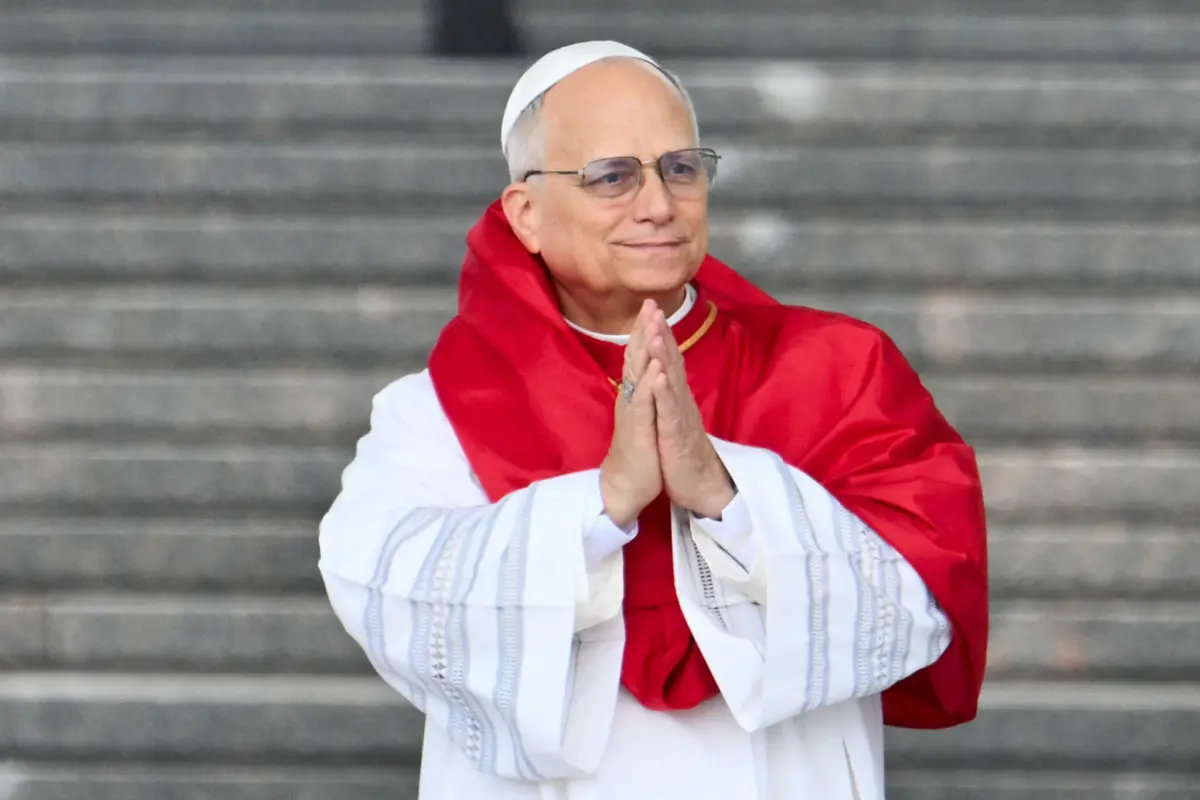
Pope Leo XIV is expected to remain hospitalized for approximately a week following a successful surgical procedure to remove part of his right lung. The Vatican confirmed that medical tests performed after the operation verified a diagnosis of lung adenocarcinoma, which is recognized globally as the most prevalent form of lung cancer. The Pontiff’s medical team and Vatican officials have maintained a transparent approach regarding his health, offering regular updates to the global Catholic community and the wider public as he begins his recovery at Rome’s Gemelli Hospital.
The Vatican shared an encouraging update regarding the Pontiff’s condition, noting that his first night following the Tuesday surgery was calm. Doctors reported that his subsequent medical tests show his recovery is progressing normally. As part of his post-operative care, Pope Leo has already undergone respiratory physiotherapy, begun walking around his hospital room, and resumed eating normally. Medical staff will continue to observe him closely while further laboratory examinations are performed on the removed cancer tissue to help determine what subsequent treatments, if any, might be required.
The 71-year-old Pope had previously addressed his health candidly during his Sunday Angelus prayers in St. Peter’s Square at the Vatican. During the public appearance, he informed the gathered faithful that doctors had discovered a localized nodule in his lung that necessitated surgical intervention. He expressed his gratitude to the global community for their spiritual closeness and stated that he entrusted himself fully to their prayers.
News of the diagnosis and subsequent surgery prompted an outpouring of well wishes from political and religious leaders across the international stage. U.S. Secretary of State Marco Rubio, a Catholic, offered his prayers for the health of the first American Pope. Meanwhile, European Commission President Ursula von der Leyen issued a public message wishing the Pontiff a full and speedy recovery, and Canadian Prime Minister Mark Carney described Pope Leo as a vital source of hope and inspiration for billions of people around the world. President Donald Trump, who has experienced a tense relationship with the current papacy and previously criticized Pope Leo, has not yet publicly commented on the news.
As the head of the Catholic Church, Pope Leo leads an institution with an immense global following. According to figures released in March by the Central Office of Church Statistics of the Secretariat of State, the number of Catholics worldwide stood at just over 1.422 billion in 2024. While the Pontiff focuses entirely on his recovery, all official papal audiences have been canceled through Oct. 20. His temporary absence from the Vatican has naturally prompted broader questions regarding how the administration of the church functions and who, if anyone, oversees operations while a Pope is hospitalized.
What is the role of the Pope?
The Pope serves as the Bishop of Rome and, under Catholic canon law, is defined as the head of the college of bishops, the Vicar of Christ, and the pastor of the universal church on earth. This foundational position grants him supreme, full, immediate, and universal ordinary power within the church.
According to Miles Pattenden, a historian of the Catholic Church at the University of Oxford, the Pope functions essentially as the chief executive who makes executive decisions regarding the governance of the church. These responsibilities range from the appointment of bishops and cardinals to the canonization of saints and any other matters involving the Pope’s personal legislative or doctrinal authority.
Beyond his internal administrative and spiritual duties within Catholicism, the Pope occupies a prominent position on the international stage. He frequently speaks out on high-profile global topics, including artificial intelligence, international diplomacy, migration, and humanitarian crises, while also undertaking apostolic journeys abroad.
In June, Pope Leo embarked on his first major European trip to Spain, a journey honoring the legacy of Pope Francis. During the final years of his life, Francis had expressed a strong desire to visit the Canary Islands, which serve as a major arrival point for migrants crossing the Atlantic from West Africa into Europe. In September, Pope Leo followed this with a four-day official visit to France. Furthermore, the Pope is currently scheduled to undertake a 12-day apostolic trip to Latin America beginning Nov. 6, which includes a planned stop in Peru, a nation where Pope Leo holds citizenship. As of now, plans for the trip are set to proceed as scheduled.
What happens if a Pope becomes sick, incapacitated, or is hospitalized?
The Vatican maintains extensive and detailed laws and rituals designed to handle the transfer of papal power in the event that a Pope dies or resigns. However, none of these established protocols apply when a Pontiff falls ill, experiences temporary health complications, or becomes unconscious.
Unlike other ecclesiastical positions within the church, Catholic canon law does not provide a clear mechanism for transferring the Pope’s authority if he becomes temporarily unable to carry out his daily responsibilities. Canon 335 explicitly declares that when the Holy See is vacant or entirely impeded, nothing is to be altered in the governance of the universal church. The papacy officially becomes vacant only if the Pontiff dies or formally resigns, with any resignation requiring that the decision be made freely and properly manifested.
Pattenden notes the structural reality of this situation, explaining that there is no alternative rule or administrative backup plan. The Pope remains in charge, and there are no legal frameworks addressing a scenario where a Pope temporarily cannot function in that capacity. When a Pope is incapacitated, it creates a serious and complex challenge for the structural governance of the church.
Historical precedents highlight the gravity of these considerations. In February 2013, Pope Benedict XVI, then 85 years old, gathered the cardinals to announce his voluntary resignation as leader of the Catholic Church, citing his advanced age. He became the first Pontiff to step down voluntarily in nearly 600 years. Later, Pope Francis confirmed in 2022 that he had prepared and signed a resignation letter shortly after his election in 2013, created specifically in case of a medical impediment. That letter, the contents of which remain unknown, was never enacted, and Francis remained in office until his death at age 88 in April 2025. His final weeks were marked by an extended stay in the hospital as he battled multiple underlying health conditions.
The absence of an institutional deputy remains a notable characteristic of the papacy. Pattenden compares the structure unfavorably to civil governance models, noting that the church lacks any equivalent to the 25th Amendment of the U.S. Constitution and features no equivalent to a vice president. He remarks that this absence of a formal deputy can be perceived as a vulnerability in the church’s constitution.
Consequently, any administrative or spiritual matter that strictly requires the Pope’s personal or doctrinal authority during a hospital stay must simply wait until the Pontiff recovers sufficiently to address it. Despite this restriction, Pope Leo is fully conscious, already walking around his room, and remains contactable. He is expected to liaise directly with senior church officials should any pressing issues arise during his hospital recovery. Demonstrating this operational continuity, Cardinal Luis Antonio Tagle presided over a Mass in place of Pope Leo, reading out a homily that had been prepared directly by the Pontiff.
Interestingly, lower positions within the church hierarchy feature much clearer arrangements for periods of incapacity. For instance, canon law explicitly provides for circumstances in which a diocesan bishop becomes unable to govern his diocese, allowing day-to-day administration to pass smoothly to an auxiliary bishop, vicar general, or another designated official.
What does the Roman Curia do?
Even under normal circumstances, the Pope delegates the extensive day-to-day operations of the Vatican and the global church to a structured group of officials who operate continuously, regardless of whether the Pontiff is residing in the Apostolic Palace, traveling, or recovering in a hospital.
The Roman Curia serves as the central administrative institution of the Holy See, supporting the Pope in governing the Catholic Church and executing its broader global responsibilities. Pattenden explains that the Curia consists of numerous departments known as dicasteries, which continue to function according to their established structures and instructions without interruption. For example, the dicastery for education oversees the administration of Catholic universities, seminaries, and schools worldwide, operating through officials who possess delegated authority.
Senior officials within the Vatican continue their administrative duties during the Pope’s hospitalization. Cardinal Pietro Parolin addressed Leo’s surgery early, expressing concern while praising the Pope’s calm demeanor. Other prominent figures include the Dean of the College of Cardinals, a position recently assigned to Cardinal Tagle, who plays a critical role during papal transitions. Additionally, the Camerlengo of the Holy Roman Church, a role currently held by Cardinal Kevin Farrell, assumes specific administrative responsibilities concerning the Holy See’s administration and finances only when the papacy becomes officially vacant following a death or resignation, though the camerlengo does not assume papal authority during a hospitalization.
The Vatican has given no indication that Pope Leo is incapable of performing or delegating his core duties. Pattenden emphasizes that Pope Leo has demonstrated a clear desire for transparency throughout his medical journey, noting that such reminders of papal mortality naturally prompt broader reflections within the church regarding the management of papal health and governance.







No comments yet. Be the first to join the conversation!