
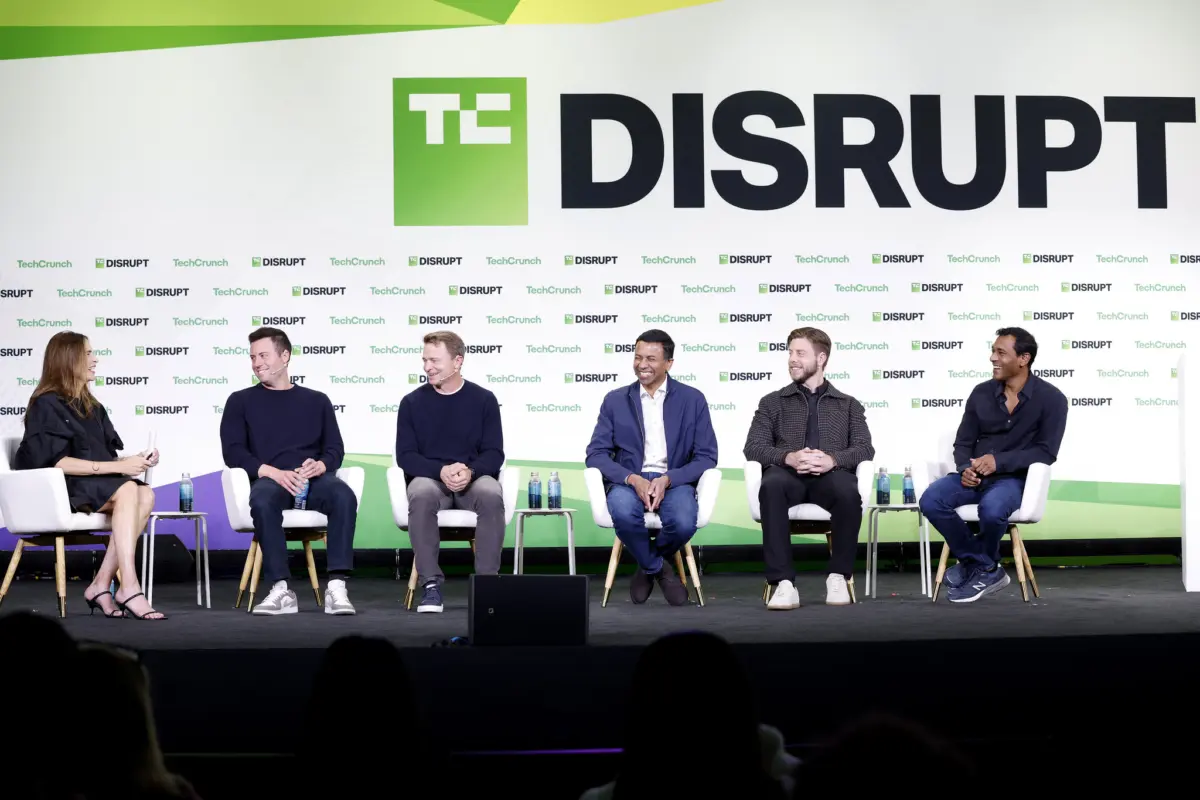
For decades, one of the most reliable and deeply entrenched unwritten rules of Silicon Valley venture capital was simple: a reputable investment firm does not back two companies that compete head-on. This unwritten pact of exclusivity protected sensitive information, maintained trust between founders and their early backers, and served as a cornerstone of the modern startup ecosystem. However, speaking at TechCrunch Disrupt, the partners of legendary venture capital firm Benchmark readily acknowledged what many in the industry have suspected for a long time—the unprecedented artificial intelligence boom is placing an intolerable strain on that rule, pushing it to the absolute breaking point.
The foundational tension underlying this shift has been visible across the tech landscape for quite some time. The towering, industry-shifting AI labs that currently dominate the technological conversation, most notably OpenAI and Anthropic, share dozens of the exact same institutional investors. As these multi-billion-dollar entities and their smaller ecosystem counterparts expand their reach, the traditional boundaries separating portfolio companies have begun to blur, creating a breeding ground for potential conflicts of interest, corporate espionage allegations, and bitter public fallout.
The simmering friction boiled over in dramatic fashion at the end of September. Factory, an early-stage startup that builds advanced artificial intelligence agents capable of writing software, publicly announced it was firing board observer and adviser Chris Degnan. The stated reason for the drastic action was what Factory termed "unethical conduct involving Cognition," its direct, fierce rival and the creator of the popular Devin coding agent.
According to Factory’s chief executive officer, Degnan had allegedly discussed taking a job at Cognition while he was simultaneously privy to highly sensitive, board-level discussions at Factory. Degnan fiercely contested the narrative, stating publicly that he had already resigned from his position at Factory and firmly denying that he had ever shared any confidential information. Shortly after the public dispute erupted, Degnan formally announced he was joining Cognition as its chief revenue officer.
The public feud escalated further when powerhouse venture capitalist Vinod Khosla waded into the fray on social media platform X. Khosla strongly sided with Degnan, publicly blasting Factory’s CEO and dismissing the startup as "a struggling second tier competitor." The public drama took on an extra layer of irony and industry-wide significance because Khosla Ventures, the firm led by Vinod Khosla, happens to be an investor in both warring startups.
Even Benchmark—a firm whose legendary reputation rests heavily on building deep, exclusive 10-to-15-year partnerships with founders at the absolute earliest stages of company formation—admitted that the old rule can no longer be counted on as an absolute guarantee. When asked at TechCrunch Disrupt whether the traditional pact against backing competing entities still holds true as portfolio companies rapidly expand into each other’s operational territory, the Benchmark partners characterized these escalating conflicts as a matter of raw, unavoidable necessity rather than corporate preference.
"The harsh reality of this world is every company is evolving very quickly," Benchmark partner Eric Vishria told the audience during the session. Vishria explained that as modern startups continuously pivot, adapt, and alter their strategic trajectories to capture emerging market opportunities, "you are going to get conflicts, and that’s just the reality of the current dynamic."
Despite acknowledging the inevitability of overlapping markets, Vishria emphasized that Benchmark remains deeply committed to each individual founder they back and strictly maintains the confidentiality of what it learns behind closed doors. He also downplayed the extent to which a traditional venture capital firm could realistically pass along sensitive product secrets anyway, noting frankly, "We are not product or technology experts."
Seemingly alluding to the messy public dispute between Factory and Cognition, Vishria noted that Benchmark has ultimately been fortunate so far not to land in "that type of insane direct conflict." He maintained that exclusivity remains "really important" at the very early seed and Series A stages that Benchmark traditionally favors. Even so, he conceded that the broader landscape is undergoing a permanent transformation. "Things are evolving. There’s no doubt about that," he added.
Fellow Benchmark partner Chetan Puttagunta expanded on these thoughts, pointing out that the artificial intelligence wave is fundamentally accelerating the problem by lowering historical barriers to entry. As the cost of building complex software "effectively goes to zero," Puttagunta observed that modern startup founders are "incredibly ambitious." Because these entrepreneurs now perceive a massive market "surface area" and are driven to claim all of it simultaneously, Puttagunta believes that overlapping turfs are becoming the rule rather than the exception. "It’s probably going to happen more, where you start to run into each other," he said.
Puttagunta drew a careful and important line between two distinct scenarios. A startup that is a direct, undeniable competitor to another portfolio company right from the outset represents "an easy answer" for a venture firm—one that is typically rejected to preserve trust. However, a portfolio company that organically expands, drifts, and invades another existing portfolio company’s turf over time as it scales is an entirely different matter. "That happens," he noted, highlighting the gray area plaguing modern tech investors.
Peter Fenton, another veteran partner at Benchmark, described the entire issue using a striking metaphor, calling portfolio conflict "kryptonite" and identifying it as arguably the firm’s toughest operational problem. To illustrate the delicate tightrope investors must walk, Fenton described a wide spectrum of how capital allocators relate to the companies they fund.
At one extreme end of the spectrum is the traditional co-founder, an individual who would fundamentally never dream of working on or backing a competing enterprise because of personal loyalty and mission alignment. At the other extreme end is the public-market stock picker, an investor who can comfortably and routinely own shares in several direct market rivals because their sole job is allocating capital rather than shaping corporate strategy or sitting on internal operating boards.
Fenton explained that Benchmark sits much closer to the co-founder end of the spectrum, treating absolute transparency as a golden rule of engagement. "There shouldn’t be the surprise after the fact," Fenton said, emphasizing that if an unavoidable conflict eventually emerges, a founder should never be left feeling shortchanged or betrayed by their early backers.
While Benchmark is certainly not formally declaring the traditional exclusivity pact entirely dead, their candid admissions carry significant weight across the venture capital ecosystem. When a premier investment firm that built its entire market name and historical prestige on uncompromising loyalty and long-term founder partnerships openly states that pervasive portfolio conflicts are on the horizon, founders across Silicon Valley and beyond might rightly pause and wonder who else in the venture community will offer this level of strategic candor.










No comments yet. Be the first to join the conversation!