
Managing a comprehensive portfolio of personal finances often requires juggling multiple banking apps, investment platforms, and spreadsheet trackers. For years, financial tools have attempted to bridge this gap by offering a centralized dashboard, yet few have sustained long-term industry relevance. Among the survivors and notable adapters in the digital wealth management space is Empower, formerly known as Personal Capital. Having been utilized by long-term financial observers for years, the platform has established itself as a prominent instrument for overseeing an entire financial life from a single digital interface.
Quick Take
Empower delivers a complete view of your finances in one place, automatically synchronizing a wide array of accounts including checking, savings, credit cards, loans, retirement accounts such as 401(k)s and IRAs, and mortgages. By consolidating these disparate data points, the software provides a real-time snapshot of an individual’s net worth and overall financial health.
Core features include cash flow monitoring, net worth tracking, advanced investment analytics, and detailed retirement planning. The platform’s investment suite incorporates asset allocation analysis, investment fee evaluations, and comprehensive portfolio checkups. Crucially, the core financial tools and dashboard are provided entirely free of charge, though the company also operates a paid wealth advisory service for clients seeking managed portfolios. Public reception on mobile marketplaces reflects strong user satisfaction, holding a high rating on the Apple App Store with hundreds of thousands of reviews, and a solid rating on Google Play based on tens of thousands of evaluations.
Getting Started with Empower
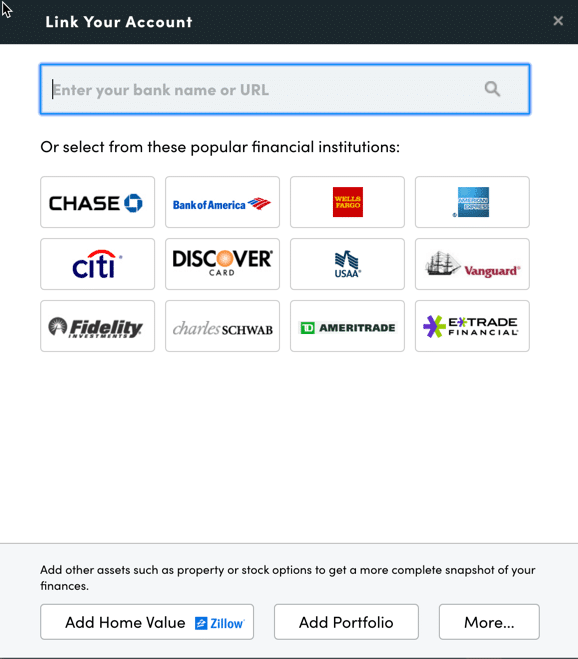
The process begins by establishing a free account on the platform, followed by the essential step of connecting all relevant financial accounts. While Empower is widely recognized for its robust investment analysis and tracking capabilities, veteran users frequently recommend connecting everyday banking accounts, credit cards, loans, mortgages, and even primary real estate holdings. For physical property, the software integrates with valuation sources like Zillow to automatically pull in estimated home equity values.
Linking accounts requires online access credentials for each respective financial institution. Users initiate the process by searching for the name of their bank, credit union, or brokerage within the dashboard’s linkage dialog box, which is accessible via a designated icon near the top left of the main screen. Accounts can be searched by institution name or website URL, and in rare instances where an institution cannot be digitally linked, users retain the option to enter asset and liability balances manually.
Connecting a comprehensive suite of accounts unlocks the platform’s broader utility, moving far beyond simple investment monitoring to encompass budgeting, cash flow tracking, bill oversight, and net worth calculation. While at least one account must be linked to initialize the dashboard, subsequent accounts can be added or managed manually. However, failing to link all major investment and banking repositories diminishes the depth and accuracy of Empower’s analytical features.
Settings and Profile Configuration
Once accounts are synchronized, completing the settings and profile sections is critical for optimizing the platform’s utility. Accessible through the user account menu in the upper right corner, the settings panel grants granular control over email subscriptions, enabling users to receive daily or weekly updates summarizing income, spending, and investment performance. Users can also configure whether investment income and dividends are factored into cash flow calculations and determine which specific accounts are included or excluded from advisory evaluations.
Security configurations are likewise centralized within this area. The platform supports multi-factor authentication, a vital security layer recommended for all users, alongside automated login alerts triggered by connection attempts originating from foreign jurisdictions. Additionally, the settings interface displays a comprehensive list of authorized devices granted access to the account, noting the timestamp of the last sign-on. This allows users to actively audit and remove outdated or unrecognized hardware from their access registry.
The profile section captures foundational demographic and financial data for individuals and spouses, including income sources, savings rates, and long-term investment objectives. These variables feed directly into Empower’s internal planning algorithms, most notably its complimentary retirement planning calculators.
Dashboard Overview
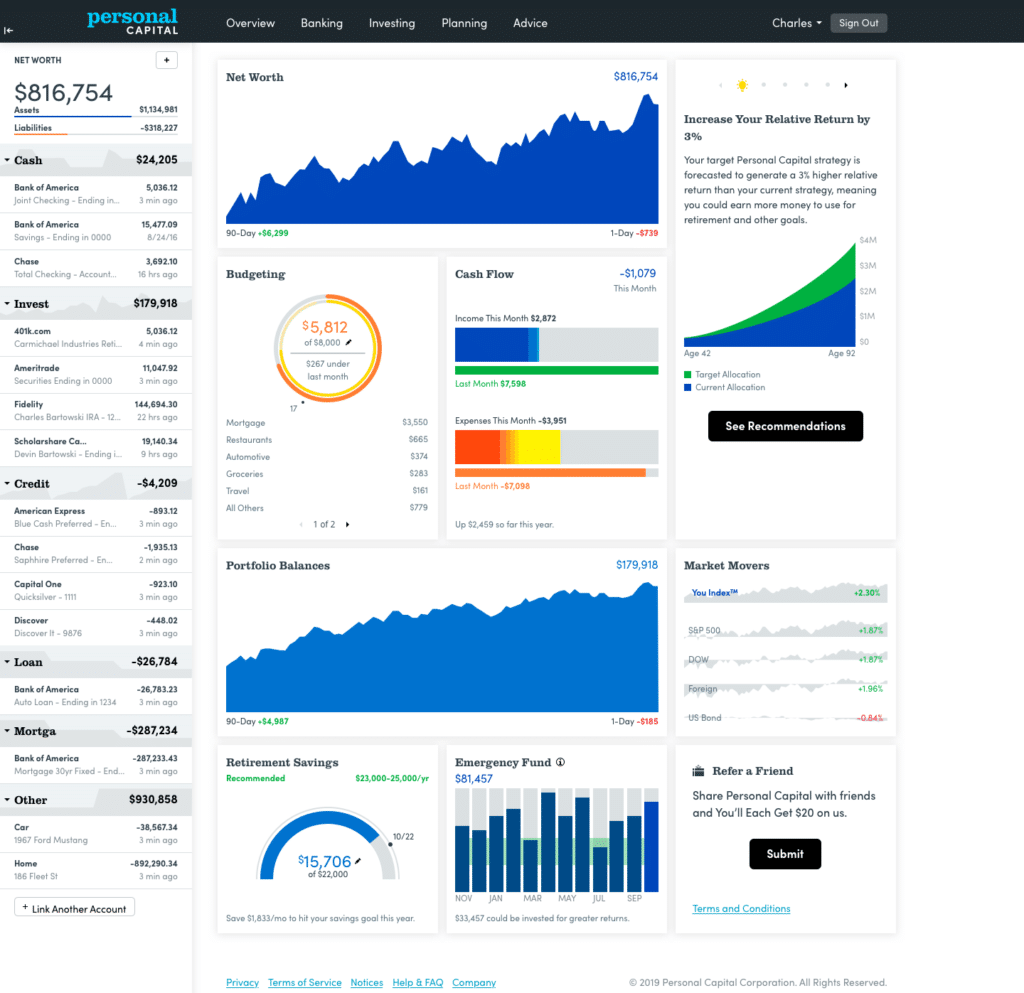
The central dashboard aggregates all synchronized data into a unified visual display, offering an immediate panoramic view of an individual’s financial standing. Rather than forcing users to navigate separate applications for spending and investing, the interface consolidates net worth updates, monthly budget summaries, cash flow metrics, investment performance, and progress toward long-term milestones such as retirement readiness and emergency fund accumulation into a single pane.
Net Worth Tracking
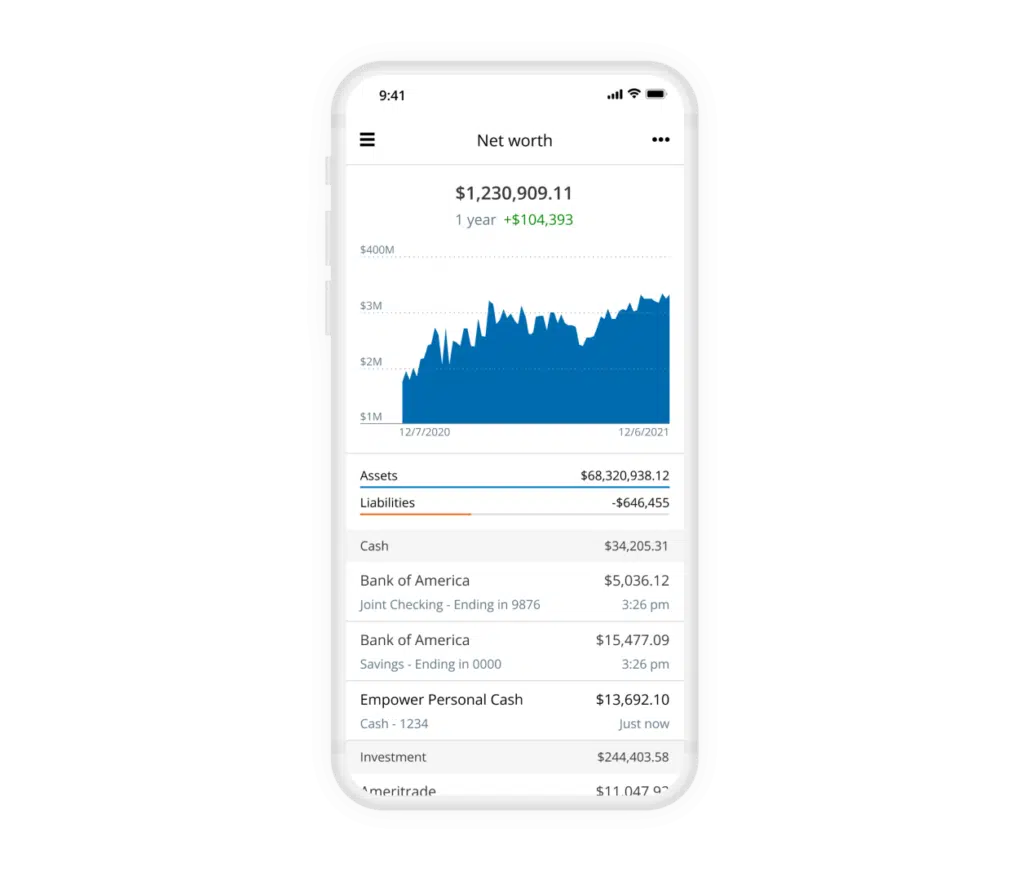
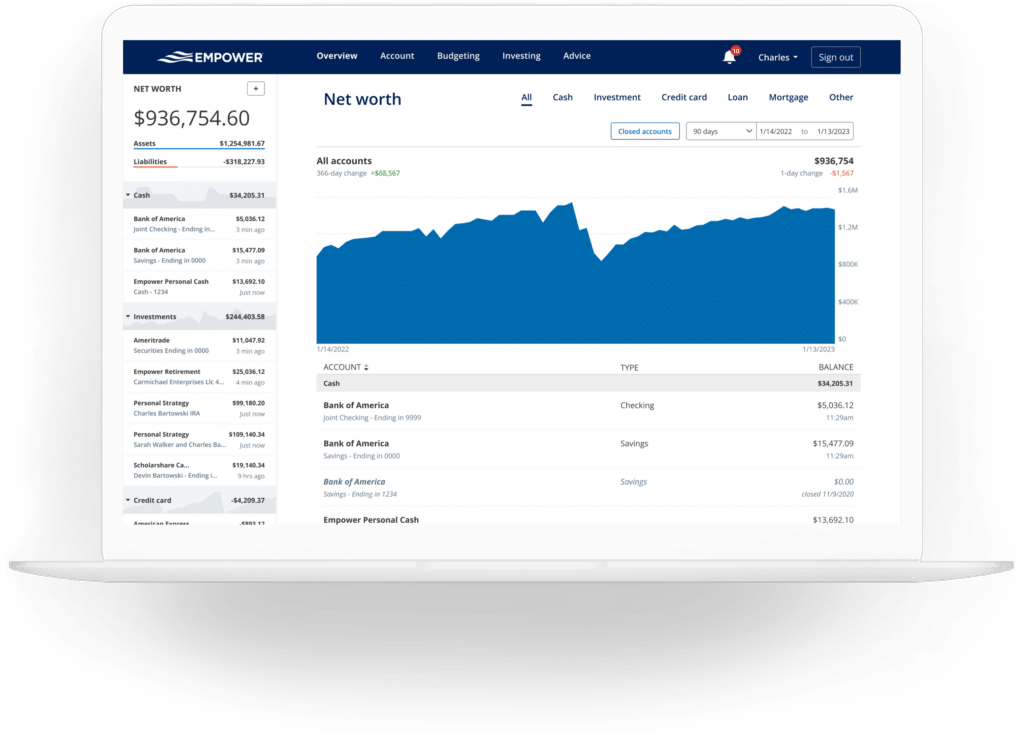
Tracking net worth remains a fundamental pillar of personal financial management, serving as a primary metric for measuring long-term financial independence. While manual spreadsheets have historically served this purpose for many disciplined savers, automated aggregation offers a distinct advantage in reducing administrative friction. When all financial assets and liabilities are successfully linked, Empower updates net worth figures automatically, reflecting daily market fluctuations in investments alongside changes in bank balances and outstanding debt obligations.
Banking and Cash Flow Management
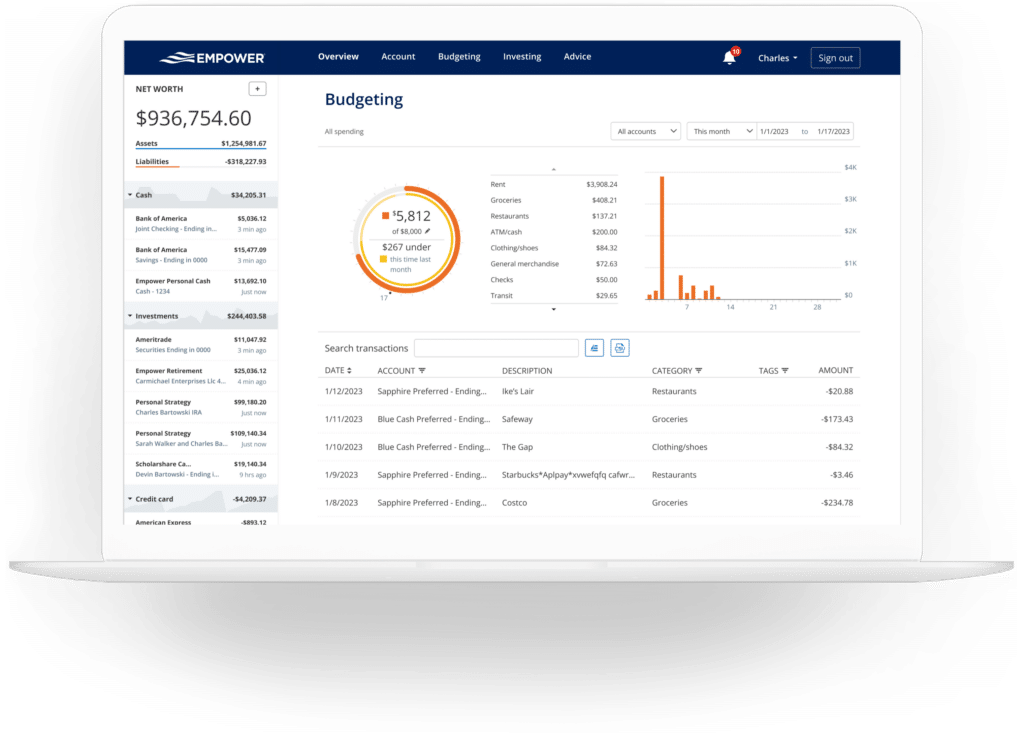
Despite its strong reputation as an investment analyzer, the platform incorporates sophisticated banking and cash flow utilities that handle transaction-level tracking for both income and expenses. Expenses are automatically sorted into predefined categories, allowing users to drill down into specific line items for detailed analysis.
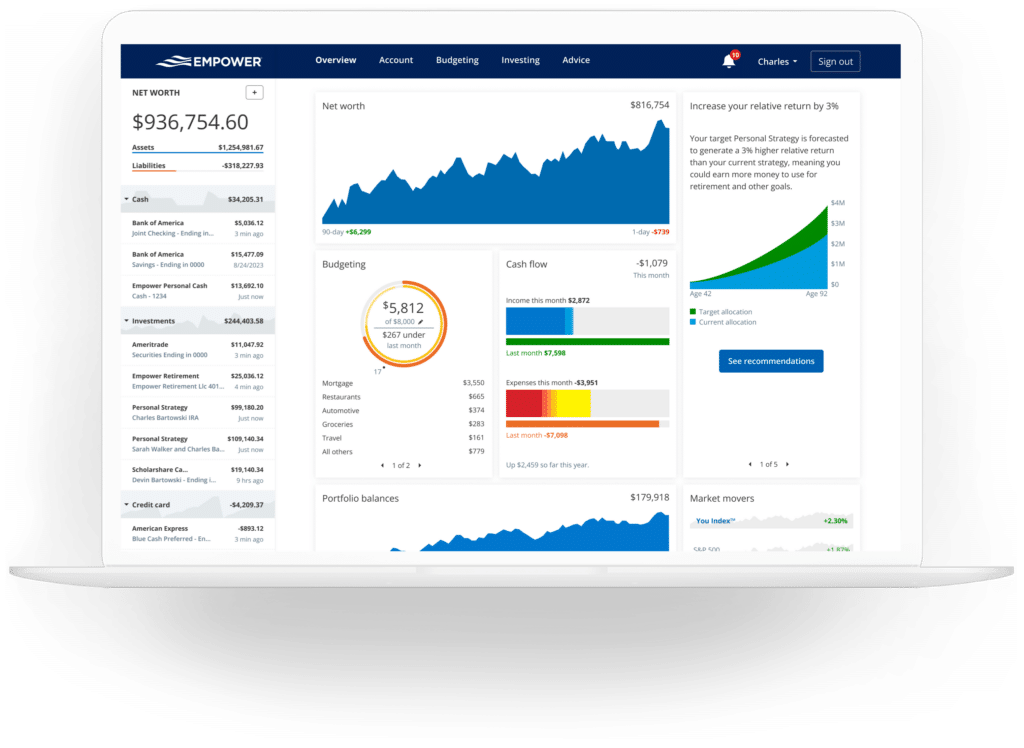
A particularly useful feature is the ability to filter reports by specific accounts. This filtering capability enables self-employed individuals and business owners to isolate commercial checking and credit card accounts to review business expenses independently. Similarly, users can isolate investment accounts to evaluate monthly interest and dividend generation strictly from their portfolio holdings.
The budgeting module functions differently than traditional envelope-style budgeting applications. Rather than establishing rigid spending limits for every distinct category, Empower focuses on overall monthly spending goals while providing exceptional visibility into historical spending habits by category. Transactions imported from linked accounts are automatically categorized, though minor manual adjustments are occasionally required to ensure absolute accuracy. Users can also utilize custom tags to track specific expenditures—such as home maintenance projects or travel expenses—without creating entirely separate budget categories.
Furthermore, by linking credit cards, mortgages, and installment loans, the platform tracks upcoming bill due dates. This notification system assists in avoiding late payments and aids in short-term cash flow forecasting throughout the month.
Investment Analysis and Portfolio Monitoring
Investment tracking represents one of the platform’s most powerful capabilities. Once retirement and taxable brokerage accounts are connected, the software tracks portfolio holdings automatically, updating asset prices throughout active trading days and monitoring underlying mutual fund expense ratios.
The holdings interface details individual securities, tracking share quantities, current market values, daily gains or losses, and total percentage returns. Performance over turbulent periods, such as historical market drawdowns, is clearly visualized to provide realistic context regarding market volatility.
Asset allocation tools evaluate a portfolio’s distribution across major asset classes, breaking down domestic and international equities, fixed-income instruments, and alternative investments. An interactive graphical interface allows users to inspect the underlying composition of each asset class down to individual holdings. Notably, the cash tracking feature looks beyond dedicated money market funds to identify uninvested cash holdings embedded within stock mutual funds and exchange-traded funds.
For cryptocurrency investors, Empower accommodates digital assets such as Bitcoin, Ethereum, and Litecoin. Rather than requiring direct API access or the sharing of sensitive wallet credentials, the platform allows users to add manual crypto accounts. By specifying the token symbol, exchange, and holding quantity, investors can monitor thousands of digital tokens across numerous exchanges alongside their traditional financial assets.
Financial Planning and Retirement Tools
Moving beyond passive tracking, the platform’s planning utilities provide forward-looking analytical models designed to project long-term financial outcomes.
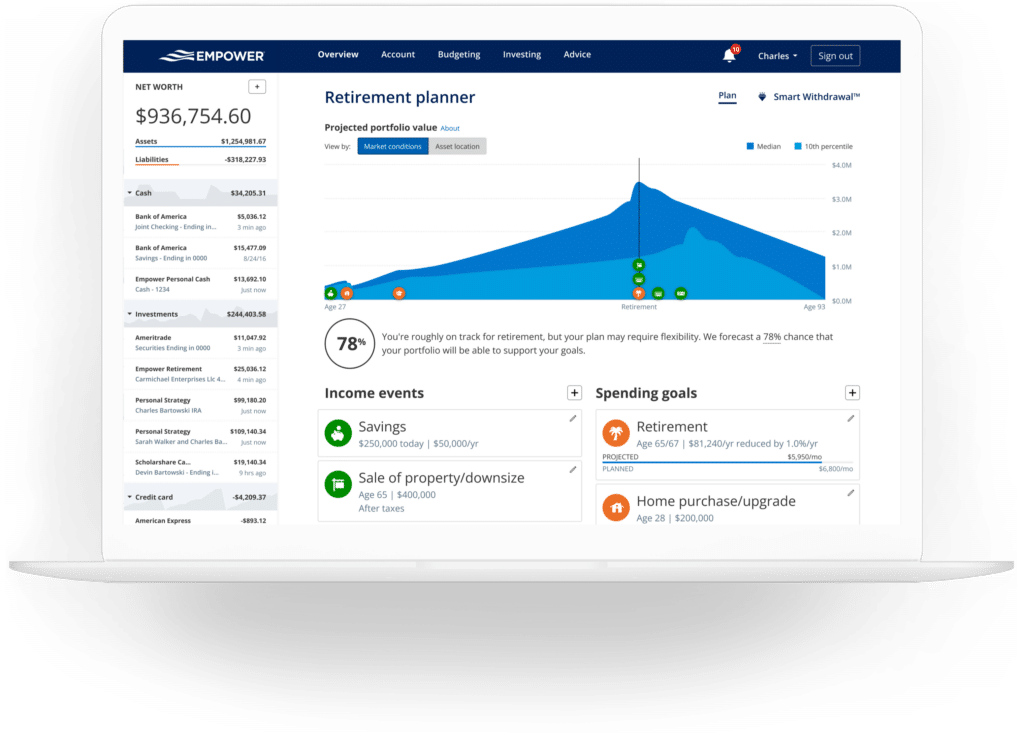
The retirement planner utilizes synchronized account data to assess retirement readiness under various conditions. Users can construct multiple parallel scenarios—comparing traditional retirement timelines against early retirement paths, testing the inclusion or exclusion of social security benefits, and adjusting assumptions regarding future inflation rates, effective tax brackets, and projected life expectancies. These scenarios can be evaluated side-by-side to understand the sensitivity of a financial plan to changing macroeconomic or personal variables.
The savings planner integrates retirement savings goals, emergency fund targets, and debt paydown milestones into a cohesive tracking mechanism. The retirement savings component monitors annual contributions across tax-advantaged vehicles like 401(k)s and IRAs, as well as taxable brokerage accounts, synchronizing directly with the primary retirement planner. The emergency fund planner aggregates balances across all linked checking and savings accounts, recommending a liquidity buffer equal to three to six months of living expenses based on established budget parameters. The debt paydown planner tracks installment loans, mortgages, and credit cards that carry revolving balances, displaying current interest rates, year-to-date balance changes, and amortization progress.
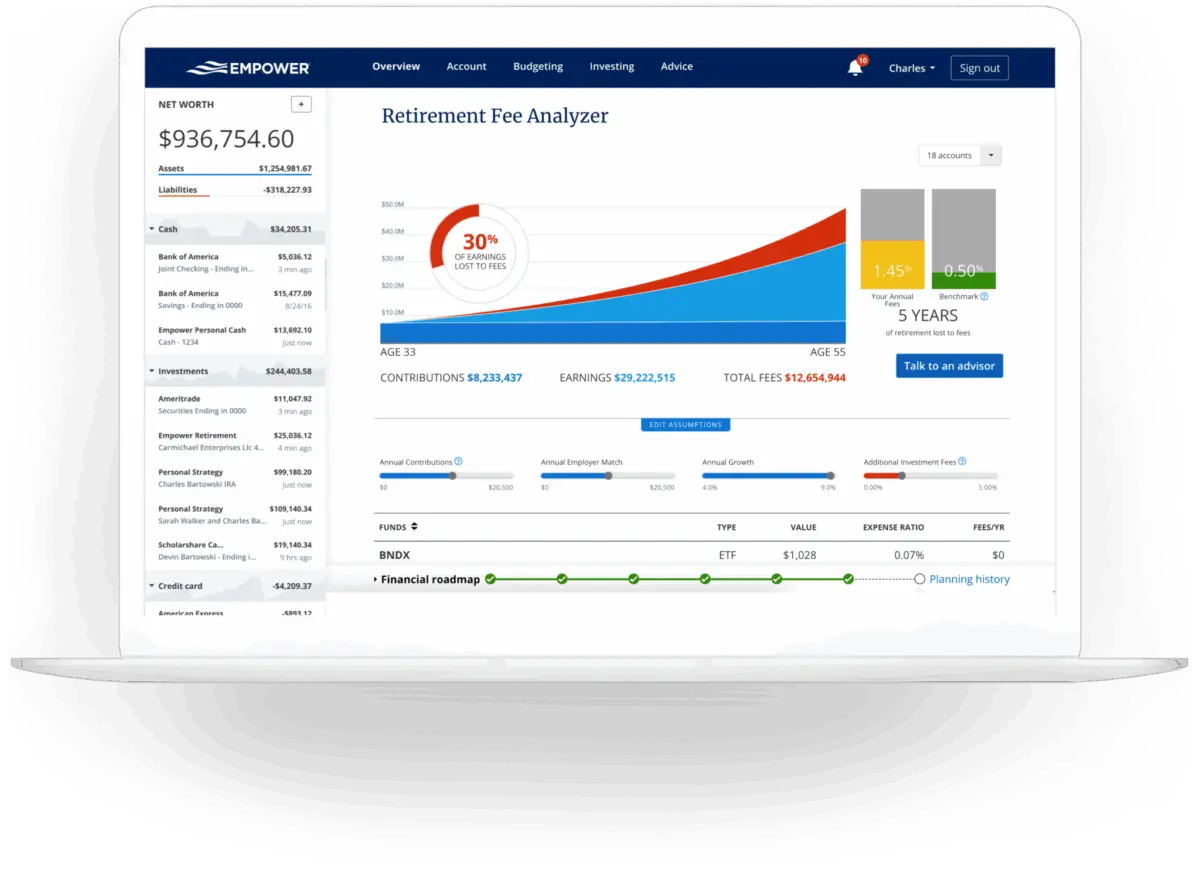
The retirement fee analyzer evaluates the weighted average expense ratio across all linked investment accounts. By quantifying annual management fees and mutual fund expense ratios in monetary terms over multi-year horizons, the tool highlights the long-term wealth impact of seemingly minor percentage fees, demonstrating how high-fee structures can erode portfolio values over decades.
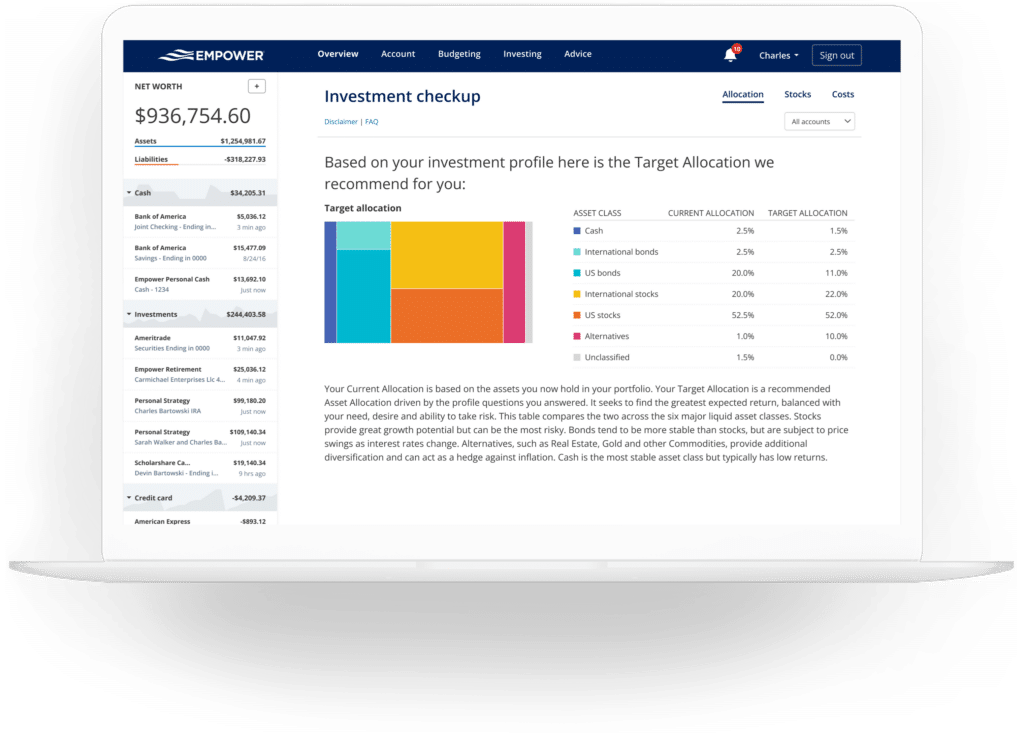
Finally, the investment checkup tool compares an investor’s current asset allocation against a model portfolio recommended based on age, time horizon, and risk tolerance. It outlines historical performance, projected risk and return metrics, and provides specific rebalancing recommendations indicating which asset classes require increasing or decreasing exposure to align with the recommended model.
Platform Security and Business Model
Security infrastructure relies on AES-256 data encryption with multi-layer key management, including rotating user-specific keys and salts. Internal personnel do not have direct access to user login credentials, and device authentication protocols require identity confirmation via automated phone calls, emails, or text messages when unrecognized hardware attempts to access an account.
The core financial dashboard and its associated tracking, budgeting, and planning tools are offered free of charge. The platform operates as part of a broader wealth management business model where the free digital dashboard serves as an acquisition channel for advisory services. While users may receive outreach from financial advisors offering managed account consultations, advisory services remain entirely optional. For clients who choose to engage professional management, advisory fees scale based on assets under management, starting at a higher percentage tier for initial balances and decreasing for portfolios exceeding significant wealth thresholds. Engagement with the advisory arm is not required to maintain access to the comprehensive suite of digital financial planning tools.








No comments yet. Be the first to join the conversation!