
By Victor Li
October 16, 2026, 11:35 am CDT
Citing the robust legal protections of prosecutorial immunity, a federal judge in New Mexico has dismissed the vast majority of actor Alec Baldwin’s civil lawsuit against the prosecutors who previously sought to convict him in connection with the fatal 2021 shooting on the movie set of Rust.
The ruling, issued by U.S. District Judge Kea Riggs of the District of New Mexico, marks another major chapter in the prolonged legal fallout stemming from the tragedy at the Bonanza Creek Ranch near Santa Fe. In her decision, Judge Riggs held that former New Mexico First Judicial District Attorney Mary Carmack-Altwies and special prosecutor Andrea Reeb were entitled to absolute prosecutorial immunity on most of the multiple counts brought forward by Baldwin.
Judge Riggs’ latest decision comes just weeks after she similarly dismissed claims against another prominent figure in the prosecution team, special prosecutor Kari Morrissey, relying on the same legal doctrine of prosecutorial immunity.
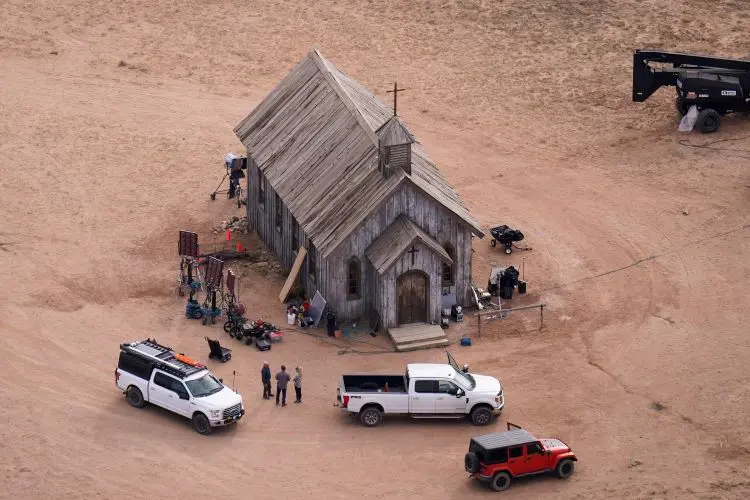
The underlying criminal case originated from an October 2021 incident during a rehearsal on the low-budget Western film Rust. Cinematographer Halyna Hutchins tragically lost her life, and director Joel Souza was injured, when a prop revolver held by Baldwin discharged live ammunition. The incident triggered worldwide media attention, intensive safety investigations, and multiple legal battles over who bore responsibility for the presence of live rounds on a professional movie set.
Baldwin was formally charged with involuntary manslaughter in 2023. However, the high-profile criminal case came to a dramatic halt in July 2024 when the presiding judge dismissed the charges with prejudice. That dismissal was granted after the defense successfully argued that state prosecutors and law enforcement officials had committed "egregious discovery violations" by failing to properly turn over exculpatory evidence—specifically, a batch of ammunition brought to the sheriff’s office by a Good Samaritan that may have been related to the case.
Buoyed by the dismissal of his criminal indictment, Baldwin filed a civil lawsuit in early 2025. His complaint targeted the prosecutors and sought damages and legal accountability, alleging malicious prosecution, defamation, and various civil rights violations arising from how the criminal case was pursued against him.
In her written opinion, Judge Riggs acknowledged that the allegations leveled by Baldwin against the prosecutors raised serious ethical and procedural concerns. "Even though the court is concerned by the allegations of misconduct by defendants Carmack-Altwies and Reeb, it recognizes that, as prosecutors, they are entitled to invoke the protection of absolute prosecutorial immunity," Judge Riggs wrote.
Under established American jurisprudence, absolute prosecutorial immunity shields government lawyers from civil liability when they are performing traditional, core functions associated with initiating and pursuing a criminal prosecution. This broad protection is designed to ensure that prosecutors can perform their duties independently and vigorously without the constant threat of being personally sued by dissatisfied defendants.
However, absolute immunity is not limitless, and Judge Riggs’ ruling carved out specific exceptions where Baldwin’s claims will be permitted to move forward. The federal judge ruled that Carmack-Altwies was not protected by immunity regarding allegations tied to her purported role in investigating and destroying the prop gun involved in the incident. Judge Riggs reasoned that such actions fell outside the scope of traditional advocacy and were "too far removed from the judicial process" to warrant absolute protection. Furthermore, claims concerning Carmack-Altwies’ public media statements and her direct involvement in the preliminary law enforcement investigation will also proceed toward trial, largely because her defense team had not explicitly sought their dismissal in that aspect of the litigation.
Judge Riggs also addressed distinct legal questions regarding special prosecutor Andrea Reeb. The judge found that Reeb had violated constitutional separation of powers principles by simultaneously serving as a New Mexico state legislator while acting as a special prosecutor on the high-profile criminal matter. Despite that finding, Riggs concluded that Reeb nevertheless retained the legal authority to prosecute the case. Additionally, the judge declined to dismiss a handful of what she described as "vague and undated allegations" directed at Reeb, ruling that it was premature at this early stage of the proceedings to determine whether immunity applied to those specific claims.
Legal representatives for the prosecuted officials expressed satisfaction with the federal court’s overarching decision. Luis Robles, the attorney representing the prosecutors, stated to Courthouse News Service that his clients were deeply "relieved" and "heartened" by Judge Riggs’ ruling.
Counsel for Alec Baldwin did not immediately respond to requests for comment regarding the federal court’s dismissal of the bulk of the civil claims.
As the civil litigation moves forward on the surviving narrow counts, the legal aftermath of the Rust tragedy continues to wind its way through both state and federal courts, illustrating the complex and long-lasting reverberations of the 2021 film set disaster.











No comments yet. Be the first to join the conversation!