
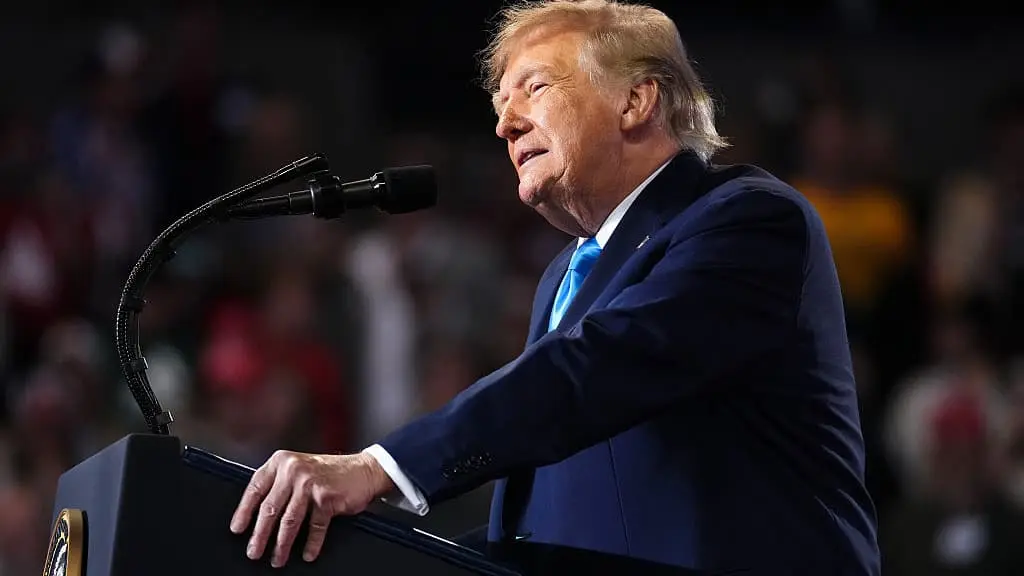
President Donald Trump signed an executive order on Friday waiving many of the most severe sanctions mandated by the Lindsey O. Graham Sanctioning Russia and Iran Act of 2026. The legislation, which was passed by Congress in honor of the late South Carolina senator just last month, was intended to go into effect on October 18. This pivotal executive action comes mere days after the administration announced a high-profile diesel deal with Moscow, highlighting a widening chasm in relations between Washington and Kyiv and dealing a significant blow to the united front maintained by Western allies against the Kremlin’s ongoing military campaign in Ukraine.
The bipartisan legislation was designed to fundamentally restrict the financial lifelines supporting Russia’s war effort. Specifically, the law called for biting economic penalties targeting Russian officials, major financial institutions, and various commercial entities. Furthermore, it threatened secondary tariffs of up to 100 percent on goods imported into the United States from countries that act as major buyers of Russian crude oil or natural gas. Proponents of the act argued that such measures were vital to cutting off the revenues enabling Moscow to sustain its military operations.
International assessments have long underscored the potency of such financial pressure. According to an estimate published in June 2025 by the United Kingdom’s Foreign, Commonwealth & Development Office, international sanctions had successfully deprived the Russian state of at least $450 billion in war-related funds since the full-scale invasion began in February 2022. These losses accumulated through various channels, including drastically reduced oil tax revenues and the immobilization of crucial central-bank reserves held abroad. While Trump’s newly signed waiver leaves existing sanctions framework largely intact, it effectively blocks the implementation of the additional, escalated financial pressure that the new legislative measures were explicitly designed to exert.
The decision to waive the sanctions follows a series of controversial moves by the White House regarding the conflict. Trump has consistently pressured Ukraine to scale back its strategic military campaigns targeting Russia’s critical energy infrastructure. In recent months, the administration has repeatedly urged Kyiv to halt drone and missile strikes on Russian fuel refineries, arguing that these Ukrainian operations are artificially driving up fuel prices for American consumers.
However, energy analysts point out that Ukrainian military strikes represent only one minor variable in a complex global market. Disruptions directly linked to ongoing conflicts involving Iran have played a far more substantial role in constraining global fuel supplies, while reduced refinery activity within Russia itself has added considerable pressure to international diesel markets.
The friction escalated on October 11, when Trump publicly claimed that both Russia and Ukraine had agreed to an overarching "energy ceasefire." The claim was swiftly undercut by reality. Ukrainian officials reported Russian airstrikes hitting domestic energy infrastructure mere hours after the presidential announcement, and Ukrainian President Volodymyr Zelensky stated publicly that the purported ceasefire agreement came as complete news to him. On that same day, Trump took the extraordinary step of publicly calling for Ukraine to replace President Zelensky. The withdrawal of the sanctions package within a single week of those contentious statements has only reinforced perceptions of an increasingly erratic and uneven display of American support for Kyiv.
Jeff Colgan, a professor of political science at Brown University, described the administration’s trajectory in stark terms, telling TIME that the decision is essentially "like trading [Ukrainian] democracy for diesel."
The bilateral diesel deal with Russia, officially announced on October 9, represents one of several aggressive actions taken by the White House to lower domestic fuel prices ahead of the midterm elections scheduled for November 3. Accompanied by the easing of sanctions, the U.S. Treasury Department issued a temporary license through the Office of Foreign Assets Control (OFAC). This license authorizes specific financial transactions involving Russian diesel, including direct imports into the United States, through April 7, 2027.
In his initial announcement of the agreement posted on Truth Social, Trump boasted that Russia had agreed to supply global markets with more than 4.8 million tons of diesel, asserting with characteristic hyperbole that the move would drive fuel prices down "IN RECORD NUMBERS."
Despite the administration’s optimistic framing, energy market experts have openly questioned whether the arrangement will have any material impact on the prices paid by everyday American consumers at local gas stations.
"There could be a modest short-term effect on wholesale prices, but only a small and delayed benefit, if any, would reach consumers at the pump," noted Tatiana Mitrova, a research fellow at Columbia University’s Center on Global Energy Policy.
Conversely, the broader sanctions waiver signed on Friday carries distinct geopolitical implications, potentially preventing further disruption to the wider global energy market by allowing Russian oil to flow unhindered to major Asian importers like China and India, thereby mitigating immediate price volatility.
"The broader sanctions waiver may prevent additional market disruptions, but it does not itself create new supply," Mitrova explained. "The potential economic benefit to American consumers looks rather modest compared with the geopolitical cost of weakening sanctions pressure."
Mitrova emphasized that reducing this economic pressure—widely viewed by analysts as an implicit component of the broader diesel arrangement, even if not explicitly codified as such—ultimately benefits Moscow far more than the nominal monetary value of the diesel transaction itself. "The much bigger financial benefit for Moscow is avoiding additional sanctions that could have undermined its much larger crude oil export revenues," she observed.
Colgan echoed these assessments, questioning whether the tangible beneficiaries of the policy shift extend beyond the Kremlin itself. "Easing the sanctions probably won’t move global prices very much [given the sheer size of the global market], but could mean substantial extra revenue for Russia," he noted.
Beyond the immediate financial balance sheet, the waiver has cast a heavy shadow over Washington’s long-term strategic commitments to Eastern Europe as diplomatic ties continue to fray.
How might the sanctions waiver affect Ukraine?
Beyond its direct and indirect impacts on global commodity markets, President Trump’s decision to waive the sanctions threatens to deepen the growing rift between the United States and Ukraine, intensifying concerns regarding the future of American leadership and backing for Kyiv.
Konstantin Sonin, a prominent Russian economist and professor at the University of Chicago Harris School of Public Policy, views the administration’s move as a powerful symbolic gesture of appeasement toward Russian President Vladimir Putin. He suggests the decision sends an unmistakable signal to international allies that stretches far beyond simple economic calculations.
"I think this will be read by Ukraine and Ukraine leadership—and European leadership—as another step in the United States withdrawing from being an active European player," Sonin told TIME.
In addition to shoring up Moscow’s finances and granting the Kremlin greater latitude in prosecuting its war, Sonin argued that waiving the additional sanctions provides a tangible psychological lift to the Russian leadership. "It’s another bit of signaling that the United States is not as supportive of Ukraine as they were historically," he added. "You still cannot say that the United States is on Putin’s side, but it is another bit of diminishing support for Ukraine."
Mitrova concurred that the primary advantage gained by Moscow is strategic rather than purely monetary. "For Putin, the most valuable outcome may not be additional diesel revenues but the perception that Washington is increasingly prioritizing domestic energy prices over sustained pressure on Russia," she said. "That could reinforce the Kremlin’s belief that it can outlast Western support rather than make meaningful concessions."
President Zelensky did not mince words in his public reaction to the administration’s move to block the bipartisan legislation. "The decision to undo all of this, to block all of it, seems wrong to me," the Ukrainian leader wrote in a post on X. "And it definitely helps only the Russians. It only fuels their satisfaction and their desire to keep killing people. This certainly does not stop the war."
Furthermore, Mitrova warned that by abruptly easing sanctions, the United States risks isolating itself from European allies who have remained steadfast in their alignment with Kyiv and President Zelensky.
"Europe is still tightening sanctions against Russia, while Washington is now moving in the opposite direction," she noted. "By suspending sanctions that were designed to discourage major countries from buying Russian energy, Washington risks undermining a central pillar of the Western strategy toward Russia."
Why Republicans and Democrats are criticizing the waiver
The presidential waiver provoked an immediate and severe backlash from lawmakers on both sides of the political aisle, particularly because it directly dismantled a major piece of legislation that had enjoyed overwhelming congressional consensus just weeks prior. The Sanctioning Russia Act of 2026 had successfully cleared Capitol Hill on September 16, securing an emphatic bipartisan vote of 86-11 in the Senate and 262-159 in the House of Representatives.
The executive action drew sharp rebukes from senior Republican lawmakers. Outgoing North Carolina Senator Thom Tillis, who is set to leave office in January, condemned the decision as "beyond irresponsible" in a weekend statement. Suggesting that the executive branch was overtly subverting the constitutional authority and expressed will of the legislative branch, Tillis wrote on X: "It’s unconscionable that this administration is capitulating to a Russian dictator who illegally invaded Ukraine."
Texas Republican Senator John Cornyn similarly expressed dismay, remarking on social media that "Lindsey would be appalled." His comment referenced the late Senator Lindsey Graham, a staunch hawk on foreign policy and a vocal champion of Ukraine after whom the bipartisan sanctions act was proudly named. Graham had spent more than a year tirelessly petitioning Congress and the administration for the legislative measures before his passing on July 11.
Democratic leaders were equally scathing in their assessments. Massachusetts Senator Elizabeth Warren issued a statement accusing Trump of actively "enabling Vladimir Putin to continue his war of aggression." Senate Democratic Leader Chuck Schumer released a statement declaring that "by giving the Russian economy life support, Trump’s deal with the devil keeps getting dirtier."
The administration was legally empowered to issue the waiver due to a specific safety valve provision embedded within the text of the legislation itself. The statute explicitly granted the president the authority to waive the mandated sanctions and tariffs provided that the executive branch submitted a formal written certification to Congress declaring that the waiver served the vital national interests of the United States, accompanied by a detailed report explaining the rationale behind the determination. In Friday’s executive order, President Trump confirmed that both required documents had been transmitted to Capitol Hill.
"I am hereby waiving the application of such sanctions, restrictions, and duties provided for in the Graham Act," Trump wrote in the official order text. "I have submitted to the Congress a certification that the issuance of such a waiver at this time is in the national interests of the United States."
To date, the White House has not publicly detailed the specific national security justifications underpinning the decision, and representatives for the administration did not respond to repeated requests for comment from TIME.
Meanwhile, political reverberations were felt directly within the late senator’s home state. Darline Graham, the late senator’s sister who was recently appointed to fill his vacant Senate seat in South Carolina and is currently running in the November election to secure a full term, addressed the controversy during a campaign stop on Saturday. While acknowledging that the executive decision ultimately fell within the constitutional purview of the presidency, she made no secret of her personal disapproval, affirming her preference to maintain maximum economic pressure on Moscow.
"I don’t trust Putin and I don’t trust Russia," she told supporters.








No comments yet. Be the first to join the conversation!