

Good morning! It is Monday, October 19, 2026, bringing with it a fresh round of major automotive developments from around the globe. This edition of the daily briefing covers the intersection of consumer protection, corporate governance, international manufacturing shifts, and heavy-duty regulatory recalls.
At the forefront of today’s news, New York City is taking legal action against online automotive marketplace CarGurus over allegations of misleading consumers on vehicle prices. Meanwhile, Tesla has officially filed its proxy statement for its upcoming annual meeting, once again urging shareholders to back CEO Elon Musk. In international manufacturing news, Stellantis faces backlash over potential plans to import Chinese-built Jeeps into Canada following domestic plant cancellations. Finally, Ford is back in the headlines with another recall, continuing a turbulent year for the manufacturer’s quality assurance operations.
NYC Sues CarGurus for Deceptive Pricing Practices
New York City’s Department of Consumer and Worker Protection has launched a formal enforcement action against CarGurus, accusing the prominent online vehicle listing platform of deceiving consumers regarding dealership prices on its website. Filed earlier this month in the New York State Supreme Court, the consumer protection lawsuit alleges that the company’s online price rating algorithms and integrated artificial intelligence chatbots systematically present false or misleading prices that conceal mandatory extra fees.

The department has flagged more than 2,000 individual violations of local consumer protection laws, seeking civil penalties of up to $3,500 per violation. If successful, the legal action could cost CarGurus millions of dollars and permanently bar the platform from engaging in misleading advertising practices within New York State.
Department Commissioner Samuel Levine emphasized the gravity of the allegations in a public statement released on October 15. Levine stated that New Yorkers should be able to trust that labels advertising a "Great Deal" are genuinely advantageous. The lawsuit aims to halt bait-and-switch pricing structures, eliminate hidden charges, and safeguard consumers from unfair financial practices during major automotive purchases.
In response, CarGurus has rejected the city’s claims entirely, vowing to mount a vigorous legal defense. Company CEO Jason Trevisan issued a statement asserting that the allegations ignore CarGurus’s long-standing industry track record of setting transparency standards for vehicle buying and selling. CarGurus maintains that its deal ratings—which categorize listings as "Great Deal," "Fair Deal," or "Overpriced"—rely on objective, transparent data reviews and adhere to disclosure requirements for dealership fees.

However, the city’s complaint argues that CarGurus failed to adequately enforce its own guidelines. Investigators found that required fees were frequently hidden or rendered difficult for consumers to locate, and that the site’s automated AI chatbot omitted mandatory fee structures from the vehicle lists it generated. The lawsuit contends that inadequate enforcement by the platform has directly contributed to widespread consumer confusion.
This legal challenge arrives in the wake of broader federal regulatory shifts. In March, the Federal Trade Commission issued a decisive ruling targeting 97 dealership groups, declaring it illegal to advertise vehicle prices that omit mandatory charges such as documentation fees and pre-installed accessories. Under federal guidelines, advertised prices must reflect true out-the-door costs, excluding only mandatory government taxes and registration fees. Third-party listing sites have faced mounting pressure to ensure compliance with these tightening standards.
Tesla Asks Shareholders to Re-elect Elon Musk at Annual Meeting
In a corporate development that has surprised virtually no market observers, Tesla has filed its official proxy statement with the U.S. Securities and Exchange Commission, asking shareholders to re-elect CEO Elon Musk to a three-year term during the company’s upcoming annual meeting on December 3.
The filing also seeks the re-election of Board Chair Robyn Denholm and director JB Straubel to subsequent three-year terms. This governance milestone follows closely on the heels of the Austin-based electric vehicle manufacturer’s decision to grant Musk a massive performance-based compensation package, widely valued as a $1 trillion incentive structure, approved by shareholders roughly a year ago.
According to Reuters, Musk’s 2025 CEO Performance Award comprises approximately 423.7 million restricted shares, valued at a total of $158.4 billion within the summary compensation table. None of the twelve tranches within the massive performance award have been earned to date. Each tranche requires specific operational targets alongside market-capitalization milestones scaling from $2 trillion to $8.5 trillion. Unearned shares retain voting rights proportional to all other outstanding stock.
Musk successfully exercised all 303.96 million stock options stemming from his 2018 compensation package on June 16, leaving 286.4 million restricted shares scheduled to vest in January 2028, provided he remains in his leadership position. Additionally, Tesla disclosed that it spent months collaborating directly with the SEC to pioneer a voluntary framework for retail investor voting, ultimately securing a formal SEC no-action letter.
To address corporate governance concerns regarding share utilization, Tesla’s updated pledging policy caps any borrowing secured by Musk’s pledged shares at the lesser of $3.5 billion or 25 percent of the total value of those shares. Musk currently maintains a personal ownership stake of approximately 20 percent in Tesla, which includes 207.5 million pledged shares, while major institutional holder Vanguard Capital Management commands a 5.3 percent stake.
Jeep Could Build Canadian-Bound Vehicles in China
Automotive manufacturing strategies within Stellantis’s Canadian operations have taken an unexpected turn. The multinational automaker is reportedly laying the operational groundwork to import electrified Jeep models directly from China into Canada. This strategic pivot follows the company’s decision to scrap its previous plans to assemble the next-generation Jeep Compass at the idled Brampton Assembly Plant in Ontario, with management instead planning to divest the facility to a local defense contractor.
Beginning in 2027, a joint venture between Stellantis and Chinese automaker DongFeng plans to manufacture two electrified Jeep models—utilizing advanced plug-in hybrid and battery-electric vehicle technology developed by DongFeng—at a facility in Wuhan, China. These vehicles are intended for domestic consumption in China as well as international export markets, including Canada and Mexico. Industry reports indicate these specific models are not slated for the United States market.
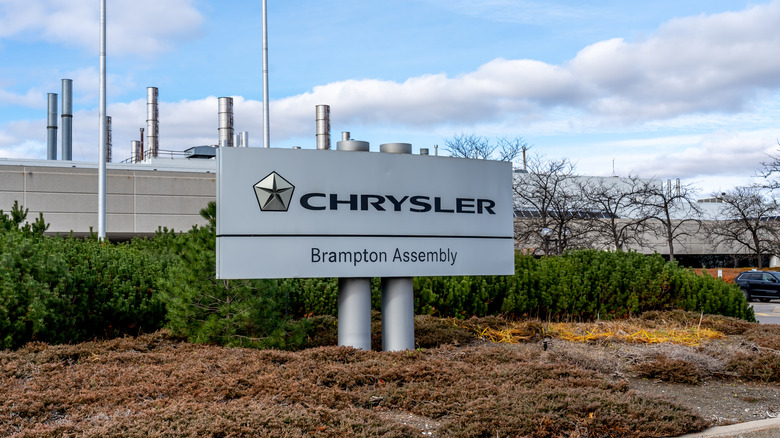
Stellantis Canada representatives have characterized the import plans as strictly preliminary. Company spokesperson LouAnn Gosselin stated via email that it would be premature to confirm these vehicles are officially scheduled for the Canadian market, adding that potential overseas imports played no role in the strategic decisions surrounding the Brampton facility.
The proposed import strategy has drawn sharp criticism from labor organizations and government representatives. The Brampton plant has remained inactive since 2003, when Stellantis initially began retooling operations for the Compass manufacturing program—a project ultimately cancelled in February 2025 when production was shifted to the United States. Unifor President Lana Payne expressed strong disapproval, calling the prospect of importing Chinese-built electric Jeeps while abandoning domestic production commitments entirely unacceptable and out of touch with Canadian workers.
Ford Issues Another Recall Over Front Seat Security
Ford Motor Company is issuing a safety recall for 2,276 vehicles across the 2025 through 2027 model years of the F-150 pickup truck due to concerns that front seats may not be properly secured to the vehicle body. According to the National Highway Traffic Safety Administration, fewer than one percent of the recalled population is estimated to actually exhibit the defect. However, the action represents the latest addition to an extensive list of recalls issued by the Blue Oval throughout 2026.
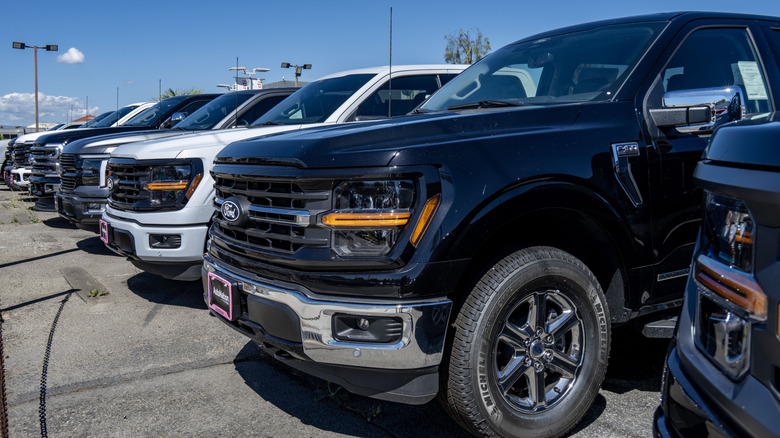
The manufacturing oversight involves improper securement of front seat mounting bolts, which could fail to adequately restrain vehicle occupants during a collision and increase the risk of injury. Ford has confirmed that it is not currently aware of any accidents, injuries, or fatalities related to the condition.
Authorized dealership service departments will inspect the affected vehicles, tightening or replacing front seat bolts as necessary at no cost to vehicle owners. Because the issue involves a recognized safety risk, Ford has indicated that repairs will be eligible for mobile service options as well as dealer pickup and delivery programs. Owner notification letters are scheduled to be distributed starting October 26.
Internal investigations revealed that the issue originated from a production line bottleneck. A warranty report filed in June identified a missing front-seat mounting bolt on a specific vehicle, alongside an improperly seated passenger-side bolt. Subsequent internal reviews determined that an assembly line worker was unable to complete the seat installation within the allocated workstation cycle time, triggering a standard line stoppage protocol. Although a team leader marked the required repair as completed within the tracking database, the corrective action was never physically executed. Quality investigators subsequently cross-referenced warranty and field data to identify 62 specific vehicle identification numbers potentially affected by improperly secured seating assemblies.

This recall marks the 80th distinct campaign initiated by Ford in 2026, more than doubling the recall volume of second-place Stellantis, which stands at 39. Cumulatively, Ford has recalled over 14 million vehicles year-to-date, eclipsing the total volume of affected vehicles from previous operating periods despite falling short of the record 153 individual recall campaigns issued during the prior year.
The Fuel Up
National fuel price averages continue to experience gradual downward adjustments, though the pace of relief remains modest for everyday motorists. Market conditions are complicated by continued elevation in global commodities, with West Texas Intermediate crude oil futures and Brent crude sitting at $98 and $108 per barrel, respectively.
According to data compiled by AAA, national average fuel prices remained virtually unchanged overnight. Regular unleaded gasoline held steady at a national average of $4.30 per gallon, reflecting only a fractional decline. Diesel fuel exhibited a similarly stagnant trend, ticking down by a fraction of a cent while remaining elevated at an average of $6.32 per gallon nationwide.









No comments yet. Be the first to join the conversation!