
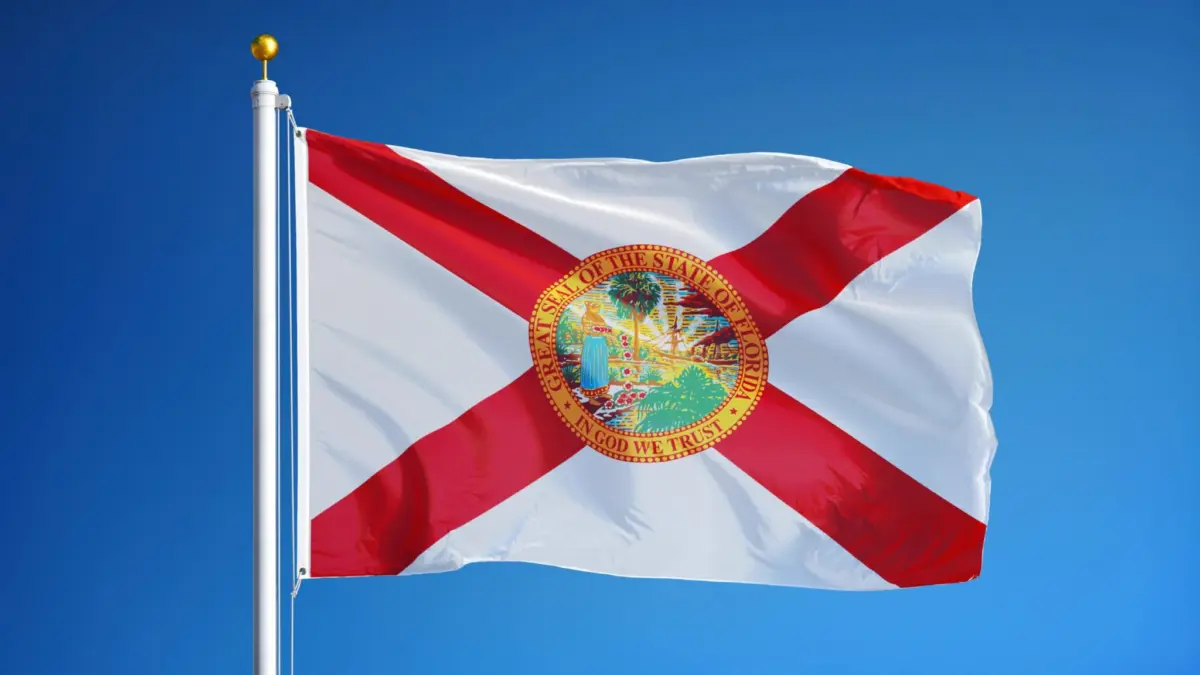
Florida currently maintains one of the nation’s most competitive tax systems, distinguished by its lack of an individual income tax and a relatively modest reliance on property taxes compared to many competing states. This deliberate tax structure has long allowed the Sunshine State to attract both new residents and expanding businesses while simultaneously funding the public infrastructure, essential services, and community amenities that make the state a desirable place to live, visit, and work.
However, Florida voters are now being asked to weigh a consequential shift in public policy. Set to appear on the ballot on November 3, 2026, Amendment 3 is a constitutional proposal that would substantially increase the state’s current homestead exemption for non-school district property taxes. If approved by at least 60 percent of voters, the measure would mark one of the most significant fiscal policy changes in modern Florida history. While the amendment promises immediate property tax relief for many primary homeowners facing escalating cost-of-living pressures, its broader economic and fiscal repercussions would ripple across the entire state, impacting all Floridians.
Florida’s Current Tax Code Is Consistently in the Top 5
Florida’s tax code has consistently ranked among the nation’s most competitive, placing it securely in the top five in nearly every edition of the Tax Foundation’s State Tax Competitiveness Index and its predecessor, the State Business Tax Climate Index, dating back to the inception of those rankings in 2003.
Extensive economic research demonstrates that state income taxes are among the most harmful forms of taxation because they actively discourage work, investment, entrepreneurship, and business expansion. By eschewing a state individual income tax entirely and maintaining a competitive 5.5 percent corporate income tax rate, Florida has insulated its labor and capital markets from these disincentives. Furthermore, Florida’s combined state and local sales tax rate of 6.98 percent is notably lower than those levied in many neighboring southern states, such as Alabama and Georgia, where average combined rates reach 9.46 percent and 7.56 percent, respectively.
This sustained economic competitiveness is rooted not merely in low tax burdens, but in a balanced revenue structure that has historically provided reliable, sufficient funding for local infrastructure, public safety, and other civic services essential to a thriving business climate.
Amendment 3 Would Fundamentally Change Florida’s Property Tax System
Florida’s economic success has fueled an influx of tourists, workers, retirees, second homeowners, and entrepreneurs. This robust in-migration and business relocation have created a highly competitive housing market, driving rapid growth in property values. Consequently, property tax burdens have risen for many homeowners despite existing constitutional protections. This challenge is especially acute for new and first-time buyers, exacerbated by Florida’s existing assessment limit known as Save Our Homes (SOH). Under SOH, nearly identical properties on the same street can carry dramatically different tax burdens based solely on their purchase dates or the length of time the occupants have owned the home.
To address these cost-of-living and housing pressures, voters will decide on Amendment 3 in November 2026. Under current law, Florida homeowners who qualify for a homestead exemption receive an exemption from all property taxes levied on the first $25,000 of assessed value. A second inflation-adjusted exemption of $25,000 applies to assessed values beginning at $50,000, though it excludes school district property taxes. Thus, a homestead property with an assessed value of at least $76,411 currently receives a total non-school tax exemption of $51,411.
Amendment 3 would preserve the existing $25,000 homestead exemption for school district property taxes. For all other property taxes, however, the measure would dramatically increase the homestead exemption to $150,000 beginning in 2027, and to $250,000 beginning in 2028. Starting in 2029, that $250,000 exemption would be adjusted annually for inflation. To qualify immediately, property owners must have established permanent Florida residency by December 31, 2026.
For those establishing a homestead on or after January 1, 2027, eligibility would be restricted to the standard $25,000 exemption for school district taxes and capped at $50,000 for all other levies during their first five years of ownership, after which they would become eligible for the larger exemption. Additionally, the amendment directs the legislature to establish a uniform procedure allowing counties and municipalities to increase exemptions further, up to the complete exclusion of all homestead property values.
The amendment would also alter assessment limits for non-homestead properties. Currently, annual increases in assessed value for non-homestead property are capped at 10 percent. Amendment 3 would reduce this limitation to 5 percent beginning in 2027, while preserving the foundational SOH assessment limits and portability provisions for existing homeowners.
The Property Tax Is a Locally Accountable, Stable, and Economically Efficient Revenue Source
Property taxes serve as the cornerstone of local government finance, aligning closely with the benefit principle of taxation—the concept that taxpayers help finance the public services from which they directly benefit. Local services like police and fire protection, infrastructure, and neighborhood amenities enhance local property values. Because property taxes fund localized services, they foster a direct, accountable relationship between taxpayers, the benefits they receive, and local officials.
Economic literature consistently identifies the property tax as one of the most stable sources of local government revenue. Real property is immobile; land and structures cannot be relocated to avoid taxation, rendering the tax base highly reliable. Furthermore, property values are inherently less volatile than wages, business profits, or retail activity. While economic downturns can cause rapid contractions in income and sales tax revenues, property values adjust more slowly due to market lags, shielding local governments from severe fiscal disruptions and reducing the need to slash essential public services during recessions.
The composition of the property tax base—encompassing residential, commercial, industrial, agricultural, and utility properties—further dampens volatility. A decline in one sector is often offset by stability or growth in another. Beyond stability, property taxes are economically efficient because they are levied on existing assets rather than active economic decision-making, imposing fewer distortions on labor participation, savings, and capital formation than income or consumption taxes.
Homestead Property Is a Substantial Portion of Florida’s Property Tax Base
Property taxes account for 41.5 percent of own-source local revenues and 75.8 percent of total local tax collections in Florida. While non-school property tax collections grew significantly between 2019 and 2025, outpacing both population growth and cumulative inflation, this recent financial expansion does not mean local governments can easily absorb the impact of Amendment 3.
Homestead parcels represent 46.7 percent of all real property parcels in Florida, accounting for 46.4 percent of market value and 36.1 percent of taxable value statewide. State estimates indicate that implementing the $150,000 exemption would cost local governments $4.9 billion in its first year, while the subsequent $250,000 exemption would cost $8.7 billion, scaling to an annual impact of $11.8 billion by tax year 2031. Because the amendment also authorizes future legislative expansions up to total exemption, the long-term fiscal impact remains highly uncertain and could easily exceed current projections.
Amendment 3 Would Shift Who Pays
Because eliminating a major portion of the property tax base does not eliminate the underlying cost of delivering local public services, Amendment 3 would fundamentally alter who bears the financial burden. A much larger share of local government operating costs would shift to owners of non-homestead properties, meaning businesses, landlords, second homeowners, and recent homebuyers would face higher effective tax rates.
Businesses would experience notable pressures. In addition to real property, Florida taxes business tangible personal property (TPP) using local millage rates. Higher tax burdens would increase operating costs for capital-intensive industries and potentially trickle down to consumers through higher prices.
Approximately one-third of Floridians are renters. Because renters do not receive direct homestead tax relief, counties with large renter populations could experience significant downstream effects if landlords pass along increased property tax liabilities. Empirical research into similar assessment limits, such as California’s Proposition 13, demonstrates that landlords frequently pass a substantial majority of increased tax burdens through to tenant rents. Analyses specific to Amendment 3 suggest that if local governments raise millage rates to offset homestead revenue losses, annual property taxes on rental housing could climb significantly by 2031, placing severe upward pressure on residential rents statewide.
Similarly, commercial tenants and second homeowners would shoulder increased costs. While second homeowners contribute meaningfully to local economies through high-end retail and service spending without adding to school enrollment demands, higher property taxes could diminish Florida’s relative attractiveness as a destination for prospective buyers and investors.
New homebuyers and recent arrivals would also face disparate tax bills compared to long-term residents. Despite qualifying for a homestead exemption, new residents would be excluded from the enhanced exemption tiers during their first five years of residency, creating stark tax disparities between neighbors based purely on their purchase dates.
Many Local Governments Could Raise Property Tax Rates
Florida law enforces a rollback requirement that adjusts millage rates to generate the same revenue from existing property as the prior year, excluding new construction, to prevent governments from receiving windfalls from rising property values. However, if Amendment 3 dramatically shrinks the taxable value of residential properties, the rollback mechanism will not prevent local governing bodies from raising millage rates to offset revenue losses.
Local governments face constitutional limits capping county and municipal general operating millage rates at 10 mills each. While jurisdictions already levying at or near their authorized ceilings possess little room to maneuver without voter approval, many local governments maintain rates well below the cap. Data indicates that over half of Florida counties levy rates below 7 mills, and nearly half of municipalities levy rates under 5 mills, suggesting that many local entities retain the fiscal capacity to adopt revenue-neutral rate increases by raising millage rates on remaining taxable property.
Where Would the Money for Public Services Come From?
Faced with massive reductions in property tax revenue, local governing boards would be forced to evaluate alternative funding strategies. While some jurisdictions could utilize unused millage capacity, others might explore alternative local taxes and fees.
Florida counties utilize the Discretionary Sales Surtax (DSS) as their largest non-property tax revenue source, but DSS revenues are heavily restricted by statutory caps and dedicated primarily to specific purposes like infrastructure, transportation, and education. Local governments also levy business taxes, municipal public service taxes on utilities, and communications services taxes, though many of these alternative revenue sources face strict statutory rate freezes or narrow bases.
Impact fees and special assessments offer additional avenues, but impact fees are restricted to funding new infrastructure necessitated by growth, while special assessments require proof of a distinct, proportional benefit provided to assessed properties. If millage increases and alternative revenue sources prove insufficient, local governments may have no choice but to defer capital investments, curtail services, or pursue a combination of both, ultimately impacting public safety, infrastructure, and community amenities.
The Consequences of Constitutional Tax Policy
Embedding major tax policy directly into the state constitution creates severe structural inflexibility. While statutes can be readily debated, enacted, amended, or repealed during legislative sessions, amending the Florida Constitution requires arduous statewide campaigns and supermajority voter approval. Enshrining complex tax exemptions and assessment caps into the foundational law limits the ability of future policymakers to respond flexibly to changing economic conditions, housing market shifts, or fiscal emergencies.
Recent voter rejections of major tax restructuring measures in other states, such as Missouri’s defeat of a sweeping income tax repeal initiative, demonstrate that voters approach fiscal ballot measures with deep caution when the mechanics of replacing lost revenue remain uncertain. For Florida voters, the upcoming decision on Amendment 3 centers not simply on the desire for tax relief, but on whether the profound long-term trade-offs and structural unknowns are worth the cost.
Conclusion
Amendment 3 represents far more than a simple tax cut; it is a fundamental restructuring of local government finance in Florida. While primary homeowners would see immediate benefits, those advantages would be financed by shifting tax burdens onto businesses, renters, new homebuyers, and non-homestead property owners, while forcing local governments toward less stable revenue mechanisms. Over time, these trade-offs threaten to erode the fiscal stability and economic competitiveness that have long defined the Florida model.











No comments yet. Be the first to join the conversation!