
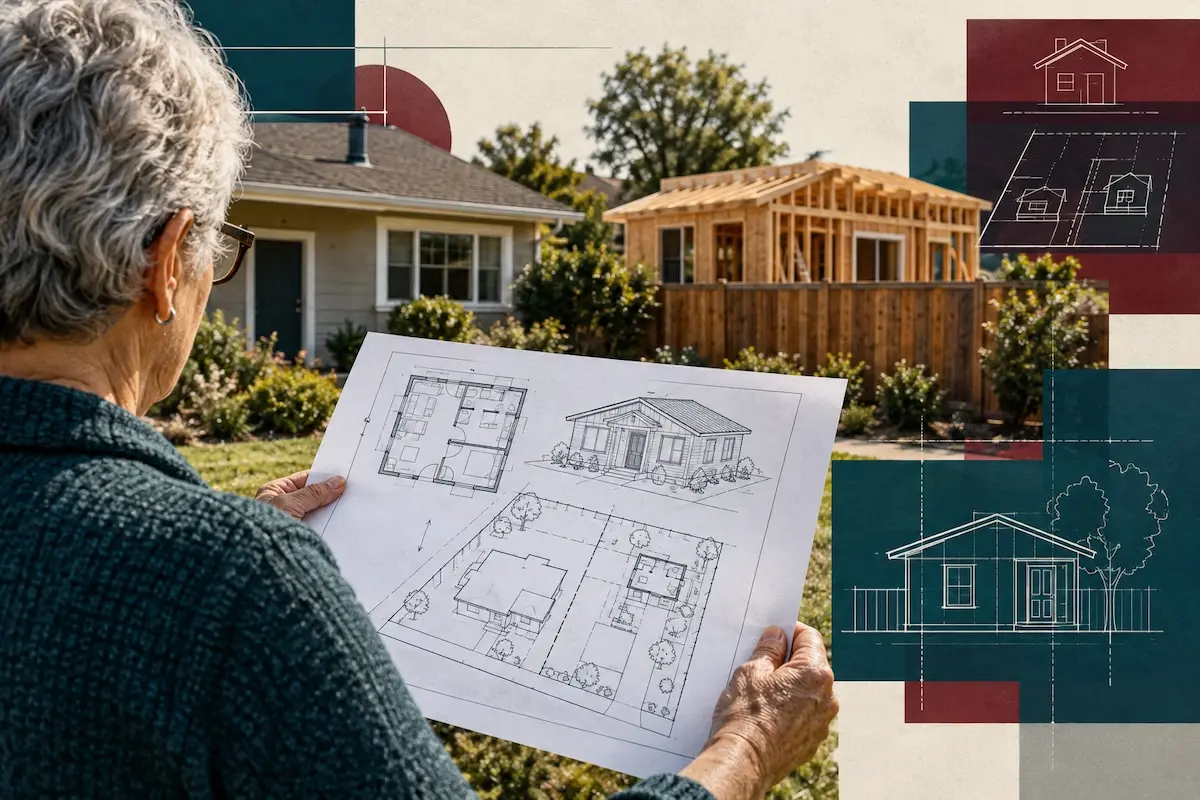
Alameda County, California, is currently developing a groundbreaking housing initiative aimed at addressing two pressing regional issues simultaneously: the severe shortage of accessible housing for families and the financial vulnerability of older homeowners living on fixed incomes. The pioneering program is designed to help seniors unlock the substantial equity tied up in their residential properties by guiding them through the complex process of building accessory dwelling units (ADUs), subdividing their land, and eventually selling their original primary residences to secure their financial futures while remaining deeply rooted in their local communities.
According to plans detailed by county officials, the proposed initiative will assist eligible older adults in financing and constructing modern ADUs directly on their existing residential parcels. Once the secondary dwelling is completed and ready for occupancy, participating seniors would move out of their larger, legacy homes and into the smaller, more manageable, and typically more accessible backyard units. Following this transition, the participants would legally divide their land into separate, independent parcels, allowing them to sell their original homes to prospective buyers on the open market.
The financial mechanics of the program are structured to provide immediate relief and long-term security. The proceeds generated from the sale of the original primary residence would be used first to fully pay off any construction loans incurred while building the ADU. Whatever funds remain after satisfying the debt would then go directly to the senior homeowner, providing a substantial cash cushion to enhance their financial stability during retirement.
Michelle Starratt, director of the Alameda County Housing Department, emphasized that the initiative offers a thoughtful and compassionate alternative to traditional displacement, giving older residents a viable path forward that allows them to age in place within the neighborhoods they call home.
Describing the core vision of the project, Starratt explained that the senior participant walks away with a smaller, right-sized living space tailored to their changing physical needs, while simultaneously creating a brand-new opportunity for another family to purchase a traditional home in a competitive housing market.
This ambitious county-level proposal does not exist in a vacuum; rather, it strategically builds upon a series of landmark legislative measures passed by the state of California in recent years to encourage higher-density housing and maximize the utility of existing residential land. Specifically, the initiative draws heavily upon Assembly Bill 68, a piece of legislation designed to significantly ease restrictive zoning laws and streamline the construction of ADUs across the state. Furthermore, the program incorporates elements of Proposition 19, which under specific conditions permits eligible older homeowners to transfer their existing property tax assessments to a newly constructed or purchased home, thereby protecting them from sudden, unaffordable tax hikes. Additionally, the initiative relies upon Senate Bill 9, a state law that provides a legal framework and streamlined mechanism for qualifying property owners to split single-family residential lots into two distinct parcels.
Despite the innovative nature of the program and its strong foundation in state housing legislation, local officials acknowledge that the proposal faces several significant potential obstacles as it moves closer to implementation.
Chief among these challenges is the deep emotional attachment many older homeowners feel toward their long-time family residences. For many seniors, the family home is not merely a financial asset, but a repository of memories and a tangible legacy that they had always hoped to pass down to their children and other heirs. Persuading homeowners to part with the original structure—even while remaining on the same plot of land in a newly built ADU—will require sensitive communication and robust educational outreach.
Furthermore, local housing officials have noted that prospective buyers of the subdivided original homes may express concerns or reservations. Buyers might worry about the social dynamics, boundaries, and expectations surrounding their close proximity and ongoing relationship with an older neighbor who previously owned the entire property and lived there for decades. Navigating these interpersonal and neighborhood relations will require careful planning and clear guidelines.
To address these legal, logistical, and practical complications, Starratt and her team are currently laying the groundwork for the program’s rollout. County officials are actively seeking an experienced program administrator who can guide participants step-by-step through the intricate processes of construction financing, zoning approvals, parcel subdivision, and real estate transactions.
Current timelines indicate that official public outreach for the initiative is scheduled to begin in early 2027. During the initial pilot phase, Alameda County aims to facilitate the successful completion of 10 ADUs under the program, with an ambitious target of scaling that number up to 50 completed units within the subsequent two years.
While the Alameda County initiative offers a novel pathway for seniors looking to monetize their property equity while downsizing, industry observers note that other financial instruments also exist to help older adults navigate housing transitions, though they often remain underutilized. Reverse mortgages, for instance, represent another potential avenue for older homeowners seeking accessible, smaller living arrangements without the burden of traditional monthly mortgage payments.
Specifically, the Federal Housing Administration-backed Home Equity Conversion Mortgage for Purchase program allows eligible seniors to utilize the net proceeds from the sale of a conventional home to purchase a brand-new, more accessible property without the requirement of making mandatory monthly mortgage payments to a lender. Proprietary reverse mortgage products offered by private financial institutions can be utilized in a remarkably similar fashion to achieve comparable goals. However, housing and financial experts frequently point out that these financial programs remain severely underused across the country, largely due to a general lack of consumer awareness and a deficiency in education among real estate professionals regarding their specific mechanics and benefits.
The need for innovative senior housing solutions is underscored by broader demographic and economic trends. According to a comprehensive 2024 survey conducted by the AARP, the vast majority of older adults strongly prefer to remain in their current homes and established communities as they grow older. Nevertheless, soaring housing costs, property taxes, and maintenance expenses remain the leading reasons why many seniors are eventually forced to move against their will. The same AARP survey revealed a striking level of interest in alternative housing solutions among older populations, noting that one in four homeowners aged 50 and older has actively considered building an accessory dwelling unit on their property to help address their changing lifestyle and financial needs.
As Alameda County continues to refine its program details and search for a qualified administrator ahead of the planned 2027 outreach launch, housing advocates and local policymakers across California will be watching closely to see whether this creative synthesis of state laws can successfully transform single-family lots into dual-purpose solutions for aging seniors and home-seeking families alike.








No comments yet. Be the first to join the conversation!