
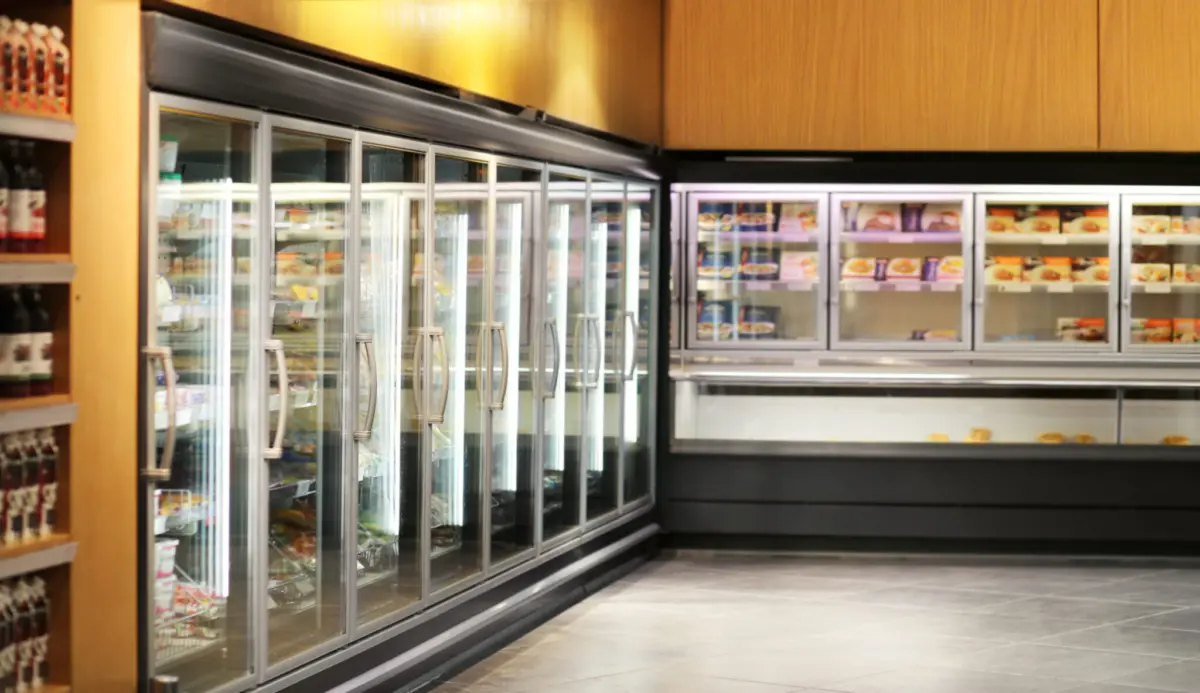
Keeping things cool is generally a foundational requirement in the modern supermarket business. From dairy and fresh produce to frozen dinners and ice cream, temperature-controlled supply chains are vital for maintaining inventory integrity and consumer safety. However, when a malicious cyberattack actively interferes with refrigeration systems, the resulting consequences can extend far beyond a few melted tubs of ice cream or spoiled frozen goods.
A recent high-profile incident affecting hundreds of supermarkets across France has thrust this vulnerability into the global spotlight. Beyond the immediate operational chaos, the attack has raised deeply complex questions regarding commercial insurance coverage, the legal mechanics of attribution, and the intricate financial hurdles of putting an exact price on multi-faceted losses in the retail sector.
What Happened?
In an incident that laid bare the persistent vulnerabilities of internet-connected operational infrastructure, unknown attackers managed to commandeer the refrigeration equipment of roughly 350 supermarkets throughout France. Operating directly through the units’ internet connections, the malicious actors systematically altered temperature settings on refrigeration machinery belonging to several major supermarket groups.
Preliminary findings indicate that hackers remotely spiked the temperatures of these commercial refrigerators. In several alarming cases, units soared to temperatures reaching up to 50 degrees Celsius, or 122 degrees Fahrenheit, occasionally sparking electrical fires. This rare and dangerous trajectory transformed a standard digital security breach into an event characterized by genuine physical loss, structural damage, and severe safety hazards.
To date, no cybercriminal syndicate, ransomware group, or hostile entity has publicly claimed responsibility for the breach, and no ransom demands have been issued to the affected retailers. Approximately 350 supermarkets across France bore the brunt of the disruption. The compromised refrigeration units relied on software and controllers developed by Danfoss, a major industrial manufacturing firm headquartered in Denmark.
Crucially, investigations revealed that many of the affected units were operating past their functional end-of-life cycle. This meant these legacy systems were no longer receiving routine software patches, security updates, or modernized firmware, leaving them exposed to external exploitation.
Intriguingly, the French incident was not isolated. A nearly identical cyber intrusion targeted a major retail operator in the Netherlands. That Dutch enterprise shares corporate connections with prominent American grocery chains, including Stop & Shop and Giant Food, signaling that the underlying vulnerabilities may extend far beyond French borders.
Which Insurance Applies: Cyber, Property, Both or Neither?
Faced with millions of dollars in potential damages, commercial policyholders and risk managers are left grappling with a thorny insurance puzzle. Is this unprecedented loss covered under traditional cyber insurance policies, standard commercial property coverage, both concurrently, or neither?
The reality of modern commercial insurance means that the answer could easily be complicated. Many commercial property insurance policies now incorporate explicit cyber exclusions, though some feature specific carve-outs for resulting fire damage. Meanwhile, the spoilage of refrigerated stock is traditionally covered only via specific policy endorsements or dedicated equipment breakdown insurance—coverages that frequently carry their own distinct cyber-related limitations and sub-limits.
To the extent that cyber insurance policies might apply, a fundamental threshold question is whether these grocers even purchased dedicated cyber coverage. Market data suggests that the uptake rate for standalone cyber insurance policies in France lags considerably behind the United States, particularly among small and medium-sized enterprises. Even within the United States, where the cyber insurance market is comparatively mature, small business adoption is estimated to hover around 50 percent, leaving a vast swath of the retail sector exposed.
Stock Losses, Business Interruption and Increased Costs
For any supermarket experiencing a sudden and dramatic refrigeration failure, the most immediate and visible consequence is the wholesale spoilage of perishable stock. However, calculating the true financial value of that damaged inventory is rarely as simple as counting the empty cartons left in the freezers.
This reality introduces a cascade of complex accounting questions for claims adjusters. Should the destroyed stock be valued strictly at the wholesale cost incurred by the grocer, or should it be evaluated at the projected retail sales price? Does the spoiled food retain any salvage value, and how can policyholders and insurers prevent a double recovery in instances where insurers are simultaneously compensating businesses for lost profits?
Establishing legitimate business interruption losses under such ambiguous circumstances can also prove remarkably challenging for insured stores, particularly because many supermarkets chose to remain open while specific departments were temporarily closed or operating at severely reduced capacity.
A consumer walking into a partially disrupted supermarket who finds themselves unable to buy frozen pizza might easily opt to purchase a fresh alternative instead, visit a competing supermarket across the street, or simply return on another day once the freezers are fully operational. Consequently, not every lost sale of frozen or refrigerated food translates into a direct euro-for-euro or dollar-for-dollar drop in net profit.
Furthermore, a reduction in gross turnover cannot simply be multiplied by a supermarket’s standard accounting gross margin to arrive at an accurate insurable loss figure. Depending on the precise wording of the insurance contract, necessary financial adjustments must be made for uninsured working expenses, savings realized on variable costs, and differences in contribution margins across diverse product categories.
Even once the physical refrigeration equipment is fully repaired and brought back online, the financial fallout often lingers. Replenishing massive inventories, restoring full product ranges, and returning to normal trading conditions takes valuable time. Simultaneously, emergency expenses such as temporary refrigeration units, expedited delivery fees, and other operational mitigation measures can dramatically inflate the ultimate financial toll.
Exclusions, Business Interruption Triggers and Attribution
Traditional cyber insurance policies frequently include strict exclusions for physical damage and bodily injury. This raises critical legal questions regarding whether such exclusions apply to the catastrophic stock loss, the structural damage caused by resulting fires, or the physical destruction of the hardware itself.
Some contemporary cyber policies feature narrow exceptions to these exclusions that restore coverage for "bricked" hardware—equipment rendered permanently unusable by a malicious digital attack. If such language is present in the affected French grocers’ policies, it might respond directly to the fried electronic controllers, even if it leaves questions about the broader refrigeration machinery.
Under U.S. legal frameworks, depending heavily on the jurisdiction and specific policy wording, this scenario might invoke doctrines such as efficient proximate cause. This legal principle forces courts to determine whether the predominant cause of the loss was the cyber intrusion, the subsequent loss of cooling, or an intervening fire. However, the policies held by the affected French grocers are governed by French law, under which contractual exclusions must be exceptionally clear, unambiguous, and limited to be legally enforceable.
The incident also sparks debate over whether the grocers’ income losses fall under direct business interruption coverage or contingent business interruption coverage. It remains publicly unclear whether this was a coordinated, potentially automated attack targeting individual refrigeration controllers installed locally at separate stores, or whether it constituted a deeper, systemic breach of the manufacturer’s central software infrastructure.
An attack localized at the store controllers would typically implicate direct business interruption coverage, whereas a breach originating within the manufacturer’s central network would present a classic contingent business interruption scenario. Early public reports offer conflicting narratives; French supermarket giant E.Leclerc has publicly attributed the massive disruption to an attack impacting one of its primary refrigeration equipment suppliers, while Danfoss has pointed toward outdated and unsupported equipment left unpatched at individual customer sites.
Under contingent business interruption frameworks, many cyber policies explicitly require a formal written contract between the policyholder and the dependent third-party business that suffered the security breach. Some policies even restrict this coverage strictly to recognized providers of information technology services. Whether an industrial refrigeration manufacturer qualifies under these definitions often depends on whether it hosts or operates the remote monitoring platforms.
Presumably, the affected grocers held valid written contracts with refrigerator manufacturers at the time of purchase, but determining whether those maintenance and service contracts remained active is another matter entirely. Danfoss has stated that most of the compromised units were legacy models no longer receiving software updates, and that the company had long advised clients to modernize their setups.
If these supermarket operators allowed their service contracts to expire or opted to operate remote systems independently without active manufacturer oversight, their insurance recovery prospects could be severely compromised. Conversely, if attackers successfully breached the manufacturer’s central infrastructure, insurers may find themselves navigating complex liability and recovery paths.
Attribution adds yet another layer of complexity. While no group has claimed responsibility, if investigators eventually attribute the attack to a foreign state-backed actor, insurers could attempt to invoke war exclusions or state-sponsored cyberattack exclusions—provisions that major reinsurance markets, such as Lloyd’s of London, have increasingly mandated in standalone cyber policies.
Separating Incident Losses from Normal Trading
One of the most intricate challenges in assessing these complex insurance claims will be accurately isolating the financial losses genuinely attributable to the cyberattack from the routine economic fluctuations of everyday supermarket retail trading. Seasonality, temporary promotional discounts, fluctuating commodity pricing, and underlying consumer sales trends all heavily influence retail turnover, regardless of whether store freezers are operating at peak efficiency.
Comprehensive forensic accounting assessments will likely require deep dives into granular point-of-sale data, departmental profit margins, historical trading patterns, and the performance of comparable, unaffected store locations. This rigorous analysis is essential to establish what the incident truly cost the business, rather than relying on simplistic valuations of lost stock or broad comparisons between financial projections and actual outcomes.
Subrogation and Recovery Against Third Parties
The financial and legal story may not conclude with the payout of an insurance claim. If official investigations establish valid legal grounds for subrogation and recovery against equipment manufacturers, third-party maintenance contractors, or technology service providers, the financial liabilities could cascade further down the commercial supply chain. The further upstream a foundational software or hardware vulnerability resides, the greater the number of businesses a future attack could compromise, and the more entities that could face costly recovery litigation as a result.
A Broader Operational Technology Problem
While some national officials have understandably characterized this event as a direct assault on France’s critical food supply chain, security experts view the attack as part of a broader, deeply concerning trend of malicious actors probing the security posture of operational technology across various industries. Across multiple sectors, operational technology systems are frequently less secure, less monitored, and more antiquated than traditional corporate information technology networks.
This systemic risk extends far beyond the supermarket aisles. Cybersecurity researchers have documented persistent concerns that critical infrastructure sectors, such as municipal water utilities in the United States, continue to operate vital systems on outdated software directly linked to the internet. These legacy industrial control systems remain highly vulnerable to the exact same style of remote manipulation that allowed hackers to alter temperature settings, demonstrating that digital threats can quickly materialize into physical dangers.
Ultimately, the French supermarket refrigeration cyberattack bridges the gap between digital vulnerability and physical reality. When malicious actors gain remote control over industrial machinery, the resulting risk transcends traditional data breaches and business interruption, threatening public health, safety, and physical infrastructure. For the insurance and retail industries alike, a clear, empirical understanding of these losses and their underlying causes will be essential to navigating future claims in an increasingly interconnected world.








No comments yet. Be the first to join the conversation!