
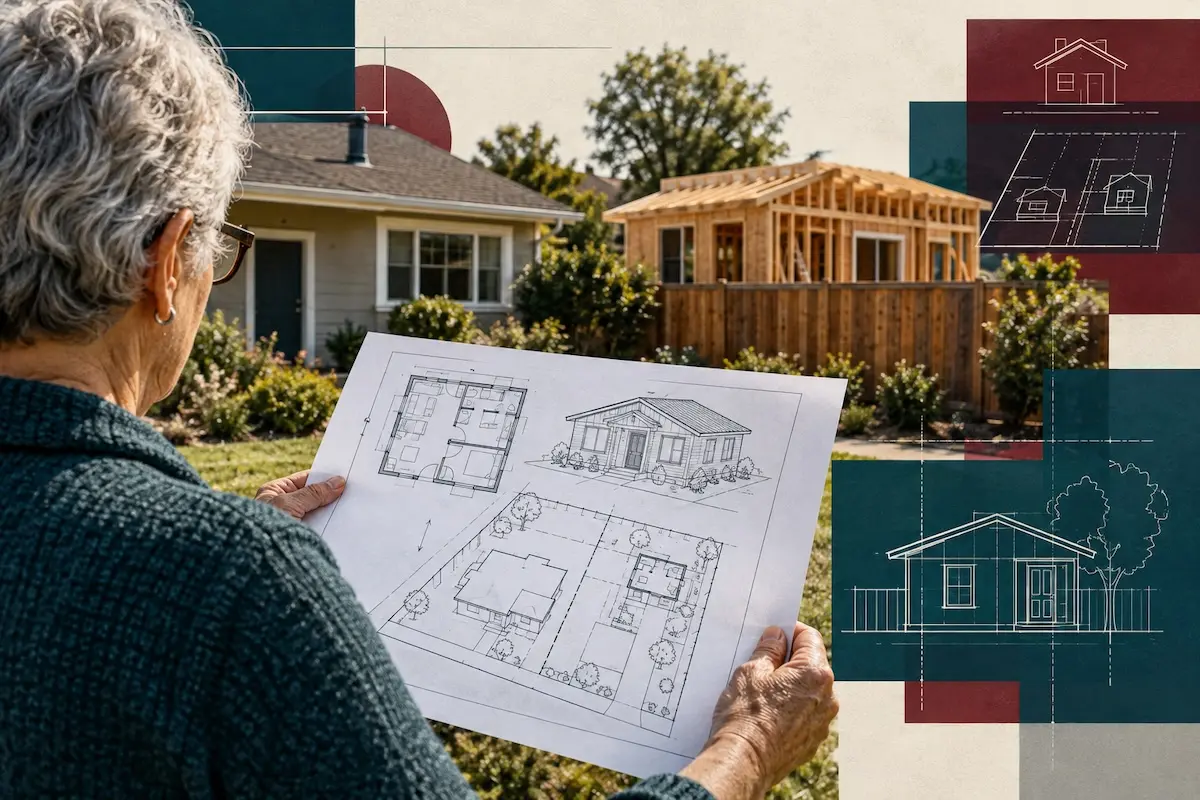
Alameda County, California, is currently in the process of developing a pioneering housing initiative aimed at assisting older homeowners on fixed incomes. The program is designed to help seniors unlock the substantial financial value tied up in their residential properties while simultaneously generating much-needed housing inventory for families searching for homes in the region.
The innovative strategy centers on helping eligible older adults finance and construct accessory dwelling units, commonly known as ADUs, directly on their existing residential parcels. Once the secondary dwelling is completed, participating seniors would transition out of their larger, original houses and move into the newly constructed, smaller residences. Following this relocation, the participants would legally divide their land into separate, independent parcels and sell off their original homes.
According to a detailed report from the San Francisco Chronicle, the proceeds generated from the sale of the primary residences could be utilized to fully repay the initial construction loans incurred to build the ADUs. Furthermore, the leftover funds would provide a vital source of additional financial security for seniors navigating the challenges of living on fixed incomes.
Michelle Starratt, the director of the Alameda County housing department, explained that the initiative offers a practical, community-oriented alternative that allows older adults to remain within the neighborhoods and social networks they have grown accustomed to over the years.
“That senior is then walking away with a smaller unit, a right-sized unit that they then can live in, hopefully more accessible, and we have created an opportunity for a new family to have a home,” Starratt told the Chronicle during an interview discussing the evolving program parameters.
Legislative Foundation and Legal Framework
The ambitious proposal does not exist in a vacuum; rather, it strategically draws upon a suite of progressive California laws designed to address the state’s severe housing affordability and availability crisis. Local housing planners have woven together pieces of state legislation to create a viable pathway for seniors looking to downsize without being forced out of their communities.
Specifically, the initiative relies heavily on Assembly Bill 68, a piece of legislation passed by state lawmakers to significantly ease regulatory and physical restrictions surrounding the construction of accessory dwelling units across California. By lowering traditional barriers, AB 68 made it much easier for property owners to add secondary structures to single-family lots.
Additionally, the county’s program incorporates elements of Proposition 19. This state proposition allows eligible homeowners, including seniors, to transfer their existing property tax assessments to a newly constructed or purchased home under certain qualifying conditions, thereby preventing older residents from facing skyrocketing property tax bills after a move.
The third critical legislative pillar supporting the Alameda County initiative is Senate Bill 9. Signed into law to encourage gentle residential density, SB 9 provides a legal mechanism for qualifying property owners to split their existing residential lots into two separate parcels, effectively opening the door for independent ownership of the newly divided land.
Navigating Potential Obstacles and Community Concerns
Despite the promising framework provided by state laws, the proposed program in Alameda County faces several potential roadblocks and practical challenges as it moves closer to implementation.
Housing officials acknowledge that some homeowners may experience deep emotional or psychological reluctance when it comes to selling their longtime family homes. Many older adults harbor a strong desire to preserve their properties as generational assets that they can eventually pass down to their children and other heirs. Parting with the primary house, even to secure financial stability and a more manageable living space, represents a major hurdle for a significant portion of the demographic.
Beyond the emotional attachment to the property, local officials highlighted potential concerns among prospective buyers. Real estate purchasers may harbor hesitations regarding the unique living arrangement and the built-in proximity to an older neighbor who also happens to be the previous owner of the land. Navigating boundaries, shared spaces, and neighborly expectations will require careful planning and clear communication.
To mitigate these legal, social, and logistical complications, Starratt noted that the county is actively working to address these issues as the program continues to take shape. County officials are currently searching for a dedicated program administrator to guide prospective participants through the intricate process from start to finish, ensuring that seniors receive adequate support at every stage of the development and property-splitting procedure.
Community outreach regarding the initiative is officially slated to begin in early 2027. During the initial rollout phase, Alameda County aims to facilitate the construction of 10 ADUs. Following the initial pilot phase, officials have set a broader target of expanding the program to support 50 completed ADUs within the subsequent two years.
Broader Context in Senior Housing and Financing
While Alameda County’s ADU initiative offers a novel localized approach, older homeowners seeking accessible, smaller living arrangements have historically explored other financial pathways, such as reverse mortgages.
The Federal Housing Administration-backed Home Equity Conversion Mortgage for Purchase program allows eligible seniors to leverage the proceeds derived from selling a home to purchase a new, more suitable property without being encumbered by mandatory monthly mortgage payments. Similarly, proprietary reverse mortgages can be utilized by older adults to achieve comparable financial objectives.
However, industry experts note that these specialized financial programs remain notably underused. Much of this hesitation stems from a general lack of awareness among consumers and real estate professionals regarding the specific benefits and protections these products offer.
Data underscores the urgency behind exploring creative housing solutions for aging populations. According to a comprehensive 2024 survey conducted by the AARP, the vast majority of older adults strongly prefer to age in place, remaining within their long-established homes and communities. Yet, rising housing costs consistently rank as the leading catalyst forcing seniors to contemplate relocation. Furthermore, the survey revealed that one in four homeowners aged 50 and older have actively considered building an accessory dwelling unit on their property to address their changing lifestyle needs.
As Alameda County refines its program administration and prepares for its 2027 outreach launch, local housing advocates and municipal leaders will be watching closely to see whether this innovative blend of state legislation and local intervention can successfully bridge the gap between senior housing security and family homeownership.









No comments yet. Be the first to join the conversation!