
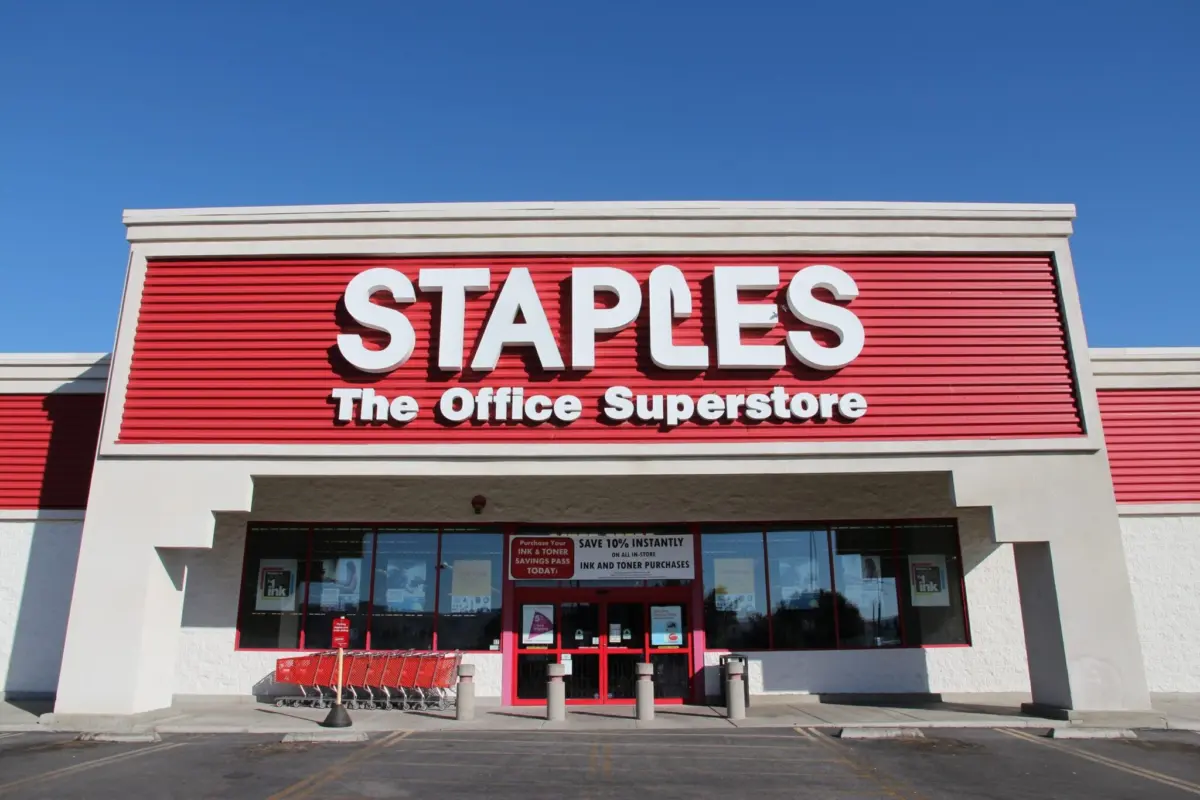
Staples Canada has officially introduced Staples Business, a newly established brand designed to consolidate office supplies, cutting-edge technology, printing solutions, and facilities services into a single, unified purchasing ecosystem for Canadian commercial clients.
Headquartered in Richmond Hill, Ontario, Staples Canada designed the new brand to radically simplify procurement and account management processes for business customers of all sizes. Operating nearly 300 retail outlets across the country—with its operations in Quebec proudly serving customers under the Bureau en Gros nameplate—the company is leveraging its decades-old footprint to address the evolving administrative and logistical burdens facing modern enterprises.
The launch of Staples Business introduces a structured, two-tier service model. The first tier is tailored specifically to smaller businesses that require streamlined, frictionless digital purchasing experiences, while the second tier caters to larger buyers who demand custom pricing structures, specialized product catalogs, and dedicated account management support. By dividing the service framework this way, Staples aims to address the distinct operational challenges that small startups face compared to enterprise-level organizations.
Why Staples Business is Launching in Canada
For more than 30 years, Staples Canada has maintained a prominent presence as a trusted retail and commercial supplier for organizations across the country. According to company leadership, the rollout of the dedicated B2B brand is a natural evolution of that long-standing commitment, arriving at a critical juncture for the Canadian economy.
"Staples Business brings everything our business customers rely on together under one brand, building on our long-standing commitment to supporting Canadian businesses for more than 30 years," said Chris Saniga, chief B2B officer at Staples Canada. "As a Canadian company, we understand the pressures organizations here are facing. Whether it’s a growing startup or a large enterprise, our goal is to take more off their plate so they can focus on what comes next."
Despite this customer-centric framing, industry analysts assessing the launch suggest that the debut of Staples Business is just as much about mounting market competition as it is about enhancing customer service. As corporate procurement shifts increasingly toward digital channels, legacy office supply retailers face continuous pressure to modernize their value propositions.
Marty Bauer, an ecommerce expert at Omnisend, an email and SMS marketing platform tailored for ecommerce brands, emphasized that the strategic pivot was a necessary defensive maneuver against aggressive market forces.
"This new branding strategy is about much more than a cosmetic rebrand," Bauer stated. "It’s an important step in defending the market against ecommerce giants, particularly Amazon Business."
What Makes Staples Canada’s Business Customer Unique?
In evaluating the strategy behind the new brand, Bauer noted that business-to-business clients possess fundamentally different expectations and operational requirements compared to regular retail shoppers who frequent Staples stores for consumer goods.
"The goal is to make supply procurement as easy and frictionless as possible," Bauer explained. "It’s as much about time and efficiency as it is about price. The new, refreshed Staples Business aims to offer exactly that."
To achieve this level of efficiency, Staples Business has successfully centralized a diverse portfolio of commercial necessities, ranging from everyday office and janitorial supplies to complex information technology hardware. By bringing these categories under one umbrella, organizations can interact with a unified administrative point of contact rather than scattering their purchasing across multiple disparate vendors.
"This means a single account manager is responsible for all of a client’s needs, which significantly lowers administrative hassle for both parties," Bauer noted.
Furthermore, Bauer pointed out that the brand’s tiered service architecture is critical because different-sized businesses require vastly different operational approaches. Small and medium-sized businesses typically place a higher premium on automated checkout systems, pricing transparency, and rapid response times. Conversely, larger enterprises expect dynamic contract pricing, custom-tailored product catalogs, and dedicated human oversight through specialized account managers.
"Staples Business is now better able to cater to these different needs," Bauer added.
How Staples Business Will Try to Compete in Canada
As the Canadian commercial supply market grows increasingly crowded, industry observers agree that a dedicated B2B brand serves as a powerful signal to the marketplace. It demonstrates that Staples Canada is aggressively prioritizing its commercial clientele and positioning itself to stand toe-to-toe with global digital marketplaces.
"They may not be able to compete in terms of pricing, but they can compete in terms of expertise and the ability to cater to clients’ specific needs," Bauer observed.
However, market observers also caution that the long-term success of Staples Business will hinge entirely on the company’s ability to execute its ambitious promises on the ground.
Rich Pleeth, founder of Finmile, an artificial intelligence-powered logistics platform, noted that a dedicated business brand can effectively help Staples Canada capture market share by clarifying its extensive service offerings to clients who may pigeonhole the retailer based on historical perceptions.
"Someone who thinks of Staples for printer paper may not think of it for IT support or facilities supplies," Pleeth stated. "Putting those services together gives the sales team a clearer story, but the customer still needs a reason to change suppliers."
Echoing Bauer’s analysis, Pleeth suggested that smaller businesses can be successfully persuaded by the prospect of reclaiming valuable time that would otherwise be wasted ordering supplies and tracking down delayed shipments. For larger corporate buyers, the advantages of consolidated invoicing, pre-negotiated pricing structures, and an accessible account manager to swiftly resolve issues can easily outweigh marginal cost savings on basic stationery items.
"The two tiers make sense because those buyers need different levels of support," Pleeth said.
At the same time, Pleeth emphasized that the structural shift introduces a significant operational test for the company. The true measure of the brand’s success will be reflected in everyday execution.
"If a business orders laptops, chairs and printed materials for a new office, can someone coordinate the delivery and resolve anything missing?" Pleeth asked, pointing to the core logistical challenge facing modern B2B suppliers. "If the customer still has to chase three departments, the brand has promised more than the operation delivers."










No comments yet. Be the first to join the conversation!