
For millions of Americans, securing health insurance through individual markets remains a daunting financial challenge, particularly for those with lower or moderate incomes. To bridge this gap, the Affordable Care Act (ACA) establishes a robust system of financial support designed to make comprehensive healthcare coverage genuinely attainable. Through sliding-scale subsidies that directly slash monthly premiums and targeted mandates requiring insurers to offer plans with reduced out-of-pocket costs, the federal framework aims to protect vulnerable consumers from catastrophic medical debt.
Understanding how these mechanisms function is critical for anyone purchasing their own health coverage through the health insurance Marketplaces, also frequently referred to as exchanges. Financial assistance provided under the ACA generally falls into two distinct categories: premium tax credits, which directly lower monthly insurance payments, and cost-sharing reductions, which minimize deductibles, copayments, and coinsurance expenses when enrollees actually utilize medical care. To take advantage of either form of relief, qualifying individuals and families must complete enrollment through an official health insurance Marketplace.
Health Insurance Marketplace Subsidies
The architecture of Marketplace financial assistance is built around easing the burden of healthcare costs at different points of service. The first primary instrument, the premium tax credit, can be applied to Marketplace plans across any of the four standard metal tiers of coverage: bronze, silver, gold, and platinum. Each tier represents a different balance between monthly premium costs and out-of-pocket financial exposure. Bronze plans characteristically feature the lowest monthly premiums but impose the highest deductibles and other cost-sharing requirements, meaning the enrollee assumes a greater share of the financial responsibility when receiving medical care. Conversely, platinum plans command the highest monthly premiums in exchange for minimal out-of-pocket expenses.
Alongside these metal-tier options, the Marketplace also offers catastrophic health plans. These specialized policies can present even lower monthly premiums and higher cost-sharing structures compared to standard bronze plans, but their availability is strictly restricted to individuals younger than 30 years old. Furthermore, consumers cannot apply premium tax credits toward the purchase of catastrophic health plans.
To receive a premium tax credit for the 2027 coverage year, a Marketplace enrollee must carefully navigate a strict set of eligibility criteria concerning household income, potential access to alternative coverage, immigration status, and non-eligibility for public programs like Medicaid.
When evaluating household income for premium tax credits, federal guidelines look to the Modified Adjusted Gross Income (MAGI) of the taxpayer, any spouse, and dependents who are legally required to file a tax return. The calculation of MAGI encompasses a broad range of revenue sources, including regular wages, salaries, foreign income, interest earnings, dividends, and Social Security disbursements.
The evaluation process also scrutinizes any job-based health insurance options available to the consumer. Employer-sponsored coverage is legally deemed affordable if the required employee premium contribution does not exceed 10.22% of household income for the 2027 coverage year. The Marketplace evaluates both the required employee contribution for self-only coverage and, where applicable, the cost of family coverage. Under provisions addressing the historical family glitch, if an employer’s self-only coverage is affordable but the required contribution for family coverage exceeds 10.22% of household income, affected dependents are permitted to purchase subsidized exchange coverage while the primary employee maintains their employer-sponsored plan.
Furthermore, employer-sponsored coverage must satisfy a rigorous minimum value standard. This federal requirement mandates that the plan provide substantial coverage for both physician services and inpatient hospital care, achieving an actuarial value of at least 60%. This benchmark signifies that the employer plan pays for an average of at least 60% of all enrollees’ combined health spending, roughly equivalent to the coverage level of a standard bronze plan. To maintain ACA compliance, the plan must also enforce annual out-of-pocket spending limits on cost sharing not exceeding $12,000 for self-only coverage and $24,000 for family coverage in 2027. Individuals who find themselves offered employer-sponsored insurance that fails to meet either the strict affordability threshold or the minimum value standards may still qualify for Marketplace subsidies, provided they satisfy all other statutory criteria.
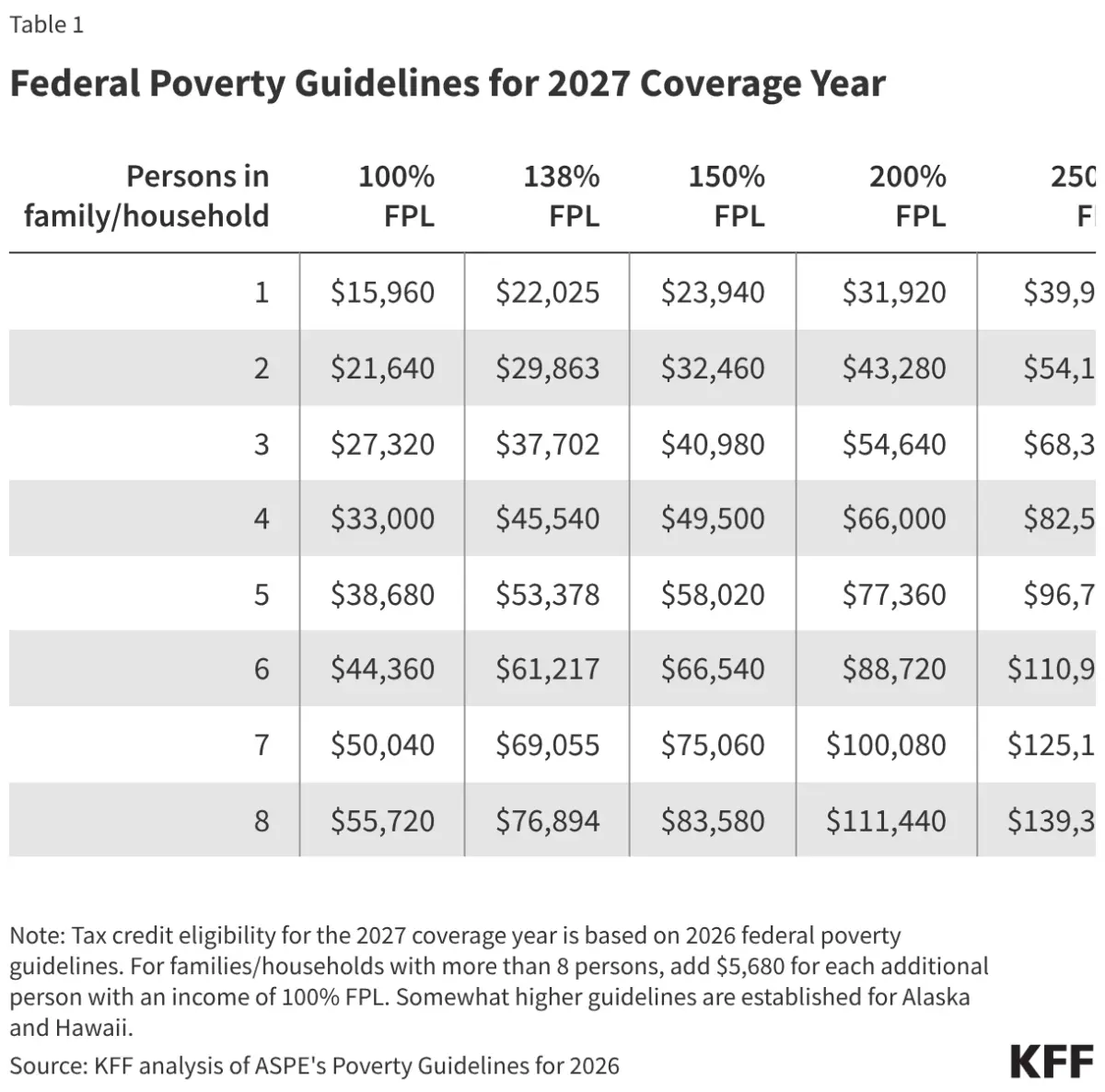
Medicaid eligibility plays another vital role in determining who can access Marketplace tax credits. In states that have chosen to expand Medicaid under the ACA, adults earning up to 138% of the federal poverty level (FPL) are generally funneled into Medicaid rather than receiving Marketplace subsidies. Conversely, in states that have opted out of the Medicaid expansion, adults with incomes as low as 100% FPL can qualify for Marketplace financial assistance. However, individuals with incomes falling below 100% FPL generally remain ineligible for tax credits or standard Medicaid unless they satisfy alternative state-specific eligibility parameters. Research and policy estimates indicate that roughly 1.2 million Americans residing in non-expansion states are trapped in this coverage gap, leaving them eligible for neither Medicaid nor Marketplace subsidies.
Immigration status also heavily dictates eligibility following adjustments stemming from federal legislative updates. Under the framework established by the 2025 federal budget reconciliation law, lawfully present low-income immigrants who are ineligible for Medicaid—often due to a residency duration of less than five years—will no longer qualify for tax credits starting with the 2026 plan year. Beginning in 2027, only individuals holding specific approved immigration statuses can qualify for Marketplace financial assistance. This qualifying group includes Lawful Permanent Residents holding Green Cards, Cuban or Haitian entrants, and Compact of Free Association (COFA) migrants. While individuals with other immigration statuses may still be permitted to purchase Marketplace coverage, they are barred from receiving premium tax credits. Non-citizens lacking an eligible immigration status, including participants in the Deferred Action for Childhood Arrivals (DACA) program, remain completely barred from enrolling in health insurance through the Marketplace, receiving tax credits, or participating in non-emergency Medicaid and Children’s Health Insurance Program (CHIP) coverage.
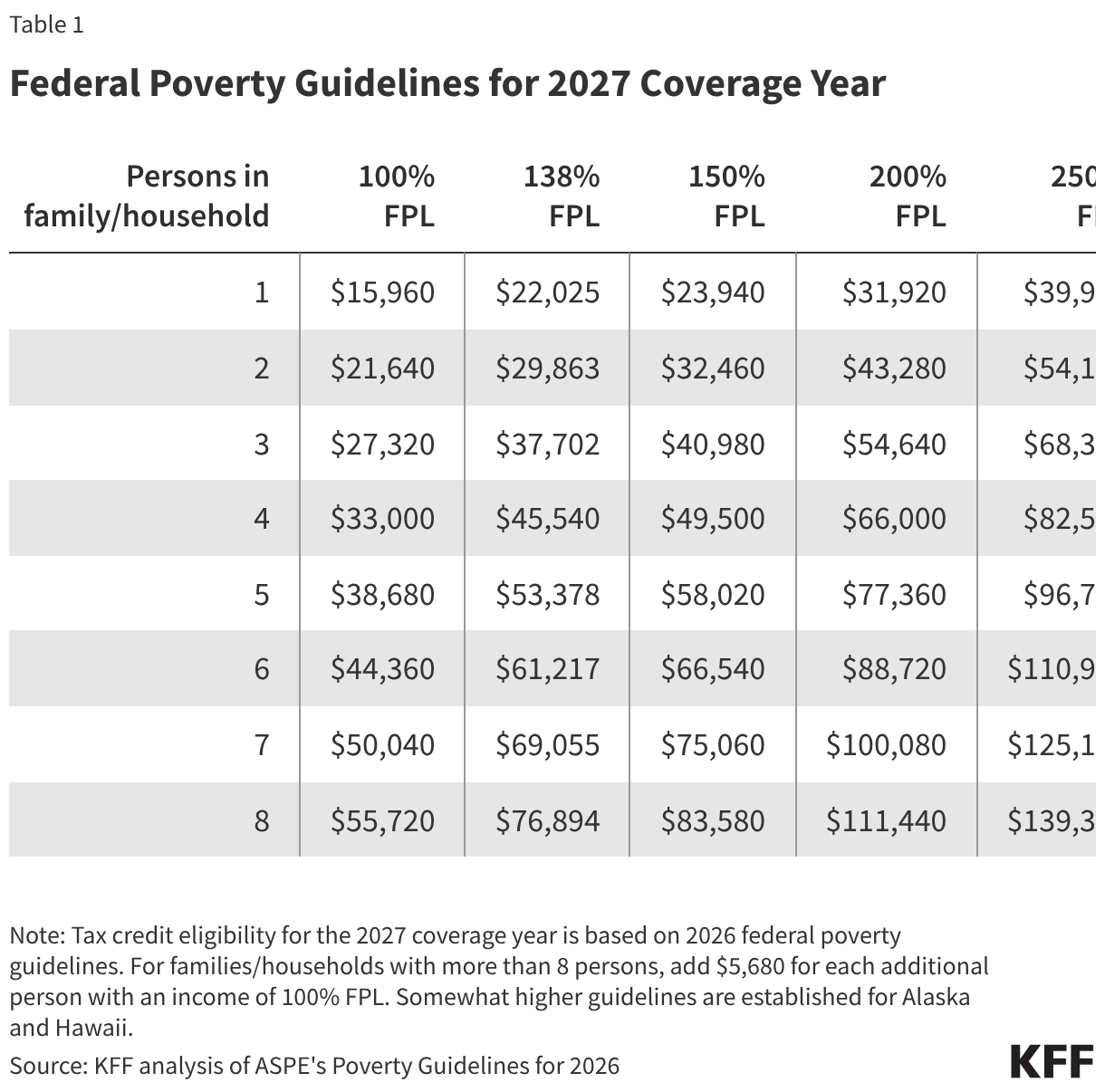
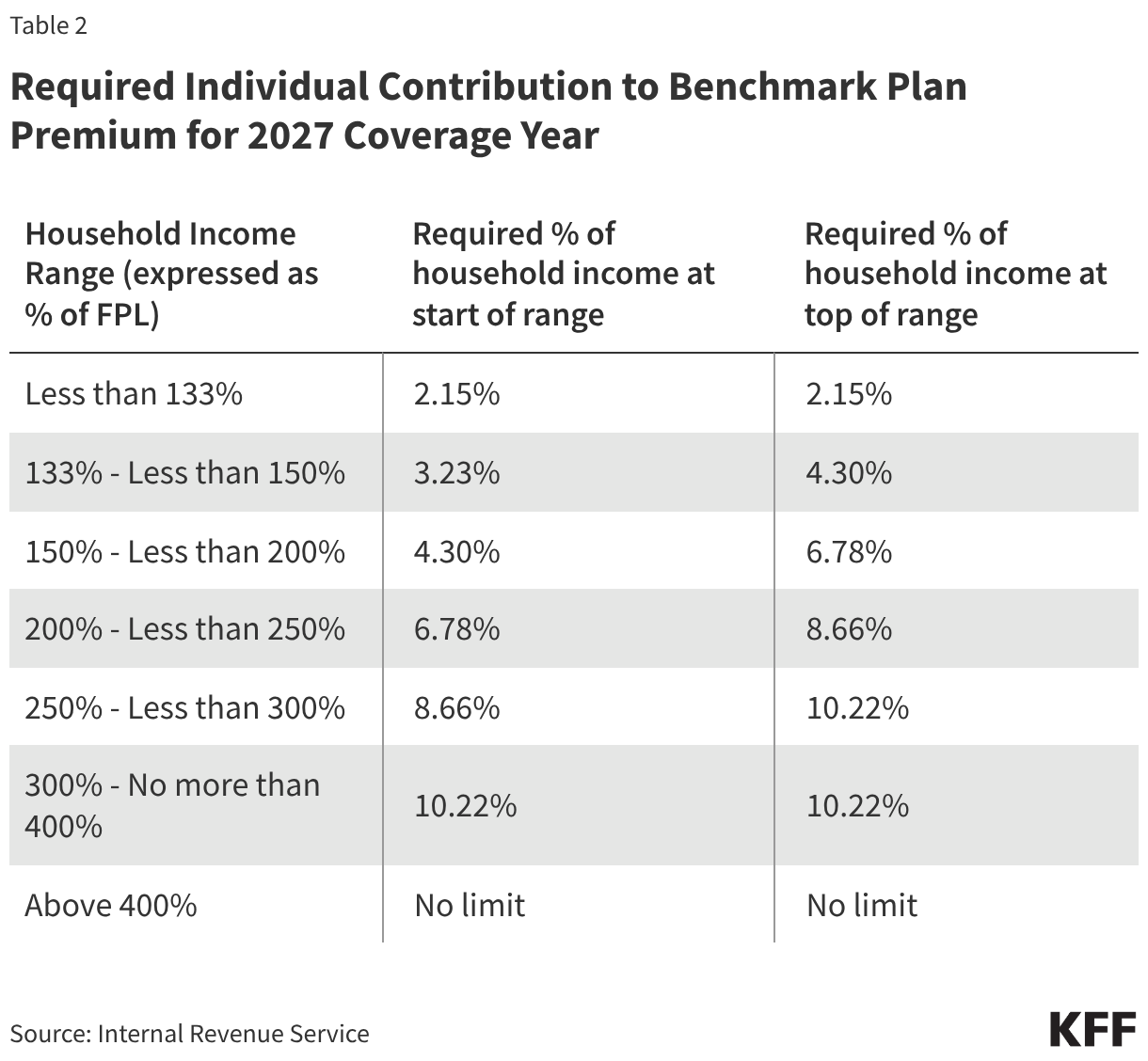
The structural calculation of premium tax credits directly limits an individual’s financial contribution toward the premium of the designated benchmark plan, which is defined as the second-lowest cost silver plan available in their specific regional Marketplace. This required individual contribution is calibrated on a progressive sliding income scale. For the 2027 coverage year, individuals with household incomes below 133% FPL face a required contribution of 2.15%, while those with incomes ranging from 300% to 400% FPL must contribute 10.22% of their household income. Consumers whose incomes exceed 400% FPL are entirely ineligible for premium tax credits.
The landscape of financial assistance experienced a significant pivot following the expiration of temporary enhanced premium tax credits at the end of 2025. Originally introduced via the American Rescue Plan Act in 2021 and subsequently extended by the Inflation Reduction Act, these enhanced credits had substantially lowered costs and expanded eligibility to higher-income earners. While those enhanced provisions were active, enrollees with incomes up to 150% FPL could access a benchmark silver plan entirely free of monthly premium payments, and the contribution level was capped at no more than 8.5% of income for higher earners. With the expiration of those enhanced credits, the strict income cap for individuals earning above 400% FPL has disappeared, exposing these consumers to the full weight of unsubsidized premiums. Market data from the immediate transition period highlighted sharp cost increases, underscoring how policy rollbacks directly impact consumer expenditures.
The ultimate dollar amount of a tax credit is derived by subtracting the individual’s mandated contribution from the actual cost of the benchmark plan. For instance, if a benchmark plan costs $6,000 annually, an individual with an income equivalent to 133% of the FPL would have a calculated contribution percentage applied to that income level, resulting in a specific annual tax credit that covers the remainder of the benchmark cost. Consumers can then apply this fixed tax credit amount toward any alternative plan sold through the Marketplace, with the sole exception of catastrophic coverage. Selecting a more expensive plan means the consumer pays the cost difference, whereas choosing a less expensive option, such as a bronze plan or the lowest-cost silver plan, allows the fixed credit to cover a greater share or even the entire monthly premium.
Certain components of a Marketplace plan premium are legally excluded from tax credit application. Subsidies cannot be applied to portions of a premium attributable to non-essential health benefits, such as adult dental coverage when sold as an extraneous benefit. Furthermore, statutory rules prohibit applying tax credits to the portion of premiums covering non-Hyde abortion benefits. Marketplace plans that cover abortion services are mandated to charge a separate $1 monthly premium to isolate the cost, meaning a consumer otherwise entitled to a fully subsidized, zero-premium policy must still remit that nominal monthly fee. Additionally, if an enrollee smokes cigarettes and faces a higher premium rate as a result, the tax credit cannot be applied to cover that tobacco surcharge.
Securing these financial benefits requires consumers to complete an application through the Marketplace detailing their age, address, household size, citizenship status, and estimated income for the upcoming coverage year. Upon submission, applicants receive a formal determination outlining the precise amount of premium tax credit for which they qualify. Consumers then choose whether to have the tax credit paid in advance directly to their insurer or claimed later when filing their annual tax return.
The advance premium tax credit (APTC) mechanism allows one-twelfth of the approved credit to be sent directly to the insurer each month, substantially lowering the immediate out-of-pocket payment required from the consumer. Because this advance determination relies on projected income estimates, enrollees are legally required to reconcile their APTC when filing taxes the following year. If a consumer underestimated their income upon application, they must repay excess subsidies. Under stricter statutory rules enacted via the 2025 federal budget reconciliation legislation, repayment caps have been eliminated, requiring consumers who underestimate their income to repay the entirety of any excess APTC paid on their behalf. Alternatively, consumers can choose to pay their full monthly premiums out-of-pocket and wait to receive their tax credit as a refundable lump sum upon filing their annual tax return, though this option remains financially out of reach for the vast majority of Marketplace participants.
Cost-Sharing Reductions
Beyond premium tax credits, the ACA provides a secondary layer of financial assistance known as cost-sharing reductions (CSR). These reductions are engineered to directly lower an enrollee’s out-of-pocket financial exposure—including deductibles, copayments, and coinsurance—at the exact moment they utilize covered healthcare services.
Eligibility for cost-sharing reductions is restricted to individuals who already qualify for premium tax credits and maintain household incomes ranging between 100% and 250% of the federal poverty level. Unlike premium tax credits, which can be flexibly applied across any metal tier of coverage, cost-sharing reductions are exclusively tied to silver-level plans. For qualifying consumers, the application of a CSR transforms a standard silver plan so that its structural deductibles and cost-sharing parameters closely mirror those found in much higher-tier gold or platinum plans. While individuals within the qualifying income band remain free to apply their premium tax credits to any metal tier, they forfeit access to reduced cost sharing unless they actively select a silver-level policy.
The scale of cost-sharing reductions operates progressively based on household income. The most generous modifications are reserved for enrollees earning between 100% and 150% FPL, often designated as CSR 94 plans due to their elevated actuarial value of 94%. These adjustments drastically compress deductibles and copays compared to standard silver offerings. Slightly less generous modifications are available for individuals with incomes above 150% and up to 200% FPL, creating CSR 87 plans that achieve an 87% actuarial value. For those earning between 200% and 250% FPL, reductions modestly adjust deductibles to an actuarial value of 73%, forming CSR 73 plans. Insurers retain a degree of operational flexibility in arranging specific copays and deductibles to meet these statutory actuarial benchmarks.
To round out consumer protections, the ACA enforces strict maximum annual out-of-pocket spending limits across all Marketplace plans, with purposefully reduced ceilings mandated for cost-sharing reduction configurations. These maximum limits ensure that even individuals facing severe medical events are shielded from limitless financial liability, reinforcing the foundational objective of the federal healthcare marketplace system as coverage options evolve for the future.








No comments yet. Be the first to join the conversation!