
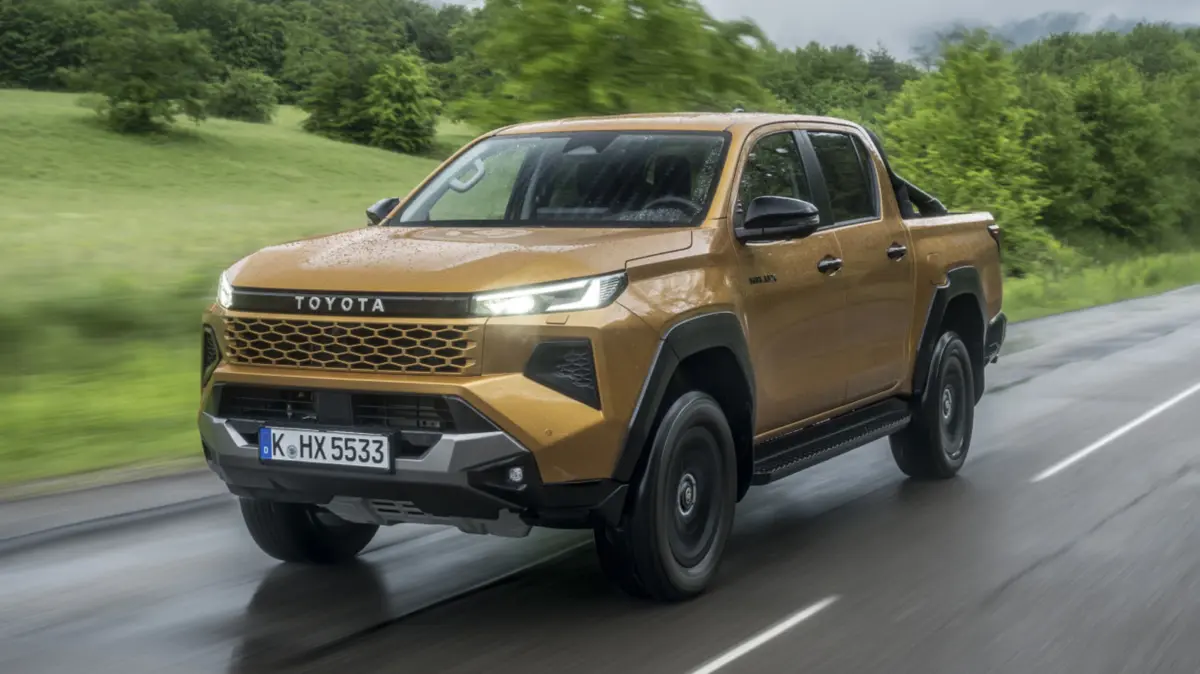
When automotive enthusiasts discuss legendary durability and bulletproof reliability, few brands command the universal respect enjoyed by Toyota. Within the Japanese automaker’s vast and storied global lineup sits a midsize pickup truck that, despite being virtually unknown to the average American car buyer on a first-hand basis, commands an almost mythical status across the rest of the planet: the Toyota Hilux.
For decades, the Hilux has forged a reputation not merely as a working vehicle, but as a mechanical marvel capable of defying the harshest elements known to humanity. While the American market has long embraced rugged utility vehicles, the Hilux has remained resolutely absent from domestic dealership showrooms since the mid-1990s. Understanding this truck requires examining its storied history, its baptism by fire on global television and actual battlefields, and the complex economic and regulatory reasons—ranging from protectionist trade policies to internal brand strategy—that keep it away from U.S. shores.
The Anatomy of an Indestructible Legend
It is virtually impossible to discuss the cultural footprint of the Toyota Hilux without referencing the legendary television experiments conducted by the British motoring show Top Gear. In a multi-part special that cemented itself in automotive pop culture history, the program subjected a tired, high-mileage diesel Hilux to an escalating series of catastrophic tortures designed to test the absolute limits of mechanical endurance.
The vehicle was driven down stairs, smashed into a tree, submerged in the salty tide of the Bristol Channel to be battered by waves for hours, and even placed on top of a multi-story residential building that was subsequently demolished with explosives. Despite enduring these grueling trials, the truck stubbornly refused to yield to permanent destruction. With the assistance of only a basic set of hand tools and a minimal amount of mechanical sympathy, the workshop crew was able to coax the engine back to life after each ordeal, cementing the Hilux moniker as a global synonym for indestructibility.
The television exploits did not stop in a British television workshop. Viewers watched as presenter James May drove a similarly equipped Hilux up the crumbling slopes of an active volcano. That exact vehicle was later utilized by the camera crew during the famously punishing Polar Special expedition, where May accompanied co-host Jeremy Clarkson on an arduous trek across the frozen expanse of the Arctic to reach the magnetic North Pole—again relying entirely on the rugged capability of the Toyota pickup.
Beyond the realm of entertainment, the Hilux has earned its stripes as a remarkably dependable companion in actual conflict zones. The vehicle is inextricably linked to the historical conflict known as the "Toyota War," which unfolded across the harsh expanses of the Saharan desert in the mid-1980s. During this territorial dispute between Chad and Libya, the military forces of Chad deployed large fleets of modified Hilux pickups outfitted with weaponry. The tactical mobility, speed, and sheer resilience of the trucks allowed the smaller Chadian forces to outmaneuver and decisively defeat heavily armored opposing columns, showcasing the chassis’s uncanny ability to withstand combat conditions.
Civilian utility in extreme climates has been equally vital to the truck’s legendary status. In Australia, a continent defined by its punishing outback terrain, blistering heat, and unforgiving driving conditions, the Hilux enjoys an intensely loyal following. Over the past decade alone, Toyota managed to shift well over half a million units of the truck in Australia, driving it to the top of the sales charts and making it the country’s single best-selling vehicle throughout that extended period.
Synthesizing all these elements—a robust ladder-frame chassis, mechanical simplicity that allows for field repairs, Toyota’s broader reputation for reliability, and a string of high-profile endurance demonstrations—creates the foundation of the Hilux legend. It is a vehicle engineered to thrive in environments where modern, heavily computerized alternatives would inevitably falter.
Why Isn’t the Hilux Sold in the U.S.?
The sheer scale of the Hilux global footprint makes its conspicuous absence from the United States market all the more striking. Toyota currently distributes the Hilux in more than 190 countries and sovereign regions worldwide. To put that global reach into proper perspective, geopolitical consensus recognizes between 193 and 237 countries globally, depending on how disputed territories and partially sovereign regions are classified. This means Toyota ships the Hilux to virtually every corner of the earth, save for a few notable exceptions, with the United States chief among them.
The situation becomes even more nuanced when considering historical context. The Hilux was, in fact, sold in the United States for many years, though it was primarily marketed under the simple, utilitarian "Toyota Truck" moniker rather than its global nameplate. That chapter came to a close in 1995 when Toyota decided to phase out the compact truck to make room for a new, purpose-built vehicle tailored specifically for North American tastes: the Toyota Tacoma.
From the perspective of corporate product planning, the Tacoma—featuring a slightly larger footprint, distinct styling cues, and powertrain options better suited to American highway speeds and consumer expectations—was deemed a superior fit for domestic buyers. As consumer preferences in the U.S. shifted away from traditional compact utility toward larger, more comfortable midsize and full-size trucks, the Tacoma cemented its place, leaving little business justification to reintroduce the Hilux alongside it.
Beyond internal portfolio management and brand positioning, significant regulatory and economic hurdles stand in the way of the Hilux returning to America. Chief among them is the enduring legacy of the "Chicken Tax." Enacted in 1963 as a retaliatory tariff in response to European tariffs on American poultry imports, this protectionist measure levies a hefty 25 percent tax on light trucks imported into the United States.
If Toyota were to consider bringing the latest ninth-generation Hilux to U.S. showrooms, the company would be forced to absorb or pass along the immense financial burden of this tariff. Furthermore, importing the vehicle would create direct, internal competition with the locally manufactured Tacoma, cannibalizing market share for a truck that has spent decades cultivating a dedicated domestic following. To circumvent the tariff entirely, Toyota would need to invest heavily in local assembly lines within the United States or establish production facilities in neighboring nations like Mexico or Canada, where trade agreements might afford preferential tariff treatment. However, such a logistical pivot makes little economic sense given that the Hilux is already efficiently manufactured at numerous global hubs, including Argentina, Venezuela, India, Pakistan, Thailand, and several other strategic locations across Asia and Africa.
Meanwhile, evolving market demands suggest that Toyota’s focus for smaller utility vehicles in North America lies elsewhere. Industry reports indicate that the automaker is actively developing a compact pickup truck expected to utilize a passenger car platform derived from the popular Corolla. According to automotive reporting from publications like Car and Driver, this upcoming compact unibody truck could potentially revive a historic moniker like the Stout or simply launch under a straightforward designation such as the Corolla Pickup.
While concrete details regarding specifications and release timelines remain scarce, the likelihood of a smaller, car-based unibody truck capturing the compact vehicle segment in the United States is significantly higher than the legendary, ladder-frame Hilux ever crossing the Pacific to reclaim a space in American driveways. For now, the undisputed king of global durability will continue to conquer the roads, trails, and work sites of the rest of the world, remaining an object of fascination for American enthusiasts who can only look on from afar.







No comments yet. Be the first to join the conversation!