

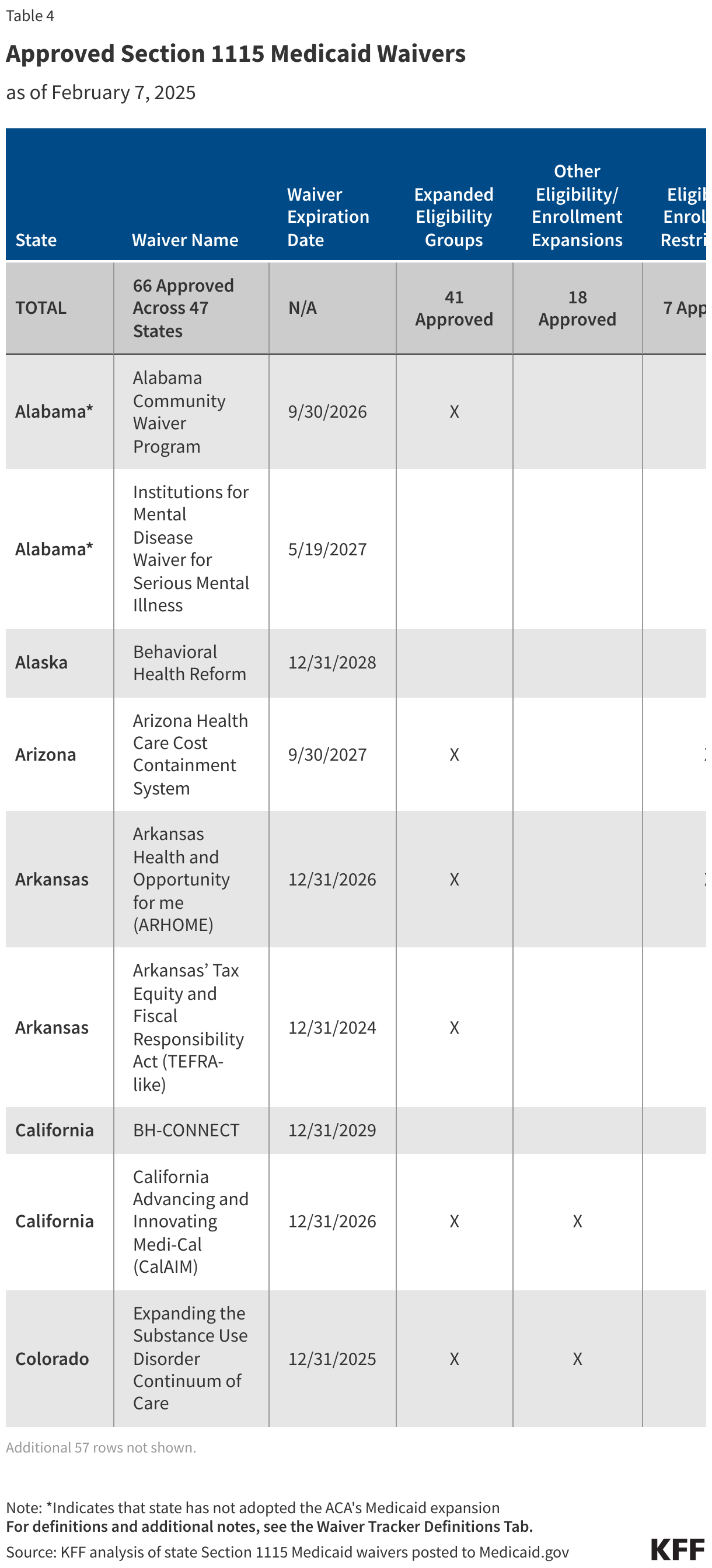
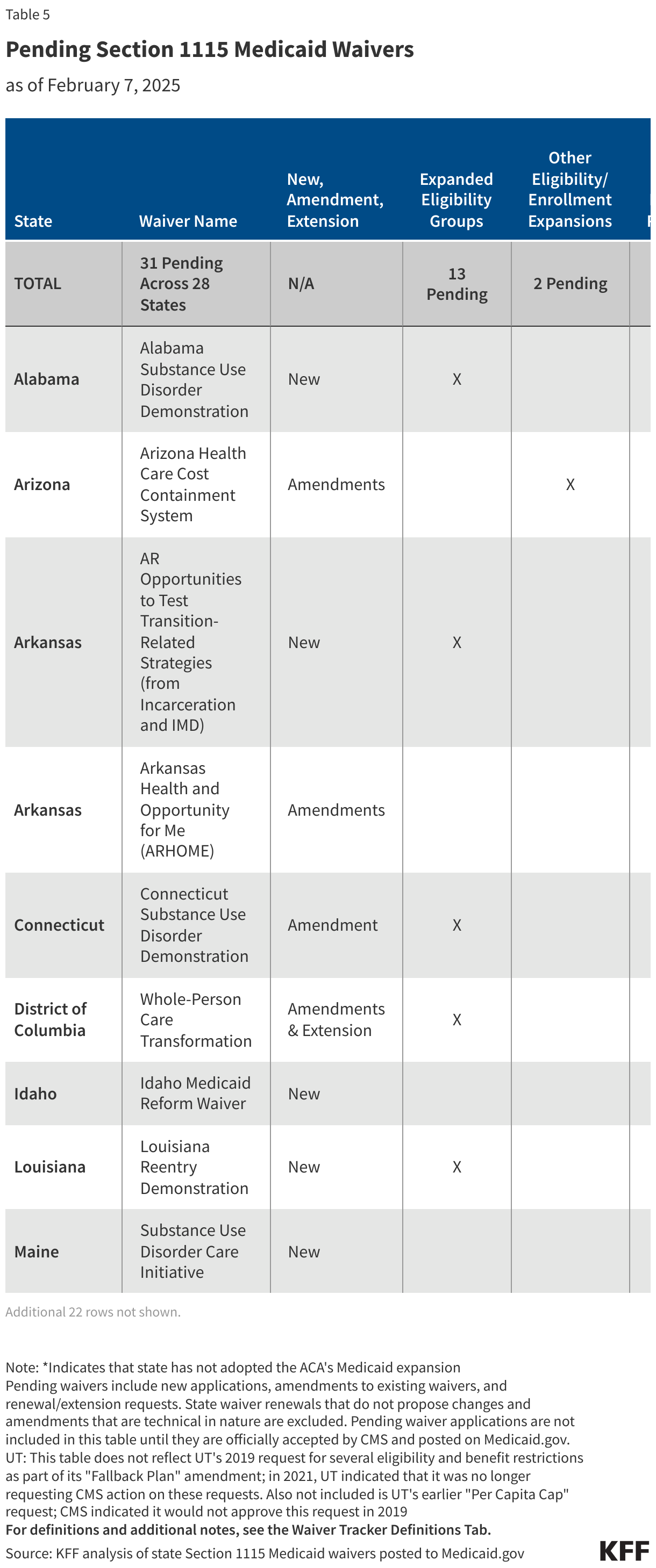
As states continue to shape the landscape of their healthcare systems, Section 1115 Medicaid demonstration waivers remain one of the most dynamic tools available to state policymakers. These waivers offer states an avenue to test innovative approaches in Medicaid that differ significantly from what is strictly required by federal statute. According to federal guidelines, such experimental approaches must, in the view of the Health and Human Services (HHS) Secretary, promote the core objectives of the Medicaid program. By utilizing this mechanism, states can secure additional flexibility in how they operate their programs, going well beyond the considerable latitude already permitted under current law.
Nearly all states maintain at least one active Section 1115 waiver, with several managing multiple concurrent waivers to address targeted populations, service delivery models, or financing structures. Historically, these waivers reflect both the specific priorities identified by individual states and the evolving policy agendas of shifting presidential administrations. As tracking data demonstrates, approved and pending waiver provisions span critical areas such as eligibility criteria, expanded or restricted benefits, social determinants of health, and broader delivery system reforms.
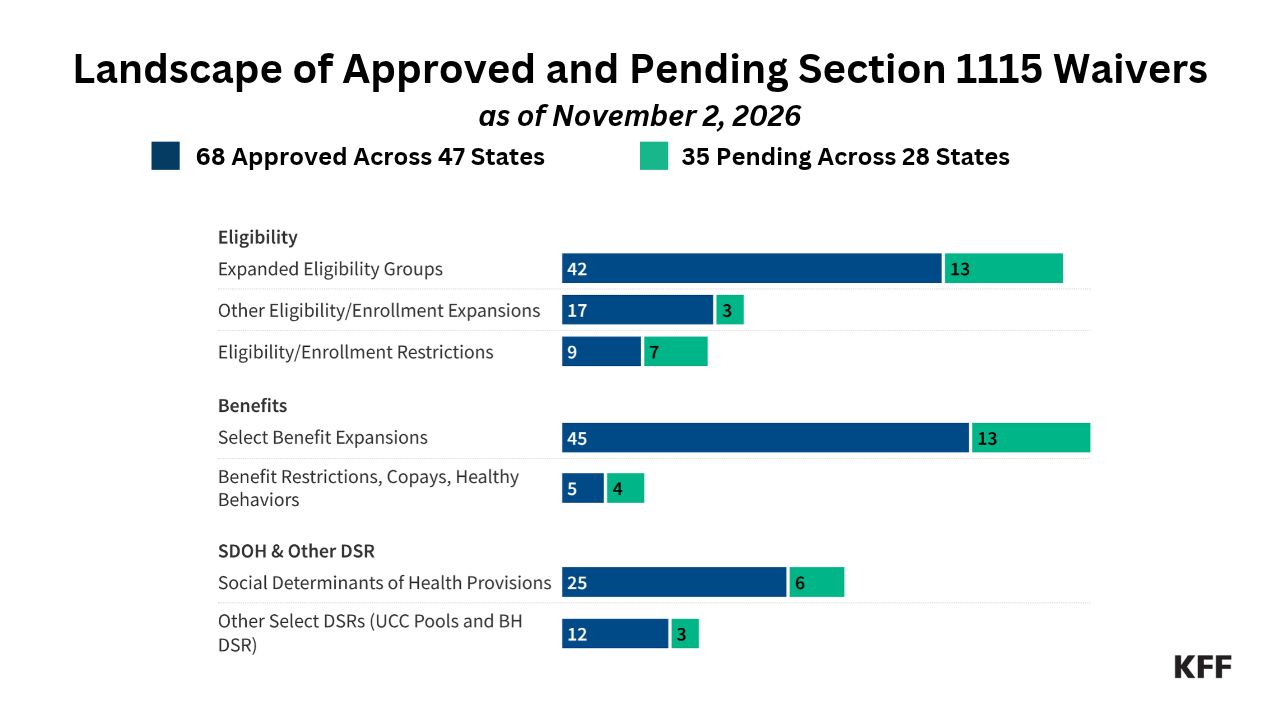
Waivers with Eligibility Changes
Eligibility policy under Section 1115 waivers has long served as a primary battleground for federal and state policy shifts. States frequently request authority to alter eligibility rules, introduce enrollment fees, modify retroactive coverage windows, or implement new pre-conditions for coverage. Over the years, administrations have taken starkly contrasting approaches to these requests. For instance, previous initiatives under the Biden administration sought to withdraw or phase out Medicaid premium requirements previously approved under Section 1115 authority in states such as Arkansas, Michigan, Montana, and Wisconsin. Conversely, upcoming federal statutory changes are slated to introduce mandatory work requirements for Affordable Care Act (ACA) expansion adults alongside shortened retroactive eligibility windows.
Under the 2025 tax and spending legislation, significant structural adjustments are on the horizon. Beginning January 1, 2027, retroactive Medicaid coverage will be limited to one month prior to application for ACA expansion enrollees and two months prior to application for traditional enrollees, a departure from the traditional three-month window. Furthermore, beginning January 2027, all states will be federally required to condition Medicaid eligibility for ACA expansion adults on meeting specific work requirements. While federal legislation mandates these pathways, states have also pursued individual adjustments. For example, Maryland has historically waived retroactive eligibility for an optional coverage group of targeted low-income children, and Utah has similarly waived retroactive coverage for demonstration enrollees receiving premium subsidies for employer-sponsored insurance or COBRA coverage.
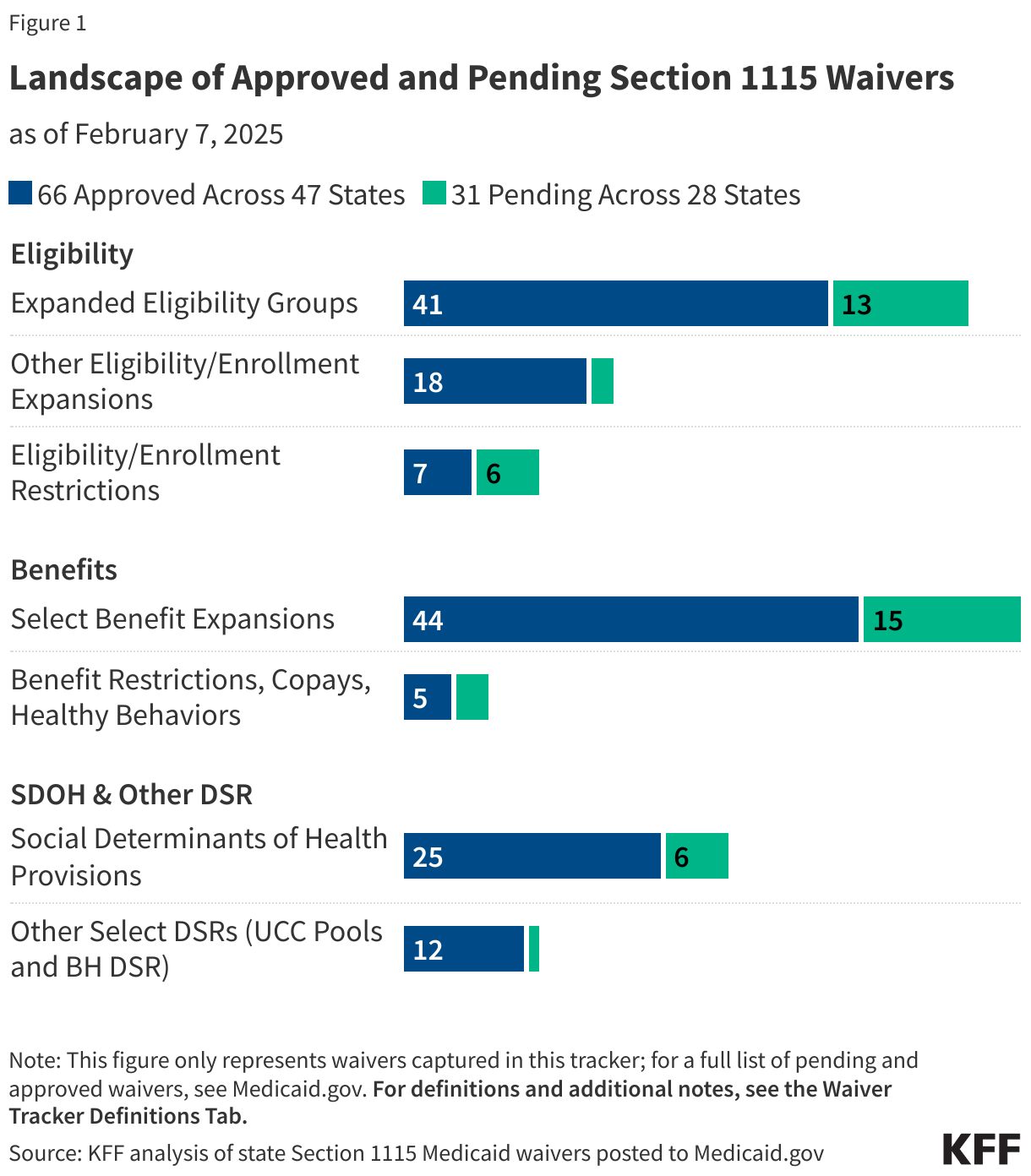
State-level litigation has also played a critical role in shaping eligibility rules. In Indiana, a notable legal development unfolded when a U.S. District Court decision vacated the federal approval for the state’s "Healthy Indiana Plan 2.0" waiver. This judicial ruling removed Indiana’s authority to charge premiums beyond standard federal limits, waive retroactive eligibility, and waive the provision of non-emergency medical transportation. Although the Indiana Family and Social Services Administration appealed the ruling to the D.C. Circuit Court, the case highlights the volatile legal environment surrounding state-specific eligibility flexibilities. Beyond general adult expansion groups, states continue to pursue targeted eligibility expansions focused on specialized populations, including individuals with behavioral health needs, home and community-based services recipients, justice-involved populations preparing for community reentry, postpartum individuals, and children or young adults.
Waivers with Benefit Changes
Beyond eligibility modifications, Section 1115 waivers enable states to experiment with benefit packages, introducing targeted expansions alongside specific restrictions, copayments, or healthy behavior incentives. Benefit expansions frequently focus on addressing critical gaps in care, such as providing enhanced substance use disorder treatment, specialized pediatric services, or comprehensive postpartum care extensions. At the same time, some states have explored or maintained provisions related to benefit limitations, specialized copay structures, or programs tying certain incentives to healthy behaviors.
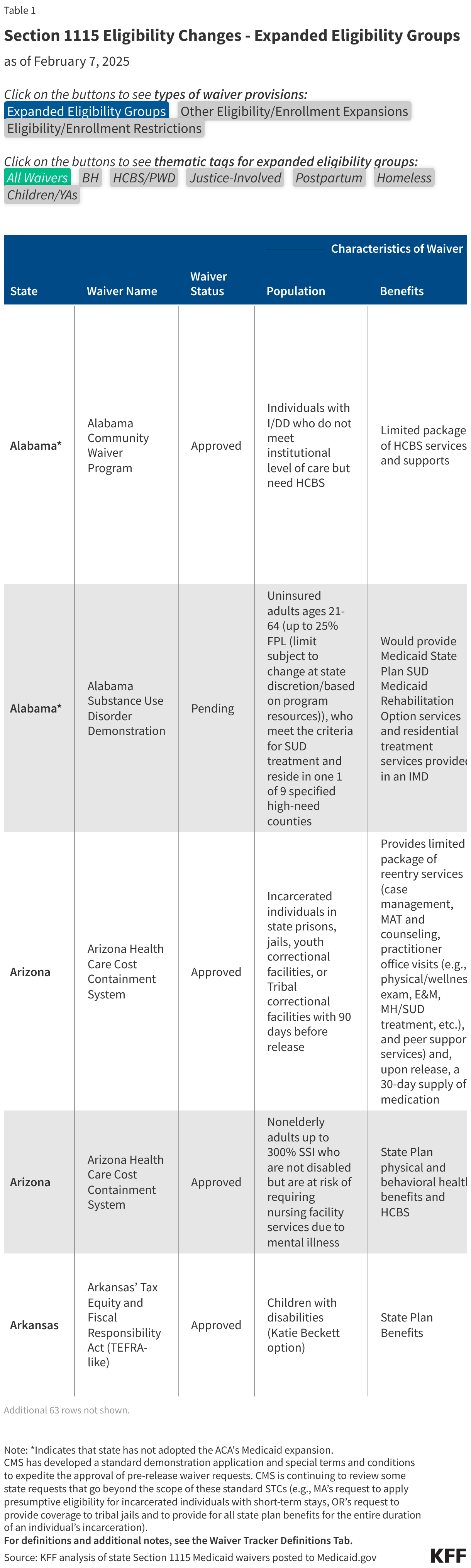
State proposals in this arena frequently fluctuate depending on local policy goals and federal negotiations. For instance, states like Georgia have revisited their structural proposals during waiver extension requests, seeking to modify or remove specific healthy behavior incentives previously built into their program frameworks. These adjustments illustrate the ongoing balancing act states face as they attempt to design cost-effective benefit packages while complying with overarching federal statutory requirements and administrative guidance.
Waivers with Social Determinants of Health and Delivery System Reforms
Social determinants of health—encompassing the non-medical conditions in which people are born, grow, live, work, and age, such as housing stability, food security, and transportation—have emerged as a major focus of Section 1115 demonstration projects. In recent years, federal agencies created frameworks allowing states to address health-related social needs through targeted services funded via Medicaid. These initiatives allowed states to direct resources toward housing supports, nutritional assistance, and case management for vulnerable populations.
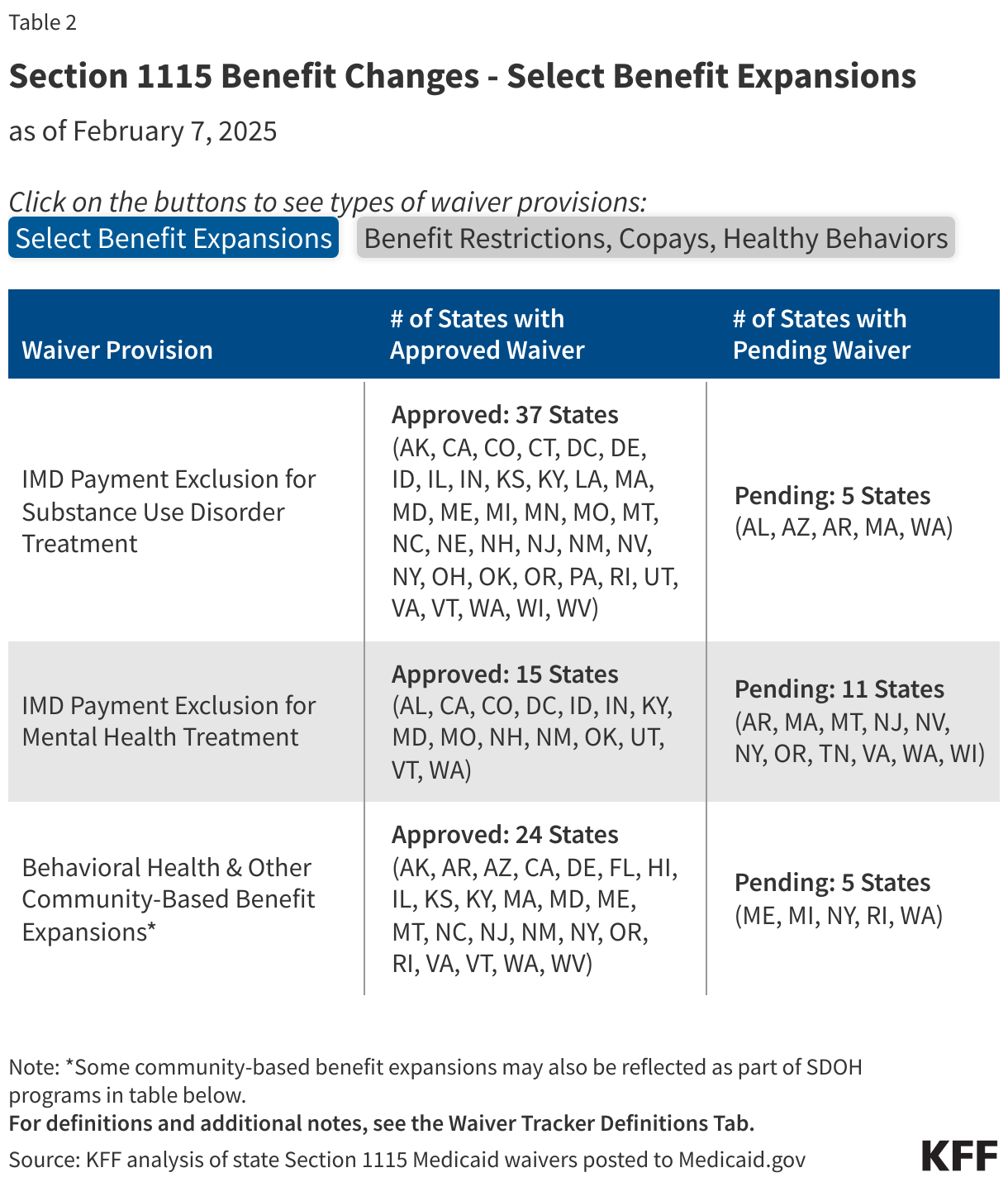
However, federal policy regarding these initiatives has experienced notable shifts. Guidance surrounding health-related social needs has been subject to administrative review and revision. While existing approvals remain valid, federal oversight agencies have indicated that new applications or extensions involving specific social determinant frameworks or designated state health programs will be evaluated carefully on a case-by-case basis as priorities evolve. In addition to direct service provisions, many states have historically requested infrastructure and capacity-building funds to support the implementation and delivery of these complex new services, aiming to modernize their delivery systems and improve long-term health outcomes.
Work Requirements and Early Implementation Strategies
The intersection of federal legislation and state-level implementation has brought work requirements to the forefront of Medicaid policy discussions. The reconciliation legislation enacted in 2025 mandates that states condition Medicaid eligibility for adults in the ACA expansion group on meeting work requirements starting January 1, 2027. However, the law provides states with the option to implement these requirements earlier through state plan amendments or approved Section 1115 waivers.

Several states have moved quickly to leverage early implementation pathways. Nebraska announced plans to enforce federal work requirements early through a state plan amendment, setting an effective date of May 1, 2026. Additional states have scheduled early rollouts, with Montana planning an implementation date of July 1, 2026, and Iowa targeting December 1, 2026. Meanwhile, Arkansas announced intentions to launch a soft implementation of work requirements in mid-2026 without officially disenrolling individuals prior to the mandatory federal start date in January 2027.
While multiple states submitted 1115 waiver proposals related to work requirements following changes in federal administration, the passage of overarching federal legislation has largely steered states toward utilizing state plan amendments for early adoption. Georgia remains a prominent example, maintaining an active Medicaid work requirement waiver following extensive litigation over federal administrative actions. Georgia’s waiver is scheduled to expire at the end of December 2026, at which point the state will transition into full compliance with the nationwide federal requirements taking effect at the start of 2027.
Key Themes: Incarcerated Reentry and Continuous Eligibility
State utilization of Section 1115 waivers has also centered heavily on targeted transitions and coverage stability. A prominent area of bipartisan interest involves pre-release coverage for individuals who are incarcerated. Under guidance issued to encourage state innovation, numerous states pursued demonstration opportunities to partially waive the longstanding federal inmate exclusion policy. This policy historically prohibited Medicaid from paying for healthcare services provided during incarceration, save for certain inpatient care.
By securing pre-release waivers, states aim to establish a bridge for individuals preparing for community reentry. These transition-related strategies are designed to ensure continuity of health coverage, reduce disruptions in chronic and behavioral healthcare, improve overall health outcomes, and ultimately lower recidivism rates upon release. Both Republican and Democratic governors have pursued these applications, leading to widespread adoption of pre-release frameworks across the country, supplemented by ongoing federal reviews and updated transition guidelines.
Similarly, coverage stability for children has been a focal point of state waiver activity. The Consolidated Appropriations Act of 2023 required all states to implement 12-month continuous eligibility for children beginning in January 2024. Prior to and alongside this mandate, several states secured Section 1115 approval to test multi-year continuous eligibility models, such as maintaining coverage for children from birth up to age six. Research has consistently demonstrated that continuous eligibility policies successfully reduce coverage churn—the phenomenon where individuals temporarily lose Medicaid coverage and subsequently re-enroll after a short gap.
Despite the proven benefits of reducing enrollment disruptions, federal administrative guidance has shifted regarding the expansion or extension of multi-year continuous eligibility waivers. Federal oversight bodies have signaled that future approvals or extensions for extended continuous eligibility demonstration projects will face stricter limitations, prompting states to reevaluate their long-term enrollment strategies. As federal and state priorities continue to intersect, the future trajectory of Section 1115 waivers will remain a central component of the nation’s healthcare policy evolution.









No comments yet. Be the first to join the conversation!