
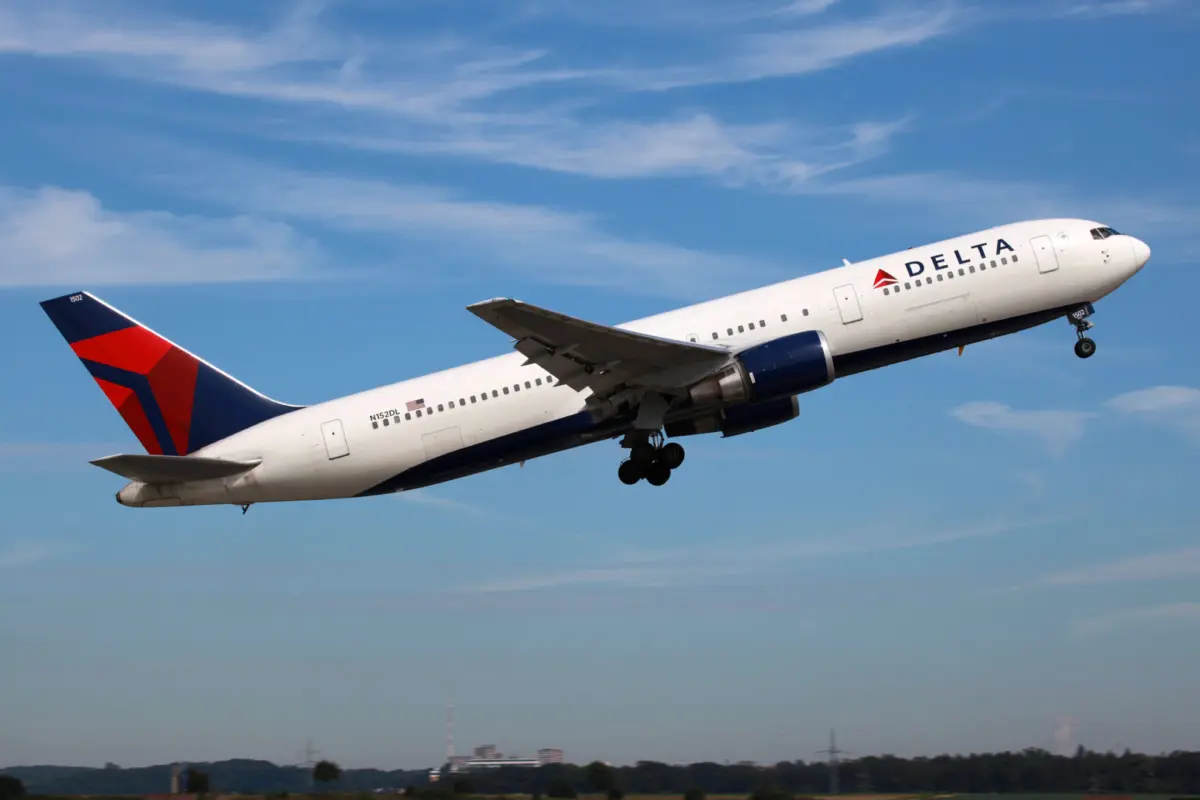
action lawsuit brought by passengers who paid extra money to secure window seats, only to find themselves seated next to windowless blank walls.
US District Judge Ramon Reyes, sitting in Brooklyn, ruled on Wednesday that there is a genuine and reasonable dispute over whether Delta’s contract of carriage requires the carrier to provide actual window seats to customers who pay for them. The airline’s standard contract states that the carrier "does not offer tickets or contracts to customers that guarantee particular seats." However, the court found that this general disclaimer does not automatically absolve the airline when a customer specifically pays a premium for a window seat feature that turns out to be entirely absent.
Judge Reyes did not decide the underlying merits of the lawsuit at this stage of the litigation. The ruling simply allows the case to move forward toward discovery and potential trial. This decision closely mirrors a similar legal development in July, when a federal judge in San Francisco rejected a bid by United Airlines to dismiss a nearly identical class-action lawsuit filed by passengers facing the same issue.
Representatives for Delta declined to comment on Thursday regarding the Brooklyn federal court’s decision, maintaining the company’s standard corporate policy of not discussing pending litigation in public forums.
Meanwhile, Casey Olbrantz, an attorney representing the four primary Delta plaintiffs in the lawsuit, welcomed the federal judge’s ruling. He called the decision a significant precedent in establishing that, despite decades of federal airline deregulation, everyday passengers can still hold major commercial carriers accountable when they do not receive what they paid for.
The proposed class-action lawsuits were originally filed in August 2025 by disgruntled flyers who paid extra fees during the booking or check-in process to secure window views, only to board their flights and discover solid fuselage walls directly beside them. The affected flights involved several common aircraft models operated by the carrier, including Boeing 737, Boeing 757, and Airbus A321 planes.
According to the legal arguments put forward by the plaintiffs, travelers typically purchase or select window seats for a variety of practical and personal reasons. Many passengers rely on window seats to help manage or alleviate a fear of flying, while others need them to cope with motion sickness by keeping their eyes on the horizon. Parents frequently choose window seats to keep children occupied and entertained during long flights, and other travelers simply prefer to get more natural cabin light or take in the scenic views during takeoff, flight, and landing.
The plaintiffs argued in court filings that the complete absence of windows next to their assigned seats was never disclosed to them during the digital booking and seat selection process. In modern commercial aviation, aircraft interior walls sometimes align with essential operating components of the plane rather than the cabin windows. These hidden components can include air conditioning ducts, structural ribs, wiring harnesses, and insulation packages, which inevitably block the external view and leave passengers staring at a blank, curved panel of plastic and metal.
In its initial legal motion seeking to dismiss the Brooklyn lawsuit, Atlanta-based Delta Air Lines argued that the inherent nature of commercial airline operations should protect the carrier from such claims. The airline pointed out that operational realities, including the periodic and sometimes last-minute need to substitute aircraft with different seating arrangements or configurations, absolve it from being able to guarantee specific seat assignments or physical amenities. The carrier contended that passengers purchase a contract for transportation from one point to another, rather than a guaranteed physical feature of the aircraft interior.
Both the ongoing Delta lawsuit and the parallel action against United Airlines are seeking millions of dollars in financial damages on behalf of more than one million affected passengers per carrier. As the litigation proceeds in federal courts in Brooklyn and San Francisco, attorneys for both sides are expected to address how airline booking systems handle seat selection fees and whether existing contracts of carriage adequately protect consumers from paying for amenities that ultimately do not exist.











No comments yet. Be the first to join the conversation!