
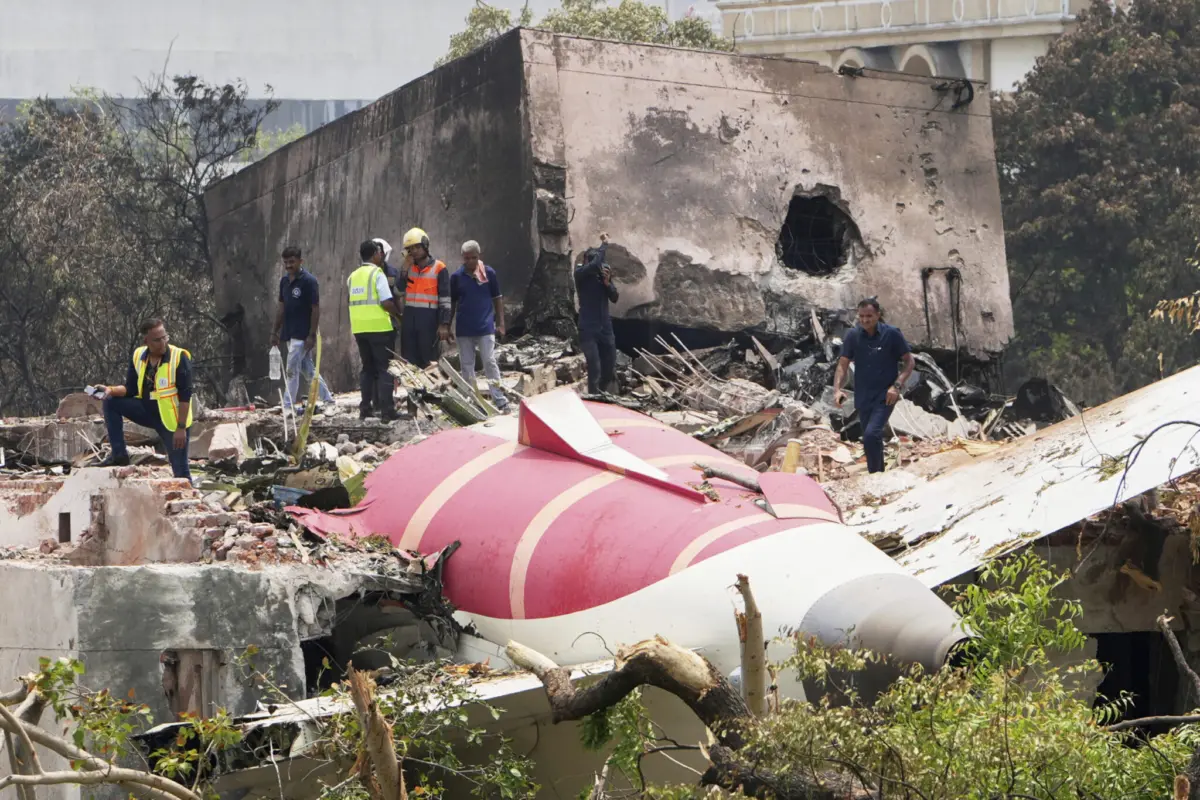
National aviation authorities around the world are failing to publish a sufficient number of air accident reports, depriving the global aviation industry of critical safety recommendations that could protect the flying public, safety advocates warned on Thursday. Speaking on the sidelines of a major industry gathering, aviation officials expressed deep concern that final investigation reports are currently published for only about half of all commercial aviation accidents investigated under established international frameworks.
Despite persistent calls from airline trade organizations and safety foundations to improve transparency and streamline the investigative process, the completion rate has stagnated. Industry leaders note that this lack of progress directly undermines the foundational goals of global aviation safety, which relies heavily on post-accident analysis to prevent future tragedies.
Mark Searle, global director of safety at the International Air Transport Association (IATA)—a trade association representing the world’s commercial airlines—voiced strong frustration over the current state of affairs while speaking at the International Aviation Safety Summit in Montreal.
"I’d have expected to see more efforts to improve the current state of affairs. I don’t think 50% is acceptable," Searle said. He emphasized that the completion rate has remained essentially flat, lacking any meaningful upward trajectory. "It just seems we’re floating around that 50% and there’s no real sort of forward trajectory," he added.
Under international rules known to the industry as Annex 13, aviation accident investigations are launched with a specific purpose: to help experts gain comprehensive knowledge, identify root causes, and formulate actionable recommendations that enhance safety across global operations. According to standard international practices governing these investigations, final reports on air accidents are generally expected to be completed and published within a one-year timeframe. However, institutional bottlenecks, resource constraints, and political sensitivities often disrupt these timelines.
The consequences of these delays are visible in several high-profile aviation incidents. For instance, it remains entirely unclear when a final report will be published regarding the tragic June 2025 crash of an Air India Boeing 787 jetliner, which went down shortly after takeoff in Ahmedabad, India. That devastating accident resulted in the loss of 260 lives. A draft final report of the accident had originally been anticipated around October. Before such a draft can receive formal approval, standard procedure dictates that the report must be thoroughly circulated to relevant participating countries so they can review and submit comments.
The challenges surrounding timely reporting extend to other regions and recent incidents as well. In late autumn, Reuters reported that Saudi Arabia had launched an official air accident probe under international rules following a tense September 30 cockpit stabbing incident aboard an Israel-bound flydubai jet. Despite the high profile of the event, it remains unclear whether Saudi authorities will produce a preliminary report, which is typically expected to be published approximately 30 days after an incident occurs. Neither the Saudi government nor the country’s National Transport Safety Center responded to multiple requests for comment regarding the status of the investigation.
Similarly, China has yet to publish a final, comprehensive report into the catastrophic crash of a China Eastern Airlines flight that occurred back in 2022. The absence of closure in such major cases continues to draw scrutiny from international aviation watchdogs and grieving families alike.
Hassan Shahidi, president and CEO of the Flight Safety Foundation, the organization that hosted the Montreal conference, echoed Searle’s concerns, acknowledging that persuading all sovereign nations to produce timely, transparent reports has proven to be a persistent structural challenge within global aviation governance.
In an interview during the summit, Shahidi explained that the reasons routinely cited by national authorities for failing to file reports on time usually point to a shortage of qualified personnel. Specifically, investigating bodies often lack enough workers with sufficient technical expertise to handle complex modern aircraft investigations. Furthermore, Shahidi noted that in some cases, incidents are rendered politically or socially sensitive because they involve suspected intentional downings of commercial aircraft, complicating the investigative and reporting process.
For industry experts, the primary casualty of these delays is institutional learning. Searle stressed that producing thorough, timely reports is the single most important mechanism for preventing similar accidents from recurring in the future.
"When these
reports aren’t coming out with solid recommendations, the industry can’t learn," Searle said, underscoring that global aviation safety relies on an uninterrupted flow of data, transparency, and shared accountability among nations.








No comments yet. Be the first to join the conversation!