
WASHINGTON — In a significant legislative maneuver on Monday, the United States Senate voted to advance a high-stakes bipartisan bill designed to overhaul and streamline the construction of new energy infrastructure across the country.
The legislation, formally titled the Bipartisan American Affordability and Jobs Act (BAAJA), has gathered a broad and diverse coalition of support. Proponents range from labor leaders, who argue the measure will generate thousands of good-paying jobs, to clean energy advocates who believe the reforms are vital to unlocking stranded wind and solar projects. With the clock ticking on the current legislative session, the bill’s sponsors are pushing aggressively to secure final passage before the current Congress adjourns in January.
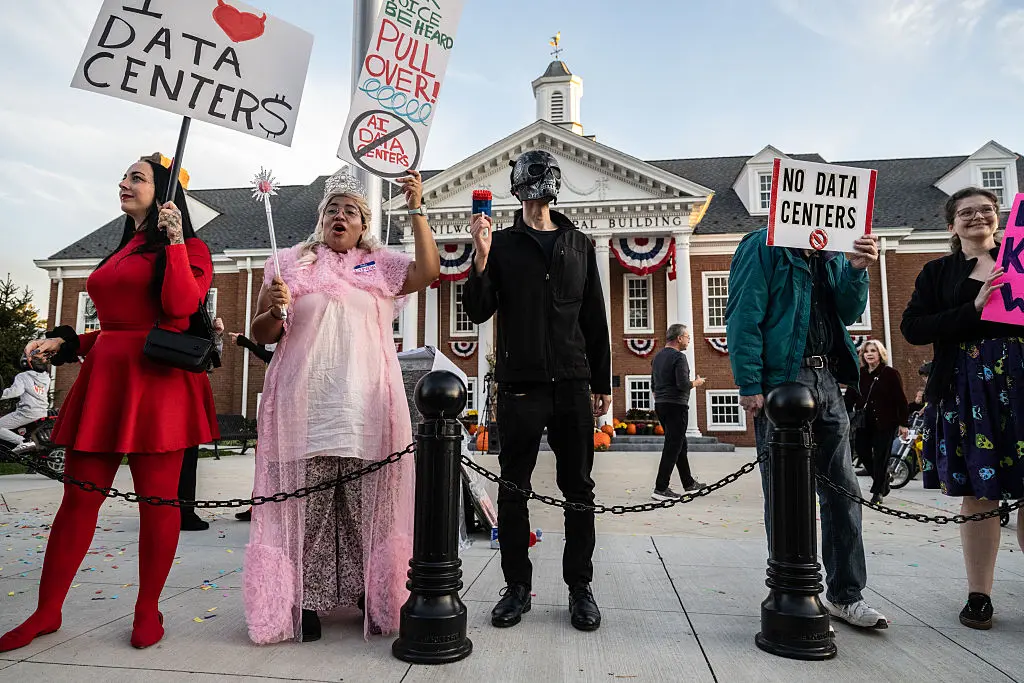
However, the path forward is fraught with intense political friction. BAAJA has ignited fierce opposition from a rapidly growing coalition of anti-data center critics and environmental organizations. Opponents contend the bill would dangerously accelerate the unchecked expansion of an industry that voters resoundingly pushed back against during the recent midterm elections.
While the legislation attempts to address widespread consumer affordability concerns by forcing data center operators to shoulder the full cost of the electrical grid upgrades they trigger—and includes essential transmission reforms to modernize the aging grid—critics warn it also strips away critical environmental protections. Furthermore, they argue the bill could inadvertently spur a wave of new data centers heavily reliant on natural gas, constructed directly on sensitive public lands.
A Divisive Legislative Battleground
In the days leading up to the Senate vote, hundreds of local and national organizations mobilized, signing joint letters urging Congress to reject the bill in its current form. Among the most prominent vocal critics are major environmental groups like the Sierra Club and the Natural Resources Defense Council, who argue that the legislative compromises undermine core environmental safeguards.
Conversely, the bill has found a welcoming audience among major industry trade groups, which have thrown their weight behind the measure despite acknowledging that its stringent ratepayer provisions will likely make building new facilities more expensive. The political alignment took an unexpected turn on Sunday when Donald Trump took to Truth Social to urge the Senate to pass the bill immediately. In his post, the former president warned that “China will take any Data Center that we don’t want.”
The unfolding legislative showdown represents the first major political test for congressional Democrats in the post-election landscape. Lawmakers are currently grappling with the complex challenge of delivering tangible relief on consumer affordability while attempting to maintain unity within a sprawling, ideologically diverse coalition.
“Everything about BAAJA goes against the spirit of voters this midterms, in which we saw voters turn out for candidates who directly oppose data centers,” said Allie Rosenbluth, U.S. campaigns manager at the environmental nonprofit Oil Change International. “This bill is a massive giveaway to the data center industry—and creates a backdoor for fossil fuels to enter the grid through data centers.”
Gas and Fossil Fuels
The unprecedented American data center boom, largely driven by the explosive growth of artificial intelligence, has simultaneously triggered a massive expansion in domestic natural gas production. In a desperate scramble to bring energy-intensive AI data centers online as quickly as possible, numerous developers have bypassed traditional utility connection delays by constructing dedicated, behind-the-meter gas power plants.
Recent data compiled by Global Energy Monitor and reported by Wired highlights the staggering scale of this shift: U.S. gas projects dedicated to powering data centers surged from roughly 4 gigawatts in early 2024 to a staggering 189 gigawatts in various stages of development by mid-2026. Scientific researchers and public health advocates have increasingly warned that these localized gas power installations threaten to worsen regional air pollution and exacerbate public health crises, including rising asthma rates in surrounding communities.
Proponents of BAAJA emphasize that the legislation incentivizes a wide array of energy sources to come online much faster, explicitly including wind and solar generation. Many energy experts remain hopeful that the bill will finally accelerate the slow-moving development of inter-state transmission lines that are universally recognized as essential for integrating renewable energy into the national grid.
Yet, environmental advocates remain deeply skeptical, arguing that the primary and most immediate beneficiary of the legislation will not be clean energy, but rather gas-powered data centers. They point to an extensive backlog of proposed projects already lingering in various stages of the regulatory approval pipeline.
Rosenbluth specifically highlighted projects such as the Ports-Pike Technology Campus in Ohio and the STAK Energy Campus in Alaska, which are currently navigating the complex federal permitting process. If BAAJA becomes law, critics fear that crucial environmental reviews and permits for these fossil fuel-backed facilities could be fast-tracked, allowing them to bypass traditional scrutiny and come online with alarming speed.
Holly Bender, chief program officer of the Sierra Club, echoed these concerns, noting that the data center industry’s relentless demand for rapid power is driving historic investments in fossil fuels. “There’s a lot in this bill that will make it easier and faster to build gas pipelines, while making it harder for communities to have a say,” Bender said.
Public and Tribal Lands
Beyond the expansion of fossil fuels, the legislation has drawn intense scrutiny over its potential impact on federally managed public lands. The push to utilize federal acreage for digital infrastructure found a formal ally in the Trump administration, which issued an executive order in July 2025 directing the Departments of the Interior and Energy to actively make federal sites available for data center development while streamlining environmental reviews.
“We’re going to ‘mine, baby, mine’ so we can ‘build, baby, build’ because we’ve got to build AI data centers,” Interior Secretary Doug Burgum said in defense of the administration’s aggressive development strategy.
Recent analyses, including a study by Western Values Project, identified at least 17 active applications for data center campuses situated on public lands, encompassing thousands of acres across western states such as Arizona, Idaho, and Nevada. Critics warn that BAAJA’s streamlined permitting provisions would grease the wheels for these projects, making them significantly easier to advance and harder for local stakeholders to legally challenge, in part by curtailing the authority of judges to halt construction pending thorough environmental reviews.
The legislative push has also alienated key Indigenous communities. A broad coalition of Tribal leaders released a sharp statement criticizing the bill for threatening cultural heritage. The group argued that the legislation would effectively “gut the ability of Tribal Nations and the American public to identify and protect historic and cultural places threatened by federally connected projects—including data centers.”
Potential Benefits and Ratepayer Protections
Despite the fierce backlash from environmentalists and Tribal organizations, supporters of BAAJA maintain that the legislation provides critical safeguards designed to protect ordinary consumers from the massive financial burdens typically associated with tech expansion.
Chief among these provisions are strict ratepayer protections that mandate that data center developers pay the full, incremental cost of necessary transmission infrastructure upgrades. Independent economic analyses suggest that these provisions would force data centers to contribute approximately $55 billion in transmission charges over the next decade—representing roughly $35 billion more than what current regulatory policies require. The legislation also introduces safeguards to ensure that everyday households and small businesses are not left holding the financial bag if speculative tech projects ultimately fail.
“The day of data center freeloading ends when this bill passes,” Senator Sheldon Whitehouse, a Democratic sponsor of the legislation, declared last week. On Monday, Whitehouse added that enacting the bill would clear the legislative deck, setting the stage for Democrats to pursue robust, comprehensive clean energy policies next year when they are projected to control both chambers of Congress.
A modeling study published by the Rhodium Group projected that the bill, as introduced, could actually lower household electricity bills by expanding access to cheaper power sources and legally barring utilities from shifting data center infrastructure costs onto residential ratepayers.
However, skeptics remain unconvinced. Meg Slattery, a staff scientist at Earthjustice, cautioned that the sheer, ravenous appetite of the data center industry could easily swallow up any newly generated power without offering meaningful relief to the public.
“It’s quite possible that if there are more gas pipelines being built, for example, that is going to increase data center demand,” Slattery said. “We are supportive of transmission reform because we want to build a clean energy grid that benefits everybody. But these other provisions, we think, are going to fast-track the worst version of this story.”
Following Monday’s successful cloture vote, the Senate must formally vote to take up the legislation for debate. Should it clear that hurdle, the bill will navigate the intricate amendment process. Any version ultimately passed by the Senate would then have to clear the House of Representatives in an identical format before heading to the president’s desk.
While advocates celebrate the measure as a rare instance of bipartisan compromise and a victory for consumer cost-saving, critics on the political left continue to urge restraint, arguing that rushing major structural changes through a lame-duck session disrespects the recent mandate delivered by voters.
“You just heard Americans demand much more of a say in a way that AI is shaping their lives,” said Michele Jawando, CEO of the Omidyar Network. “Whenever you try to ram something through in a lame duck Congress before you have a hundred new House members, that’s never a good look for either the industry or other actors.”








No comments yet. Be the first to join the conversation!