
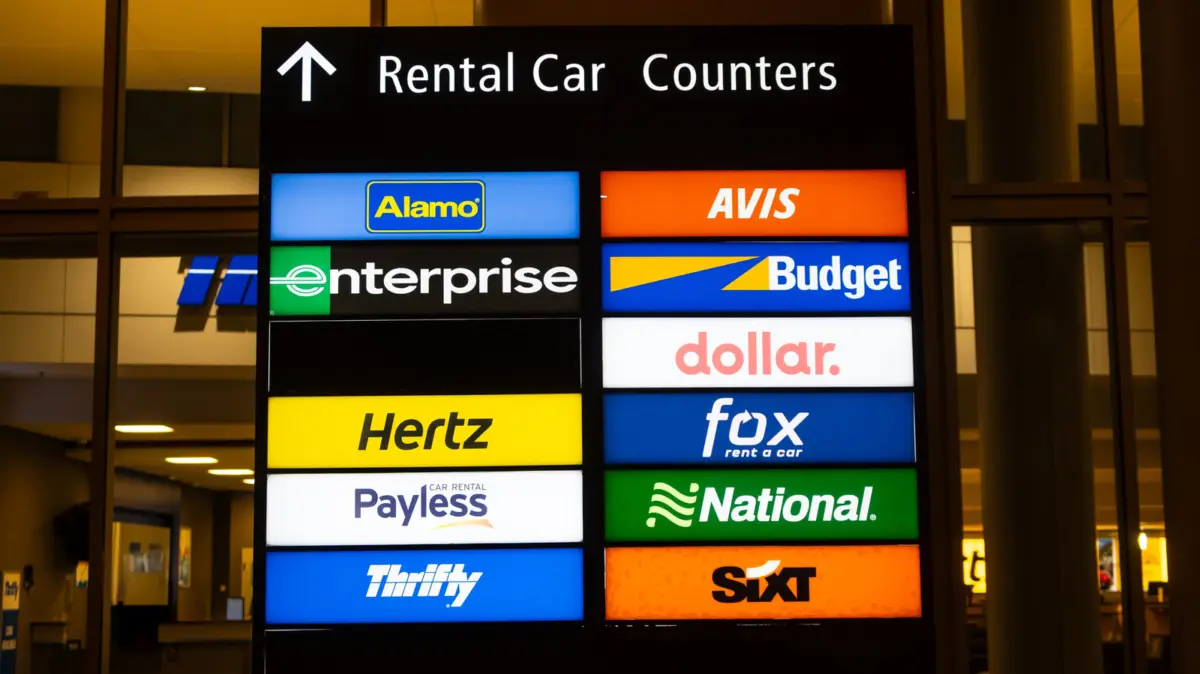
For decades, navigating the world of ground transportation has come with a built-in set of frustrations. While auto dealerships have long held a well-earned reputation for making life difficult for consumers, the process of renting a vehicle hasn’t always offered much relief. Travelers have frequently found themselves at the mercy of logistical hiccups, unexpected fees, or controversial corporate policies. Infamous headlines over the years have documented bizarre billing anomalies—such as customers being charged for seemingly defying the laws of physics—or automated artificial intelligence damage scanners erroneously billing drivers hundreds of dollars for minor wheel scuffs.
Clearly, traditional rental car agencies have had plenty of work to do when it comes to winning back public trust and boosting customer satisfaction. Fortunately, the latest industry metrics suggest that meaningful progress is finally underway across the board.
According to the newly released J.D. Power 2026 North America Rental Car Satisfaction Study, overall customer satisfaction across the industry saw notable, widespread improvements compared to the previous year. These gains were especially pronounced in two critical operational areas that directly impact the traveler experience: vehicle availability and customer choice at the counter.
The data reveals that 90 percent of rental car customers reported that when they arrived at the rental counter, a vehicle matching the exact class they had reserved was ready and waiting for them. For example, a traveler who reserved a mid-size sedan found that vehicle class physically present and available. Zooming in on even finer details, 85 percent of respondents stated that they were able to actively pick a specific individual vehicle within the class assigned to them. These figures represent solid improvements, climbing 3 and 5 percentage points, respectively, year-over-year.
Simultaneously, the study’s broader index figures reflected this upward trend. The industry’s average customer satisfaction score rose from 691 points in 2025 to 707 points in 2026, measured on a standard 1,000-point scale.
To determine these rankings, J.D. Power evaluates companies across seven core dimensions, weighted sequentially in order of importance: ease of rental, pick-up and drop-off experiences, level of trust, the condition and quality of the vehicle, staff helpfulness and performance, value for the price paid, and the efficiency of digital tools.
The outcome of the 2026 evaluation showed that six out of the 13 major agencies analyzed finished with above-average scores. The top tier of the industry was led by Enterprise, National, Advantage Rent A Car, Alamo, Sixt, and Hertz. Conversely, brands lagging behind the industry average and bringing up the rear of the study were Thrifty and Dollar.
The findings are derived from a robust pool of 7,845 survey respondents. Every participant surveyed had rented a vehicle from an airport-based rental company during the 12-month window between August 2025 and August 2026, providing a current and comprehensive snapshot of modern travel pain points and successes.
Scanning the Scores
A closer examination of the individual company scorecards reveals that the rising tide of customer satisfaction lifted virtually every boat in the industry. All 13 rental agencies evaluated earned higher scores in the 2026 study than they did the year prior. Interestingly, a significant portion of this momentum was concentrated at the lower end of the rankings, where struggling brands worked to close the performance gap.
Dollar, for instance, occupied the very bottom of the corporate rankings in both 2025 and 2026. Yet, even as it maintained its last-place position, the brand’s score climbed significantly from 641 to 663 points. Meanwhile, the most dramatic single advance in raw points belonged to Payless. Last year, Payless languished in 11th place with a score of 650 points; in the 2026 study, the brand leaped into 8th place, pushing its score up to 699 points.
At the other end of the spectrum, however, the upper echelons of the standings remained remarkably stable. The hierarchy at the top stayed completely intact, with Enterprise firmly setting the industry pace, followed closely by National and Advantage Rent A Car. These market leaders also saw steady, incremental improvements in their underlying numbers: Enterprise rose 5 points to reach a leading 739 points; National matched that upward trajectory with a 5-point gain of its own, landing at 726 points; and Advantage advanced 6 points, rising from 711 to 717 points.
Slight shifts did occur just beneath the podium. In 2025, Advantage was technically tied with Sixt. Despite securing a three-point bump in its satisfaction score for 2026, Sixt slipped to fifth place overall, edged out by Alamo, which recorded a score of 716 points.
Beneath the competitive landscape of individual brand names and distinct logos lies a quieter reality about how the North American rental market is structured: nearly every major rental car brand in the country is ultimately owned by just three parent corporations.
Enterprise Mobility commands the market not only with its flagship Enterprise brand, but also by controlling National and Alamo under its corporate umbrella. Similarly, Avis Budget Group oversees its namesake Avis and Budget operations, alongside the budget-focused Payless brand. Meanwhile, Hertz manages its own primary fleet in addition to Dollar and Thrifty.
Hertz’s corporate history also briefly intersected with Advantage. At one point, Hertz purchased Advantage and folded it into its portfolio. However, when Hertz acquired Dollar and Thrifty back in 2012, federal regulators stepped in. The Federal Trade Commission forced Hertz to divest and sell off Advantage to a separate entity in order to preserve a competitive marketplace for consumers.









No comments yet. Be the first to join the conversation!