
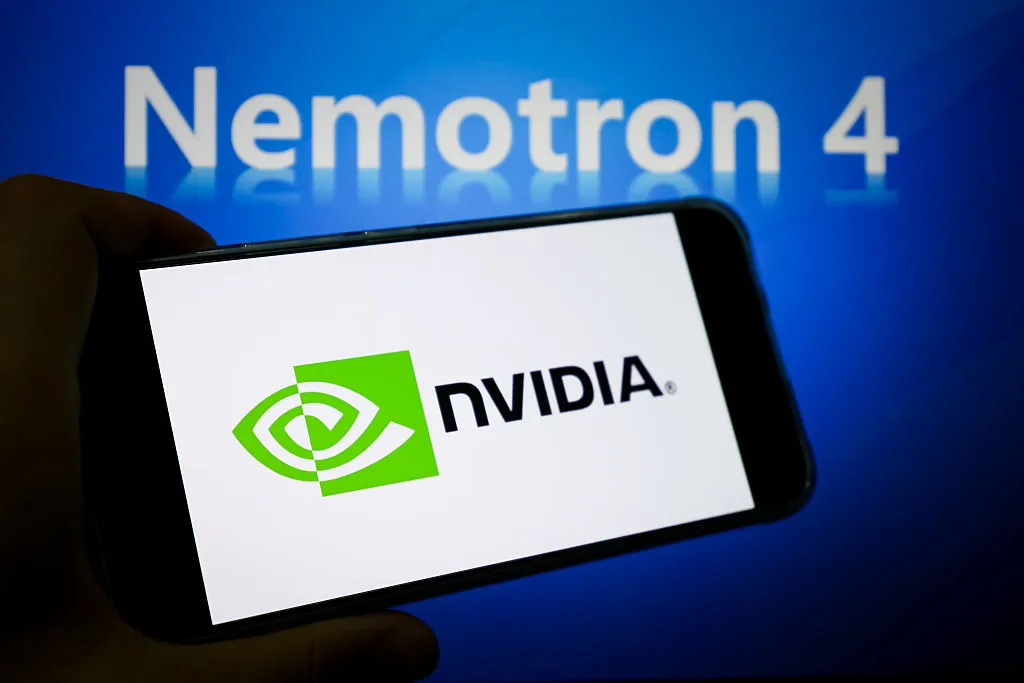
Nvidia interim CEO Colette Kress has forcefully reaffirmed the technology giant’s long-term commitment to the open-source artificial intelligence ecosystem. Delivering her remarks during Tuesday’s crucial earnings call with market analysts—the first such financial briefing since the high-profile resignation of longtime CEO Jensen Huang—Kress sought to project stability and continuity as the semiconductor powerhouse navigates a turbulent leadership transition and mounting regulatory scrutiny.
Addressing the financial community in her opening remarks, Kress emphasized that openness remains a cornerstone of the company’s broader strategic vision for the artificial intelligence landscape.
“At Nvidia, we are committed to fostering a vibrant open model ecosystem, so every country, company, and industry can build its own intelligence,” Kress told the assembled analysts.
To contextualize the rapid momentum behind open models, Kress highlighted explosive growth metrics across the developer community. She pointed to a staggering 35-fold year-over-year surge in weekly token volume on OpenRouter, which included a remarkable 3.5-fold increase recorded over just the past three months alone. This exponential uptick, according to company leadership, underscores how heavily developers and enterprises rely on open alternatives to build, deploy, and scale custom AI applications.
A central point of discussion during the earnings call centered on Nvidia’s ambitious plans for Hugging Face, the globally renowned collaborative platform for open-source AI models. In September, Nvidia made waves across the technology sector by agreeing to acquire Hugging Face for a staggering $12.9 billion, marking what stands to be the second-largest corporate acquisition in Nvidia’s storied history.
Serving a massive community of more than 118 million developers and over 200,000 corporate clients, Hugging Face has long served as the digital town square for open-source machine learning. Despite the abrupt ouster of Jensen Huang—who had aggressively championed open-source AI technology internally and externally—Kress confirmed that the acquisition remains firmly on track to be finalized.
Huang’s departure had previously cast a blanket of uncertainty over the company’s future roadmap regarding open models. The founder’s exit was met with dismay by open-source advocates, with Hugging Face’s CEO publicly describing Huang’s departure as “a sad day” while vowing to “keep fighting for open-source AI, harder than ever.”
However, during Tuesday’s earnings call, any immediate fears of a strategic pivot appeared unfounded. While the pending multi-billion-dollar acquisition was notably absent from the tightly managed Q&A session with analysts, Kress’s prepared remarks left little doubt about the intended trajectory of the merger.
“Together, we will scale its platform and make intelligence more open, more capable, and more accessible,” Kress stated, outlining Nvidia’s overarching vision for the integration of Hugging Face.
The leadership transition at Nvidia follows a dramatic series of events that unfolded last week, when founder Jensen Huang officially resigned from his position as chief executive officer. Huang’s departure came in the wake of intensifying media reports regarding his extramarital affairs. Among them was a relationship with Alice Huang, an executive at the Singapore-based firm Megaspeed who has been suspected of operating as a Chinese spy. Furthermore, Huang has faced accusations of engaging in extramarital relationships with two direct corporate reports, developments that have triggered intense political and regulatory fallout.
In the wake of these revelations, Huang has agreed to testify before the United States Congress ahead of the Thanksgiving holiday, a high-stakes appearance that is expected to draw immense scrutiny from lawmakers concerned with corporate governance and national security implications within the tech sector. Simultaneously, financial regulators have turned their sights on the chipmaker, with The Wall Street Journal reporting that the Securities and Exchange Commission (SEC) has launched an investigation into Nvidia to determine whether the company’s corporate disclosures regarding the executive turmoil may have misled investors.
Within the corporate walls of Nvidia, Huang had been the primary driving force behind the development of the Nemotron family of open-weight AI models. Engineered specifically to power long-running agentic AI systems and complex reasoning workloads, the Nemotron models represent a vital piece of Nvidia’s software strategy. During Tuesday’s financial briefing, Kress provided an update on the adoption curve of these proprietary open models, noting that Nemotron has swiftly climbed the ranks to become the “most widely used U.S. open model on OpenRouter.”
Kress described the model family as the primary entry point “where developers start to build their own intelligence,” reinforcing the narrative that Nvidia’s hardware dominance is increasingly intertwined with an accessible, open-weight software foundation.
“That foundation is empowering the ecosystem,” Kress concluded, signaling that despite the executive upheaval, regulatory investigations, and ongoing congressional inquiries, Nvidia’s foundational bet on open-source intelligence development remains operational, funded, and fully prioritized.






No comments yet. Be the first to join the conversation!