
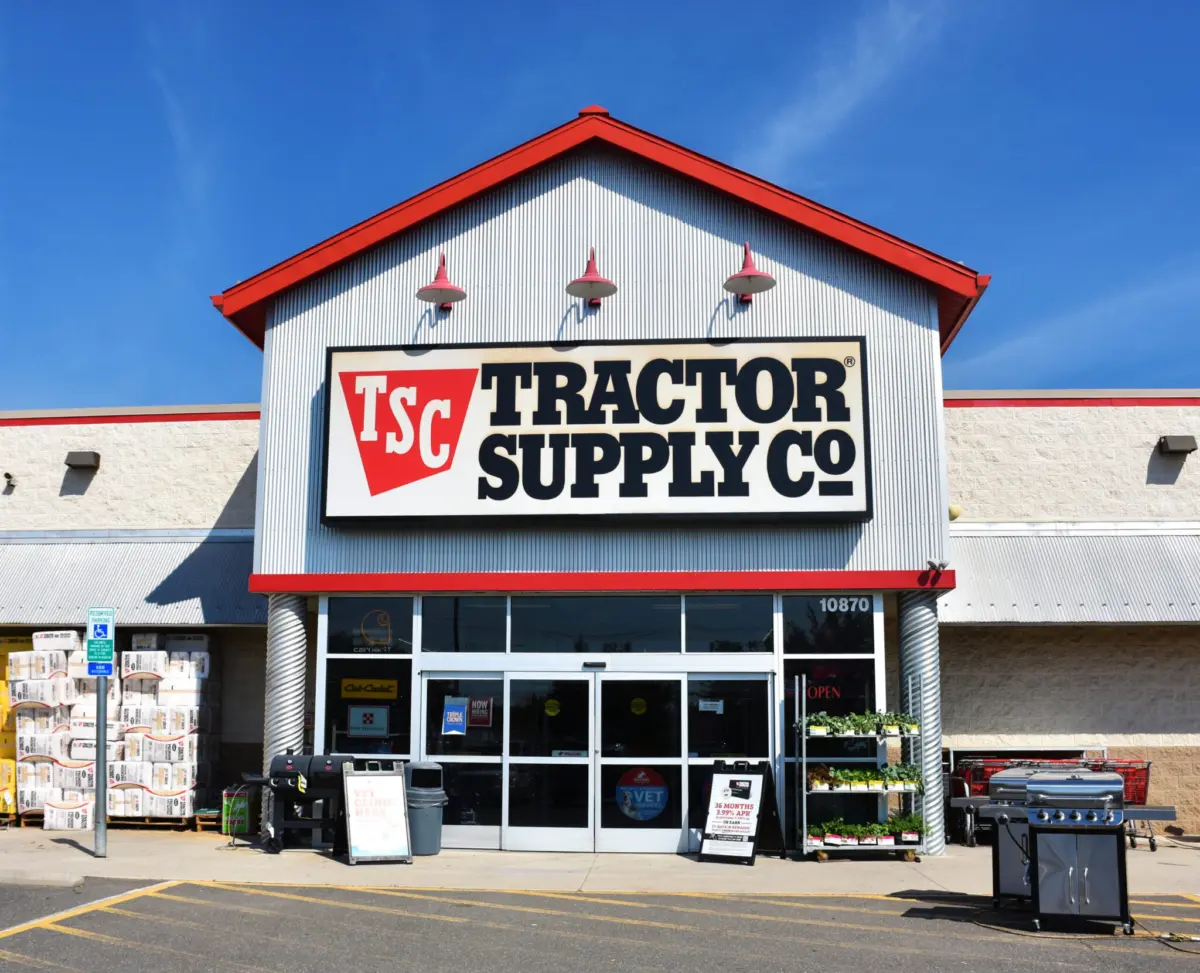
Tractor Supply Co. has significantly broadened its digital delivery capabilities by announcing a nationwide partnership with Uber, making its vast array of products available to customers through the Uber, Uber Eats, and Postmates applications. The collaboration, officially unveiled by the companies, marks another major strategic step for the dominant rural lifestyle retailer as it seeks to capture an increasingly digitally minded consumer base across suburban, exurban, and rural America.
Under the terms of the new agreement, customers can utilize the Uber family of apps to order a comprehensive selection of items, ranging from everyday essentials like pet food and animal care products to lawn and garden supplies, essential tools, and specialized outdoor gear. This on-demand delivery option leverages Uber’s expansive delivery network to bring heavy, bulky, or urgent supplies directly to doorsteps in areas that traditional delivery services have sometimes struggled to serve efficiently.
The integration applies specifically to Tractor Supply’s core branded locations rather than its Petsense subsidiary. As of late September, Tractor Supply operated a robust footprint consisting of 2,486 stores spread across 49 states, alongside 135 Petsense by Tractor Supply stores. Tractor Supply maintains a prominent position in the e-commerce landscape, ranking No. 83 in the Top 1000 Database, which tracks North America’s largest online retailers by annual ecommerce sales. Furthermore, the company holds the No. 225 spot in Digital Commerce 360 and ReFiBuy’s AI Commerce Rankings, a specialized metric available through the Top 1000 Pro with AI Database.
Tractor Supply Expands Delivery Beyond Metro Areas
The core strategic rationale behind Uber’s pursuit of the partnership centers on geography and demographic reach. While many third-party delivery services have historically focused their energies and operational footprints heavily on densely populated metropolitan areas, Tractor Supply’s physical store network is intentionally concentrated in rural, exurban, and suburban communities. For Uber, this partnership represents a major opportunity to extend its on-demand delivery infrastructure deep beyond major city limits.
"The need for convenience doesn’t stop at the city limits," said Nathan Bernheim, Uber’s head of retail partnerships, highlighting the strategic vision behind bringing a traditionally urban-centric delivery model into America’s heartland and surrounding communities.
For Tractor Supply, the collaboration opens up entirely new avenues for customer acquisition and engagement. Matthew Rubin, the retailer’s senior vice president and president of digital and ecommerce, emphasized that the deal provides shoppers with significantly more ways to fulfill their purchasing needs while simultaneously introducing the brand to a massive new audience.
"Tractor Supply is continually finding new ways to serve customers and make Life Out Here more convenient," Rubin noted, adding that the arrangement exposes the retailer to "millions of Uber users" who may not have previously patronized its stores or digital channels.
To utilize the new service, customers simply open the Uber, Uber Eats, or Postmates app and search for Tractor Supply or browse the dedicated Retail section. From there, shoppers can select their preferred local store, build a customized cart, choose a delivery option, and track the progress of their order in real-time directly through the app interface. To celebrate the official launch, Uber introduced a promotional incentive offering $20 off Tractor Supply orders totaling $60 or more, subject to standard fees and terms. Neither company immediately specified delivery speeds or exact fee structures in their initial announcement.
Tractor Supply’s Relationship with Instacart and DoorDash
The alliance with Uber represents the second major third-party delivery platform partnership that Tractor Supply has forged within a single year. In July, the rural retailer announced it had joined forces with Instacart Marketplace, a prominent competitor to Uber in the on-demand delivery space. At the time of that announcement, representatives from both Tractor Supply and Instacart expressed shared enthusiasm for expanding same-day delivery access to rural and semi-rural consumers while introducing the retailer to fresh demographics of digital shoppers.
Long before these recent expansions, Tractor Supply had already established a delivery foundation through a partnership with DoorDash initiated in 2022. However, the broader digital delivery market has experienced substantial consolidation over recent months, reshaping the competitive landscape for major retailers.
On October 29, DoorDash announced a definitive agreement to acquire Instacart in a monumental deal valued at $17 billion. The proposed acquisition remains subject to customary regulatory approvals and the green light from Instacart shareholders, with both companies projecting that the transaction will close near the end of 2027 or during the first half of 2028. Until the merger is finalized, Instacart is slated to operate independently, and DoorDash has indicated plans to maintain the Instacart brand, consumer-facing app, and enterprise technology products following the eventual integration.
Tractor Supply’s Own Delivery Network
The newly minted Uber agreement builds directly upon an expansive, store-based delivery network that Tractor Supply has systematically grown and refined over the past year and a half. During a financial presentation in September, Chief Executive Officer Hal Lawton detailed that the retailer has offered various forms of store-delivered fulfillment for five to six years, encompassing options ranging from rapid same-day drop-offs to standard two- to three-day windows.
More recently, the company rolled out its advanced "Final Mile" system. This proprietary logistical framework links every group of three to four stores together in a tightly coordinated hub-and-spoke arrangement, allowing one primary store to efficiently serve four surrounding locations. According to Lawton, Tractor Supply completed as many last-mile deliveries during the first half of 2026 alone as it managed to complete throughout the entirety of 2025. Furthermore, fulfilling orders directly from local stores served as a primary driver of double-digit digital sales growth during fiscal Q2, even amidst a challenging retail environment that saw comparable store sales dip by 1.5%.
Alongside its digital fulfillment enhancements, Tractor Supply has continued to invest heavily in its underlying physical supply chain infrastructure. In September, the company marked a major logistical milestone by opening its 11th major distribution center in Nampa, Idaho. Spanning an impressive 865,000 square feet, the new facility was designed to support 123 stores across nine states during its initial operational year, with the ultimate capacity to serve more than 200 stores as its volume scales over time.






No comments yet. Be the first to join the conversation!