
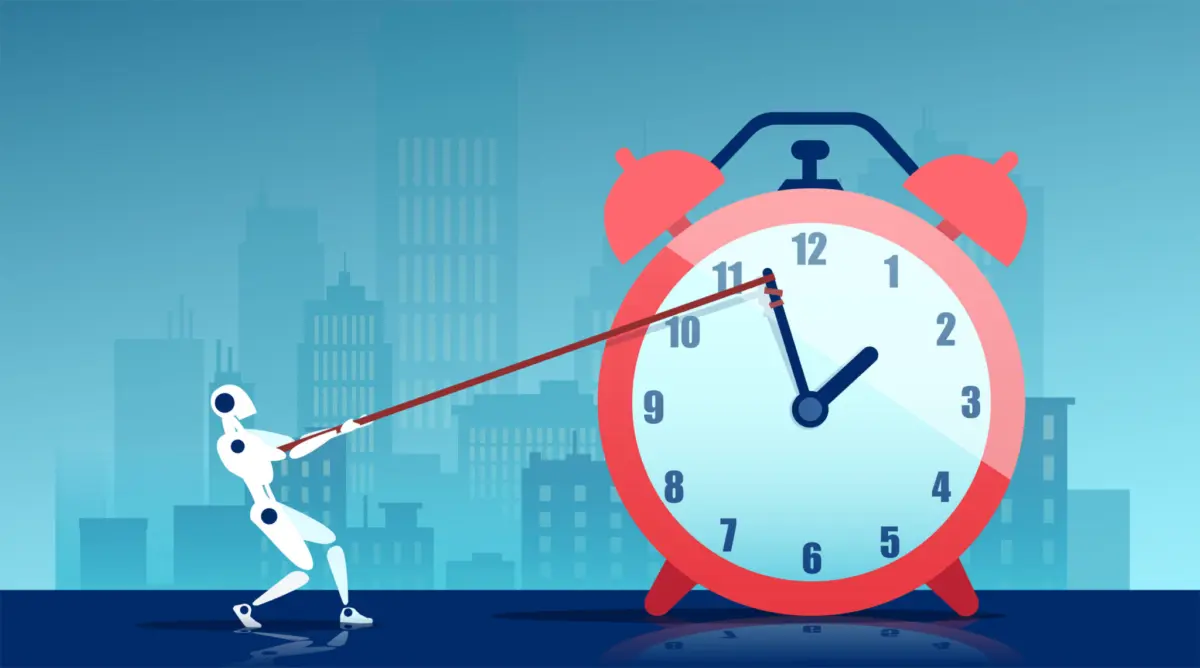
An employee encounters a roadblock on a project. A few short years ago, resolving that issue meant messaging a colleague, walking across the office to tap someone on the shoulder, or saving the inquiry for the next team meeting. Today, the routine looks vastly different. Workers can turn to artificial intelligence, prompting a chatbot and receiving a fully articulated answer in a matter of seconds.
By all standard metrics of productivity, this represents undeniable progress. Modern technology is engineered to remove friction, reduce idle waiting time, and help individuals maintain momentum on their daily deliverables. The psychological instinct behind this shift is entirely understandable. If an employee can obtain the exact same answer in thirty seconds without interrupting a peer or feeling the subtle anxiety of asking a perceived foolish question, they will almost always choose the path of least resistance.
However, this rapid transition raises a deeper, more complex question about the modern workplace: What was that old-fashioned conversation actually producing beneath the surface? Beyond a simple transactional answer, human interactions often showed junior staff how a more experienced colleague approached a complex problem. They surfaced unwritten contextual knowledge, institutional memory, and cultural nuances that rarely find their way into official documentation. Furthermore, a casual question about a work task frequently blossomed into a professional relationship that proved vital months or years down the line. Viewed through the narrow lens of task completion, those human interactions often looked inefficient. But from the perspective of organizational health, they were actively building a cohesive culture.
A Shift in Who We Ask
This transformation in workplace communication is underscored by forthcoming research from BambooHR examining how artificial intelligence is fundamentally reshaping the modern workday. According to the data, employees estimate they now spend nearly an hour and a half each day interacting directly with artificial intelligence systems. Furthermore, when examining the portions of the day workers spend in active conversation rather than working in isolation, roughly two in five of those interactions are now directed toward an AI model rather than another human being.
The motivations driving this shift are entirely rational. Artificial intelligence is remarkably fast, operates without downtime, and is perpetually available. An AI tool never looks visibly busy, does not sigh at repetitive inquiries, and never makes a user feel as though they should already know the fundamental answer. Workers can rephrase the same complex question three different ways without testing anyone’s patience or worrying about how they appear to their peers.
Many employees readily admit they would rather quietly query an algorithm than openly admit they need assistance. Asking another human being for help invariably carries a minor degree of social vulnerability and risk, whereas interacting with a neutral machine removes that friction entirely. While this fosters a profound sense of independence—a trait with undeniable value in fast-paced corporate environments—it simultaneously dismantles one of the most organic catalysts for professional relationship-building. When an employee asks a colleague for help, they are doing more than extracting data. They are signaling that they value that person’s judgment, opening a small window into their own thought process, and laying the groundwork for mentorship. Often, the resulting professional relationship carries far more long-term value than the immediate answer itself.
What Else Did the Interaction Produce?
For decades, technology leaders and management consultants have poured immense resources into eliminating unnecessary friction from daily operations. In most contexts, this is a laudable objective. Broken systems, repetitive administrative processes, pointless approval chains, and meetings devoid of clear agendas drain employees of valuable time and creative energy. Artificial intelligence offers an unprecedented opportunity to strip away even more of this corporate drag.
However, before companies enthusiastically automate every human interaction out of existence, organizational leaders must understand what those interactions were actually achieving within the broader ecosystem of the enterprise. The BambooHR research highlights a stark and meaningful operational divide between time spent interacting with artificial intelligence versus time spent collaborating with coworkers.
Time spent with AI is overwhelmingly concentrated on executing specific tasks, experimenting with prompts, refining parameters, and correcting automated outputs. Conversely, while coworker time certainly involves execution, a significantly larger proportion of that collaborative window is dedicated to sharing institutional knowledge, brainstorming creative solutions, mentoring younger staff, and solidifying interpersonal bonds.
These human-centric activities are notoriously difficult to quantify on a corporate spreadsheet because they do not always yield an immediate, tangible deliverable. Instead, their true value materializes later. It appears when a junior team member instinctively knows who to call during a high-stakes crisis, or when an emerging professional has observed a seasoned colleague navigate a nuanced judgment call where the correct path was far from obvious.
The Mentorship Gap
This dynamic presents a critical challenge for individuals in the early stages of their careers. The vast majority of workers report learning some of their most valuable professional lessons from colleagues situated at different career stages. At the same time, many professionals are beginning to recognize that cross-generational mentorship is growing increasingly difficult as younger staff members lean more heavily on artificial intelligence for day-to-day problem-solving.
This tension sits at the heart of the modern technological transition. Organizations deeply value the wisdom passed down through human experience, yet they are rapidly adopting tools that allow workers to bypass the awkwardness, delays, and vulnerability that frequently spark the learning process in the first place.
An artificial intelligence model can generate an accurate, well-structured answer. It may even articulate the underlying mechanics more clearly than a rushed coworker caught up in a busy afternoon schedule. Yet true professional judgment is rarely encapsulated by the raw answer alone. It involves knowing precisely when a technically correct solution will fail within a specific corporate culture, understanding which strategic trade-offs carry the highest stakes, or recognizing a familiar pattern because an individual has witnessed a similar crisis unfold in the past.
Much of this nuanced wisdom is absorbed organically by simply watching experienced people think and reason through ambiguity. As employees become increasingly self-sufficient on a task-by-task basis, organizational leaders must grapple with a fundamental question: Is the overall enterprise becoming more capable over time, or are we simply optimizing for short-term speed at the expense of long-term institutional depth?
The Efficiency Dividend
Organizations have spent an enormous amount of energy determining what artificial intelligence should do, but considerably less time deciding what human beings should be freed up to accomplish as a result of those efficiency gains.
In many corporate environments, the default institutional response to newfound efficiency is simply absorbing more work. A task that historically required a full hour now takes twenty minutes, so the newly liberated time is immediately backfilled with another obligation, another urgent message, or an escalated expectation. The anticipated efficiency dividend simply vanishes into an increasingly congested calendar.
Yet the ultimate value of automation cannot simply be the generation of higher output volumes. If artificial intelligence manages to return an hour of time to a manager’s day, a portion of those reclaimed minutes ought to be deliberately reinvested into coaching and development. If an experienced employee discovers newfound capacity in their schedule, there must be intentional room created for them to explain the rationale behind their decisions rather than merely dispatching the final answer. Engaging in that level of mentorship requires dedicated effort. As transactional labor becomes progressively easier to automate, that human-centric work is likely to become even more valuable.
More Human Work
Certain types of corporate friction should undoubtedly disappear. Dysfunctional internal systems and unnecessary interruptions are not worth preserving simply because they happen to generate human contact. The genuine opportunity lies in being far more deliberate about how the capacity created by artificial intelligence is utilized.
As routine transactional duties grow effortless, human judgment, active coaching, creativity, and authentic connection become the primary drivers of competitive advantage. This requires organizations to evaluate where pure speed matters most, and where the active presence of another human being fundamentally elevates the quality of the final outcome.
The employee querying an artificial intelligence model to solve an immediate problem is still making a rational choice. The answer materializes instantly, the project moves forward, and no colleagues are disrupted. Artificial intelligence will continue to make it easier for professionals to operate independently across a wide range of daily responsibilities. The more compelling question for modern enterprises is how they choose to invest that newly acquired freedom, and whether they preserve space for the collaborative moments that only happen when people are genuinely present for one another.








No comments yet. Be the first to join the conversation!