

The Commodity Futures Trading Commission has formally asked a federal court to dismiss a lawsuit filed by the Chicago Mercantile Exchange challenging the regulatory agency’s decision to permit Kalshi to offer bitcoin perpetual futures contracts, marking a significant development in the ongoing evolution of prediction markets, digital assets, and derivatives regulation.

The legal battle centers around the expanding intersection of traditional financial market infrastructure and newer, alternative trading platforms. The Chicago Mercantile Exchange, a titan in the traditional derivatives space, previously initiated legal action against the CFTC over its greenlighting of Kalshi’s bitcoin perpetual futures—commonly referred to in the industry as "perps." In its recent court filing, the regulatory agency pushed back against the CME’s challenge, urging a federal judge to throw the lawsuit out entirely and defending its oversight and regulatory determinations regarding the novel financial instruments.
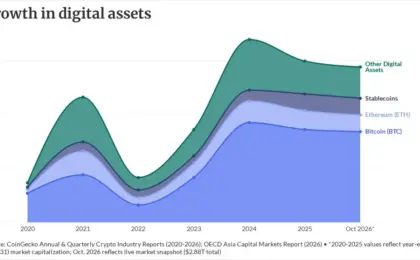
This high-stakes courtroom showdown is unfolding against a broader backdrop of profound regulatory and structural shifts across the American financial landscape. Throughout 2026, the financial technology and digital asset sectors have experienced an extraordinary wave of structural integration, highlighted by a notable surge in nonbank fintech companies actively applying for and receiving bank charters. Financial regulators and institutions alike are grappling with how to accommodate innovative financial products within traditional legal frameworks, creating intense dialogue around asset security, reserve requirements, and systemic risk.

Industry leaders have increasingly weighed in on the comparative safety and operational models of traditional versus digital-native financial institutions. Proponents of crypto-native banking structures, such as Bitgo CEO Mike Belshe, have argued that digital asset companies securing national trust bank charters actually present a lower risk profile than traditional commercial institutions. Because these crypto-focused entities often maintain full, one-hundred-percent reserves, Belshe and other advocates contend they are inherently safer than traditional banking models that rely on fractional reserves.
At the same time, institutional adoption of digital assets continues to mature through structured financial products and legislative developments. Market participants are closely watching how major legislative milestones, such as the GENIUS Act and the anticipated CLARITY Act, are reshaping the regulatory perimeter. In interviews with industry publications, executives like Anchorage Bank CEO Nathan McCauley have emphasized how the GENIUS Act is actively enabling new avenues for digital asset innovation within mainstream banking, paving the way for future opportunities and greater regulatory clarity.

This legislative and regulatory evolution has also spurred direct product development across the digital asset ecosystem. Earlier in the year, collaborative ventures among specialized financial entities yielded products like fUSD, a GENIUS-ready stablecoin introduced by Falcon Finance and Anchorage Digital Bank with integrated rewards on platforms like Ceffu. These rollouts underscore how traditional banking capabilities and decentralized finance infrastructure are increasingly converging under the watchful eye of regulators.
As the federal court considers the CFTC’s motion to dismiss the CME’s challenge over Kalshi’s bitcoin perpetual futures, the outcome could carry far-reaching implications for the future of prediction markets and crypto derivatives in the United States. The decision will likely set a crucial precedent for how federal regulators evaluate innovative trading products and how legacy exchanges can challenge agency approvals in an increasingly digitized and competitive financial marketplace.








No comments yet. Be the first to join the conversation!