
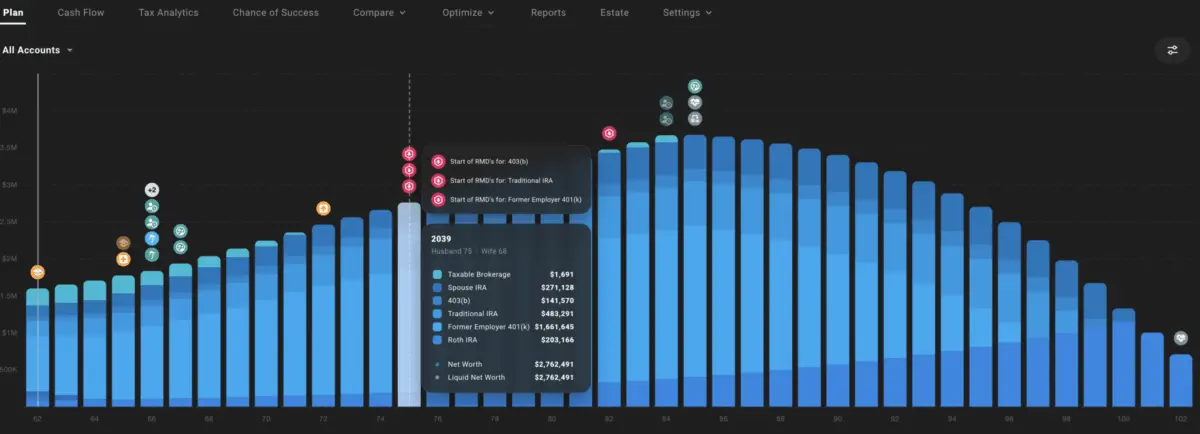
Financial planning software has long suffered from a rigid dichotomy. On one side sit institutional-grade tools that require a specialized finance degree or expensive consultations with a professional advisor to operate. On the other side are basic calculators that offer vague forecasts but crumble under the weight of complex real-world variables like fluctuating tax brackets, early retirement, and dynamic withdrawal strategies. Over the past five years, ProjectionLab has quietly carved out a powerful middle ground, maturing into a comprehensive, privacy-focused financial planning suite for individuals who prefer to take the reins of their long-term wealth.
Created by Kyle Nolan and officially launched in April 2021, the platform has evolved significantly from its early days as a promising independent project. Today, it stands as a mature ecosystem capable of mapping out net worth, income, expenses, and tax liabilities year-by-year from the present day all the way through the end of a multi-decade plan. By emphasizing a manual data-entry approach rather than mandatory bank syncing, the software positions itself around a distinct privacy philosophy: the user is the customer, not the product. For self-directed investors, particularly those pursuing financial independence and early retirement (FIRE), the tool offers a rare combination of granular depth and accessible interface design.
Understanding the Core Philosophy and Workflow
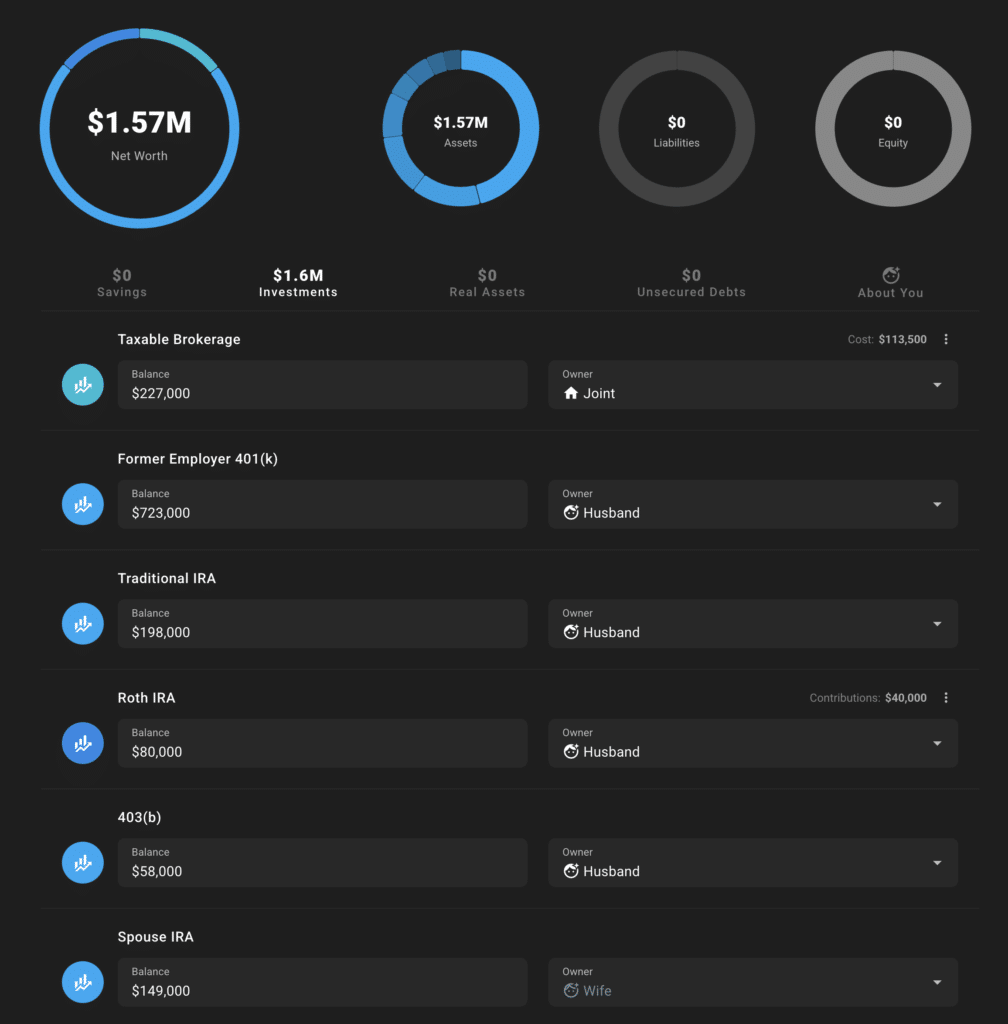
At its foundational level, ProjectionLab is designed to answer a singular question: Will your money last, and how do changing life events alter your trajectory? Users begin by inputting their current financial snapshot. This includes everything from traditional savings accounts and taxable brokerages to retirement vehicles such as 401(k)s, 403(b)s, and Roth variants, alongside real assets like primary residences and cryptocurrency holdings. The platform supports a wide array of specific account types, a crucial feature when the software eventually calculates complex future tax obligations and required minimum distributions.
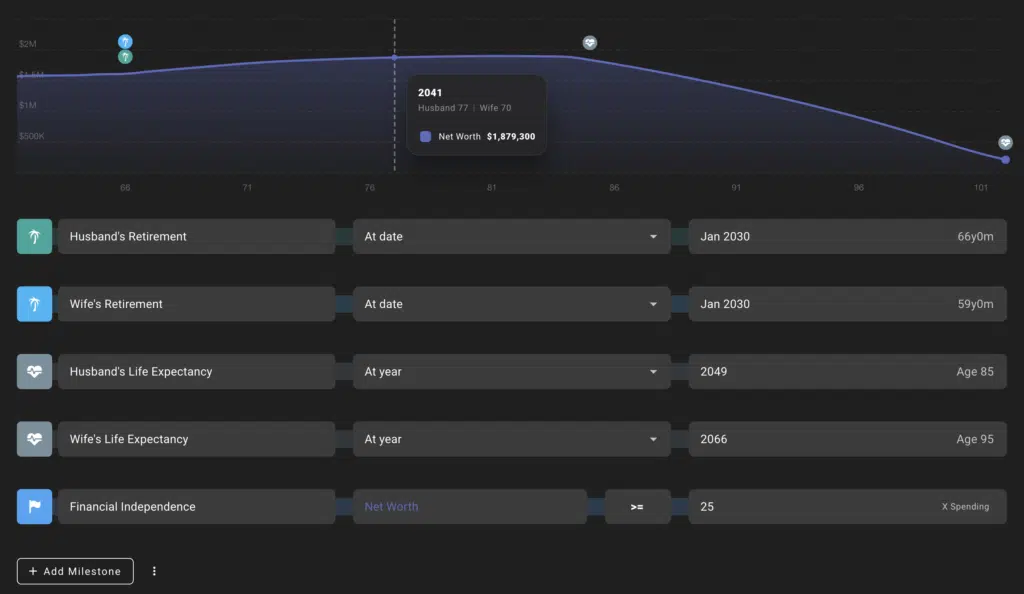
The journey continues with the establishment of milestones. These represent major life events—such as purchasing a home, welcoming a child, relocating, or scaling back work commitments—that dictate the pacing of an individual’s financial timeline. Following this, users input their anticipated income streams and recurring expenses. A notable design choice here is the distinction between essential and discretionary spending, a classification that enables sophisticated modeling of flexible spending strategies during market downturns.
To manage cash flow dynamically, the platform utilizes a priority-based system often referred to by users as cash flow rules. This mechanism dictates precisely where surplus capital flows each year, establishing an automated hierarchy that might prioritize building an emergency fund, aggressively paying down debt, maxing out tax-advantaged retirement accounts, and finally channeling remaining funds into taxable brokerages. Once these parameters are established, the platform projects the user’s financial future annually, allowing individuals to run endless "what-if" scenarios to test the resilience of their plans.
Key Features and Advanced Analytical Tools
While the software began as a straightforward forecasting utility, its evolution has introduced a robust suite of advanced analytical tools. Chief among these is the Chance of Success metric, which subjects a financial plan to thousands of simulated market scenarios through Monte Carlo simulations. In addition, the platform offers historical backtesting, subjecting a strategy to actual historical sequences of market performance. These simulations yield a single, quantifiable success percentage that allows planners to stress-test their assumptions against historical volatility.
For those operating on a paid subscription, the platform unlocks high-level visualization and optimization tools. One standout visualization is the Sankey diagram, which maps out annual cash flows by illustrating exactly how income enters the system and branches out into taxes, lifestyle expenses, and various categories of savings.
Tax planning has likewise transformed from a basic estimation feature into one of the platform’s most sophisticated capabilities. The software models federal and state tax liabilities, handles complex multi-year Roth conversion strategies, accounts for capital gains harvesting, and helps users navigate the nuances of the Affordable Care Act (ACA) subsidy cliffs. This level of tax sophistication is rarely found in consumer-facing software, making it a valuable asset for retirees aiming to minimize lifetime tax burdens.
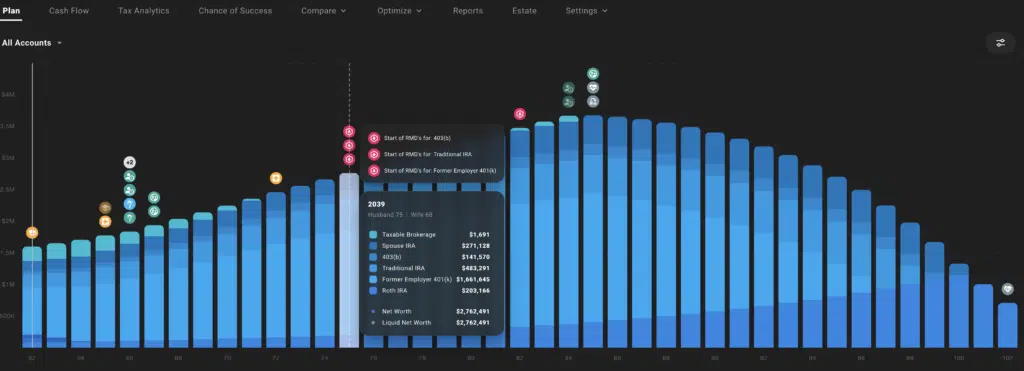
Furthermore, the platform accommodates diverse withdrawal strategies, allowing users to move beyond fixed-dollar drawdowns and experiment with variable spending rules tied to portfolio performance. Estate planning tools estimate legacy values, federal estate taxes, and charitable giving mechanics such as Qualified Charitable Distributions. International users are also supported through dedicated tax presets and account structures tailored to countries including Canada, the United Kingdom, Australia, the Netherlands, and Germany.
Subscription Tiers and Pricing Structure
ProjectionLab operates on a tiered pricing model billed annually, omitting monthly or lifetime subscription options. The platform provides a free Basic tier that grants access to the core forecasting engine, Monte Carlo simulations, and historical backtesting. However, the Basic tier does not save data between sessions and keeps advanced utilities locked.
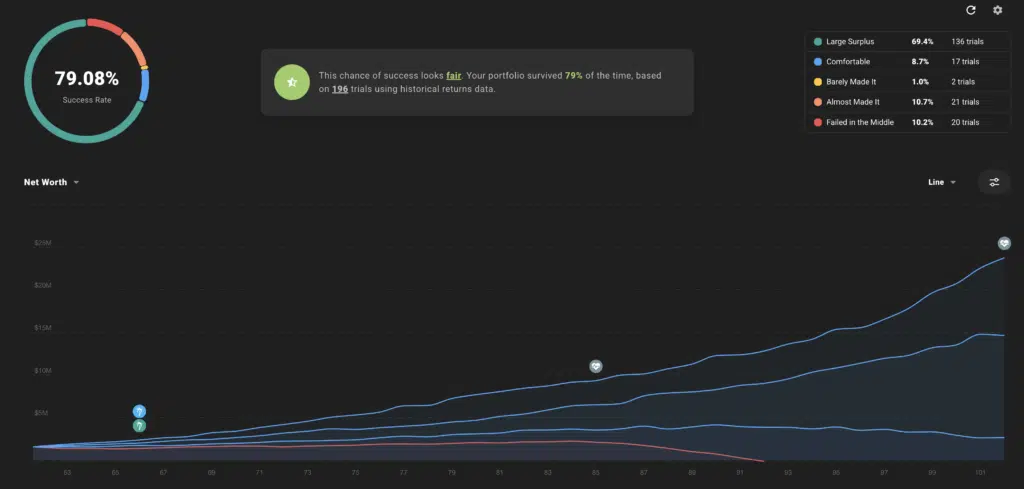
The Premium tier, priced at $129 per year, unlocks the full suite of features required for serious, long-term planning, including data persistence, cash-flow visualization, tax optimization, withdrawal strategy customization, estate planning, and compare modes. A Pro tier, priced at $549 annually, caters specifically to financial advisors and coaches by providing dedicated client dashboards and multiple user seats. Both paid tiers include a seven-day trial period, allowing users to test the comprehensive feature set before committing financially.
Ultimately, ProjectionLab occupies a unique space in the personal finance landscape. By avoiding automated account aggregation in favor of privacy and manual control, it appeals directly to hands-on planners who want deep visibility into their financial futures. While it requires a greater initial time investment than automated budgeting apps, its analytical power and transparent business model make it a compelling resource for self-directed wealth management.








No comments yet. Be the first to join the conversation!