
India produces more feature films than any other nation on Earth, maintaining an industrial output that feeds a voracious domestic and international appetite for celluloid storytelling. Led by the Hindi-language juggernaut known universally as Bollywood, Indian cinema has historically mastered the art of high-octane spectacle. Audiences have long flocked to theaters for over-the-top narratives designed to thrill and mesmerize.
In recent blockbusters, this formula has manifested in increasingly audacious ways. In last year’s Hindi hit Dhurandhar, the protagonist routinely survives hailstorms of bullets amid the festive chaos of a gangster’s wedding. In the Telugu-language global phenomenon RRR—which captured an Academy Award for the pulsating, energetic anthem Naatu Naatu—the hero unleashes an entire truckload of wild animals upon a British governor’s colonial party during a pivotal confrontation. Meanwhile, in the Tamil film Retro, director Karthik Subbaraj orchestrated a massive 15-minute single-take spectacle capturing an entire sequence of song, dance, and complex action seamlessly.
Across India’s multipolar cinematic landscape, this grand, melodramatic formula has generated immense box office returns for decades, drawing millions of dedicated moviegoers into darkened halls to experience soaring romance and visceral action. However, the modern entertainment ecosystem is undergoing a profound structural shift. The rapid proliferation of streaming platforms, shifting consumer sensibilities, and a noticeable decline in traditional theater footfall have completely upended legacy calculations regarding opening-day box office returns, bankable star power, and reliable family-friendly plotlines.
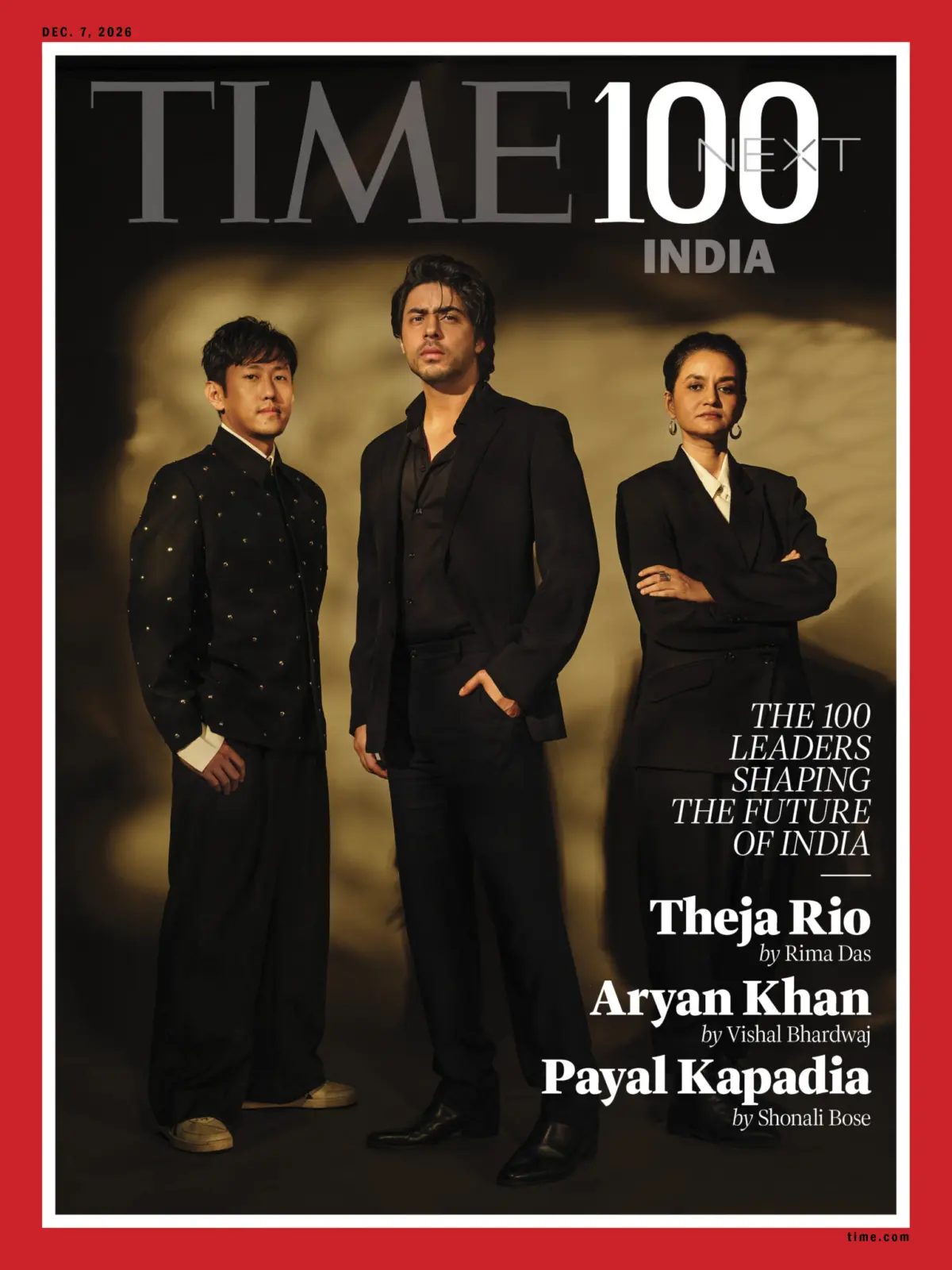
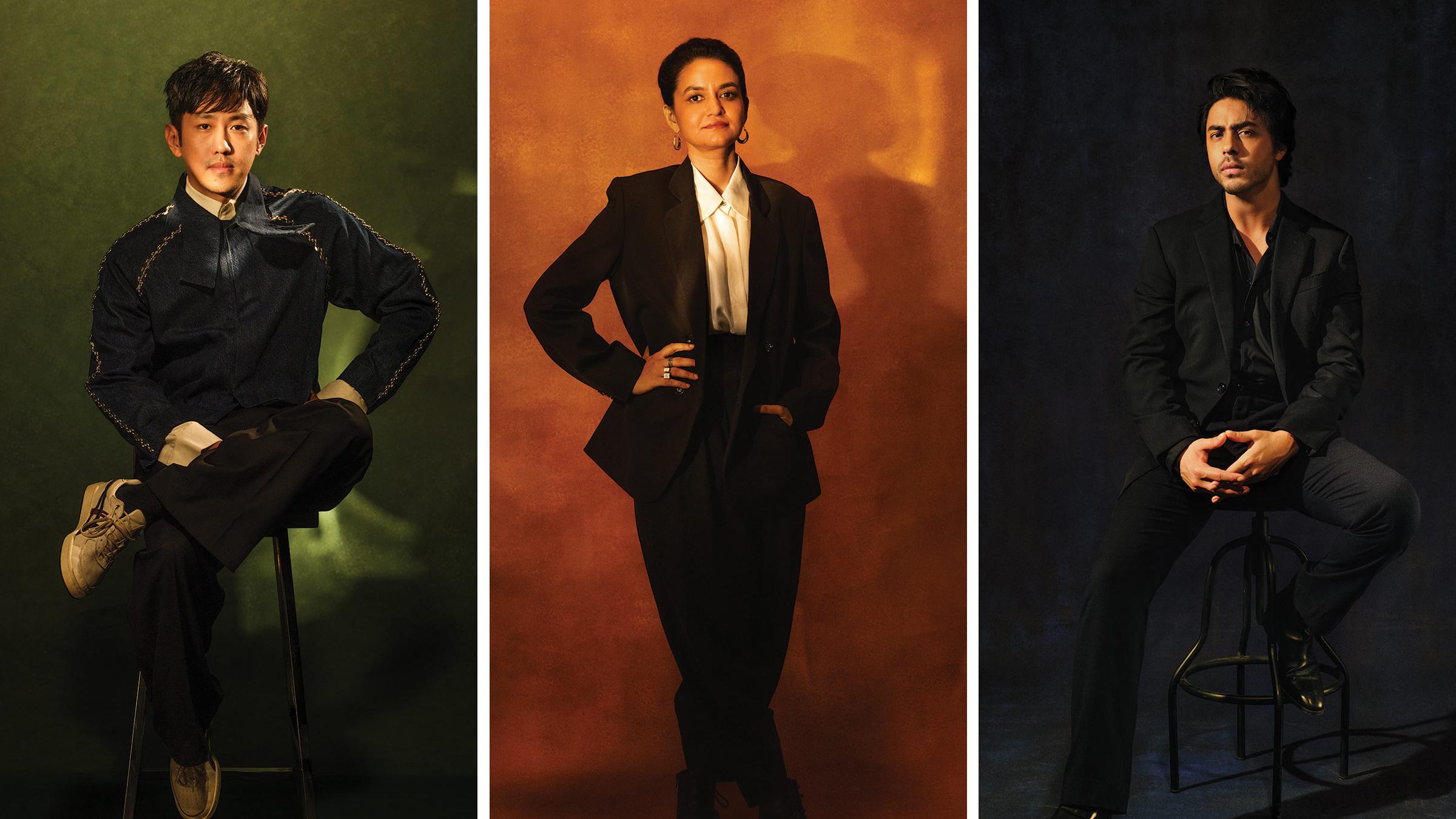
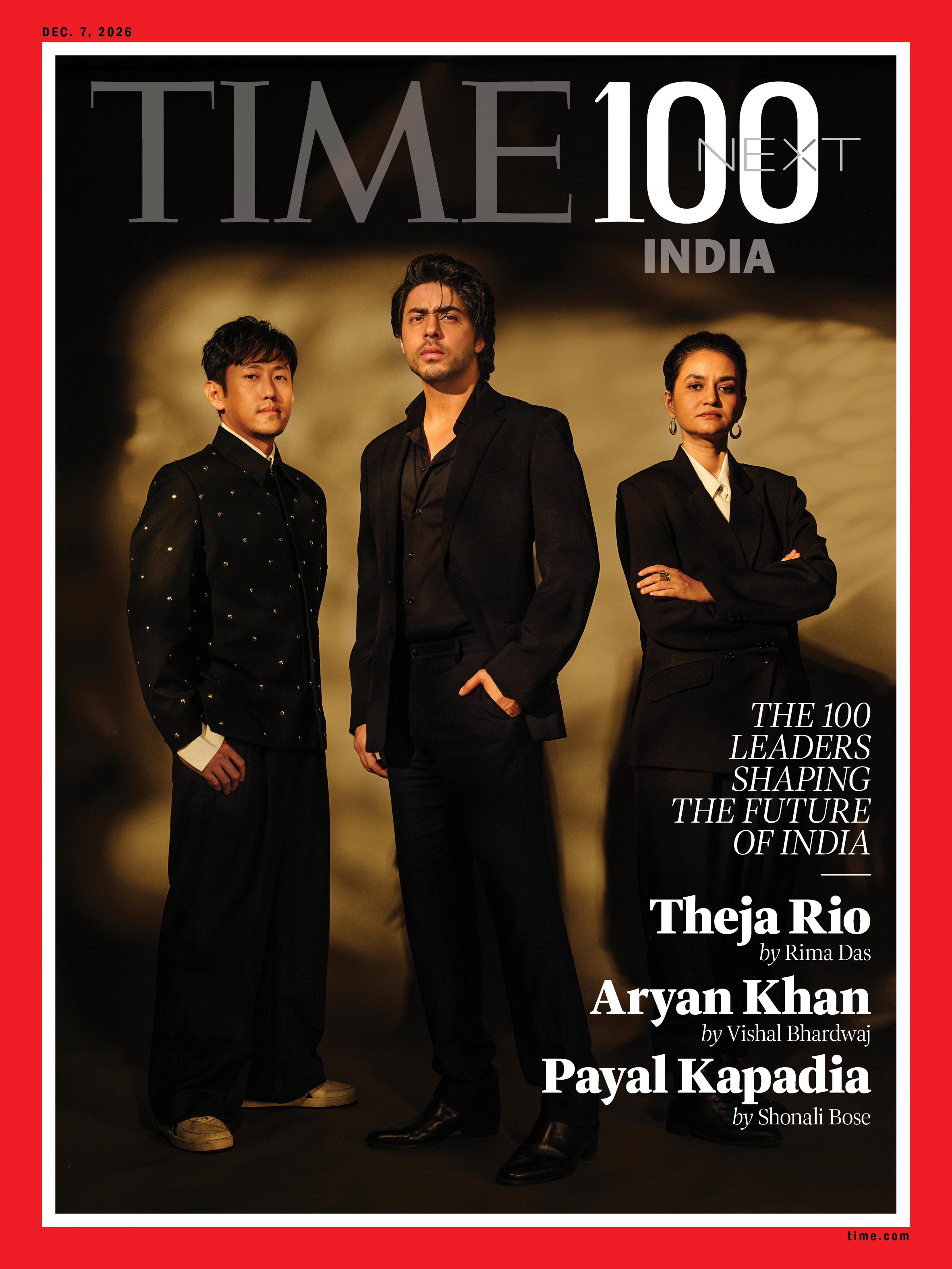
Amid this turbulent industry churn, a fresh class of innovative voices has emerged, establishing a firm foothold by deliberately challenging traditional conventions. Figures like Aryan Khan, Payal Kapadia, and Theja Rio share almost nothing in common in terms of background, language, or artistic style, yet their distinctive stamps on contemporary filmmaking are fundamentally transforming the possibilities of what Indian cinema can achieve on the global stage.
As the son of Shah Rukh Khan, India’s most universally popular cinematic superstar, Aryan Khan represents a unique bridge between classic commercial filmmaking and modern streaming culture. He is attempting to bring the grand, big-budget blockbuster tradition to a new generation of viewers, crafting mainstream fare that respects the intelligence of its audience. Operating as the ultimate industry insider, Khan made a splashy, highly anticipated directorial debut in 2025 with the puckish Netflix series *The B**ads of Bollywood, a satirical project that went on to sweep domestic award shows.
Payal Kapadia carries forward an entirely different, highly storied legacy rooted in India’s intellectual Parallel Cinema movement. By seamlessly fusing fact, fiction, and poetic fantasy, she crafts deeply intimate films designed for the international art-house stage. A former economics student who later graduated from India’s premier national film institution, Kapadia captured global attention when her first narrative feature, All We Imagine as Light, won the prestigious Grand Prix at the Cannes Film Festival in 2024.
Meanwhile, Theja Rio was raised in a remote hill town nestled within one of India’s strategically sensitive border states, growing up with virtually no access to local cinemas and suffering from a profound lack of cultural representation on-screen. Last month, however, Rio stood proudly on the world stage at the Toronto International Film Festival, accepting the coveted Platform Prize for his striking debut feature film, Angh.
Between them, these three distinct filmmakers have dramatically broadened the cultural horizons of Indian cinema, mapped out its prospective future, and demonstrated to the international community precisely why India’s diverse artistic vision remains vital.
The Insider’s Gambit
The first thing any observer notices about Aryan Khan is his striking resemblance to his father. The visual echo of a young Shah Rukh Khan—whose famous dimpled smile has commanded the adoration of hundreds of millions of fans for more than three decades—is impossible to ignore. The father and son also share a distinct brand of dry, irreverent humor, though the younger Khan tends to present a more reticent demeanor in public.
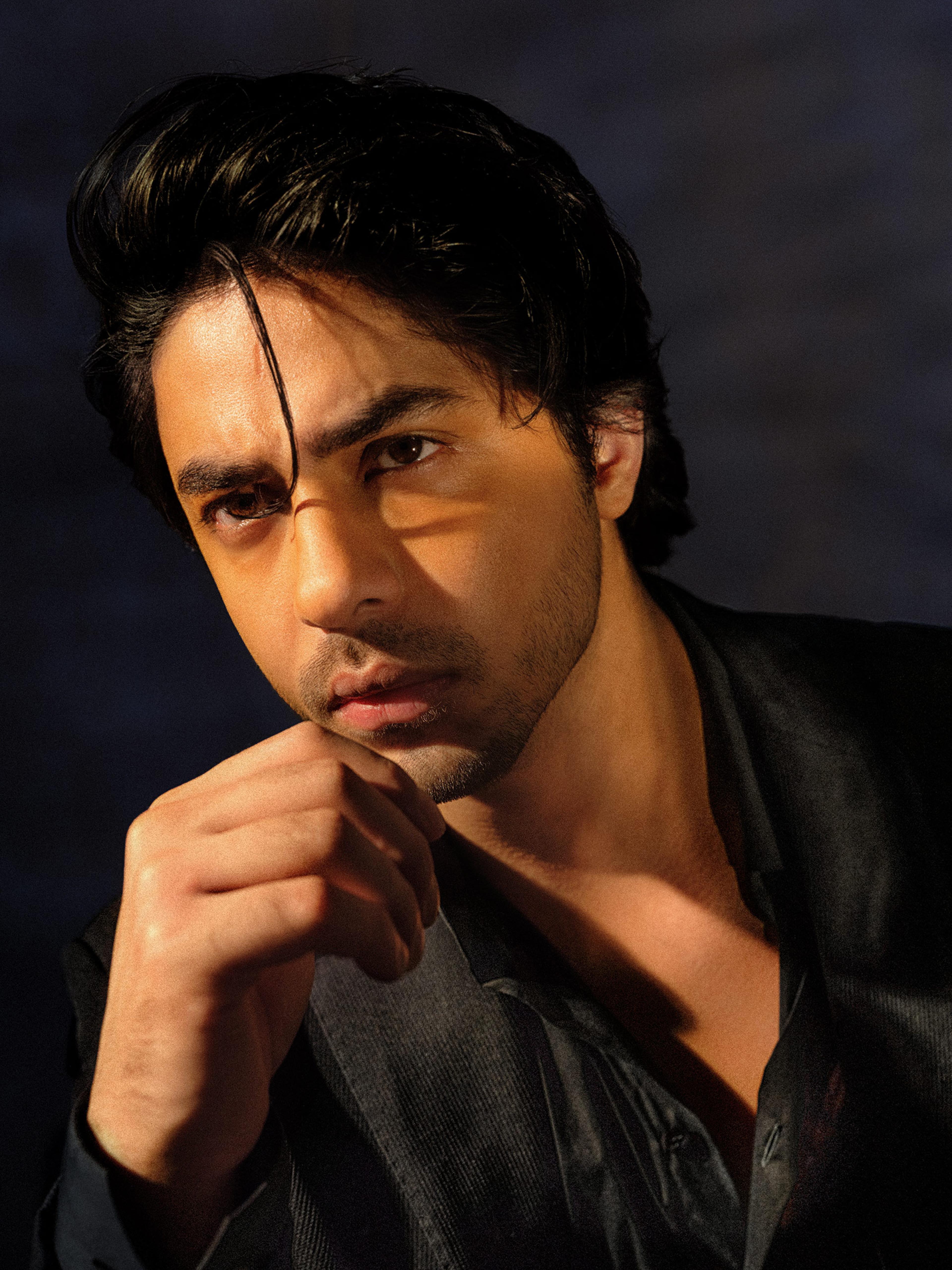
"Everyone has been compared to him. It’s fine if I’m one of the people," Khan remarks with practiced ease, reflecting on his famous lineage. "I take it as a compliment to be compared to the number one guy. He’s a beast."
At 29 years of age, Khan possessed the privilege of pursuing virtually any front-facing role within the industry. Instead, he deliberately chose to operate entirely behind the camera. *The B**ads of Bollywood, produced under his parents’ production banner, functioned as an unvarnished, satirical send-up of the Hindi film industry itself. The series leaned heavily into the internal mythology of Bollywood, bringing backstage intrigue, systemic flaws, and long-circulating rumors directly to the forefront of the narrative. The series features archetypes familiar to industry observers: the villainous producer with meticulously coiffed hair, the struggling and talented outsider, and a series of dramatic plot twists culminating in a sharp narrative climax.
Despite holding immense star power by birthright, Khan has historically remained an elusive interview subject, making his participation in prolonged media engagements a rare exception. Meeting at Mehboob Studio—a legendary cultural landmark in Mumbai that also served as the backdrop for his photographic portraits—Khan cuts a focused, serious figure. On set, he is deeply observant, offering precise suggestions regarding lighting adjustments and keeping a vigilant eye on the framing monitors. While he actively resists being labeled an absolute perfectionist, he freely admits to obsessively shooting extra takes simply to avoid the sting of regret later in the editing room.
Mumbai’s glittering facade often conceals a harsh, grinding reality. Every single day, thousands of hopeful dreamers pour into the financial capital, arriving with little more than ambition and the hope of catching a lucky break. Yet, Bollywood maintains no standardized template for success. While physical appearance, raw talent, and tireless hard work matter deeply, the industry is equally governed by sheer luck, powerful social networks, and the psychological perseverance required to outlast repeated failures. Khan understands this dynamic intimately; his father has often publicly recounted arriving in Mumbai as an ambitious young man with only 1,500 rupees—roughly equivalent to $15—to his name.
Celebrity lineage provides immediate professional opportunities, but it simultaneously invites intense public scrutiny. Khan has used his debut project to signal precisely how he intends to navigate this dual reality. During the physical production of his series, he learned that Salman Khan—for decades the dominant action star peer to his father’s romantic lead persona—was shooting at an adjacent location. The younger Khan dispatched a message to Salman’s team inquiring if he might drop by briefly to offer a polite greeting. Instead, Salman opted to walk over to Khan’s set personally.
Sensing a unique opportunity, Khan immediately alerted his cinematographer to keep the cameras rolling. Upon arrival, Salman glanced around the set and asked, "What’s the position?" Khan pointed directly at the rolling camera and fed the veteran star an improvised piece of dialogue that ultimately transformed into one of the most memorable comedic moments in the entire series.
"I am good at bringing ideas to life, from getting them down on paper to seeing things through to execution," Khan explains.
Through comedy, Khan finds the creative latitude necessary to reflect upon such singular, privileged industry experiences. *The B**ads of Bollywood spares virtually no one from its self-aware satire, even poking gentle fun at Khan’s own father, who gamely agreed to make a memorable, self-deprecating cameo appearance in the show.
Currently, Khan is deep into production on the second season of the hit series while simultaneously writing an entirely separate cinematic project. He views cinema fundamentally as a vehicle for escapism. Because most fundamental human stories have already been told across millennia of storytelling, Khan argues that the true differentiator is the unique perspective a modern filmmaker brings to the material.
"The story is the same. Now how you can make that different, and how you add a spin on it, and how you tell it, is what filmmaking really is," he observes.
Cinema’s Quiet Disruptor
Payal Kapadia’s cinematic style thrives in the accumulation of subtle, lived-in details: the quiet, clinical trauma of a stray cat undergoing an ultrasound; a fragmented conversation overheard by weary commuters on a crowded local train; or a pedestrian skywalk that transforms into a makeshift shelter for the homeless after dark. She observes these everyday realities meticulously, storing them away in her creative memory. Her artistic process, as she describes it, is akin to that of "a bird making a nest."
When these disparate narrative fragments are finally stitched together, the resulting composite is a style of cinema that is distinctly grounded in Indian realities while possessing a deeply universal, global outlook. Her films invite a radical intimacy and alternative modes of perception. "Life is more interesting than cinema," Kapadia, 40, reflects during a conversation at her Mumbai production office. Since her triumph at Cannes, her international profile has expanded significantly; she has served on the festival’s official jury and was recently honored with the prestigious Chanel Next Prize.
Her critically acclaimed masterwork, All We Imagine as Light, which propelled Kapadia onto the international stage, originated from personal observations surrounding her grandmother’s illness and the dedicated nurses who provided her care. The film centers on three female protagonists navigating the sprawling, pulsating geography of Mumbai, a metropolis Kapadia renders with as much emotional complexity and personality as the human characters themselves.
Much of the film is set against the backdrop of Mumbai’s intense monsoon season and is bathed in a symbolic palette of blue. The color choice is deliberate: blue is the ubiquitous shade of the cheap plastic tarpaulins that provide fragile protection to the sprawling shanties housing an estimated half of Mumbai’s 21 million residents through torrential seasonal downpours.
Kapadia’s progressive politics course quietly through the narrative. Amid the urban chaos, the film moves at an unhurried, meditative pace, following two young nurse roommates, Prabha and Anu, alongside Parvaty, an elderly hospital cook. Parvaty faces imminent eviction as aggressive real estate developers swallow up remaining pockets of the city to construct towering luxury skyscrapers. She is repeatedly ordered by bureaucratic authorities to produce formal documentation proving her legal right to reside in the home she has known for decades. In one emotionally affecting scene, she tells a bewildered lawyer that he could simply verify her residency by asking her neighbors. This poignant moment speaks simultaneously to Mumbai’s acute housing crisis and a broader, pervasive national anxiety concerning complex bureaucratic mandates requiring citizens to prove their identities through exhaustive paperwork.
The physical home where Parvaty’s character was depicted living has since been demolished by developers.
"We don’t live in a void as filmmakers," Kapadia states firmly. "You can choose to live in a void, you can choose to say that you don’t want to engage with anything, but that would be very strange for me."
Her social engagement extends far beyond the boundaries of her cinematic output. She recently raised her voice in public solidarity with student demonstrators at a prominent national film institution amid campus protests. "Being in university really changed my life. So student spaces are very important for me," she explains.
Her early creative inclinations were nurtured by her mother, an accomplished and prominent visual artist. Their household was frequently filled with fellow creatives visiting from esteemed institutions like the J.J. School of Arts and M.S. University in Baroda. "That was a huge influence on me. I didn’t realize how important it was till I went to film school," she notes.
An alumna of the prestigious Film and Television Institute of India—where she emphasizes she gained admission only on her second attempt—Kapadia’s artistic trajectory aligns with the long, distinguished arc of India’s art-house legacy. For decades, this alternative tradition has pushed formal boundaries to produce some of the most visually striking and socially conscious cinema in the country.
Her next feature film, currently in preproduction, spans three distinct decades of Mumbai’s history, documenting neighborhoods undergoing radical, violent modernization. As she describes the ambition behind the project, it is about "documenting the spaces before [they’re] gone."
A Regional Renaissance
In a country where the cultural lure of commercial cinema is extraordinarily difficult to resist, Theja Rio’s initial casting call for his delicate period drama—focusing on an Indigenous village chief and his son navigating the encroaching influence of Christianity in Nagaland during the 1960s—drew exactly one interested individual. Undeterred by the initial apathy, Rio embarked on an extensive journey across his home state, nestled deep within the strategically vital northeastern fringe of India.
"The film is from the perspective of the subject, not the explorer," Rio explains, explaining his stubborn insistence on casting authentic members of the Konyak tribe residing in the remote Mon region.
Finding a suitable lead actor proved intensely difficult. One evening, driven by frustration, Rio turned to his computer and typed "Konyak stand-up comedian" into a search engine. YouTube directed him to Anglong Konyak, whom Rio describes as having been "10% stand-up comedian, 90% farmer."
"I was adamant that we cast people from the same tribe who spoke the language as their mother tongue," he emphasizes.
Rio is mild-mannered and describes his personal demeanor as naturally reserved. We meet at a popular café in Mumbai, just a day after he hosted an exclusive screening for several of the city’s leading filmmakers. He jokes wryly that he likely set an unofficial world record for the sheer number of handshakes he was forced to exchange over the course of the previous month.
The exhaustive casting process alone consumed eight months, leaving him with a mere two months to complete production on his modest $525,000 budget. His crew battled grueling road conditions daily, enduring a three-hour drive just to reach the dense jungle locations where filming took place. "Every creative decision felt like I was shooting myself in the foot—shooting on film, working with non-actors. But I think it sort of paid off," he reflects.

And pay off it did. Angh captured the prestigious Platform Prize at this year’s Toronto International Film Festival and, under updated qualification rules, secured a coveted spot in the race for the Academy Award for Best International Feature Film.
Matters of religious faith and conversions remain politically volatile topics in contemporary India. Yet in Nagaland—where 88% of the population identifies as Christian, a higher proportion than the state of Mississippi—Rio approached the subject with profound narrative nuance. He captured individuals caught in the profound cultural churn as an ancient traditional order gives way to modernity. "I like to make films about things I’m conflicted about," he notes. "I have no interest in making films about things I’m sure about."
The film refuses to sanitize historical realities. In one striking sequence, the tribal chief disposes of his late wife’s body through traditional rituals designed to preserve her skull. In another, a young child responds in English out of sheer fear of corporal punishment, striking a chord of cold, ironic familiarity for countless middle-class Indians educated in convent-run missionary schools. "My family is Christian, I’m Christian. A lot of us are Christian. But [the film] is also a form of self-reflection," he explains. "I wanted my first film to be a strong reflection of who I am as an artist… something rooted in my culture and identity."
The 31-year-old filmmaker was born to a businessman and a government employee in Kohima, the mountainous state capital. The earliest films he consumed were watched not inside traditional cinema halls, but on household television sets. After completing his foundational studies in Delhi, Rio traveled to Italy to participate in intensive film workshops before securing admission to the United Kingdom’s renowned National Film and Television School.
The international success of Angh has thrust Rio into the spotlight as an accidental cultural ambassador for Nagaland and India’s broader northeastern region—a stunningly diverse geographic area that has historically suffered from the tyranny of physical and cultural distance from the nation’s political and industrial heartlands.
His upcoming cinematic project is conceived as a personal love letter to his hometown of Kohima. While he intends to continue crafting narratives rooted deeply in Nagaland, as well as in Delhi and the U.K., his immediate ambition is to radically expand the commercial and artistic horizons for films produced within his home state.
"Bigger in budget, bigger in ambition," Rio concludes. "Big enough to have Hollywood actors come and shoot."








No comments yet. Be the first to join the conversation!