
By Prasad Ananthakrishnan and Vera Songwe
WASHINGTON, DC – The recent state visit of Chinese President Xi Jinping to the United States concluded with a modest diplomatic outcome: a two-month extension of the existing bilateral trade truce. While the meeting produced little in the way of sweeping policy overhauls or landmark treaties, the subtle undertones of the summit have signaled a crucial shift in the global geopolitical climate. Both President Xi and his American counterparts have clearly signaled a desire for a more stable, predictable relationship, particularly as both nations look toward the high-stakes Asia-Pacific Economic Cooperation (APEC) summit in Shenzhen this November and the G20 gathering in Miami this December. For emerging and developing economies—most notably those across the African continent—this newfound, if fragile, thaw in US-China relations presents a strategic window of opportunity that has not existed for years.
The geopolitical stabilization comes at a time when the global financial landscape is undergoing a profound and potentially volatile transformation. We are currently witnessing a historic divergence in monetary policy and borrowing costs between the world’s two largest economies. In the United States, interest rates remain elevated, causing dollar-denominated borrowing costs to soar. For many African nations that rely heavily on international capital markets to finance their development, the current cost of servicing dollar-denominated debt has become a significant fiscal burden, constraining their ability to invest in critical infrastructure and social services.
Conversely, the Chinese economy is moving in the opposite direction. Interest rates within China are currently approaching record lows, a move intended to stimulate domestic growth and stabilize the Chinese financial system. This creates an asymmetric environment: capital is expensive and tightening in the West, while it is becoming increasingly accessible and cost-effective in the East. For African policymakers, this divergence is not merely a macroeconomic curiosity; it is a tactical opening to re-evaluate their external financing strategies and diversify their partnerships to better serve their national interests.
The central thesis for African governments is to move away from the binary "either-or" approach that has characterized much of the discourse regarding US and Chinese influence on the continent. For too long, the narrative has been framed as a zero-sum game where choosing one partner necessitates excluding the other. However, the current global economic climate suggests that a more nuanced, hybrid approach is not only possible but necessary. By strategically aligning with the United States on specific sectors and pivoting toward China for others, African nations can leverage the unique comparative advantages of both superpowers to drive their own sustainable development agendas.
The most promising area for this dual-engagement strategy lies in the energy sector. Africa is at a critical juncture in its energy transition, struggling to balance the immediate, desperate need for reliable, affordable power with the long-term imperative of decarbonization. Natural gas is widely viewed as a vital "bridge fuel" for many African economies, providing the necessary baseload power to industrialize and lift populations out of poverty while displacing more carbon-intensive energy sources. The United States, with its advanced natural gas extraction technologies and robust energy infrastructure expertise, is an ideal partner for these initiatives. African governments should prioritize partnerships with American firms and institutions to develop gas infrastructure, tapping into US technical expertise and private sector investment to secure energy stability.
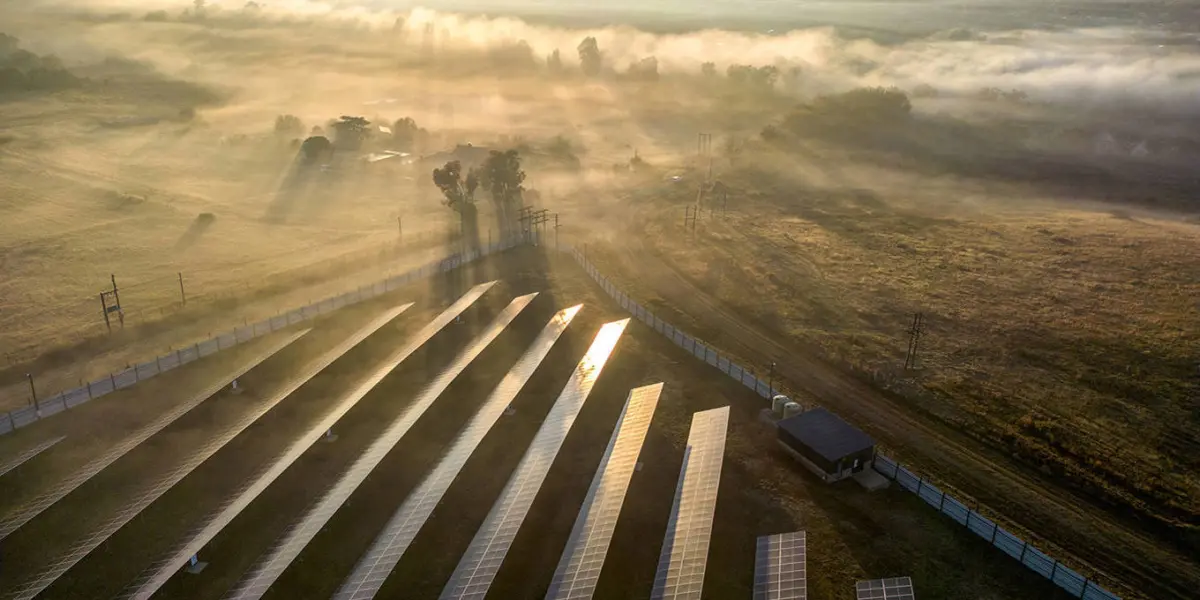
Simultaneously, the global push toward a green energy future requires a massive scale-up in renewable capacity, particularly in solar power and energy storage systems. This is where China’s current economic position offers a distinct advantage. As China pushes to solidify its dominance in the global green technology supply chain, it has invested heavily in solar manufacturing, battery production, and grid-scale storage solutions. With Chinese interest rates at record lows, the cost of financing these capital-intensive projects via Chinese credit or Asian capital markets is substantially lower than equivalent financing sourced from the dollar-denominated market.
By utilizing Chinese financing for solar and storage projects, African nations can effectively lower their total cost of capital for their energy transitions. This approach allows these countries to optimize their financing mix, utilizing high-value US partnerships for natural gas to secure the present, while leveraging low-cost Chinese capital for renewables to secure the future.
However, executing such a strategy requires a high degree of diplomatic agility and institutional capacity. African leaders must navigate the sensitivities of both Washington and Beijing, ensuring that their bilateral relationships remain transparent and focused on mutually beneficial outcomes. The "thaw" in US-China relations, while welcome, is still subject to the pressures of domestic politics in both countries. The upcoming APEC summit in Shenzhen and the G20 in Miami will serve as critical litmus tests for the longevity of this stability. African governments would do well to observe these summits closely, as the tone set by the leaders of the US and China will dictate the geopolitical room for maneuver available to developing nations in the coming year.
The fiscal pressure facing many African nations is real and mounting. High debt-servicing costs are threatening to crowd out essential public investments in education, healthcare, and climate adaptation. The ability to access lower-cost Asian capital markets for infrastructure development could be the difference between stagnation and growth. By tapping into these markets, African countries can reduce their reliance on more expensive debt instruments, thereby creating more fiscal space to address the urgent needs of their citizens.
Furthermore, the integration of these two financing streams—US expertise in traditional and transitional energy and Chinese financing for green infrastructure—can serve as a model for "smart" development diplomacy. It moves beyond the outdated paradigms of the past and focuses on the pragmatic reality of global finance. It requires African finance ministries and energy departments to become more sophisticated in their engagement with global capital, moving beyond traditional aid-based models toward a more commercial and investment-driven approach.
As the international community prepares for the upcoming diplomatic cycle, the narrative of competition between the US and China should not be viewed as a hurdle, but as a strategic variable to be managed. The divergence in borrowing costs is a temporary but significant window of opportunity. If African nations can successfully navigate this landscape, they may find that the best way to secure their national interests is to remain a partner to both, utilizing the strengths of each to build a more resilient and energy-secure future for their people. The path forward is complex, but the potential rewards—lower financing costs, more robust energy infrastructure, and greater economic sovereignty—are well worth the effort of navigating the shifting currents of global power.









No comments yet. Be the first to join the conversation!