
Managing personal finances often feels like an exercise in fragmentation. Between checking accounts, high-yield savings, credit cards, mortgages, various loans, and retirement portfolios spread across multiple brokerages, getting a holistic view of one’s monetary health can be a daunting task. Empower, a prominent financial tool formerly known as Personal Capital, seeks to solve this exact problem by consolidating 100% of an individual’s finances into a single, accessible dashboard. Having maintained a presence in the digital personal finance space for years, the platform has cultivated a robust reputation, earning strong marks on both the Apple App Store and Google Play. This comprehensive review examines the architecture, capabilities, and practical utility of Empower’s suite of financial tools, exploring how users can leverage the platform to maximize the efficiency of their money.
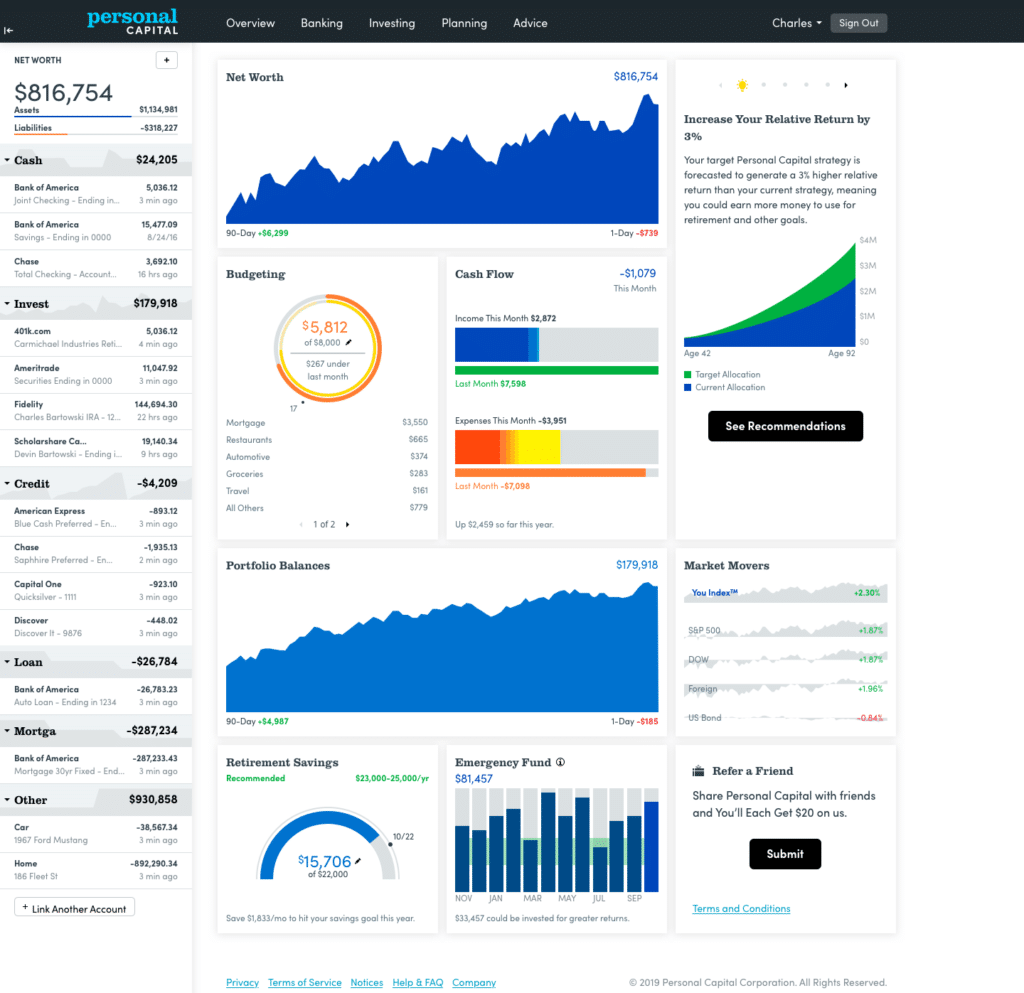
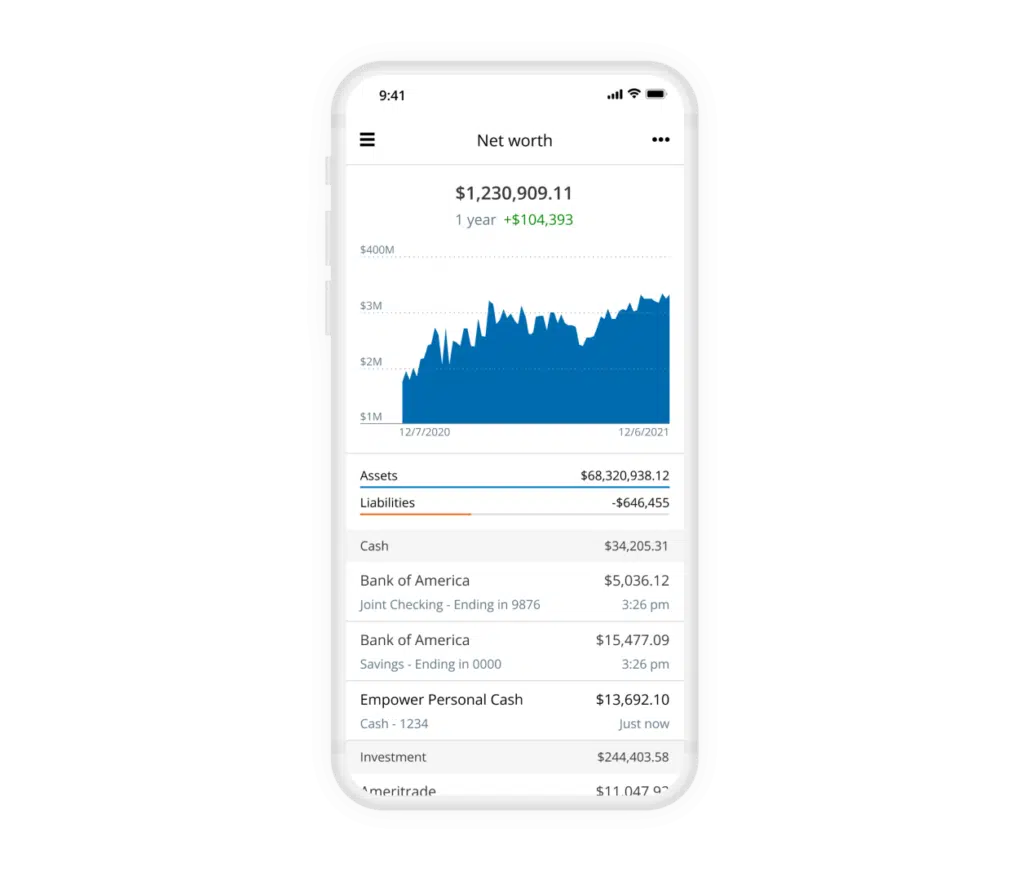
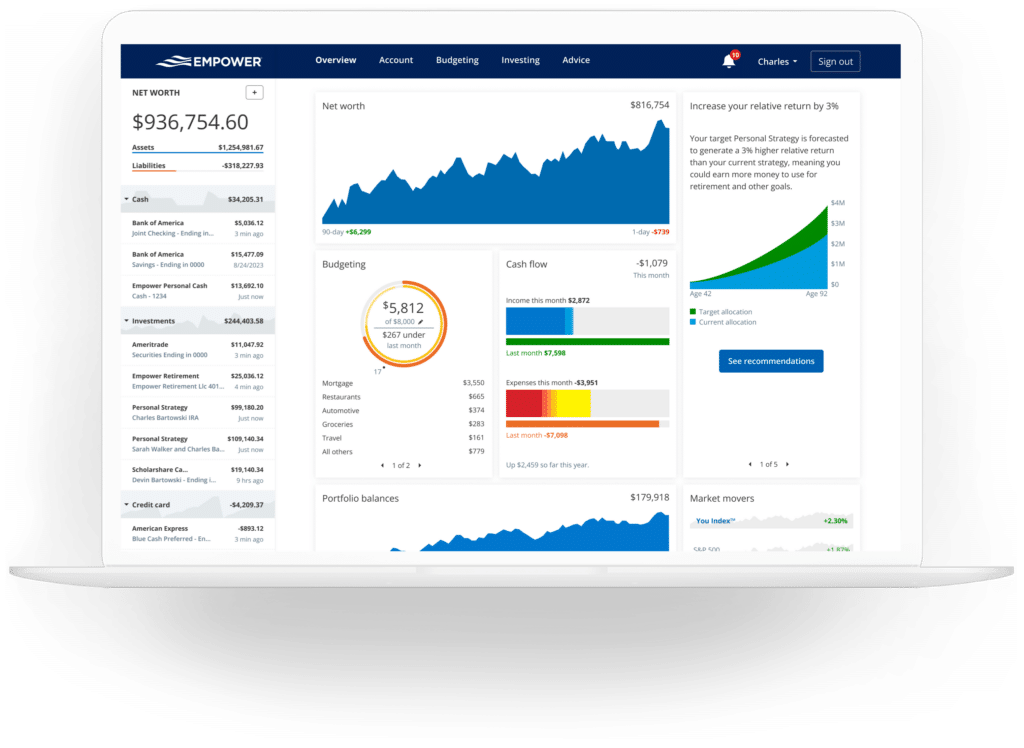
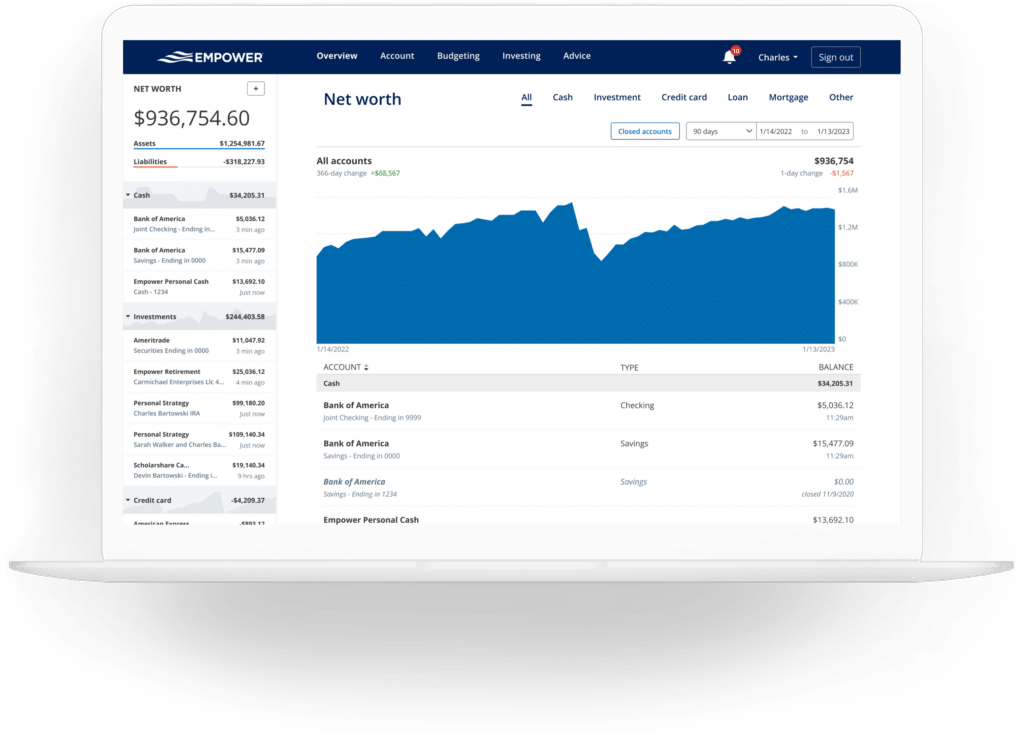
At its core, Empower delivers a complete, centralized view of an individual’s financial ecosystem by automatically syncing a wide array of accounts. This includes checking accounts, savings vehicles, credit cards, various loans, investment portfolios such as 401(k)s and IRAs, and even real estate assets like mortgages. By pulling this information together, the software provides a real-time snapshot of overall net worth and general financial well-being. The platform’s core offerings include cash flow and net worth tracking, advanced investment monitoring, and sophisticated retirement planning. Furthermore, the investment tracking apparatus features detailed asset allocation breakdowns, comprehensive investment fee analyses, and periodic investment checkups, all available through a free baseline service.
Getting Started with Empower
The journey with Empower begins by establishing a free account, after which users are prompted to connect their various financial institutions. While the platform has traditionally enjoyed a strong reputation for analyzing and tracking complex investment portfolios, its utility extends far beyond the stock market. Users routinely connect standard bank accounts, credit cards, installment loans, mortgages, and physical property. Notably, real estate assets can be integrated by linking a home address, which allows Empower to automatically pull in estimated property valuations from Zillow.
Linking accounts requires basic online access credentials, specifically the username and password associated with each financial institution. The integration process is initiated by navigating to the "Link Your Account" dialog box within the dashboard via a designated icon near the top left of the interface. Users can search for their specific financial institution by name or by entering its official web address. In the rare event that a niche financial institution or asset cannot be electronically linked, the platform accommodates manual entries.
Connecting multiple accounts unlocks the platform’s broader capabilities, allowing individuals to monitor net worth, analyze budgets, evaluate cash flow, and keep tabs on upcoming bills from a unified dashboard. While at least one account must be linked initially to activate the system, subsequent accounts can be entered manually. Security and privacy settings are a critical component of the onboarding process, accessible by selecting the user profile in the upper right corner of the screen. Within these settings, individuals can manage email subscriptions for daily or weekly financial summaries, determine whether investment income and dividends should factor into overall cash flow calculations, and configure robust multi-factor authentication. Enhanced security measures also include automated alerts for login attempts originating from foreign countries and a visible log of authorized devices, enabling users to revoke access for outdated hardware. Additionally, the profile section houses vital demographic and financial parameters regarding spouses, savings targets, income streams, and long-term investment objectives, all of which feed directly into the platform’s automated planning tools.
Empower Banking, Cash Flow, and Budgeting
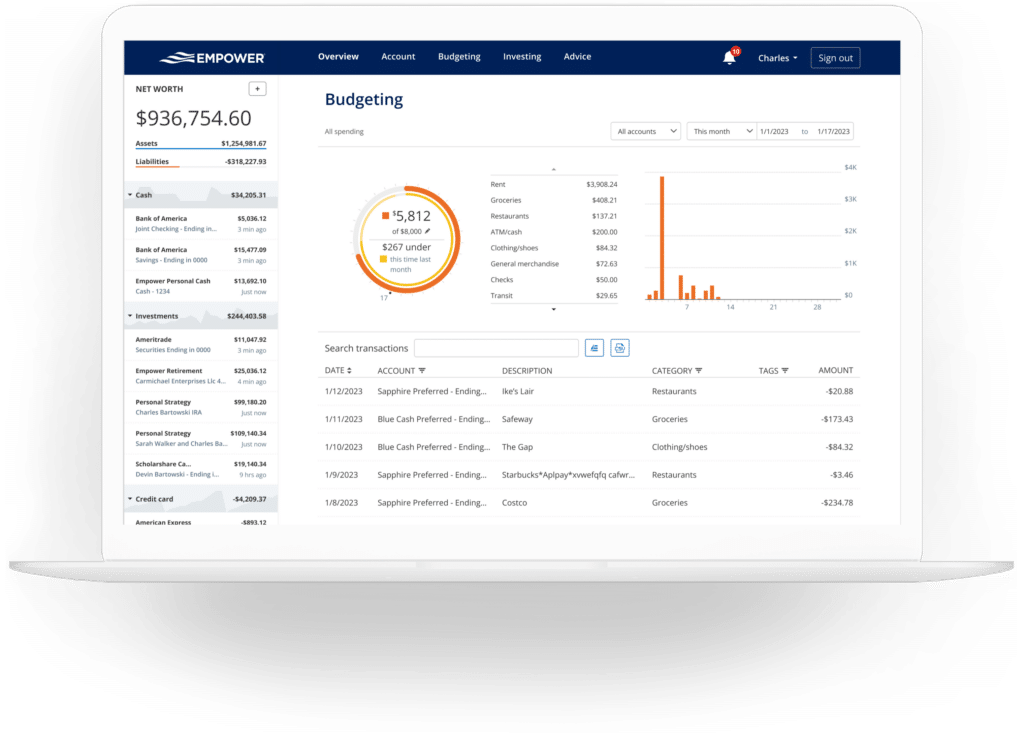
Beyond its investment tracking capabilities, Empower functions as an effective tool for day-to-day banking oversight, particularly through its automated cash flow and budgeting mechanisms. The cash flow feature aggregates income and expenses at the granular transaction level, automatically categorizing spending to provide clear visibility into monthly outlays. Users retain the flexibility to drill down into specific transaction details or filter reports by individual accounts. This filtering capability proves particularly useful for isolating specific financial sectors, such as reviewing dedicated business checking and credit card accounts separately from personal expenditures, or isolating earnings generated solely from investment portfolios to track monthly dividend and interest income.

The budgeting functionality takes a macro-level approach rather than functioning as a traditional envelope-system budgeting app. While users can establish an overarching monthly spending goal, the platform does not currently support granular, category-specific spending caps. Consequently, individuals seeking rigorous, category-based budgeting frameworks often pair Empower with specialized platforms like YNAB. Instead, Empower excels at illuminating spending habits by automatically importing and categorizing transactions across all linked accounts. Although the system generally assigns accurate categories, users typically spend a few minutes each month reviewing and refining classifications. To enhance organization without creating an unmanageable number of custom categories, the platform supports transaction tagging. For instance, a user might route various expenses through a broad home maintenance category while applying specific tags to track costs associated with a pool, thereby maintaining detailed records without overcomplicating the primary budget structure.
Additionally, the integration of credit cards, mortgages, and loans powers a dedicated bills feature. By monitoring payment schedules across linked obligations, Empower helps users track upcoming due dates, mitigate the risk of missed or late payments, and project cash requirements throughout the month.
Empower Investing and Portfolio Analysis
Investment tracking represents one of Empower’s strongest offerings. Once retirement and taxable brokerage accounts are connected, the platform automatically monitors investment holdings, updates asset prices throughout the trading day, calculates mutual fund expense ratios, evaluates asset allocation, and provides diagnostic tools to assess portfolio health.
The holdings overview details individual investments, displaying current market values, daily gains and losses, cost bases, and overall portfolio weightings alongside historical performance metrics. Meanwhile, the allocation tool evaluates the balance between equities and fixed-income assets, breaking down investments further into U.S. and international stocks, bonds, and alternative asset classes. An interactive graphical interface allows users to explore the underlying securities making up each asset class with a simple click. Notably, the cash tracking feature looks beyond dedicated money market accounts, identifying cash reserves held internally within stock mutual funds and exchange-traded funds.
For cryptocurrency investors, Empower accommodates the tracking of digital assets such as Bitcoin, Ethereum, and Litecoin. Rather than requiring direct API access or the surrender of wallet passwords, the platform allows users to add crypto holdings manually by specifying the token symbol, exchange, and quantity owned. Through this method, the system successfully tracks thousands of digital tokens across numerous exchanges.
Empower Planning, Savings, and Fee Analysis
The platform extends beyond simple tracking through advanced planning tools designed to evaluate long-term financial readiness. The automated retirement planner synthesizes data from all connected investment accounts to project future financial security. Users can construct multiple hypothetical scenarios to compare outcomes—such as contrasting a traditional retirement timeline against an early retirement strategy, or evaluating the inclusion versus the exclusion of anticipated Social Security benefits. Assumptions regarding effective tax rates, future inflation, and life expectancy can also be adjusted to test different financial environments.
The savings planner integrates retirement savings goals, emergency fund targets, and debt paydown tracking into a single interface. The retirement savings component monitors annual contributions made to tax-advantaged accounts like 401(k)s and IRAs, as well as taxable accounts, linking directly with the broader retirement planner. For emergency funds, the system evaluates the total cash stored across linked bank accounts and recommends maintaining three to six months’ worth of expenses based on the user’s established monthly budget. The debt paydown planner tracks installment obligations such as car loans, mortgages, and personal loans, alongside credit card balances that carry interest charges over a 90-day window, displaying current balances, Annual Percentage Rates, and year-to-date trajectory graphs.
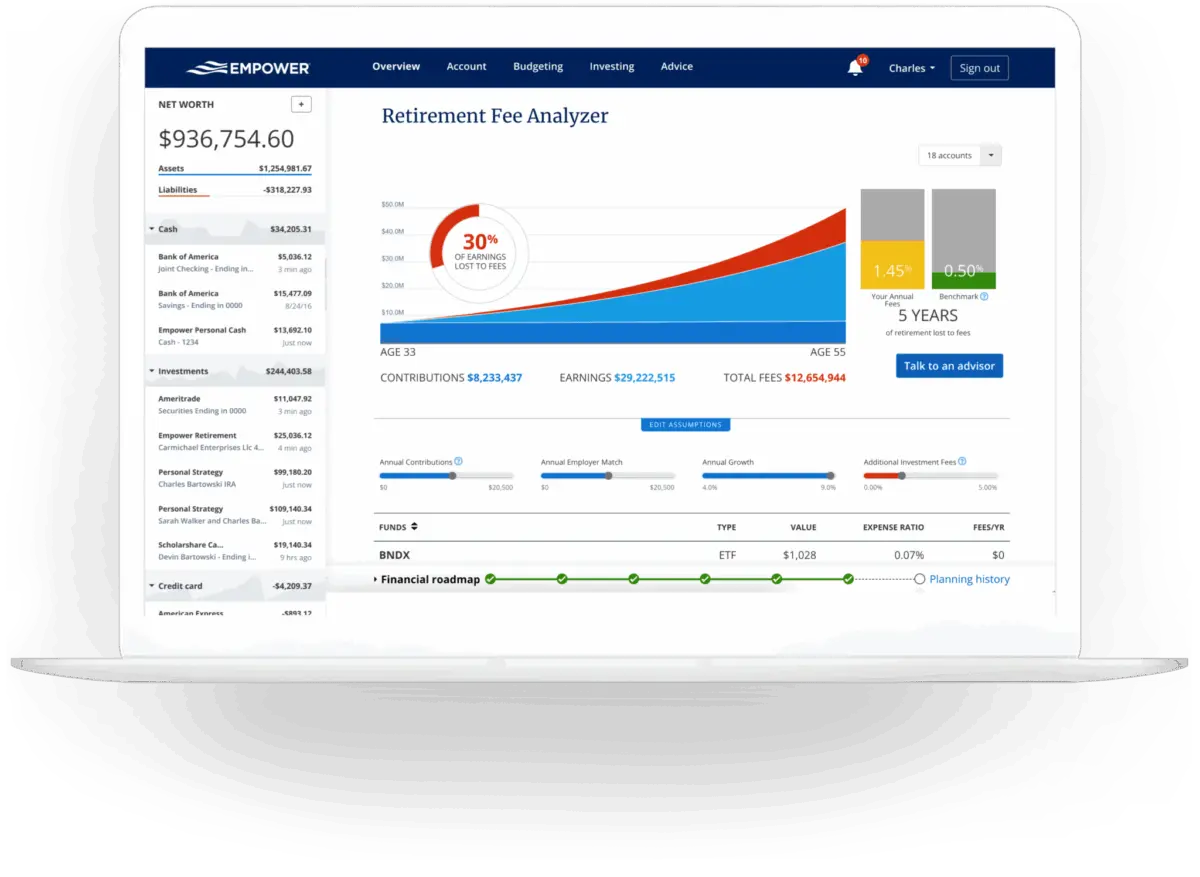
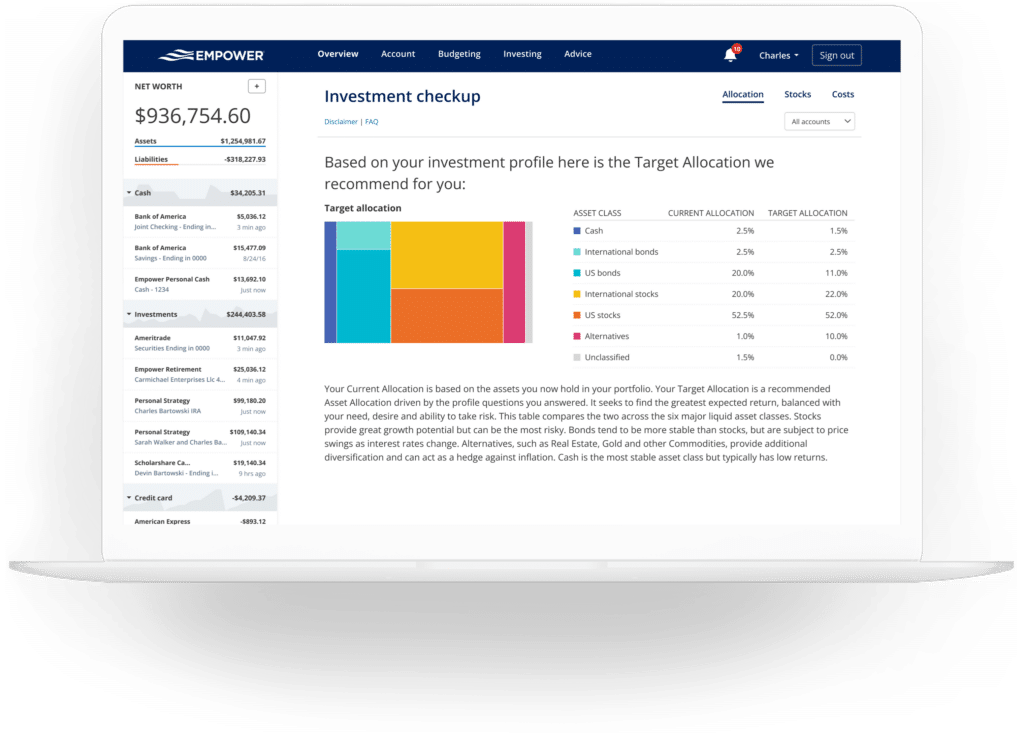
A standout feature of the platform is the retirement fee analyzer, which addresses the wealth-eroding impact of investment management fees over long horizons. By calculating a weighted average expense ratio across all linked accounts, the tool projects the dollar amount that investment and advisory fees will siphon from a portfolio over extended periods. Even low portfolio expense ratios can translate into significant lifetime costs, making this analytical component a vital resource for cost-conscious investors. Complementing the fee analyzer is the investment checkup tool, which compares a user’s actual asset allocation against a target portfolio recommended by Empower based on age, time horizon, and risk tolerance, providing actionable insights on which asset classes require rebalancing.
Security remains a foundational element of the platform’s infrastructure, utilizing AES-256 encryption with multi-layer key management, rotating user-specific keys, and strict internal access controls that prevent personnel from viewing user credentials. While the financial dashboard is offered entirely free of charge, Empower utilizes the platform as part of a broader business model that includes optional paid wealth management and financial advisory services, with advisory fees scaling based on assets under management.








No comments yet. Be the first to join the conversation!