
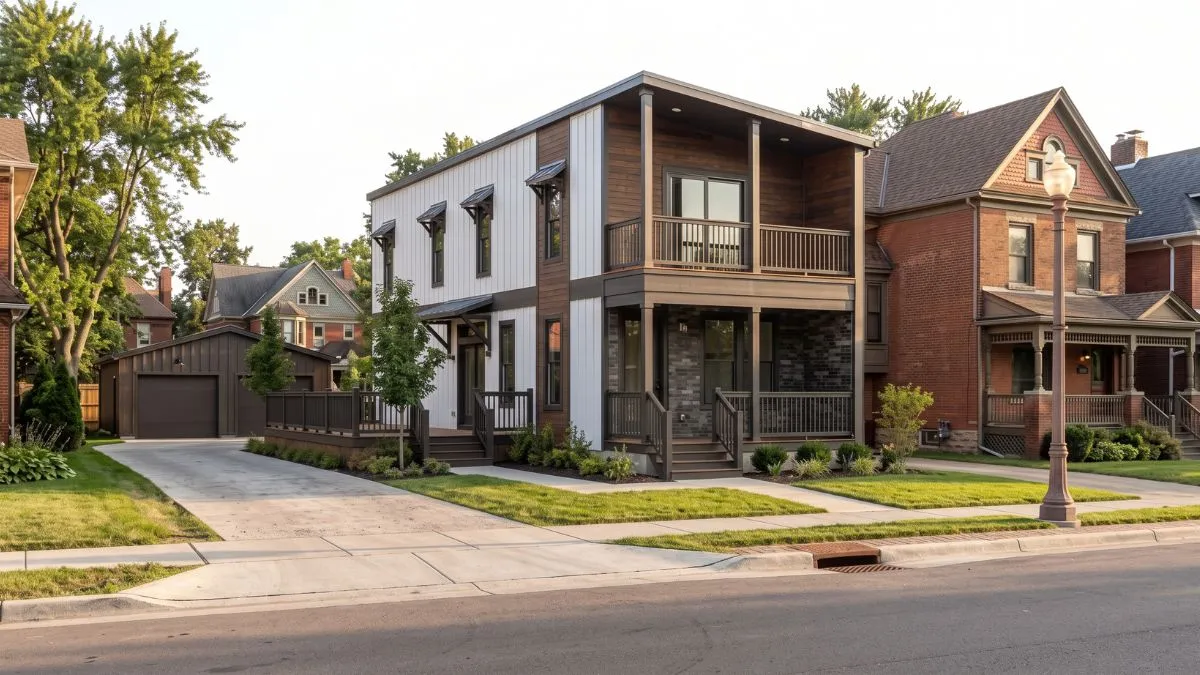
Following a major legislative victory earlier this summer, the U.S. Department of Housing and Urban Development (HUD) has taken its first official step toward implementing sweeping updates to the nation’s manufactured housing regulations. The agency released its long-anticipated "Next Generation Manufactured Housing Action Plan," marking a critical milestone in the ongoing effort to modernize factory-built construction.
The regulatory push stems from the passage of the 21st Century ROAD to Housing Act in July, which secured a historic policy win for the manufactured housing industry by removing the long-standing federal requirement for a permanent steel chassis. Industry leaders and housing advocates have widely praised the legislative shift, arguing that eliminating the chassis requirement will help manufactured housing gain greater acceptance in higher-density suburban, urban, and infill markets. Furthermore, proponents believe the modernized framework will better support the construction of multi-story homes, transforming the perception and capabilities of off-site construction.
However, industry stakeholders have tempered their immediate expectations, acknowledging that it could take a year or more to fully realize these benefits. Before manufacturers can legally begin selling homes without a permanent chassis, HUD must first update and implement the necessary changes to the federal manufactured housing code.
The release of the Next Generation Manufactured Housing Action Plan on Wednesday offers the first clear indication that HUD has formally initiated this complex implementation process. The agency’s newly published document details seven distinct actions designed to modernize and improve the manufactured housing code while ensuring full compliance with the directives established under the 21st Century ROAD to Housing Act.
Although the federal agency has not yet provided a definitive timeline for when the rulemaking and implementation phases will officially wrap up, the release of the action plan signals that the foundational work is actively underway. According to the document, the overarching goal of the initiative is straightforward: to preserve the core strengths of the federal manufactured housing system while ensuring that it can robustly support modern innovation and the next generation of factory-built housing.
The Seven Actions Outlined in HUD’s Plan
The comprehensive action plan outlines seven specific focus areas aimed at overhauling federal standards to accommodate modern design, energy efficiency, and multifamily construction.
First, HUD will conduct formal rulemaking to update the energy efficiency standards for manufactured housing under 24 CFR Part 3280, a mandate directly required by the 21st Century ROAD to Housing Act.
Second, the agency will revise the Manufactured Home Construction and Safety Standards within 24 CFR Part 3280 to officially accommodate homes built without a permanent chassis. This crucial update will encompass rigorous standards for structural design, transportation, lifting, and specialized connections, alongside other related technical requirements. The ultimate objective is to establish a clear regulatory framework that accommodates both traditional homes built with a permanent chassis and innovative new designs that omit it, thereby granting manufacturers significantly greater architectural flexibility.
Third, HUD will target the Model Manufactured Home Installation Standards found in 24 CFR Part 3285 to address how chassis-free homes are securely supported and attached to the ground. In this effort, HUD’s Manufactured Housing Consensus Committee will play a central role by recommending targeted changes related to foundations, anchoring, structural connections, setting procedures, and other vital installation requirements. This update is specifically intended to allow for a broader range of support systems and emerging construction designs while ensuring safe and reliable performance in the field.
Fourth, the action plan establishes a formalized pathway for multi-module construction, explicitly accounting for residential structures built in multiple factory-made sections. With the rigid chassis requirement removed, HUD will explore how these transportable sections can be designed, transported, assembled, and completed on-site while preserving a substantial degree of factory completion. The end goal is to significantly expand the array of housing types and designs that manufacturers can efficiently deliver to the market.
Fifth, HUD is moving to develop a performance-based federal construction and safety code—modeled closely on Part 3280—specifically tailored for residential structures containing five or more units. The agency’s plan notes that larger residential buildings inherently introduce complex design challenges, such as common corridors, shared stairwells, enhanced accessibility requirements, specialized fire separation, shared utility systems, and multi-unit egress routes, none of which are fully addressed under current manufactured housing standards. Creating a performance-based code for these larger buildings would establish a cohesive national pathway for repeatable multifamily construction operating under a unified federal framework.
As part of this broader multi-unit initiative, HUD previously selected the National Institute of Building Sciences to support an initiative aimed at expanding the use of factory-built construction for multifamily housing. This push follows closely on the heels of previous updates made by HUD in 2024, which already expanded manufactured housing standards to permit duplexes, triplexes, and quadplexes.
Sixth, the agency plans to document early pilot projects and real-world case studies utilizing chassis-free manufactured homes, with the intention of disseminating key lessons learned to the public. These case studies will evaluate practical aspects of the building process, covering design innovation, transportation logistics, foundation engineering, installation procedures, local zoning hurdles, property appraisals, mortgage lending, insurance underwriting, and broader market acceptance. By sharing these findings, HUD hopes to help industry stakeholders and local communities better understand how chassis-free manufactured housing operates in everyday practice.
Finally, HUD intends to create a specialized manufacturer on-ramp to guide existing modular and other off-site construction manufacturers into the federal HUD regulatory system. This administrative support will cover vital operational areas such as factory certification, design approval processes, quality assurance and control programs, state and third-party inspection protocols, certification labeling, and complex installation requirements. The stated objective is to successfully lower barriers to industry entry and make it easier for diverse factory-built product manufacturers to produce HUD-regulated homes.
What Comes After Implementation
While the release of the action plan marks a major stride forward, industry leaders emphasize that substantial work remains even after federal rulemaking is officially finalized.
In a July interview, Lesli Gooch, CEO of the Manufactured Housing Institute, explained that the regulatory modernization process is only the first phase of a much longer transition. Once HUD completes the comprehensive implementation process, manufacturers will be required to submit their new chassis-free designs to HUD-approved third-party inspection agencies for formal evaluation and approval. Only after securing these regulatory approvals can manufacturers officially bring homes manufactured without a permanent chassis to the commercial market.
Major players in the manufactured housing sector are already actively preparing for this anticipated market evolution. During the Innovative Housing Showcase held in Washington, D.C., in the latter half of September, Champion Homes drew significant attention by unveiling a pair of brand-new, chassis-free, two-story home models specifically designed to target urban infill development opportunities. Simultaneously, Cavco Industries debuted the Grande Arbor—its very first manufactured home model constructed entirely without a permanent steel chassis frame—at the same national showcase event.
Despite the palpable excitement surrounding these technical innovations, industry executives remain realistic about the adoption timeline. Speaking during a fiscal Q1 earnings call on July 31, Cavco Industries CEO William Boor confirmed that there is currently no set timeline for when chassis-free models will broadly hit the open market.
Boor noted that while the company is not yet building financial projections around the specific sales volume or exact timelines that these regulatory changes might yield, the strategic direction is unquestionably positive. He emphasized that the long-term benefits of the new law will naturally manifest and prove their value over time as the regulatory framework takes root across the country.










No comments yet. Be the first to join the conversation!