
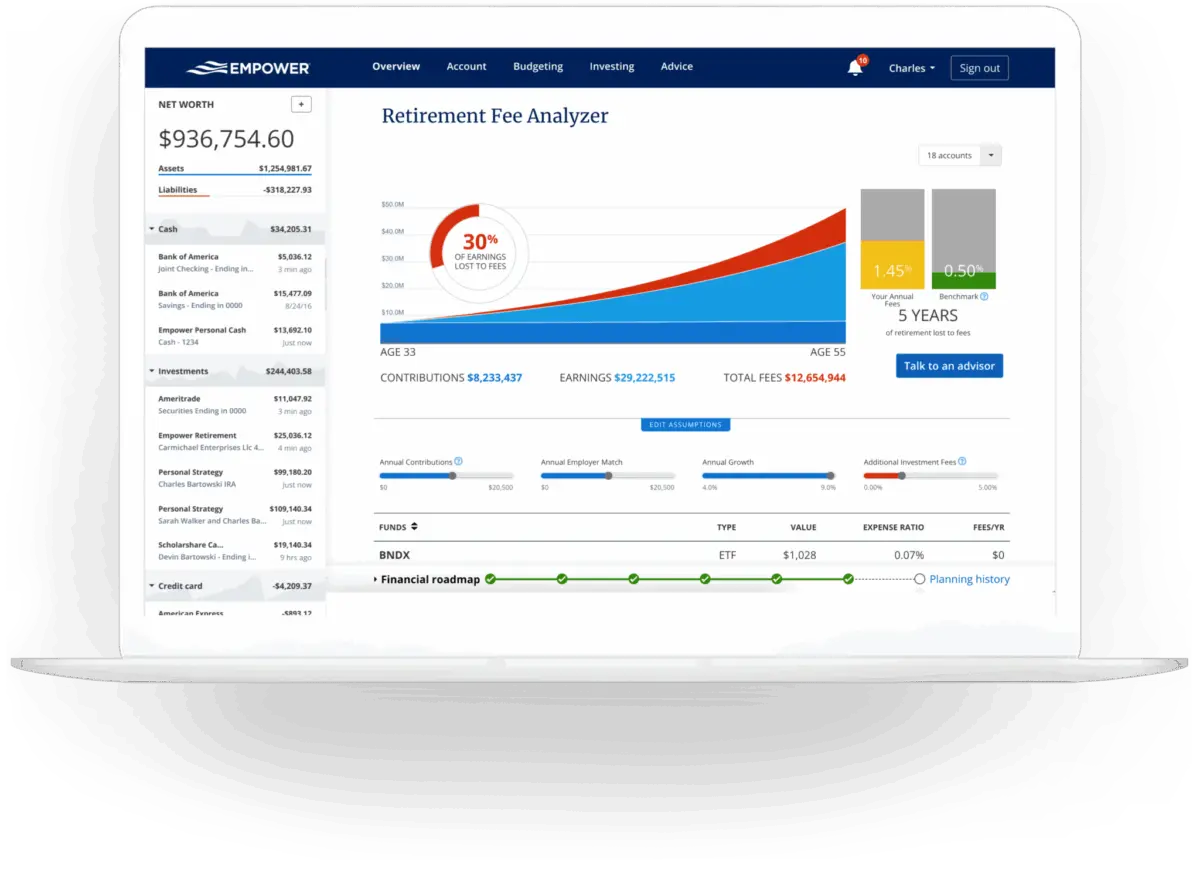
For years, millions of users have relied on comprehensive digital financial platforms to keep a centralized watch over their money. Formerly known as Personal Capital, Empower has established itself as a cornerstone tool for individuals seeking to manage 100% of their finances from a single, unified dashboard. By automatically syncing checking accounts, savings, credit cards, loans, mortgages, and complex investment portfolios like 401(k)s and IRAs, the platform delivers a real-time snapshot of overall financial health and net worth.
Available completely free of charge for its core digital dashboard, the platform has earned high ratings across digital marketplaces, boasting a 4.8 out of 5-star rating from hundreds of thousands of reviews on the Apple App Store, and a solid 4 out of 5-star rating on Google Play. Beyond basic account aggregation, it offers robust cash flow tracking, detailed budgeting visibility, advanced investment tracking, and sophisticated retirement planning tools.
Getting Started with Empower
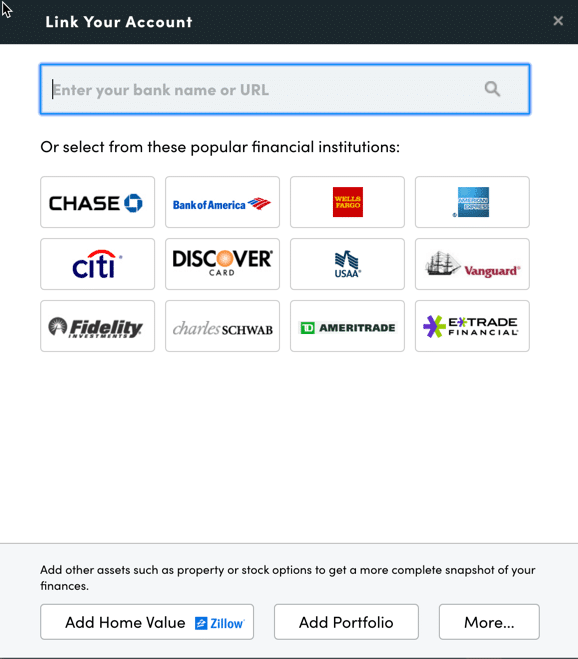
The process begins by setting up a free account and systematically connecting external financial institutions. While the platform has earned its strongest reputation through investment analysis, users frequently expand its utility by linking everyday banking accounts, credit cards, mortgages, and even physical property. Real estate assets can be integrated seamlessly, with the platform automatically pulling current property valuations directly from Zillow.
Linking accounts requires online access credentials, typically a username and password for each respective financial institution. Users can search for their bank or investment firm using the institution’s name or web address within the account connection dialog box. In the rare scenario that a specific account cannot be integrated automatically, the platform permits manual entry.
While users must connect at least one account to activate the service, the initial connection does not need to be an investment portfolio; a standard credit card or checking account will suffice. However, failing to link all financial accounts diminishes the depth of the platform’s specialized investment-tracking and holistic wealth-monitoring features.
Once accounts are synchronized, optimizing the settings and profile sections is critical. Accessible via the user profile menu, these configurations dictate email subscription frequencies—such as daily or weekly updates summarizing income, spending, and investment performance—and control whether investment dividends and interest are factored into overall cash flow calculations.
Security configurations are heavily emphasized within the settings menu, featuring robust multi-factor authentication protocols and geographic login alerts designed to flag unauthorized access attempts from foreign countries. The platform also maintains a transparent log of authorized devices, allowing users to routinely audit and revoke access for outdated or unused hardware. Meanwhile, the profile section captures vital demographic and financial details for both individuals and spouses, including income sources, savings rates, and long-term investment objectives, which directly feed into the software’s predictive planning tools.
The Central Dashboard
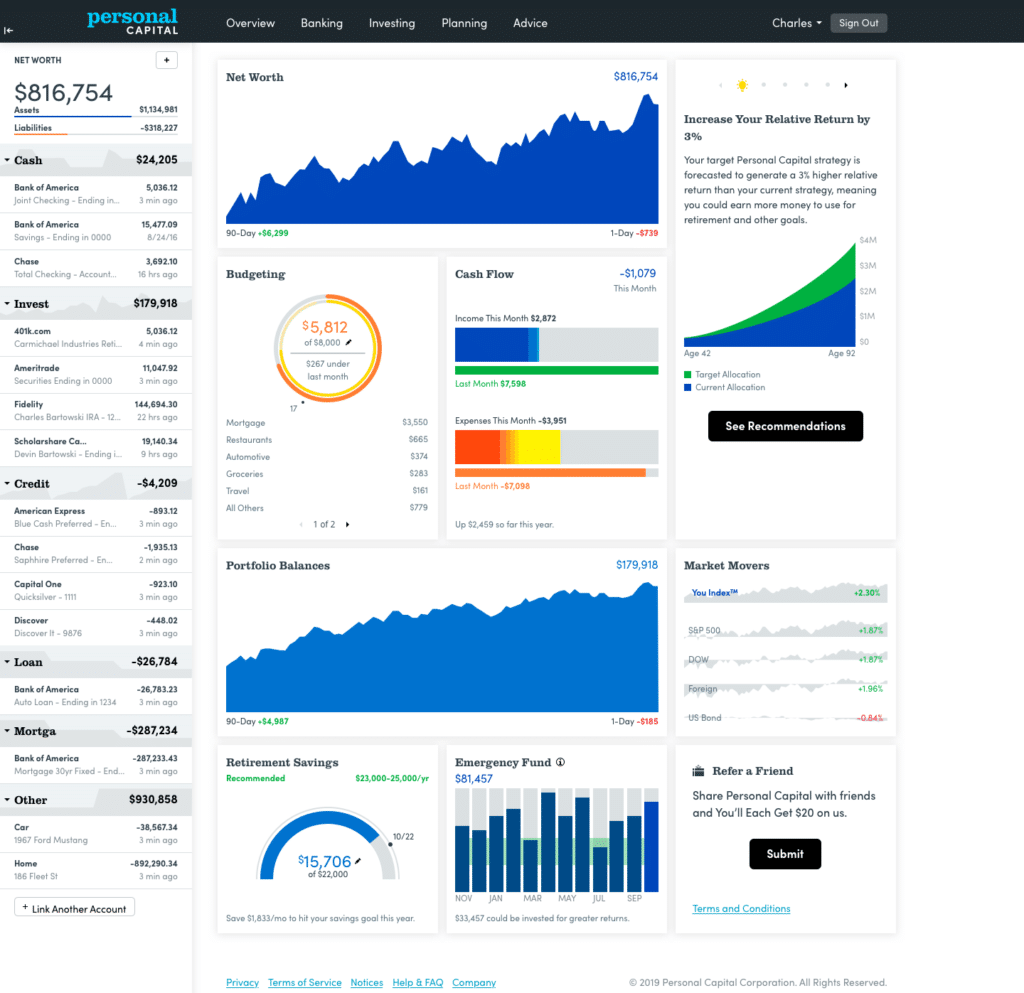
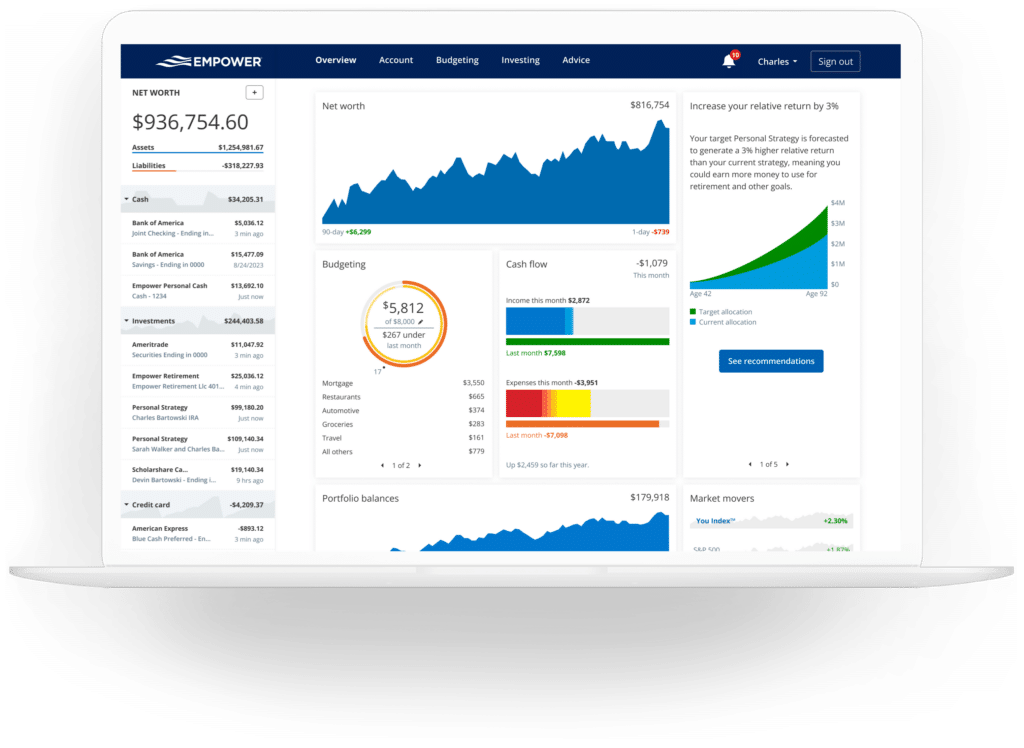
Aggregating every connected data point, the central dashboard provides a panoramic view of an individual’s financial ecosystem. The interface delivers an immediate visualization of net worth fluctuations, monthly budgets, cash flow trends, active investments, and ongoing progress toward critical financial milestones, such as emergency fund accumulation and retirement readiness.
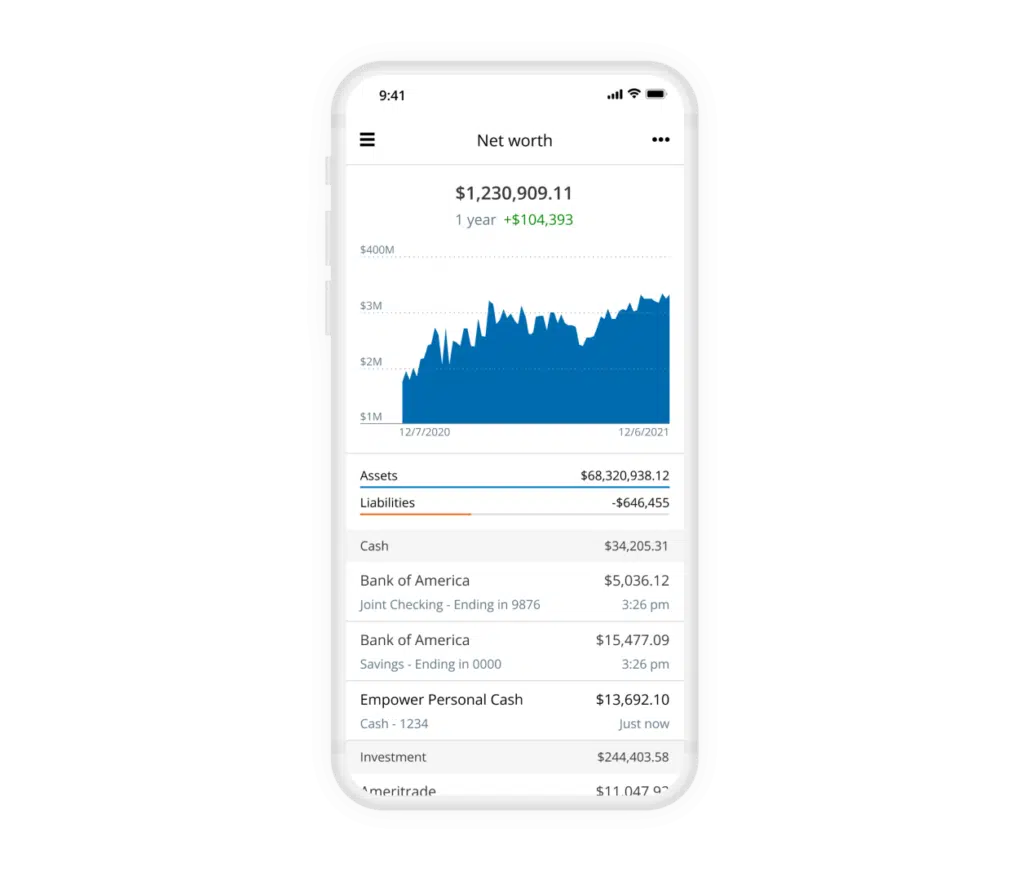
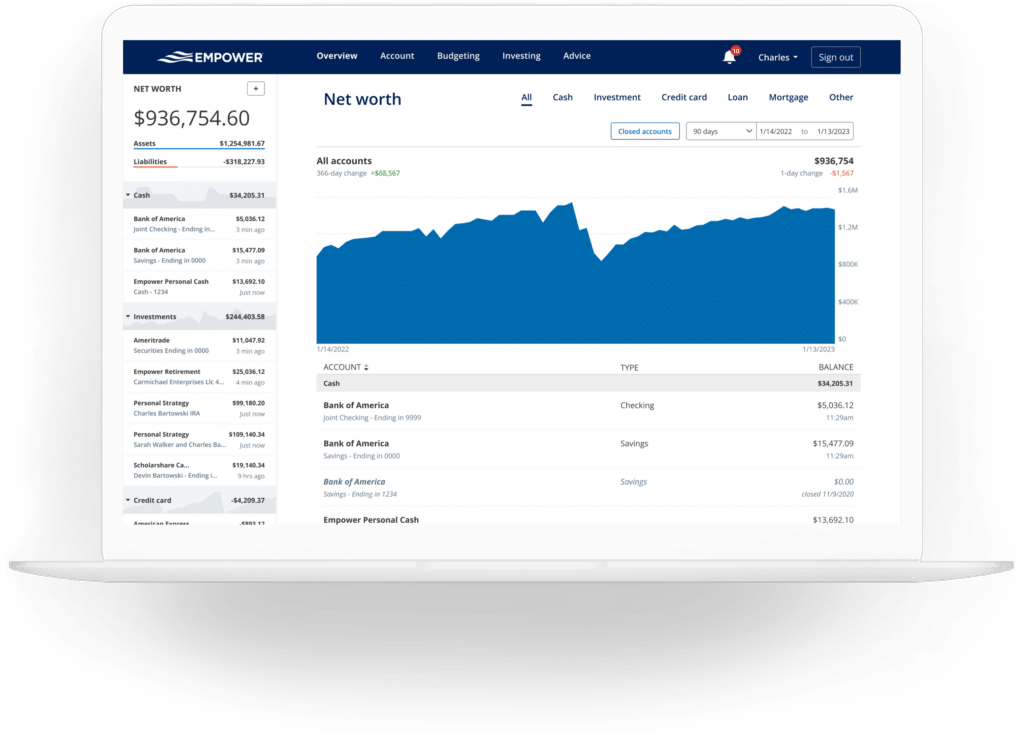
Tracking net worth remains a foundational pillar for achieving long-term financial independence. While manual spreadsheet tracking has long been a staple for disciplined savers, automated aggregation eliminates the friction of manual data entry. As market values shift and account balances update, the net worth module charts the trajectory of total assets minus total liabilities continuously.
Cash Flow and Banking Features
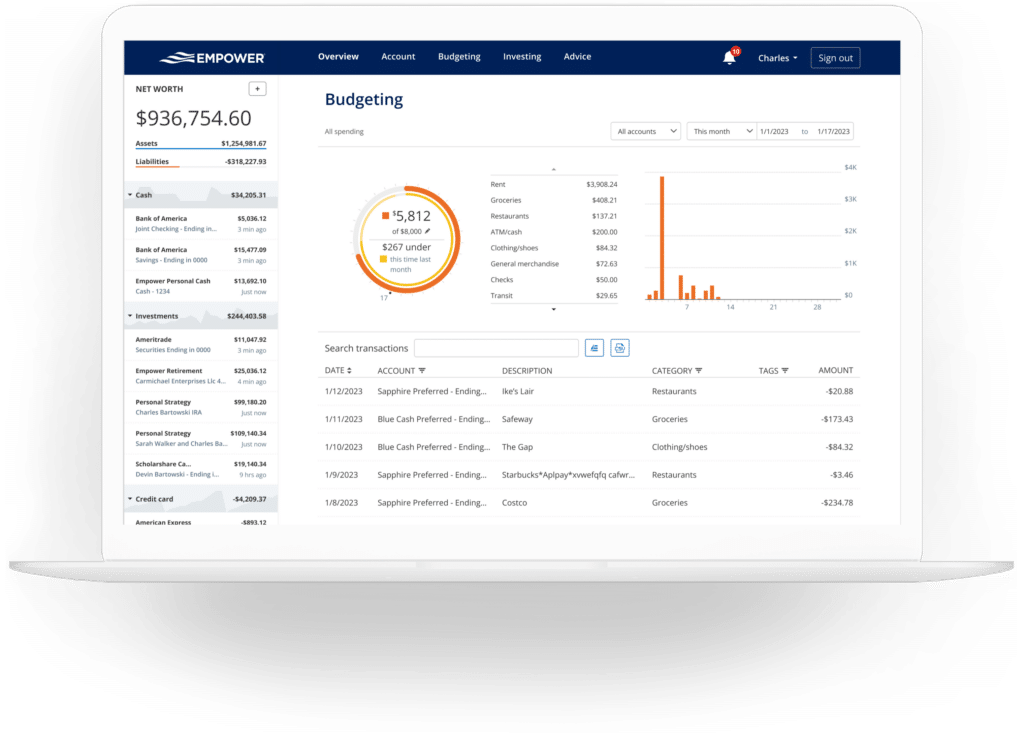
The platform’s banking and cash flow features provide granular visibility into day-to-day financial operations. Cash flow reporting captures both income and expenses at the individual transaction level, automatically sorting expenditures into predefined categories. Users retain the flexibility to filter reports by specific accounts, enabling specialized tracking such as isolating business checking and credit card transactions or exclusively reviewing passive income generated through investment portfolios, including monthly dividends and interest payments.
While the budgeting component operates differently than traditional envelope-style budgeting applications—allowing users to establish overarching monthly spending targets rather than rigid category-specific caps—it excels at illuminating historical spending patterns. Transactions are imported automatically from all linked institutions and sorted into categories that users can customize. Minor monthly adjustments are occasionally required to ensure transaction accuracy, though tagging features offer additional organizational flexibility. For instance, users can apply custom tags to specific maintenance expenses within a broader housing category, eliminating the need to clutter the system with excessive standalone categories.
Furthermore, integrating credit cards, mortgages, and installment loans activates automated bill-tracking functions. By monitoring upcoming payment due dates across connected liabilities, the system assists users in avoiding late fees and aids in short-term cash flow forecasting.
Investment Tracking and Holdings
Investment analysis is widely regarded as the platform’s strongest domain. Once retirement and taxable brokerage accounts are linked, the software updates asset prices throughout the trading day, monitors mutual fund expense ratios, evaluates asset allocation, and provides diagnostic tools to scrutinize portfolio construction.
The holdings module delivers a comprehensive breakdown of individual investments. Users can review individual asset performance, market values, cost bases, and daily percentage changes. Historical performance metrics allow investors to contextualize their portfolios against broader market movements, even during periods of extreme market volatility such as bear markets.
Asset allocation tools automatically evaluate existing investments to report the precise balance between equities and fixed-income assets. Further categorization divides holdings into U.S. stocks, international equities, bonds, and alternative asset classes. Interactive graphical representations allow users to inspect the underlying investments within each category. Notably, the cash tracking mechanism captures uninvested capital held not only in dedicated money market accounts but also the cash reserves held internally by mutual funds and exchange-traded funds.
In response to evolving digital asset markets, the platform also accommodates the tracking of cryptocurrencies such as Bitcoin, Ethereum, and Litecoin. Rather than requiring direct API access or the surrender of wallet credentials, users can incorporate digital assets via manual accounts. By specifying the token symbol, exchange, and token quantity, investors can monitor thousands of digital tokens across hundreds of exchanges alongside their traditional financial holdings.
Financial Planning and Retirement Tools
Moving beyond passive aggregation, the platform incorporates sophisticated planning calculators designed to model future financial scenarios.
The retirement planner utilizes synchronized investment data to project long-term financial readiness. By factoring in current savings rates, asset balances, projected retirement dates, and expected future cash flows, the calculator models the probability of portfolio longevity throughout retirement. Users can construct multiple comparative scenarios, contrasting traditional retirement timelines against early retirement models, incorporating or excluding estimated Social Security benefits, and adjusting assumptions regarding future tax rates, inflation, and life expectancy.
The broader savings planner consolidates three distinct modules: retirement savings, emergency fund accumulation, and debt paydown. The retirement savings planner monitors annual contributions across tax-advantaged vehicles like 401(k)s and IRAs, as well as taxable brokerage accounts, syncing directly with the primary retirement planner. The emergency fund planner aggregates balances across all linked checking and savings accounts, measuring them against a recommended reserve threshold of three to six months of living expenses derived from user-defined budgeting data.
Meanwhile, the debt paydown planner tracks installment loans, mortgages, auto loans, and credit cards that carry rolling balances subject to interest charges. For debts incurring interest over a 90-day window, the planner displays current balances, annual percentage rates (APRs), year-to-date balance changes, and visual trend graphs illustrating debt reduction progress over time.
Investment fees represent a critical variable in long-term wealth accumulation, and the retirement fee analyzer calculates the weighted average expense ratio across all connected portfolios. By translating basis points into projected dollar losses over multi-decade horizons, the tool demonstrates how seemingly minor advisory or mutual fund fees can erode hundreds of thousands of dollars in wealth over time.
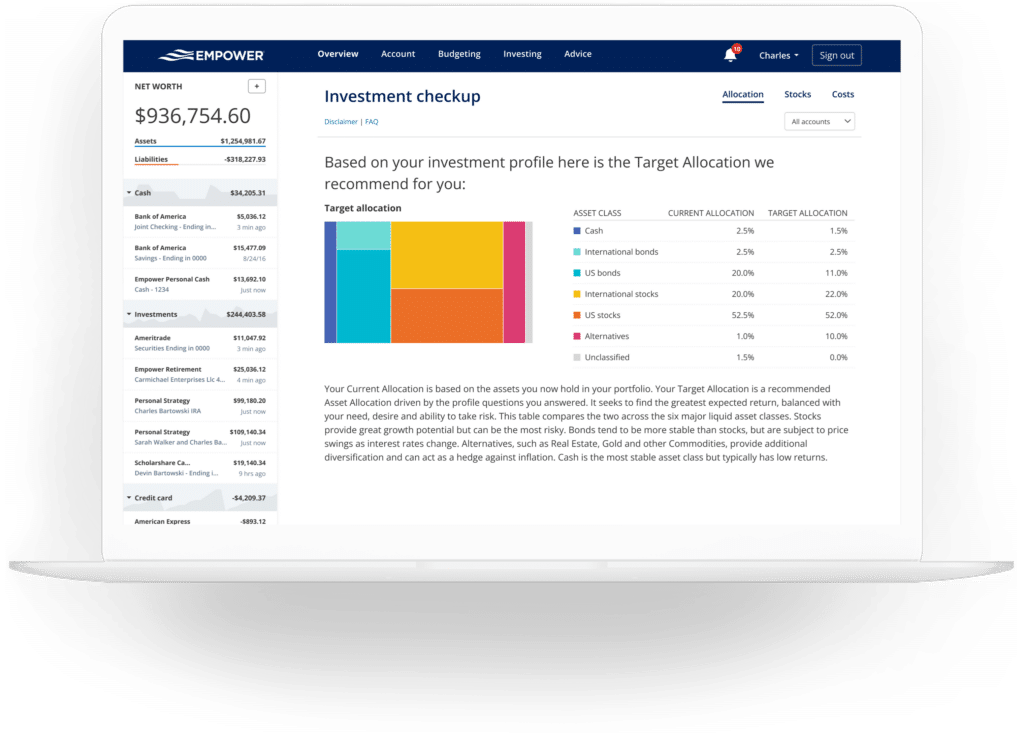
Complementing the fee analysis, the investment checkup utility evaluates a portfolio’s actual asset allocation against a target allocation recommended by the platform based on the user’s age, risk tolerance, and timeline to retirement. The system highlights asset classes requiring rebalancing, offering a clear roadmap for portfolio adjustments.
Platform Security and Business Model
Security infrastructure relies on AES-256 data encryption supported by multi-layer key management, including rotating user-specific keys and salts. Client credentials are not accessible to platform personnel, and external device access requires multi-factor authentication confirmation via telephone call, email, or text message.
While the digital dashboard and its accompanying analytical tools are provided free of charge, the platform operates as a marketing vehicle for optional, fee-based human financial advisory services. Advisory fees for wealth management services start at 0.89% for the first $1 million under management, scaling down to 0.49% for portfolios exceeding $10 million. Utilizing the free financial dashboard does not obligate users to engage with advisory services, and promotional outreach calls from advisory representatives can be permanently opted out of upon request.








No comments yet. Be the first to join the conversation!