
WASHINGTON — In a major shift in federal civil rights enforcement, the Department of Health and Human Services (HHS) finalized sweeping revisions on July 23, 2026, to regulations implementing Title VI of the Civil Rights Act of 1964. The updated rule formally eliminates disparate impact as a legal basis for determining whether discrimination has occurred in health and human services programs, services, or activities receiving federal financial assistance.
The regulatory overhaul follows Executive Order 14281, titled "Restoring Equality of Opportunity and Meritocracy," which was issued by the White House to align federal operations more closely with statutory text and judicial interpretations. Similar regulatory actions have been rolled out across the federal government by the Department of Justice (DOJ), the Department of Education (DOE), and the Department of Housing and Urban Development (HUD).
The newly enacted rule represents a fundamental transformation in how the federal government approaches civil rights oversight. By narrowing the scope of administrative enforcement exclusively to cases involving intentional discrimination, the policy change could allow facially neutral institutional policies that yield unequal health outcomes to remain unchecked. This development has sparked widespread discussions regarding the future trajectory of health equity and the persistence of racial and ethnic disparities across the American health care system.
Background on Title VI and the Evolution of Civil Rights Enforcement
Enacted at the height of the Civil Rights Movement, Title VI of the Civil Rights Act of 1964 stands as a bedrock federal prohibition against discrimination based on race, color, or national origin in any program or activity receiving federal financial assistance. The statute was forged in response to pervasive racial segregation and inequality across institutional landscapes, most notably within the health care sector. Historically, many hospitals and medical facilities routinely refused to treat Black patients, maintained segregated wards and waiting rooms, or otherwise delivered profoundly unequal care.
While the Supreme Court has historically interpreted the statutory text of Title VI to prohibit intentional discrimination, federal agencies implemented broader regulatory protections in the decades that followed. Initial regulations established by HHS—then operating as the Department of Health, Education, and Welfare—alongside other federal agencies, prohibited disparate-impact discrimination. This standard applied to institutional policies and practices that, while appearing neutral on their face, produced a disproportionately adverse effect on individuals based on their race, color, or national origin.
These long-standing regulations were designed to address the reality that facially neutral rules could inadvertently perpetuate or exacerbate deep-seated systemic inequities in access to health programs, medical services, and vital public benefits. Over more than fifty years of enforcement, federal agencies relied on disparate-impact standards to investigate, evaluate, and resolve administrative complaints where institutional procedures disproportionately harmed protected populations.
Systemic Inequities and the Role of Disparate Impact Standards
In modern health care, disparate impact frequently emerges from deeply embedded institutional policies and practices, even as overt, intentional discrimination continues to surface. Historical practices such as redlining have left enduring structural legacies, driving the residential segregation of Black and Hispanic communities into urban neighborhoods characterized by reduced structural resources and heightened environmental health risks.
Within clinical medicine, outdated and disproven assumptions regarding biological differences across racial categories continue to influence decision-making. These assumptions have historically permeated clinical algorithms, diagnostic tools, and treatment guidelines, occasionally leading to skewed medical evaluations. Furthermore, persistent language barriers can significantly degrade the quality of clinical care, increasing the risk of adverse medical events, misdiagnoses, and medical errors. Public health literature has consistently demonstrated that inadequate language assistance can delay timely patient access to care, diminish patient satisfaction, complicate chronic disease management, and ultimately produce poorer overall health outcomes.
For over half a century, federal authorities utilized disparate-impact frameworks not only for reactive investigations, but also to proactively shape administrative guidance. For instance, HHS issued comprehensive guidance regarding individuals with limited English proficiency (LEP), establishing that recipients of federal funds could violate Title VI if their operational criteria or methods of administration had the effect of national origin discrimination. These principles were subsequently operationalized through the Office of Minority Health’s National Culturally and Linguistically Appropriate Services standards.
During the height of the COVID-19 pandemic, the HHS Office for Civil Rights issued targeted guidance reminding health providers that Title VI applied directly to procedures and methods of administration yielding a disparate impact. Regulators highlighted potential pitfalls in pandemic response programs, such as distributing vaccines exclusively through brick-and-mortar pharmacies or requiring complex online appointment scheduling systems. These logistical barriers often restricted access in communities of color. To mitigate these effects, HHS previously advised providers to audit their distribution networks for structural barriers, collect comprehensive demographic data, deploy translation and transportation resources, and strategically locate vaccination sites in historically underserved areas. Similar disparate-impact principles were also incorporated into training frameworks for medical students, instructing future physicians to evaluate whether less discriminatory operational alternatives could achieve the same clinical objectives.
Implications of Eliminating Disparate Impact Enforcement
The 2026 final rule officially removes disparate impact as a mechanism for administratively enforcing Title VI under HHS regulations. Moving forward, HHS will initiate compliance reviews and enforcement actions solely when there is affirmative evidence of intentional discrimination based on race, color, or national origin. Consequently, a policy or practice that disproportionately burdens a protected group will no longer, on its own, constitute a regulatory violation of Title VI within HHS jurisdiction.
Administration officials maintain that these revisions are necessary to bring agency regulations into strict alignment with the literal text of Title VI, evolving judicial precedents, and Executive Order 14281. The final rule clarifies that statistical evidence demonstrating racial or ethnic disparities may still be submitted and reviewed as part of an overarching investigation. However, such statistical disparities will no longer be sufficient to establish a civil rights violation in the absence of demonstrable discriminatory intent by the covered entity.
This policy shift alters the landscape for investigating and resolving civil rights complaints across the health sector. By removing the disparate impact standard, the federal government may reduce its proactive oversight of institutional policies that create unintended, disproportionate barriers for minority populations. Without the threat of administrative penalties under disparate impact theories, healthcare providers and social service agencies may feel less compelled to audit their everyday operational procedures for unintended racial or ethnic disparities.
Alternative Legal Mechanisms and State-Level Variations
In the absence of federal disparate impact enforcement under Title VI, affected individuals and communities seeking redress must increasingly look to alternative federal statutes, regulatory frameworks, and state-level protections. However, these substitute mechanisms often feature more limited jurisdictions and apply to different protected classes, entities, or forms of discrimination.
At the federal level, Section 1557 of the Affordable Care Act continues to prohibit discrimination in covered health programs and activities based on race, color, national origin, sex, age, and disability, maintaining specific mandates for language access. Nonetheless, the administration has signaled upcoming regulatory adjustments to Section 1557 implementing guidelines. Similarly, the federal Medicaid program provides pathways to address health disparities through managed care contracting requirements, though enforcement and programmatic priorities vary widely across individual states.
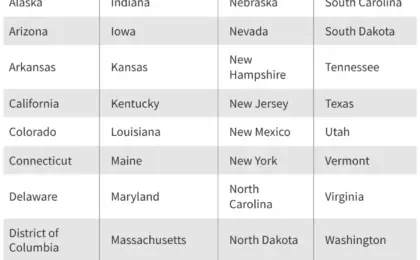
In response to the shifting federal posture, several state governments have moved to establish or reinforce their own protections against disparate-impact discrimination. For instance, California state law prohibits discrimination in state-funded programs across a broad array of protected characteristics, supported by state regulations that maintain a disparate-impact standard comparable to the one recently removed from federal HHS rules. Similarly, Illinois enacted the Civil Rights Safeguard Act, expanding state-level civil rights protections to cover disparate impact scenarios in employment, financial credit, and public accommodations, including health care delivery.
As a result of these divergent approaches, the availability of legal mechanisms and administrative safeguards to challenge systemic disparities will increasingly depend on state-level legislation rather than a unified federal standard.










No comments yet. Be the first to join the conversation!