
Doctors and other healthcare providers remain the public’s single most trusted source for reliable health information, according to comprehensive tracking data from KFF. While individual clinical relationships continue to command widespread confidence across demographic and political lines, public trust in government health agencies, federal officials, and institutional science has grown deeply divided. Amid shifting political landscapes and the rapid expansion of digital information channels, the data reveals complex trends in how Americans navigate health advice, vaccine safety, and an array of unproven or false claims.
Trusted Sources of Health Information
When Americans seek reliable guidance on health issues, they overwhelmingly turn to their personal doctors and healthcare providers. A large majority of U.S. adults express at least a fair amount of trust in their personal physician, a sentiment that holds firm across various political affiliations, age groups, racial and ethnic backgrounds, and levels of educational attainment.
In contrast, public trust in government health agencies and officials is markedly more fractured. Approximately half of U.S. adults report trusting federal agencies such as the Centers for Disease Control and Prevention (CDC) or the Food and Drug Administration (FDA). However, trust in state government officials, Health and Human Services Secretary Robert F. Kennedy Jr., and President Trump falls below the fifty percent mark overall, with sharp partisan divides defining these opinions.
Partisanship heavily dictates who the public trusts, particularly regarding high-profile federal figures. Roughly six in ten Republicans—a share that rises to at least seven in ten among Republicans who support the Make America Great Again (MAGA) movement—express trust in Secretary Kennedy or President Trump for reliable health information. Conversely, three in ten or fewer independents and Democrats say the same about these officials. Meanwhile, Democrats demonstrate higher levels of trust in state government officials than Republicans do, whereas similar shares of both parties report trusting the CDC or FDA. Despite these political cleavages, individual healthcare providers remain the universal baseline for trusted medical insight.
Demographic factors also play a subtle role in how people view their information sources. White adults and individuals with college degrees are more likely to express trust in their doctors, a pattern that may partly mirror underlying disparities in healthcare access and insurance coverage. Educational attainment also correlates with trust in federal and state agencies, with college-educated adults generally showing higher confidence in institutions like the CDC and state governments. Additionally, White adults are more likely than their demographic peers to express trust in Secretary Kennedy and President Trump regarding health matters.
Confidence in Federal Health Agencies
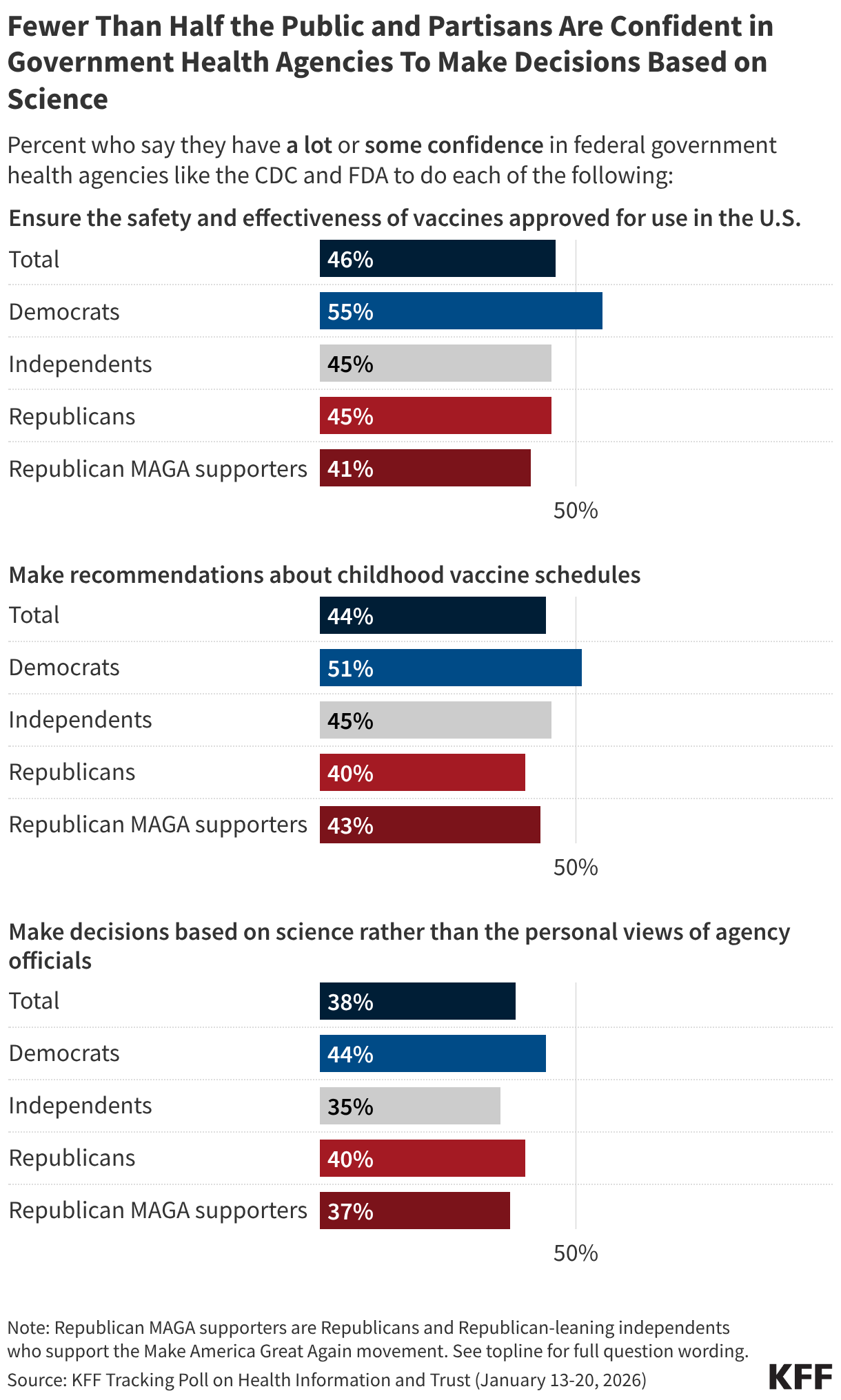
Beyond trusting general information, a significant portion of the public lacks confidence in federal agencies to execute core institutional responsibilities. Fewer than half of adults across the political spectrum express confidence in agencies like the CDC and FDA to make decisions grounded purely in science. While Democrats are somewhat more likely than Republicans to maintain at least some confidence in these agencies to ensure vaccine safety, evaluate the childhood immunization schedule, or act independently without outside political interference, skepticism remains widespread.
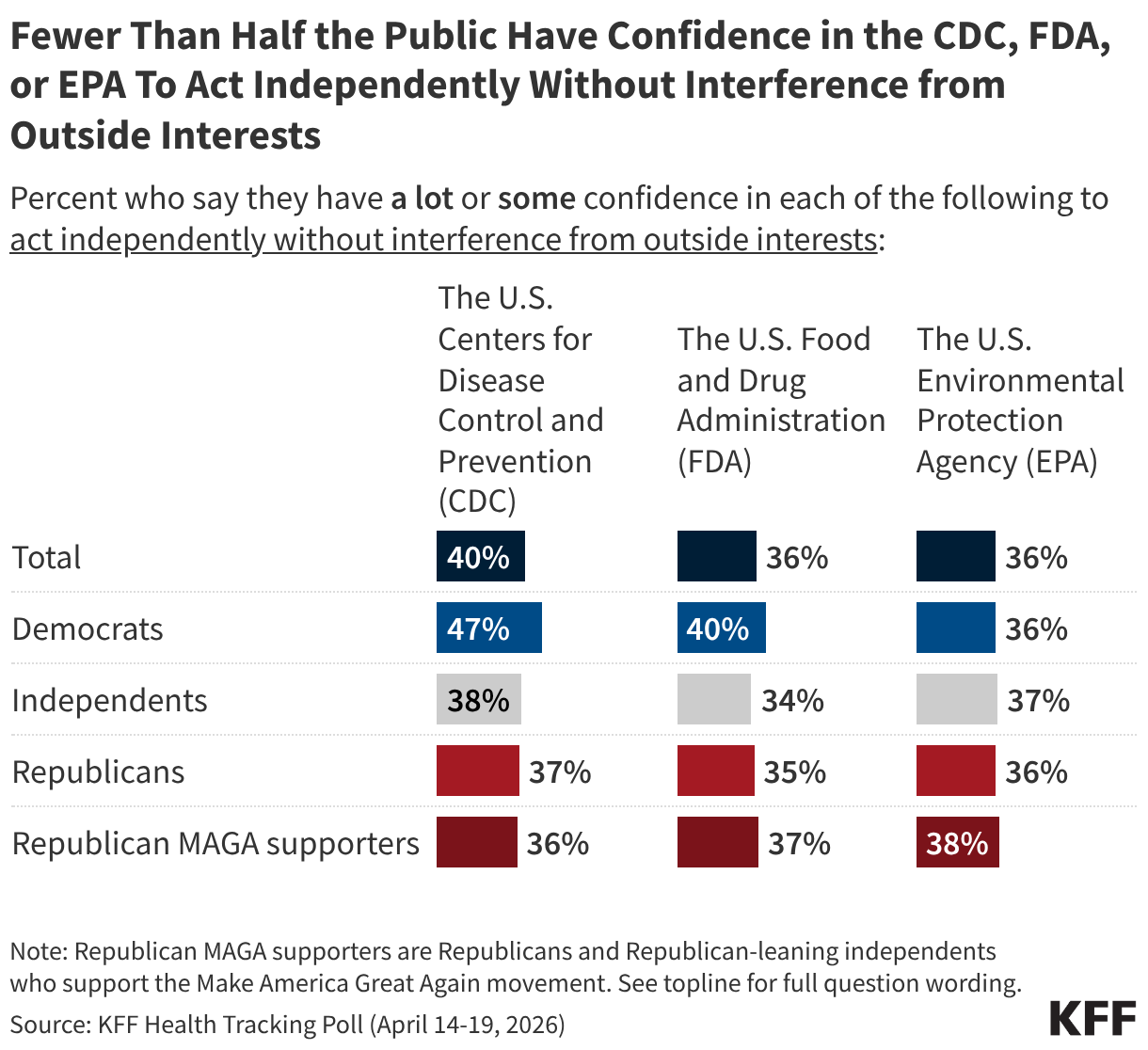
Fewer than half of all adults express confidence in the independence of the FDA or the Environmental Protection Agency (EPA). This erosion of trust represents a significant shift from the early days of the COVID-19 pandemic, during which the CDC enjoyed broad bipartisan support. Over subsequent years, trust in the CDC and other public health bodies declined amid widening partisan polarization, falling Republican confidence, and subsequent drops among Democrats following shifts in executive leadership and political appointments. Today, half of the public expresses trust in the CDC for reliable vaccine information, down substantially from historic highs.
Who Parents Trust for Vaccine Information
Among parents of children under the age of 18, pediatricians stand out as the most trusted authority for reliable vaccine advice. Majorities of parents also place their trust in local public health departments, the CDC, and the FDA, while over half turn to friends and family for guidance. Far fewer parents express trust in Secretary Kennedy, pharmaceutical companies, or online health and wellness influencers.
As seen among the general public, partisanship heavily influences parental trust. Among parents who support the Make America Healthy Again (MAHA) movement, about 38% trust Secretary Kennedy for vaccine information, while roughly 18% of all parents—predominantly MAGA supporters—do the same. Despite this backing, even among these specific political subgroups, larger shares of parents ultimately place their trust in their child’s pediatrician.
Most parents continue to keep their children up to date on routine immunizations. However, about one in six report having skipped or delayed at least one childhood vaccine, excluding seasonal recommendations like the flu or COVID-19 shots. Skepticism toward vaccine safety testing and recommended schedules is more pronounced among younger parents and self-identified Republicans, who are also more likely to report skipping immunizations for their own children.
Social Media and Artificial Intelligence in Health
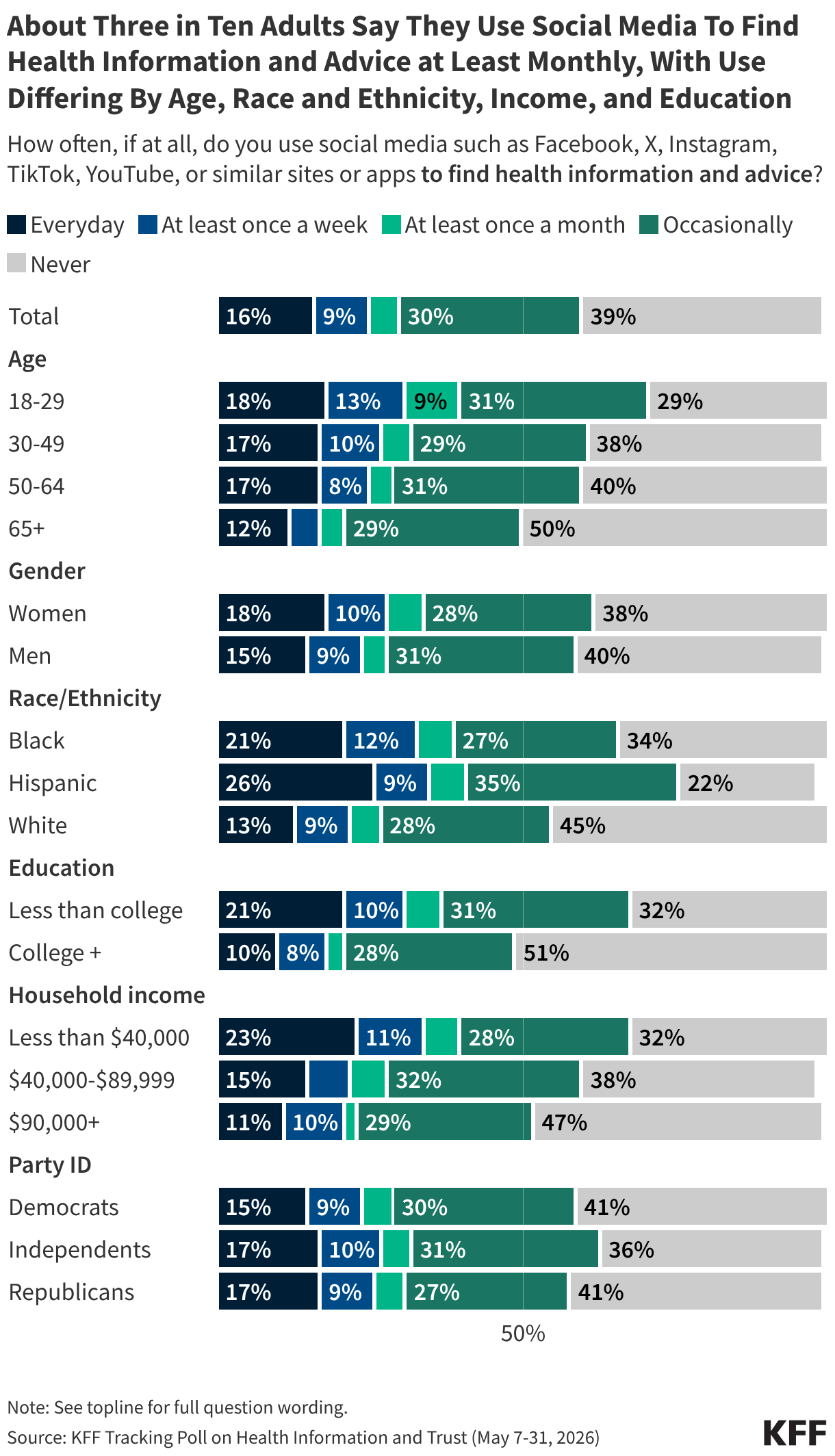
As institutional trust shifts, a substantial portion of the American public looks to digital platforms for medical guidance. About three in ten adults report using social media to find health information and advice at least monthly. This usage is notably higher among younger adults, Black and Hispanic adults, lower-income individuals, and those with lower educational attainment.
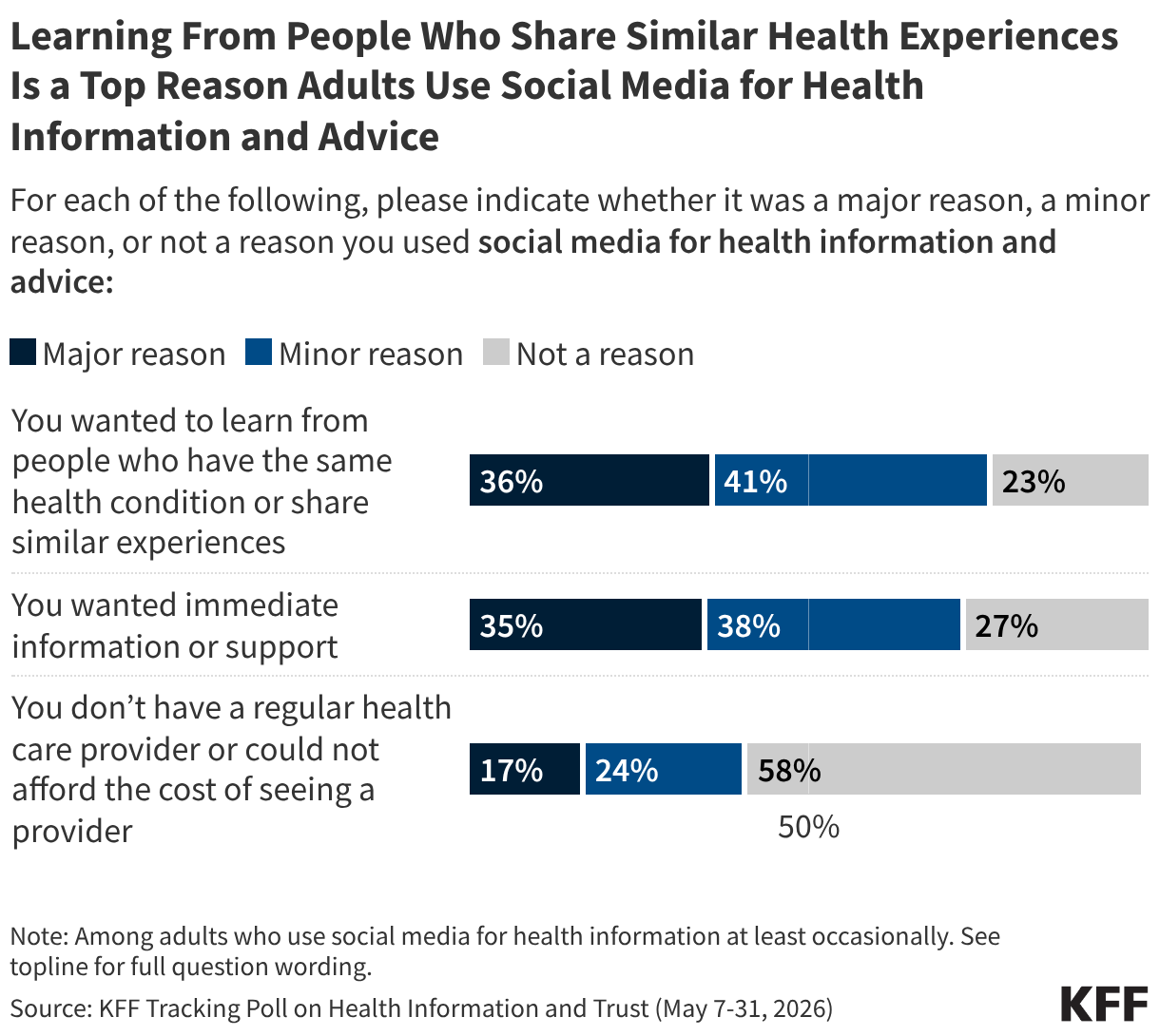
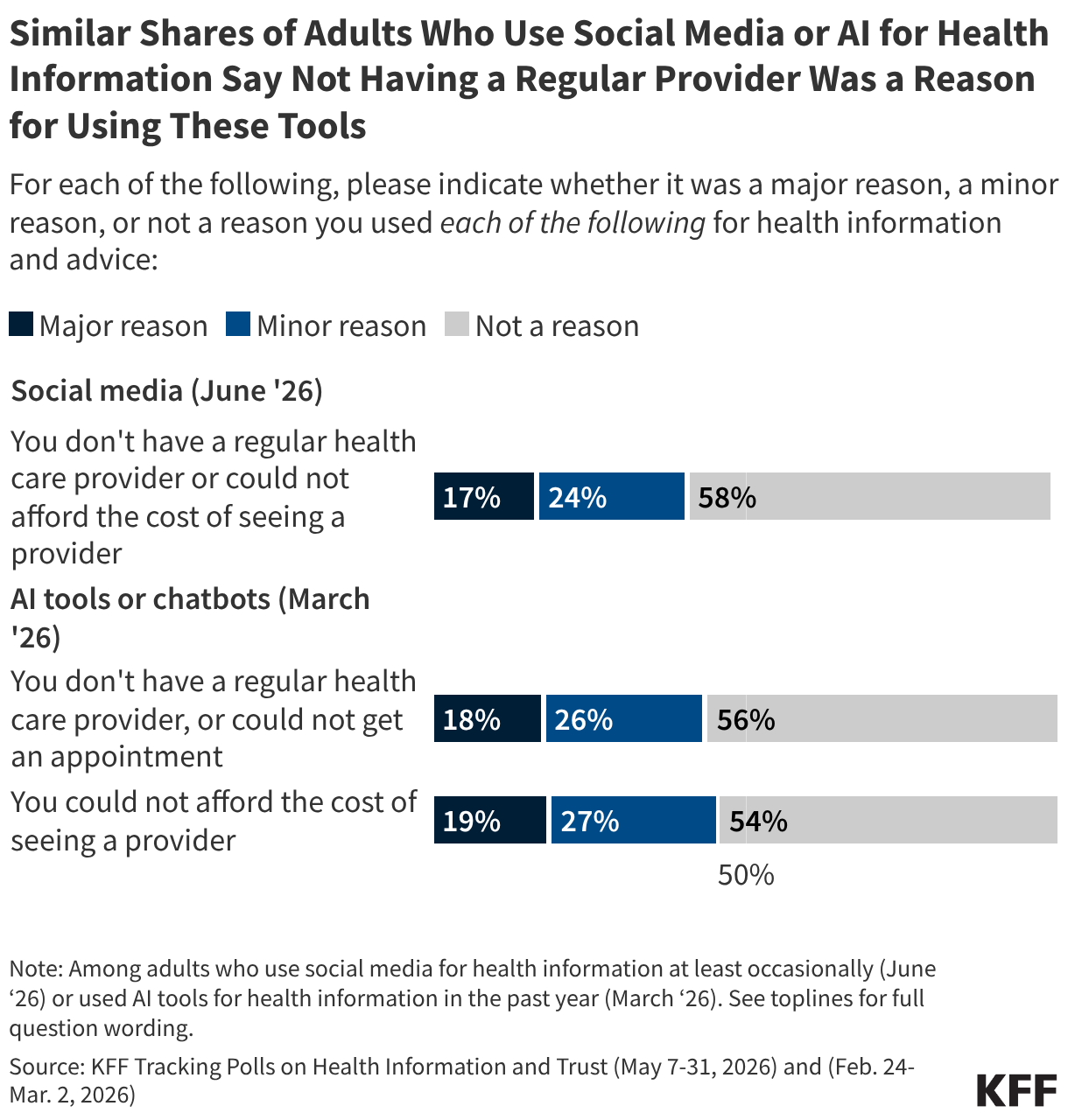
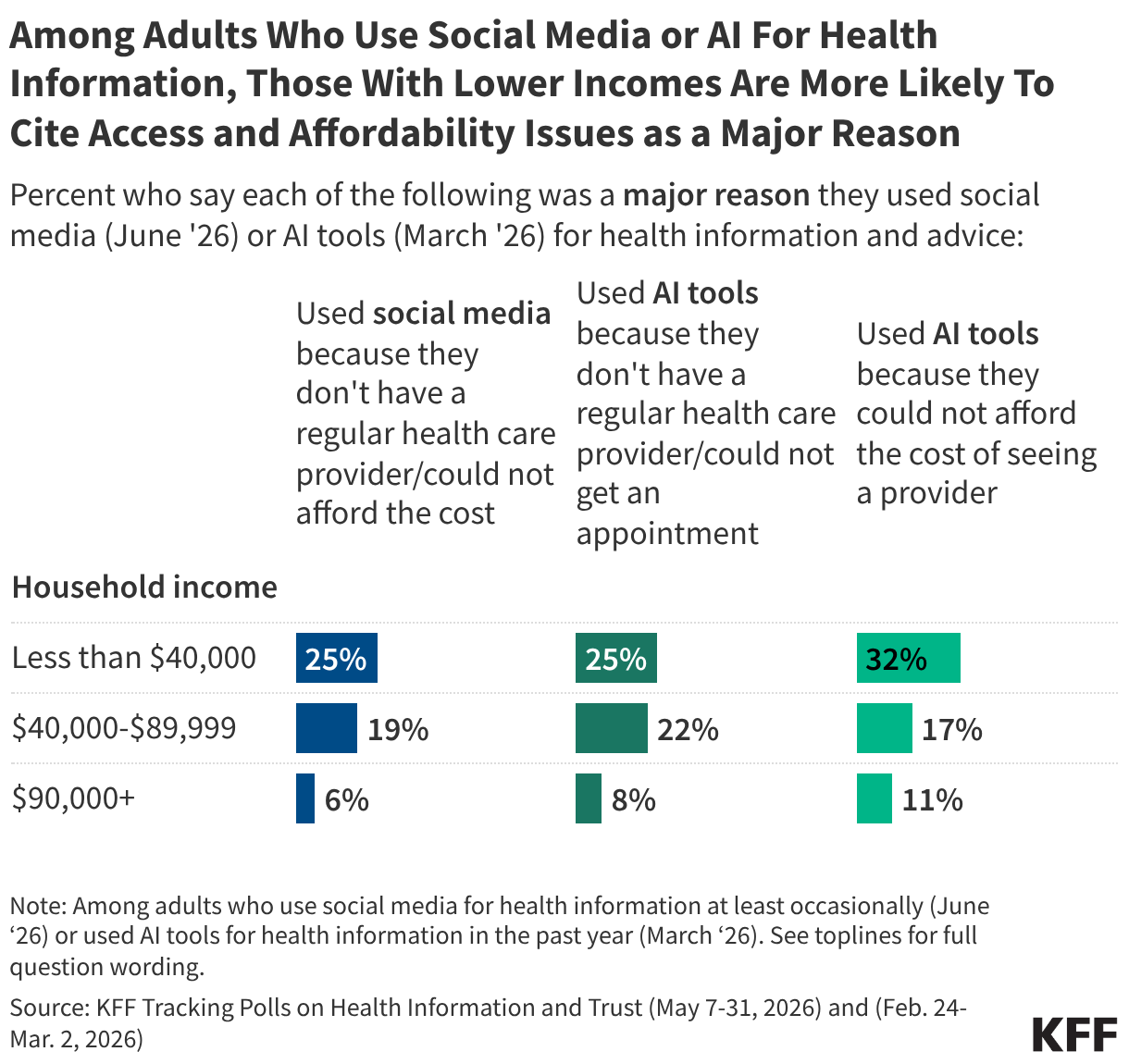
When asked why they turn to social media, about one-third of these users cite a desire to learn from peers with similar health experiences or a need for immediate support. Approximately one in six users point to difficulties accessing or affording traditional healthcare services as a major reason for utilizing social media tools. Lower-income users are particularly likely to cite cost and access barriers as driving forces behind their search for online health advice.
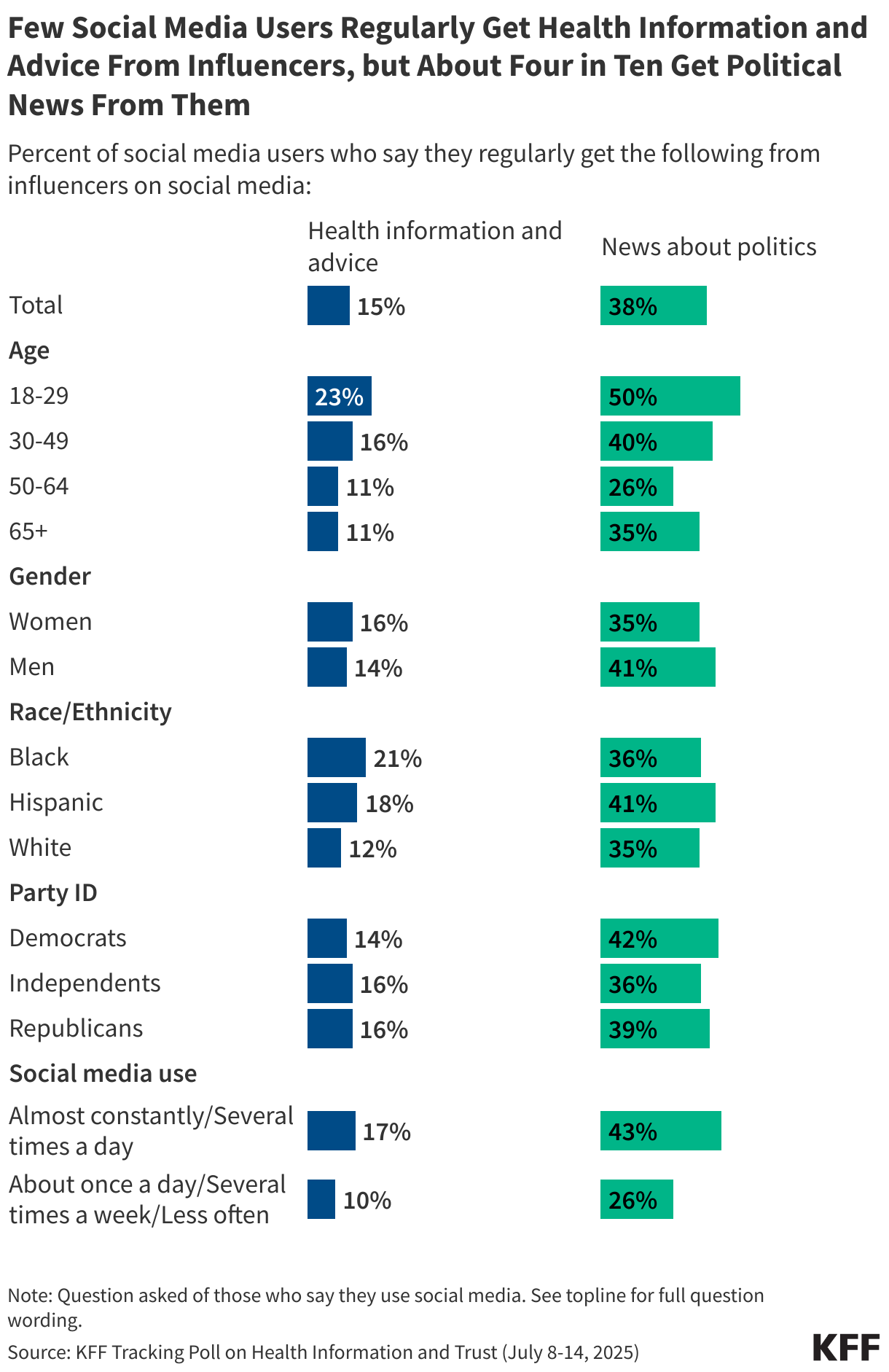
While less than half of adults actively seek out health information on social media on a monthly basis, exposure to such content is widespread. Majorities report recently encountering social media content related to weight loss, diet, nutrition, and mental health. While influencers command significant attention regarding political news, only about 15% of adults turn to them for health advice, though younger adults and Black adults are somewhat more likely to rely on influencers for these topics.
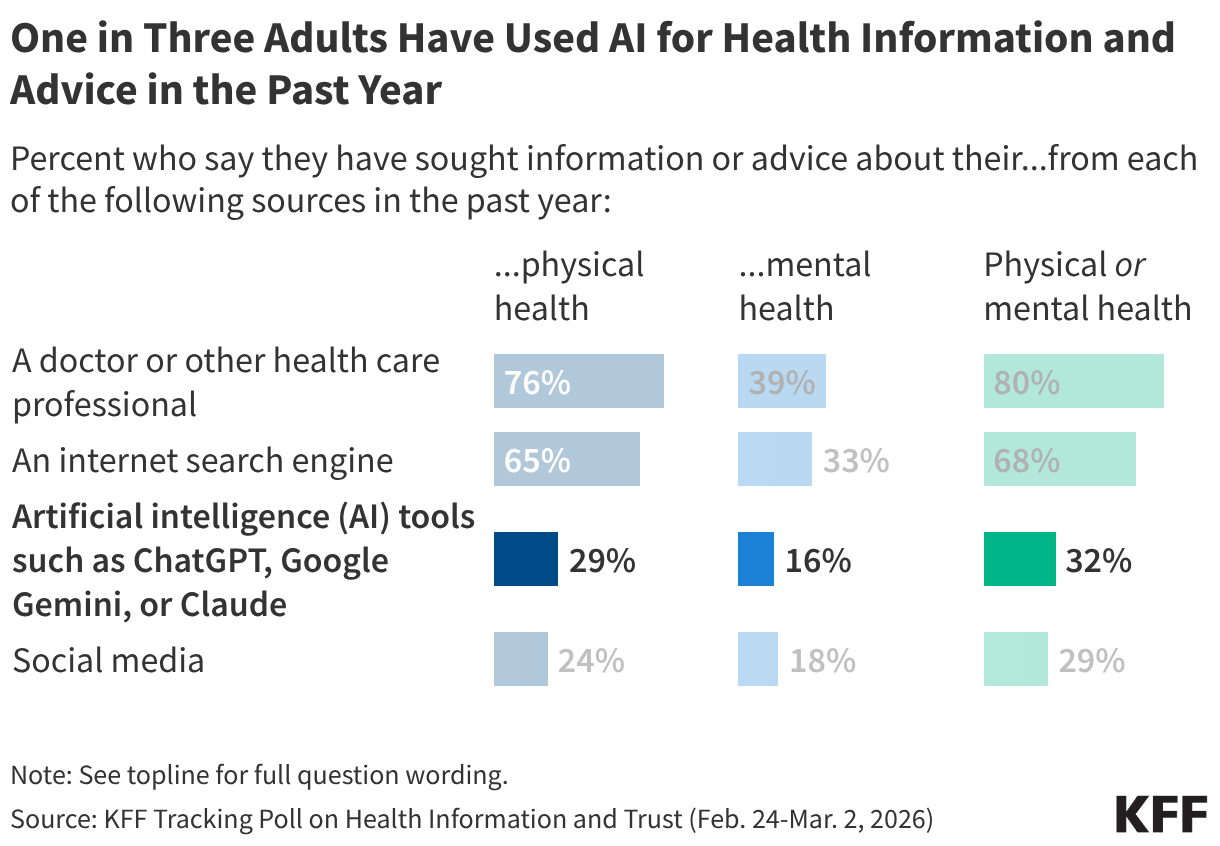
Concurrently, the emergence of artificial intelligence has created a new digital frontier for health inquiries. Approximately 32% of the public reports turning to AI chatbots for health information and advice over the course of a year, rivaling social media as an alternative information source. Usage is especially prominent among younger adults, while uninsured individuals and Black and Hispanic adults are more likely than their insured and White counterparts to turn to AI for mental health advice.
Users typically employ AI tools to look up symptoms or general condition information rather than to make final medical decisions. Similar to social media users, individuals turning to AI frequently cite a desire for quick support, privacy, or difficulties navigating traditional healthcare access and affordability. While the general public maintains low trust in AI tools overall, those who actively use chatbots for health inquiries tend to express confidence in the reliability of the information they receive.
False or Unproven Health Claims
The widespread availability of digital information has coincided with persistent exposure to false or unproven health claims. While public exposure to health misinformation is high, relatively few adults express absolute certainty that these unverified claims are true. Instead, polling identifies a large "malleable middle"—accounting for at least half of the public—where individuals view claims as either "probably true" or "probably false." This widespread uncertainty highlights a critical opportunity for targeted educational interventions and accurate public health communication.
KFF surveys tracking exposure to various false claims—ranging from COVID-19 and measles myths to assertions linking Tylenol use during pregnancy to autism—reveal that belief is deeply intertwined with partisanship, education, and information habits. Republicans and adults without a college degree are consistently more likely to believe or lean toward believing vaccine-related myths compared to Democrats and college graduates. Susceptibility also varies by age and race, with adults aged 30 to 49 and Black adults occasionally showing higher susceptibility to certain vaccine myths depending on the specific topic. Furthermore, individuals who frequently rely on social media or AI for health advice, as well as those who lack a trusted personal physician, are more likely to endorse false claims.
Vaccine Attitudes and Safety Perceptions
Despite polarized debates surrounding newer medical technologies, the vast majority of U.S. adults maintain strong confidence in the safety of traditional childhood routine vaccines, such as those for measles, mumps, rubella (MMR), polio, and hepatitis B. Similarly, older adults express robust confidence in pneumonia and shingles vaccines.
Views on COVID-19 and influenza immunizations remain starkly divided along partisan lines, with Democrats expressing substantially higher confidence than Republicans. Among parents, safety confidence is generally high for polio and MMR shots, but drops significantly for seasonal influenza and COVID-19 vaccines. Parents who skip routine immunizations are roughly twice as likely to harbor beliefs in false health claims, underscoring the profound impact that misinformation and trust deficits continue to have on public health decisions across the nation.








No comments yet. Be the first to join the conversation!