
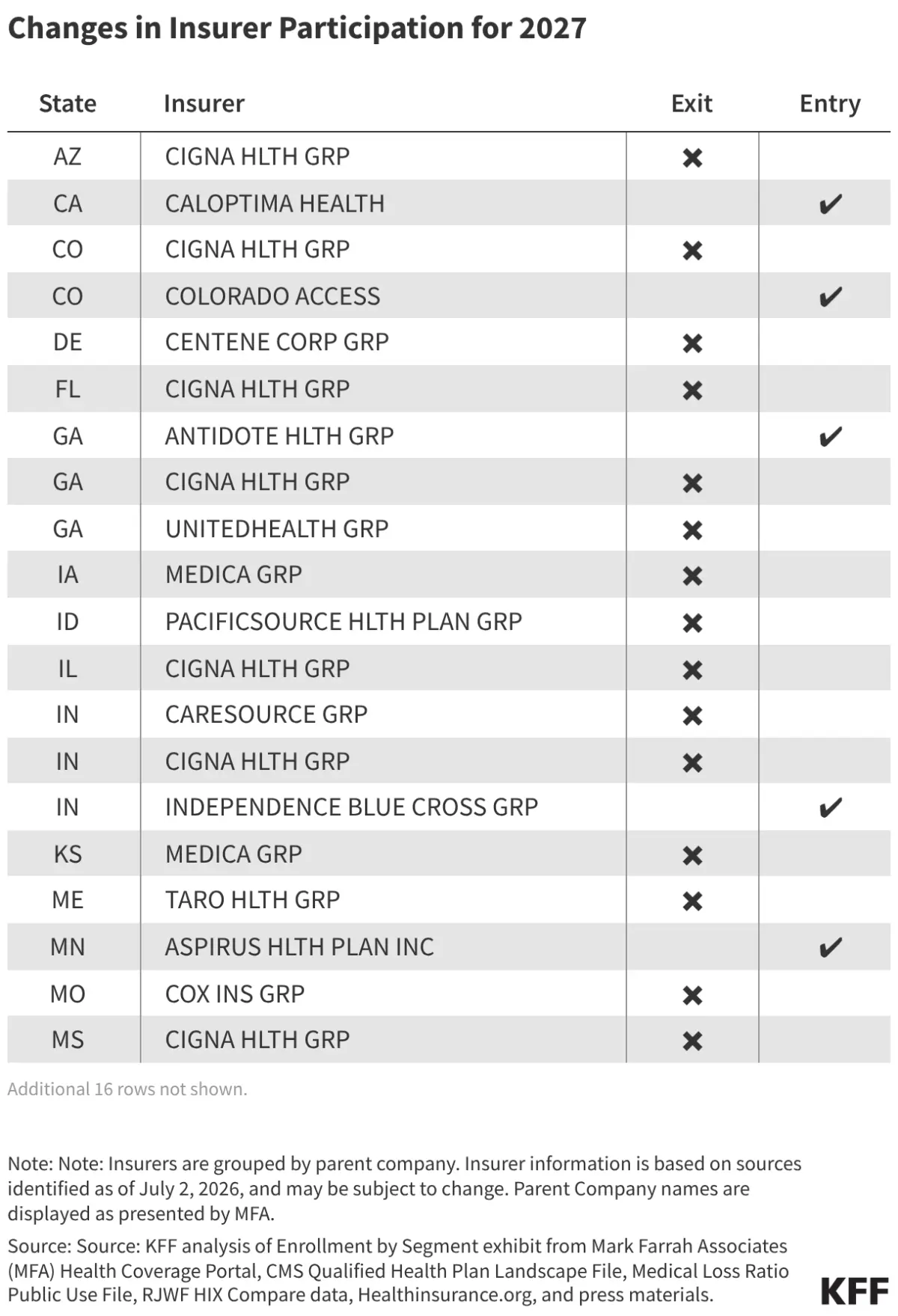
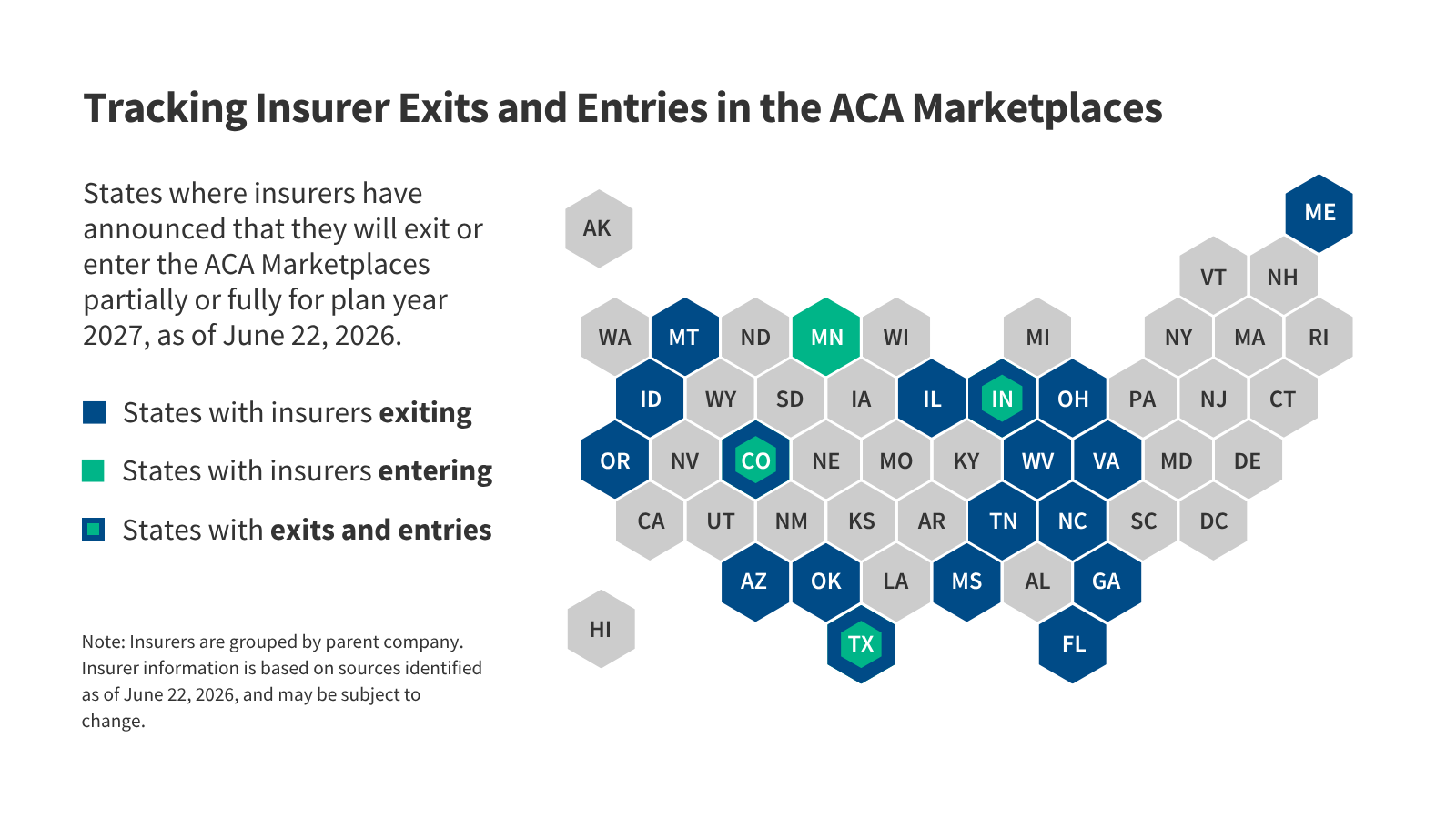
As the healthcare landscape continues to adjust to major federal policy and financial shifts, the Affordable Care Act (ACA) Marketplaces are facing a wave of insurer adjustments. As of October 7, 2026, fresh data reveals that 11 insurance carriers have officially announced plans to exit the ACA Marketplaces for the 2027 plan year, pulling out of either specific states or entirely abandoning the platform across all of their current operational footprints. At the same time, a smaller counter-movement is underway, with six carriers announcing their intentions to enter new state Marketplaces.
This shifting participation pattern follows a turbulent period for individual health insurance exchanges, most notably triggered by the expiration of enhanced premium tax credits at the end of 2025. The expiration of these subsidies removed a critical financial cushion for millions of Americans, leading to a stark drop in sign-ups. During the subsequent Open Enrollment Periods from 2025 to 2026, total enrollment plummeted by over a million people. Industry analysts note that further membership declines across the ACA Marketplaces are widely expected as the calendar year progresses and enrollees continue to face higher out-of-pocket costs without the enhanced subsidies.
These ongoing enrollment contractions carry profound implications for the broader insurance market. A shrinking marketplace alters the total addressable market size for participating insurers, but more critically, it threatens to destabilize the underlying risk pool. Health policy experts have long warned that rising costs and falling enrollment often lead to adverse selection, a dynamic where healthier-than-average enrollees are disproportionately more likely to drop their coverage because they perceive less immediate value. When healthier individuals exit, the remaining risk pool becomes sicker and costlier on average, driving up claims expenditures for carriers.
As people continue to leave the Marketplace, insurance companies are forced to aggressively reassess the long-term profitability and viability of their Marketplace participation. Many are concluding that the margins no longer justify the operational footprint, prompting decisions to pull out entirely in future plan years.
A prominent example of this strategic pivot is Cigna, which has announced its decision to leave the individual market in 2027 to focus on other core business segments. Company executives have cited a lack of meaningful growth potential within the ACA Marketplace space as a primary driver for the move. During first-quarter earnings discussions, corporate leadership highlighted that the exchange business represented a relatively small and steadily contracting segment for the enterprise.
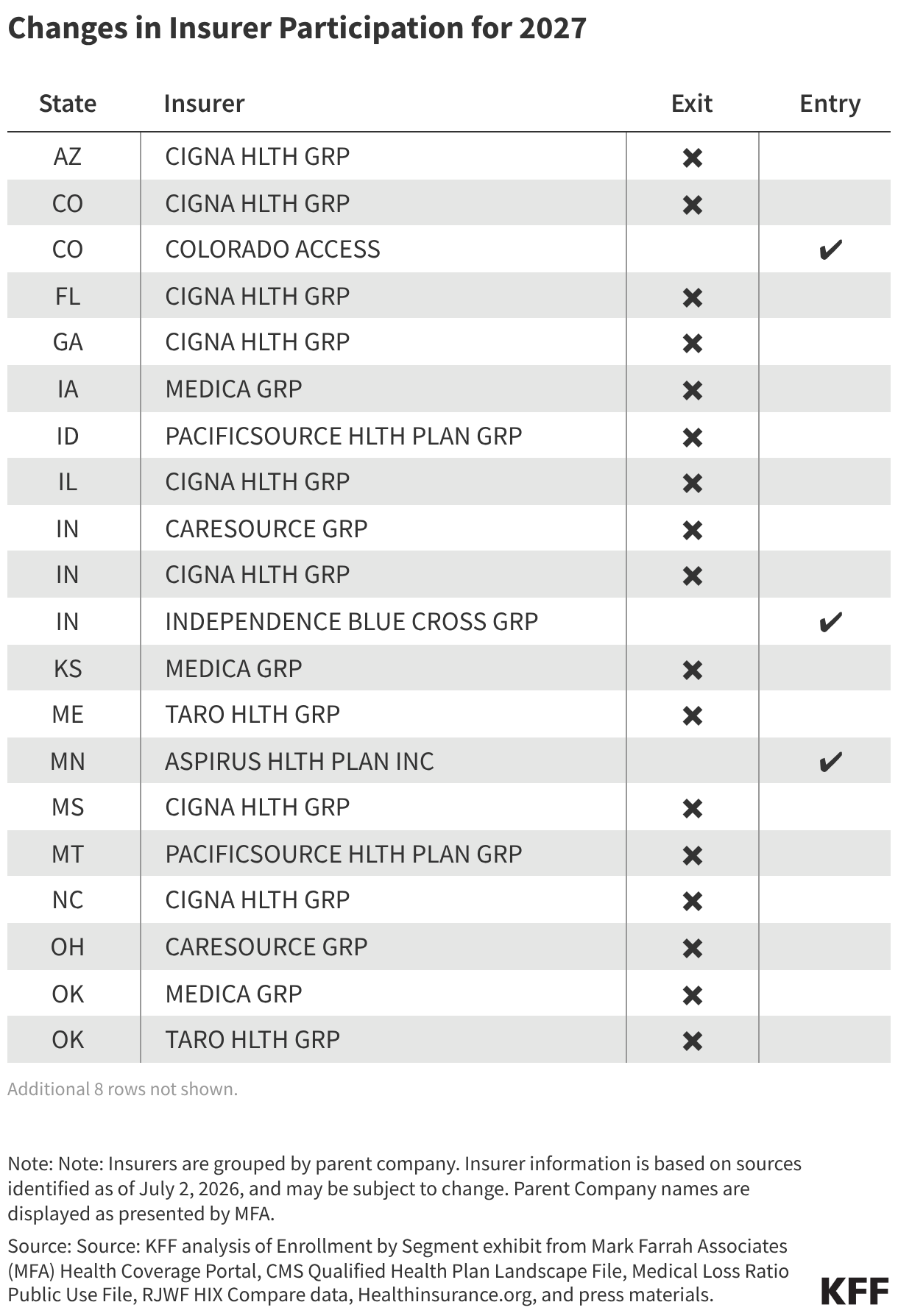
Cigna, which reported first-quarter on-exchange enrollment figures exceeding 350,000 individuals, will completely exit the 11 states where it currently participates in both on-exchange and off-exchange individual markets. This departure represents one of the most significant single-carrier retrenchments from the individual market in recent years, signaling how major national players are recalibrating their portfolios away from public exchanges and toward more lucrative commercial and institutional growth platforms across the broader corporate ecosystem.
Cigna is far from alone in its calculus. In several regions, multiple insurers are simultaneously announcing plans to exit the same state-level markets, compounding the structural changes. This simultaneous contraction creates serious implications for local consumers. In states where multiple carriers pull back, the remaining insurers will face significantly less market competition. Consequently, consumers in those regions will find themselves navigating a much narrower selection of health plans, potentially facing higher premiums, restricted provider networks, and reduced plan innovation as competitive pressures wane.
The ripple effects of these 2027 planning decisions underscore a critical juncture for the Affordable Care Act’s public exchanges. While a handful of new entrants are testing the waters in select state marketplaces, the net loss of major regional and national carriers points to a cooling market environment. As stakeholders, policymakers, and consumers look ahead, the ability of the Marketplaces to stabilize risk pools and maintain robust consumer choice will remain a central challenge for the nation’s individual health insurance ecosystem.










No comments yet. Be the first to join the conversation!