
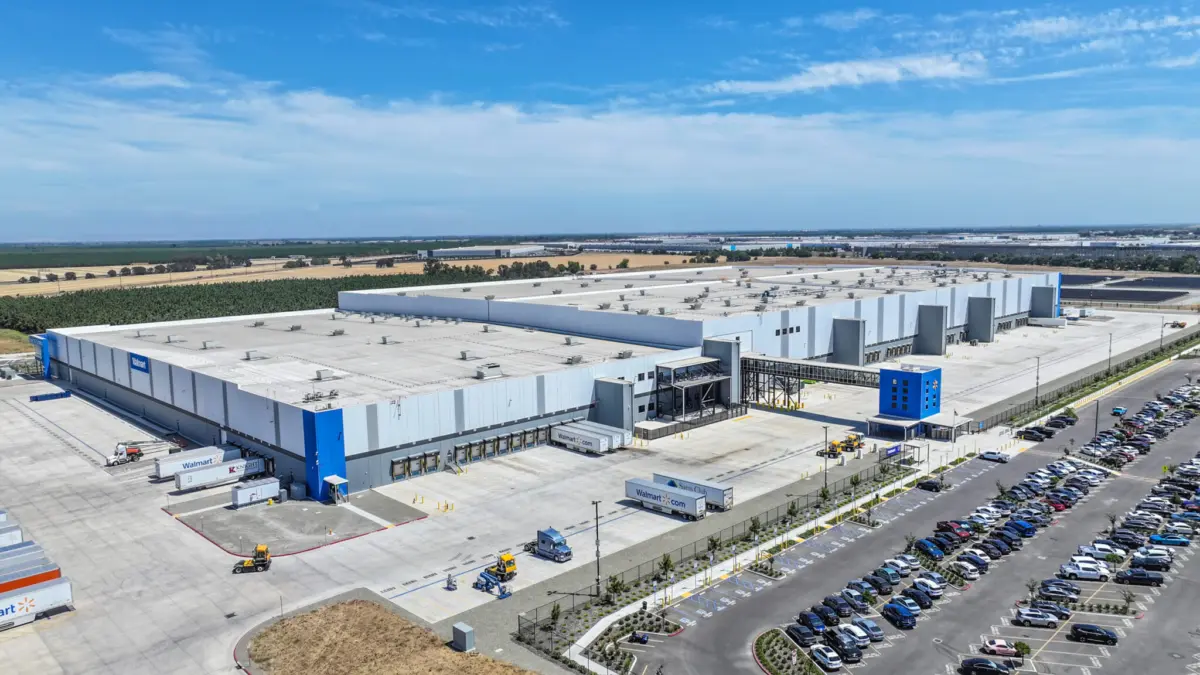
Retail giant Walmart has officially announced the opening of its fifth next-generation fulfillment center, located in Stockton, California. Spanning an expansive 900,000 square feet, the new facility is designed to significantly enhance the company’s storage capacity while streamlining the order fulfillment process for customers across California and the broader West Coast.
The announcement underscores Walmart’s ongoing evolution in the highly competitive ecommerce landscape. According to Digital Commerce 360’s Top 1000 Database, which tracks North America’s largest online retailers by annual ecommerce sales, Walmart firmly holds the No. 2 position. Additionally, the retail titan ranks No. 37 in Digital Commerce 360’s AI Commerce Rankings, a specialized set of metrics available through the Top 1000 Pro with AI Database.
What Distinguishes Walmart’s New Fulfillment Center in Stockton
At the heart of Walmart’s massive Stockton operation is a cutting-edge, automated high-density storage and retrieval system. Rather than requiring human workers to traverse the expansive facility floor to locate items, this sophisticated technology brings products directly to associates. By altering the traditional workflow, Walmart has successfully reduced what was previously a complex 12-step fulfillment process down to just five streamlined steps. This technological upgrade not only accelerates operations but also frees up associates to focus on higher-value tasks within the facility.
The Stockton opening aligns with Walmart’s broader corporate strategy regarding automation. According to figures shared with investors alongside recent online sales updates from fiscal Q2 earnings results, Walmart now processes more than half of its total ecommerce fulfillment volume through automated facilities. Furthermore, automated freight technology has been integrated to some capacity across 3,100 of Walmart’s U.S. stores.
When combined with the company’s wider fulfillment network, these next-generation centers empower Walmart to reach an impressive 95% of the entire U.S. population with either next-day or two-day shipping options.
“We’re bringing together associates with advanced technology and automation to create a safer, more efficient operation that can fulfill more orders and get products to customers faster,” said Karisa Sprague, senior vice president of fulfillment operations at Walmart U.S., in a written statement. “This facility is an important investment in the Central Valley and a critical part of how we’re building the next generation of Walmart’s fulfillment network across the West Coast.”
Fast Delivery’s Importance for Walmart
Delivery speed has emerged as a central pillar of Walmart’s overarching ecommerce strategy over recent quarters, serving as a powerful differentiator in the retail sector.
During the first quarter, Walmart U.S. online sales experienced a robust 26% growth rate. Chief Financial Officer John David Rainey explicitly cited delivery speed as a key catalyst for growth around the world. As a result of continuous network optimizations, Walmart can now reach approximately 60% of the U.S. population through ultra-fast delivery capabilities of 30 minutes or less—a service level that has now been successfully expanded to 38 distinct U.S. markets.
Concurrently, store-fulfilled delivery has more than doubled over the past two years, with over 36% of those specific orders arriving at customers’ doors in under three hours.
“Speed matters, and we have a significant competitive advantage,” Walmart CEO and president John Furner told investors during an earnings call in August, emphasizing the strategic value of the retailer’s physical store footprint and supply chain investments.
How Walmart Fulfillment Services Will Use the Center
Significantly, the newly minted Stockton facility is not solely dedicated to supporting Walmart’s traditional first-party ecommerce operations. Walmart Fulfillment Services (WFS)—the company’s comprehensive, end-to-end third-party fulfillment offering designed for marketplace sellers—will also utilize the massive space to execute orders originating from third-party merchants selling on Walmart.com.
This multi-purpose utility makes the facility’s opening particularly relevant for the rapidly expanding base of brands, manufacturers, and independent distributors that rely on the Walmart Marketplace to reach consumers. By extending its advanced automation and next-generation logistics capabilities to third-party sellers, Walmart aims to bolster the attractiveness of its marketplace platform.
The expansion of WFS comes at a time of explosive growth for the service. Units shipped either the same day or the next day through Walmart Fulfillment Services surged by nearly 150% during the first fiscal quarter, according to CFO John David Rainey. With the addition of the Stockton facility to the Western logistics network, marketplace merchants utilizing WFS will be better positioned to meet the high consumer expectations for rapid delivery across the West Coast market.










No comments yet. Be the first to join the conversation!