
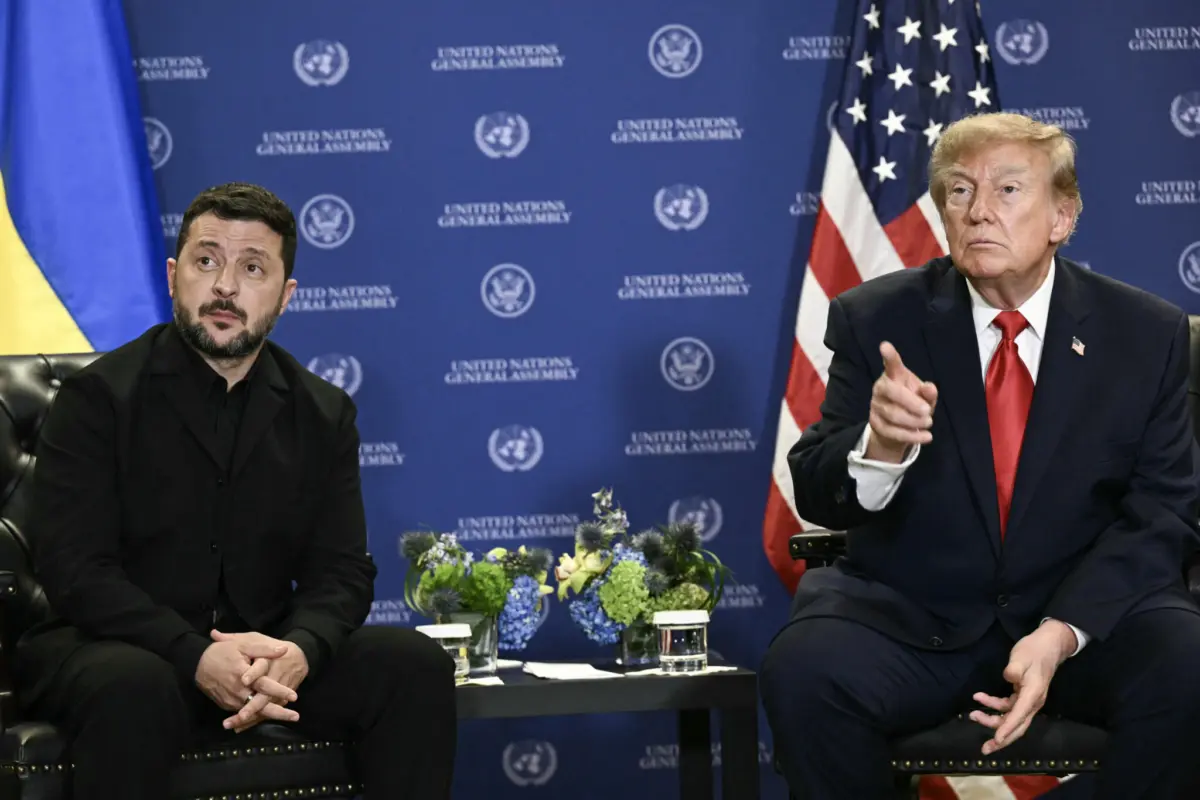
President Donald Trump is facing a formidable wave of backlash from Capitol Hill, international allies, and key domestic voting blocs following his announcement of an agreement to import Russian diesel fuel. The initiative, which the administration defends as a necessary step to stabilize global energy markets and lower surging fuel costs for American consumers and businesses, has drawn sharp condemnation from a bipartisan group of U.S. senators. Lawmakers argue that the plan directly violates federal law, undermines Western economic sanctions, and provides a critical financial lifeline to Moscow amid its ongoing military campaign in Ukraine.
The controversy erupted late last week when President Trump stated that he had successfully brokered an agreement with Russian President Vladimir Putin. According to the administration, Moscow is set to supply 300,000 tons of diesel fuel immediately to American and international markets. The arrangement was pursued as the White House intensifies its efforts to rein in soaring energy prices. These costs have spiked dramatically since the onset of the war in Iran in February, sending shockwaves through the domestic economy and alienating core constituencies, including American farmers who have warned that escalating fuel expenses are severely threatening their day-to-day agricultural operations ahead of the midterms.
However, the administration’s pivot toward Moscow has provoked immediate and fierce resistance from Congress. In a joint bipartisan statement released on Sunday, a coalition of four Republican senators and three Democrats forcefully denounced the arrangement, arguing that it flouts the statutory framework established by lawmakers following the full-scale invasion of Ukraine in 2022.
“Congress explicitly banned Russian energy imports in 2022 to prevent American dollars from financing Putin’s brutal war against Ukraine. Congress was clear: The U.S. should not import oil from Russia until it ends its aggression against Ukraine and ceases threats against our NATO allies,” the lawmakers stated.
The signatories on the joint statement included Republican Senators Lisa Murkowski of Alaska, Susan Collins of Maine, Thom Tillis of North Carolina, and John Curtis of Utah, alongside Democratic Senators Jeanne Shaheen of New Hampshire, Ron Wyden of Oregon, and Richard Blumenthal of Connecticut.
The lawmakers criticized the administration for bypassing Congress entirely, noting that executive branch officials failed to consult legislative leaders or provide any formal explanation or justification for reversing long-standing sanctions policy. Asserting that the United States must not offer Vladimir Putin a financial lifeline while Russian forces continue to target Ukrainian civilians, the group demanded that the administration immediately reverse course.
The tensions intensified over the weekend when President Trump declared on social media that Russia and Ukraine had agreed to an energy ceasefire that would take effect immediately. The optimism surrounding the announcement was short-lived, however. On Monday, Ukrainian President Volodymyr Zelensky reported that overnight Russian airstrikes had targeted energy infrastructure across the country, resulting in several deaths and dozens of injuries.
“So there were Russian violations of the energy ceasefire announced by President Trump,” Zelensky said in a public statement. “For now, this is Putin’s answer to Trump—Russian attacks. But we are waiting. We are waiting for the details of the conversation between the Americans and the Russians. We are waiting to see what specific steps the Americans are ready to take.”
When confronted with Zelensky’s initial skepticism and criticism of the diesel import agreement, President Trump told reporters over the weekend that "it’s time for Ukraine to get a new President."
On Capitol Hill, lawmakers appearing on Sunday news programs amplified their warnings, expressing profound distrust of Russian leadership and questioning the legality of the administration’s actions. Appearing on NBC’s Meet the Press, Senator Thom Tillis warned that the diesel deal could jeopardize American national security and place military personnel in jeopardy.
“These are bad people hanging out with bad people, putting American lives at risk—particularly our Special Operators and forward-deployed personnel,” Tillis said, reiterating his conviction that Putin cannot be trusted. Tillis argued that the White House’s maneuver clearly violates the legislation passed by Congress four years ago, which instituted a sweeping ban on Russian oil imports unless rigorous criteria—including a complete Russian withdrawal from Ukrainian territory—were satisfied.
“I do believe there’s a legitimate case for saying the President’s not following the law,” Tillis said. “We were very clear that Russia is the aggressor. Russia is the one who can end this war by backing out of the territory they occupied.”
The domestic friction is further complicated by recent legislative actions. Just three weeks prior to the diesel announcement, President Trump signed a comprehensive Russia sanctions bill designed to severely restrict Moscow’s financial institutions and cripple its energy sector, which has largely financed the military assault on Ukraine. The measure was named in honor of the late Senator Lindsey O. Graham, the prominent Republican who spent his final months rallying support for the legislation.
Several lawmakers highlighted the contradiction between the newly enacted sanctions and the current diesel agreement. Senator Murkowski argued that the executive branch should rely on existing legislative authorities rather than permitting Russia to export fuel, accumulate revenue, and sustain its war effort. Similarly, Senator Collins expressed her opposition to lifting sanctions on Russian diesel purchases, noting that she had been a proud co-sponsor of the bipartisan sanctions law that the administration now appears to circumvent.
In the House of Representatives, Republican opposition is also coalescing into formal legislative initiatives. Representative Brian Fitzpatrick of Pennsylvania announced plans to introduce a bipartisan bill aimed at blocking any and all purchases of Russian oil. Dubbed the “Ronald Reagan Peace Through Strength Act,” the measure has already secured the backing of fellow Republican Representative Don Bacon of Nebraska, who stressed that Congress must take a firm stand.
Administration officials have pushed back against the allegations of legal non-compliance. Treasury Secretary Scott Bessent defended the diesel agreement during a television appearance, asserting that the administration is operating strictly within the confines of established legal authorities to provide price relief to American consumers.
“We’re doing it with all the legal authorities we have, so anyone in Congress who says that—whether it’s an old bill or the current Lindsey Graham bill—prohibits us from doing it, is wrong,” Bessent told Fox News.
Support for the administration’s approach also found backing from Senate Republicans such as John Barrasso of Wyoming, who told CBS’ Face the Nation that the President “has to make tough decisions” in navigating complex global economic pressures.
U.S. allies warn Trump’s diesel deal could bolster Russia’s war
The fallout from the U.S. announcement has extended far beyond Washington, drawing sharp rebukes from international partners who view the erosion of sanctions as a strategic setback. Ukrainian President Zelensky previously described the initial announcement as a "gift to Putin," arguing that easing sanctions demonstrates an alarming weakness that encourages further aggression, prolongs the conflict, and inflicts greater devastation globally.
European leaders, whose governments have borne significant economic and political burdens to support Ukraine’s defense, voiced similar concerns. Swedish Prime Minister Ulf Kristersson expressed deep regret over the U.S.–Russia arrangement, emphasizing that energy revenues remain the primary engine of the Russian war machine. Estonian Prime Minister Kristen Michal echoed those sentiments, characterizing the agreement as a major miscalculation that directly contradicts long-term Western efforts to starve Moscow of energy export revenues. Both Sweden and Estonia rank among the leading providers of bilateral aid to Ukraine relative to the size of their domestic economies.
European Union Foreign Policy Chief Kaja Kallas warned that suspending sanctions on Russian diesel grants the Kremlin vital financial resources to continue its military campaign. Underscoring Europe’s steadfast commitment to maintaining economic pressure, Kallas announced that European foreign ministers had adopted nearly 1,600 new sanctions targeting Russia’s military-industrial complex, highlighting a stark divergence between Washington’s recent actions and Europe’s isolation strategy.
The United Kingdom also voiced strong opposition to the arrangement. British Defense Secretary Wes Streeting stated that London did not support the deal with Putin and would instead pursue measures to strengthen existing sanctions against Moscow. Prime Minister Andy Burnham reaffirmed Britain’s complete solidarity with Kyiv during a phone call with President Zelensky, acknowledging the profound difficulties of the preceding 24 hours.
Canadian Prime Minister Mark Carney echoed these concerns following a separate conversation with Zelensky on Sunday, stating that the agreement runs counter to the collective efforts of Ukraine, Canada, and international allies dedicated to fostering lasting peace and stability across Europe.








No comments yet. Be the first to join the conversation!