
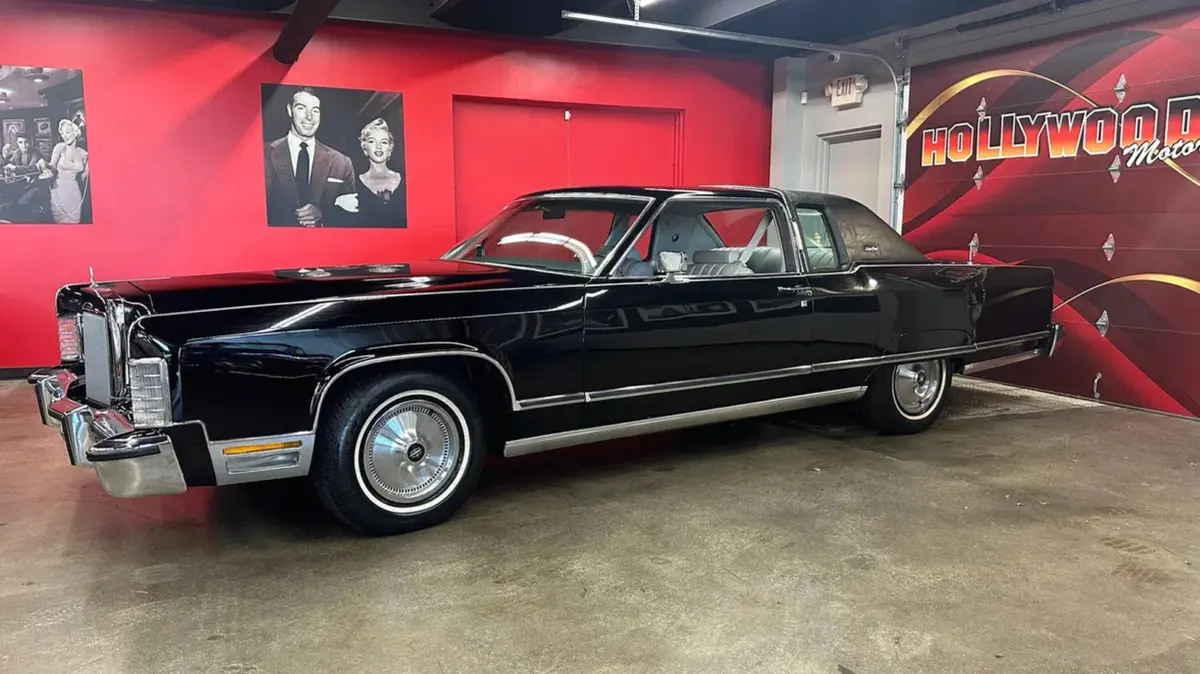
The fifth-generation Lincoln Continental, spanning the model years from 1970 to 1979, remains one of the most defining symbols of American automotive excess. Defined by its massive proportions, plush ride, and imposing presence, the Continental was the quintessential American luxury land yacht. While the comprehensive 1970 redesign brought significant aesthetic updates—ranging from a lower roofline and a full-width front grille to integrated taillights and sharply beveled fenders—the vehicle retained a traditional body-on-frame construction. Available in both elegant sedan and grand coupe configurations, these rolling palaces commanded the highway with a distinctive authority that has captured the imagination of classic car collectors for decades.
Powering these massive vehicles was a formidable 460-cubic-inch (7.5-liter) V8 engine. During the early days of this generation, this powerplant produced an impressive 365 horsepower, a figure calculated using the older gross power ratings system before the industry transitioned to net power ratings. Affectionately known as the "Lima" engine due to its manufacturing roots in Lima, Ohio, this 385-series big-block V8 has earned a reputation as one of the most durable and reliable internal combustion engines ever manufactured by the Ford Motor Company. Built with remarkable structural integrity, these stout engines were known to easily surpass 200,000 miles of operation with basic maintenance, making them an enduring favorite for project car builders and enthusiasts seeking bulletproof reliability.
However, the automotive landscape shifted dramatically in the early 1970s. New, stringent emissions regulations established by the Environmental Protection Agency (EPA) and enforced across nearly 30 automakers severely choked the performance of these robust, high-displacement powerplants. Over the course of the decade, these once-mighty engines were progressively castrated by early emissions equipment, transforming powerhouse V8s into shadows of their former selves. This historical decline introduces a compelling dilemma for modern classic car enthusiasts: Is a late-decade Lincoln Continental—no matter how original, pristine, or well-maintained it might be—truly worth the mechanical compromises of its neutered V8? A recent automotive listing for a 1977 coupe variant serves as a prime case study for this enduring automotive debate.
Should you take a chance on a cheap big-block Lincoln?
The automotive market frequently presents intriguing opportunities for collectors willing to look past a few mechanical shortcomings. A prime example can be found on Long Island, New York, where a 1977 Lincoln Continental coupe has surfaced for sale on Hemmings. Finished in deep black paint over a gray leather-appointed interior, the vehicle appears to be in remarkably preserved cosmetic condition, showing virtually no major exterior imperfections and registering just under 31,000 miles on its five-digit odometer. Although the car has recently undergone servicing, the current seller notes a missing belt for the air conditioning system and power seats that are only partially functioning, though the vehicle is said to run and drive without issue.
For enthusiasts considering a purchase, the massive physical dimensions of the factory 460-cubic-inch V8 offer a distinct advantage: a vast amount of physical wiggle room within the engine bay that accommodates extensive mechanical modifications. According to automotive performance reports from publications like Hot Rod, the anemic factory output—which hovered around the 200-horsepower mark in the late 1970s—can be exponentially increased, with some builds capable of pushing up to 900 horsepower using the original stock engine block. This incredible potential is largely due to the 460’s massive spacing between bore centerlines, measuring 4.900 inches, which readily accommodates large-bore stroker kits. Because a larger cylinder bore allows for significantly greater airflow through each combustion chamber, the engine gains a tremendous capacity for high-output performance modifications.
Yet, unlocking this hidden potential comes with a substantial financial commitment. Even though the Ford big-block architecture naturally lends itself to do-it-yourself modifications and aftermarket support, the total cost of undertaking such a project can easily cause enthusiasts to reevaluate their automotive budgets. Historical data from project builds outlined by performance media highlights that achieving substantial power gains requires serious financial input, with out-of-pocket expenses running into thousands of dollars for off-the-shelf parts and specialized machine work. For those who desire even higher performance figures, the financial investment scales upward accordingly.
Furthermore, the Ford 460 V8 is not entirely invincible. Even as one of the most steadfast large-displacement engines ever produced with low factory power outputs, it still possesses well-documented mechanical vulnerabilities. Among the most notable issues reported by long-term owners are warping exhaust manifolds and premature wear on factory timing chains. Additionally, oil and coolant leaks frequently develop as the original timing cover degrades, cracks, or develops pinholes over long periods of exposure. Other common concerns that prospective buyers must monitor include chronic overheating tendencies, ignition system failures, and recurring exhaust leaks that require regular maintenance and part replacements.
What happened to the Ford 385-series 460 V8?
The mechanical decline of the 460 V8 can be traced directly to regulatory changes that transformed the American automotive industry. When the landmark 1970 amendments to the Clean Air Act were enacted, they fundamentally reset national air quality and pollution control standards, introducing strict mandates that specifically targeted automobile emissions. These federal amendments required upcoming 1975 vehicle models to emit 90 percent fewer carbon monoxide and hydrocarbon pollutants compared to the baseline levels established by 1970 models. Furthermore, regulations dictated that nitrogen oxide emissions had to achieve a similar 90 percent reduction from 1971 levels by the time the 1976 model year rolled out onto public roadways.
To comply with these stringent environmental mandates, automakers were forced to implement a series of early, often clumsy emissions controls, including lower compression ratios, primitive catalytic converters, exhaust gas recirculation systems, and heavily modified carburetor and ignition timing setups. As a direct consequence, the once-glorious 460 cubic-inch V8 suffered a severe nosedive in performance metrics. By the 1973 model year, its official power output inside the heavy Continental was rated at a modest 219 horsepower using the newly adopted net rating system. By 1977, that same Ford V8 generated a mere 208 horsepower. To put that figure into perspective, this output is noticeably lower than the power produced by many modern, everyday hot hatches.
This dramatic loss of power is even more pronounced when considering the sheer physical mass of the vehicle it was tasked with moving. The Continental itself had not undergone significant weight-reduction measures, remaining a massive automotive titan that weighed in at nearly 5,000 pounds depending on the specific body style and equipment packages selected. The once-formidable luxury land yacht found itself severely underpowered, leading enthusiasts to frequently compare its highway momentum to that of an unassisted rowboat.
Despite this precipitous drop in factory horsepower ratings, the 460 V8 remains far from the worst choice among low-powered big-block engines for collectors and restorers looking for a classic cruiser. The engine’s fundamental architecture ensures that it will reliably start and run for hundreds of thousands of miles with basic upkeep, avoiding catastrophic failures even when neglected. This underlying durability explains why Ford continued production of the big-block 460 well into the 1990s, securing its legacy as a cornerstone of American automotive engineering.











No comments yet. Be the first to join the conversation!