
For years, everyday investors and personal finance enthusiasts have sought a singular, centralized hub to monitor their entire economic lives without navigating a dozen different banking portals. Empower, formerly known as Personal Capital, has long occupied that space, offering a comprehensive suite of financial management tools designed to aggregate assets, analyze portfolios, and plan for retirement from a single, unified dashboard. Available entirely for free, the platform continues to serve as a vital utility for users looking to maintain a real-time snapshot of their net worth, track cash flow, and evaluate investment strategies.
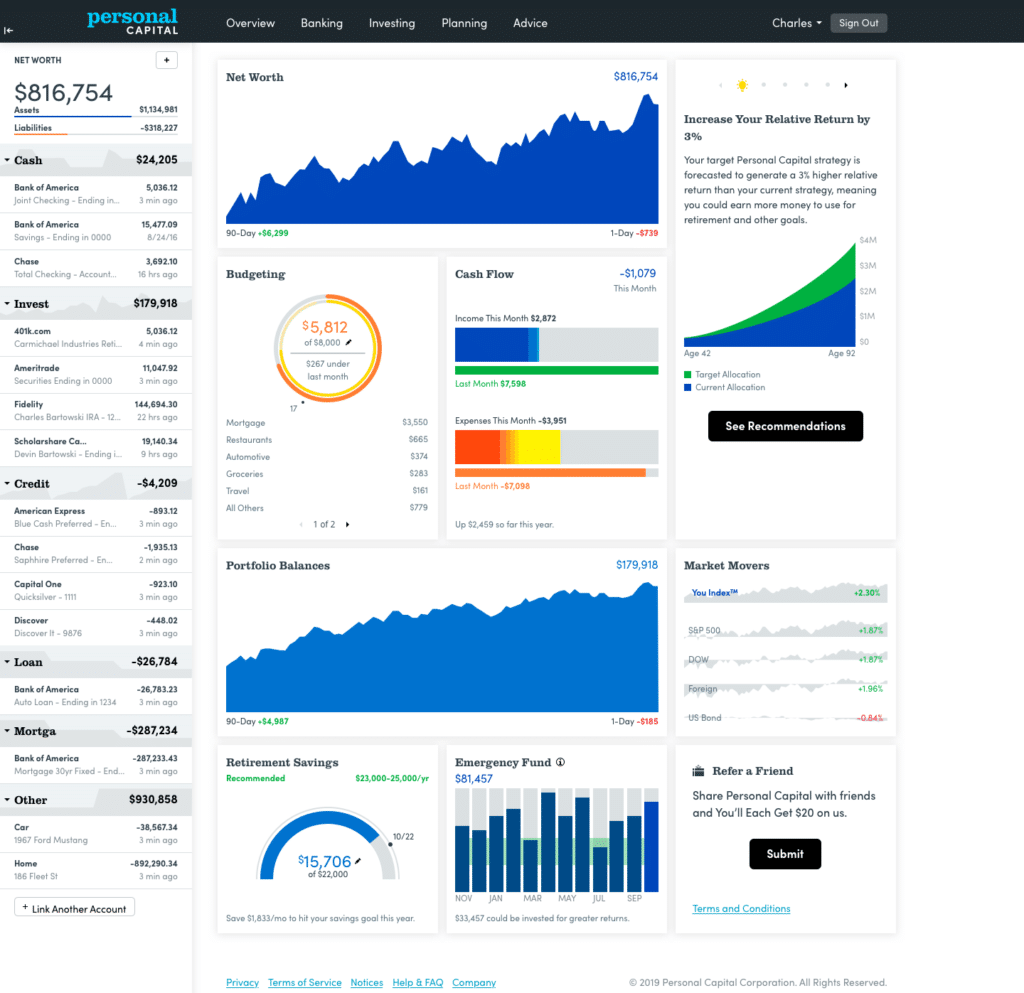
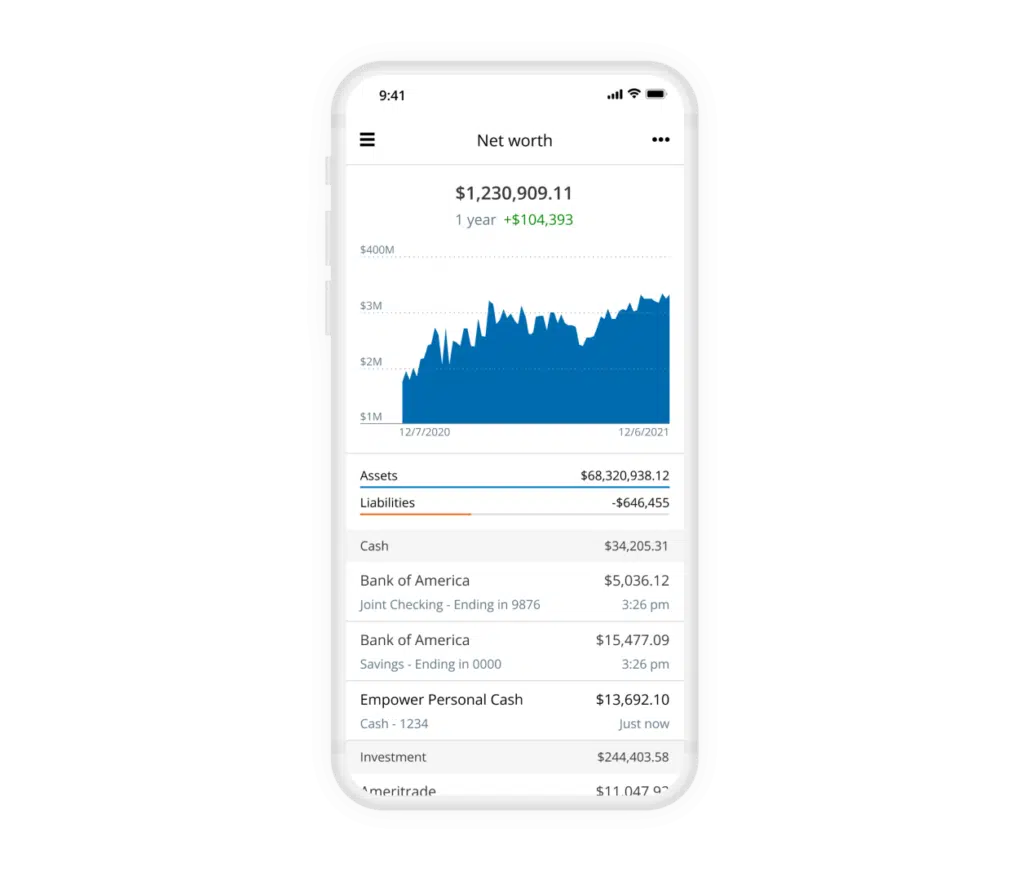
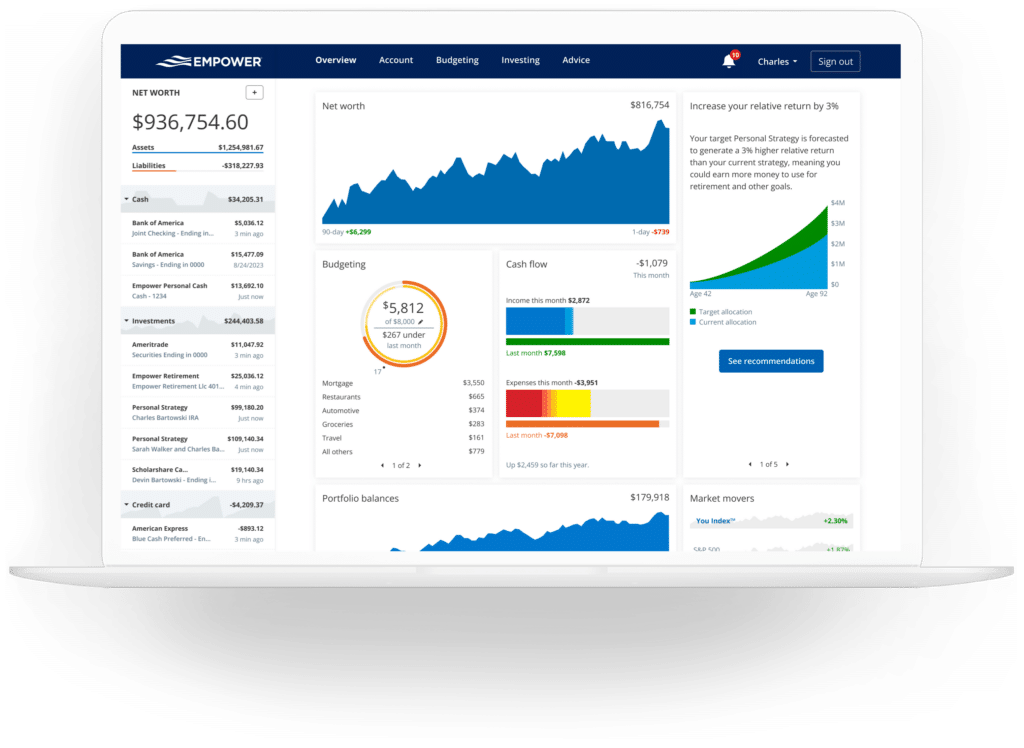
At its core, Empower delivers a complete view of an individual’s financial ecosystem by automatically synchronizing a vast array of accounts. Users can link checking, savings, credit cards, loans, investment vehicles such as 401(k)s and IRAs, and mortgage accounts. Furthermore, the platform accommodates non-liquid assets, allowing users to integrate real estate values by linking property data directly from Zillow. This seamless aggregation forms the foundation for a real-time assessment of overall financial health and net worth tracking, a practice widely regarded as foundational to achieving long-term financial freedom.
Getting started on the platform requires setting up a free account and systematically linking online financial portals by searching for institutions or entering URLs within the dashboard interface. While users are required to link at least one account initially—such as a credit card or a bank account—maximizing Empower’s robust investment tracking features necessitates connecting the entirety of one’s financial portfolio. For rare instances where an institution cannot be electronically linked, the platform accommodates manual entries to ensure complete oversight.
Security remains a primary focus for users entrusting financial aggregators with their login credentials. Empower employs AES-256 encryption supported by multi-layer key management, ensuring that user-specific keys and salts are continuously rotated and that no individual employee has direct access to private credentials. Additionally, the platform requires multi-factor authentication and device authorization. Users receive automated verification via phone calls, emails, or text messages when attempting to sign in from unrecognized devices or foreign locations, and security settings allow individuals to review and revoke access for outdated hardware.
Beyond simple asset aggregation, the platform functions heavily as a banking and budgeting assistant. The cash flow and budgeting modules automatically import and categorize transactions across linked accounts, giving users transparent visibility into monthly expenditures and income sources. While the budgeting feature functions primarily as an aggregate spending tracker rather than a granular category-by-category allocation tool like YNAB, it excels at providing macro-level insights. Users can customize spending categories and apply specific tags—such as tracking maintenance costs for a home pool under a broader category—to refine their financial reporting without establishing complex sub-accounts. The system also tracks recurring bills and loan due dates across linked credit cards and mortgages, assisting users in avoiding missed payments.

Where Empower truly differentiates itself is in its sophisticated investment tracking and analysis infrastructure. Once retirement and taxable brokerage accounts are connected, the platform updates asset valuations throughout the trading day, monitors mutual fund expenses, and evaluates asset allocation across domestic and international equities, fixed income, and alternative assets. A particularly notable recent integration allows cryptocurrency investors to track holdings in digital assets such as Bitcoin, Ethereum, and Litecoin across hundreds of exchanges without compromising private wallet credentials or exposing sensitive passwords. Users simply input the token symbol, exchange, and amount manually to incorporate crypto into their overall net worth calculations.
The platform’s planning tools extend far beyond historical tracking, offering predictive modeling for long-term financial milestones. The interactive Retirement Planner utilizes aggregated account data to project retirement readiness under various conditions. Users can construct multiple comparative scenarios, adjusting assumptions regarding retirement age, the inclusion or exclusion of Social Security benefits, projected inflation rates, effective tax rates, and life expectancy to evaluate outcomes side-by-side.
Complementing the retirement projections is a comprehensive Savings Planner divided into three distinct modules: Retirement Savings, Emergency Fund Savings, and Debt Paydown. The retirement module monitors annual contribution goals across tax-advantaged and taxable accounts. The emergency fund tracker evaluates linked bank balances against a recommended three-to-six-month expense threshold derived from the user’s established monthly budget. Meanwhile, the debt paydown planner aggregates car loans, mortgages, personal loans, and interest-bearing credit card balances, tracking year-to-date balance changes and applicable Annual Percentage Rates.
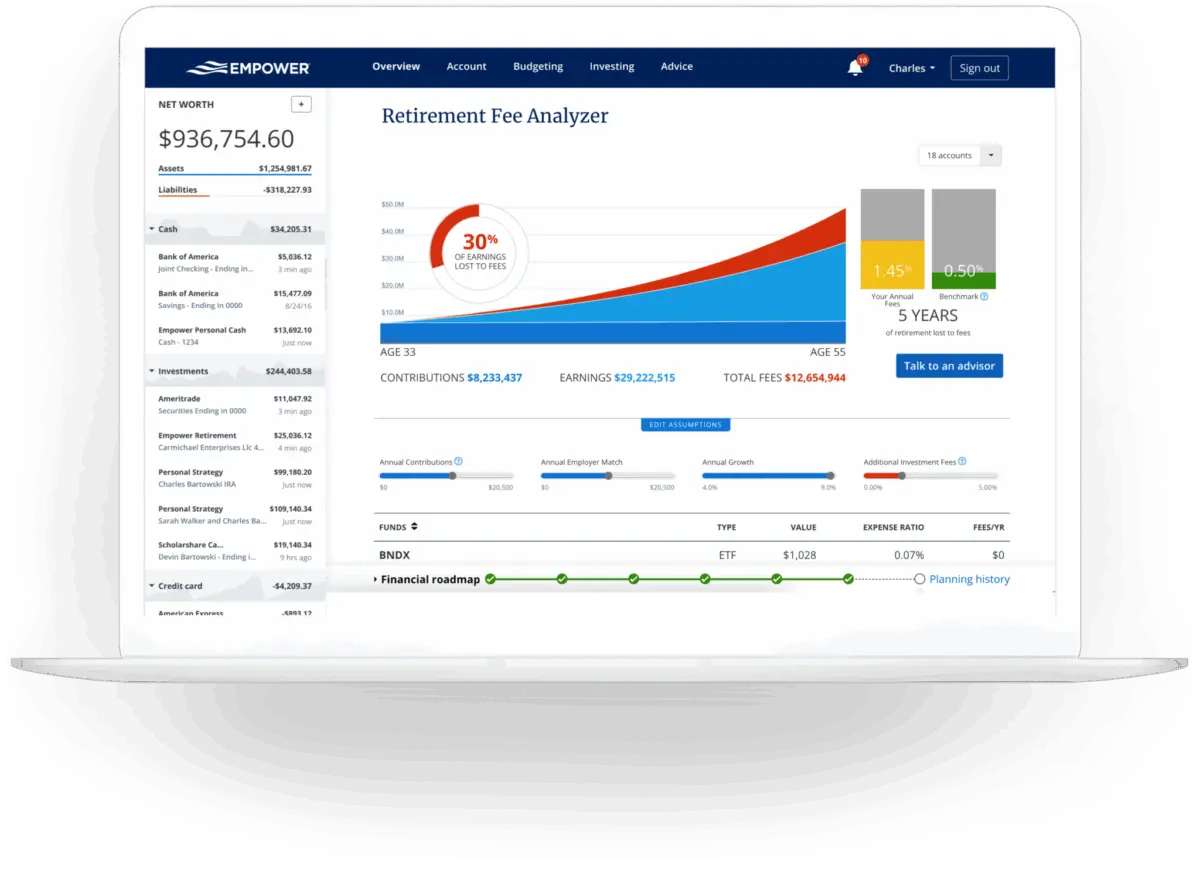
Among the platform’s most compelling utilities is the Retirement Fee Analyzer, which calculates the weighted average expense ratio across all linked investment accounts. Because incremental investment and advisory fees compound destructively over decades—potentially costing investors hundreds of thousands of dollars in lost wealth—the analyzer exposes hidden costs that are frequently overlooked. Even with a relatively low weighted average expense ratio, users can visualize the projected dollar amount consumed by fees over a seven-year horizon, underscoring the critical importance of low-cost indexing.
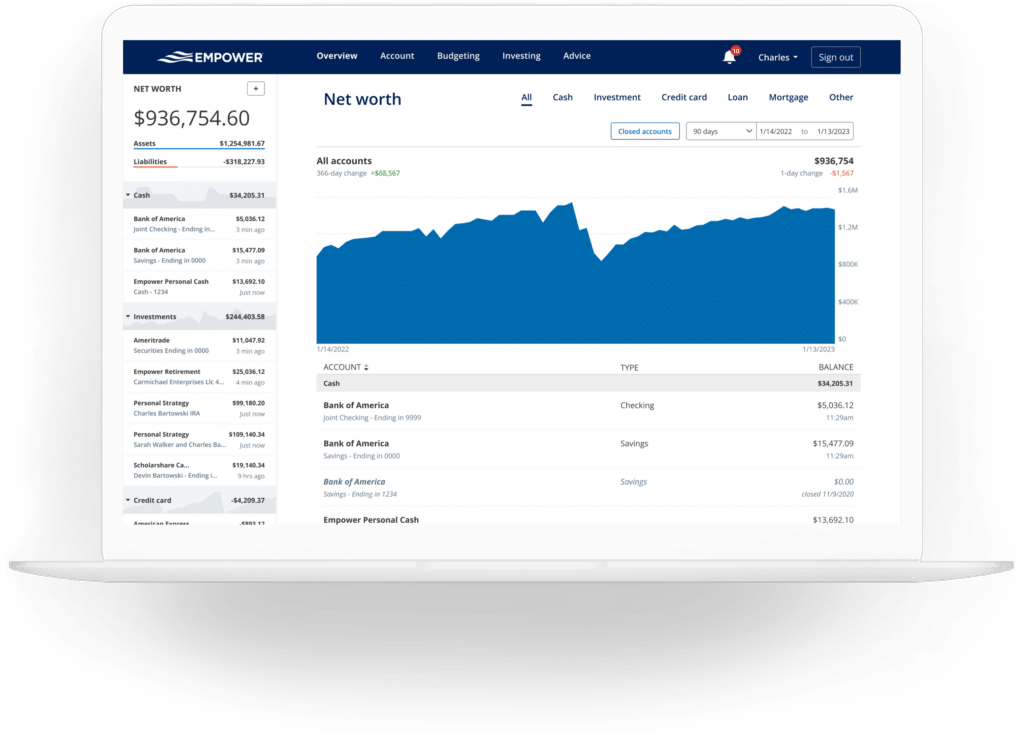
Concurrently, the Investment Fee Checkup evaluates existing portfolio allocations against recommended models tailored to an individual’s age, risk tolerance, and timeline to retirement. The tool outlines historical performance, projected returns, and specific asset classes requiring rebalancing, providing clear directives for investors seeking to optimize their market exposure.
While the financial dashboard and its associated analytical tools are entirely free, Empower operates as a commercial entity that utilizes its software as an acquisition channel for paid financial advisory services. Users frequently report receiving outreach calls from platform representatives offering professional investment management. However, these advisory services are entirely optional; users are under no obligation to invest with the firm or utilize its wealth management branch to access the dashboard. For those who do elect professional management, advisory fees begin at 0.89 percent for the first $1 million under management and scale downward to 0.49 percent for portfolios exceeding $10 million.
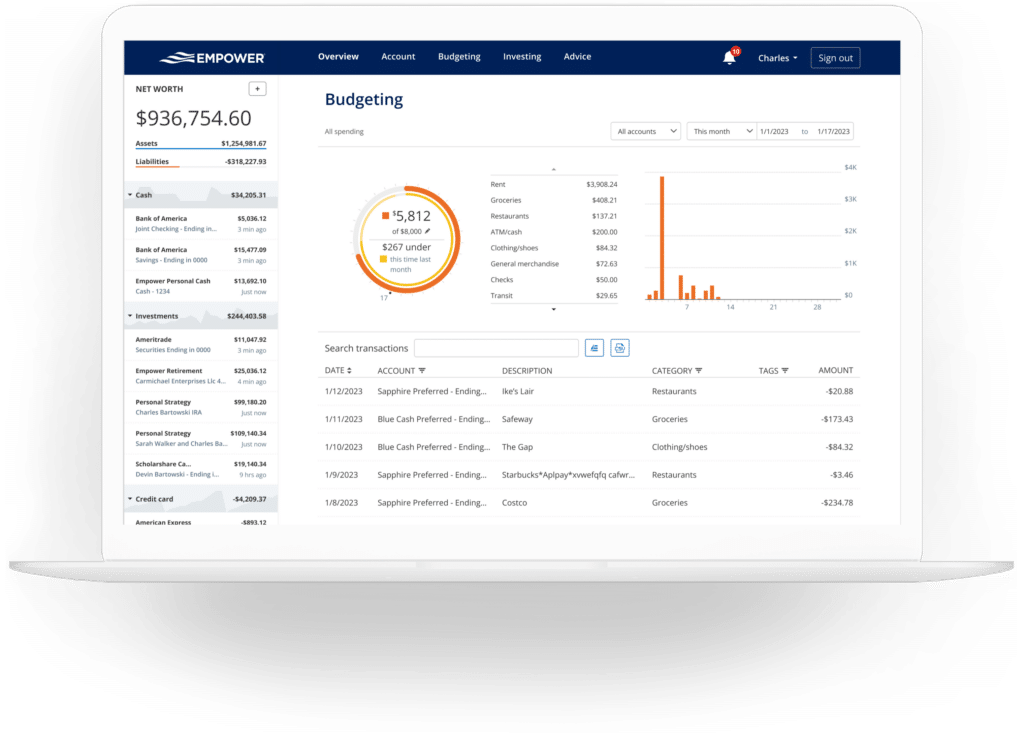
Ultimately, Empower provides an invaluable, centralized command center for individuals seeking granular insight into their net worth, cash flow, and investment strategies. By synthesizing disparate financial accounts into a cohesive interface equipped with institutional-grade security and robust analytical instruments, the platform remains an essential asset for modern financial management.








No comments yet. Be the first to join the conversation!