
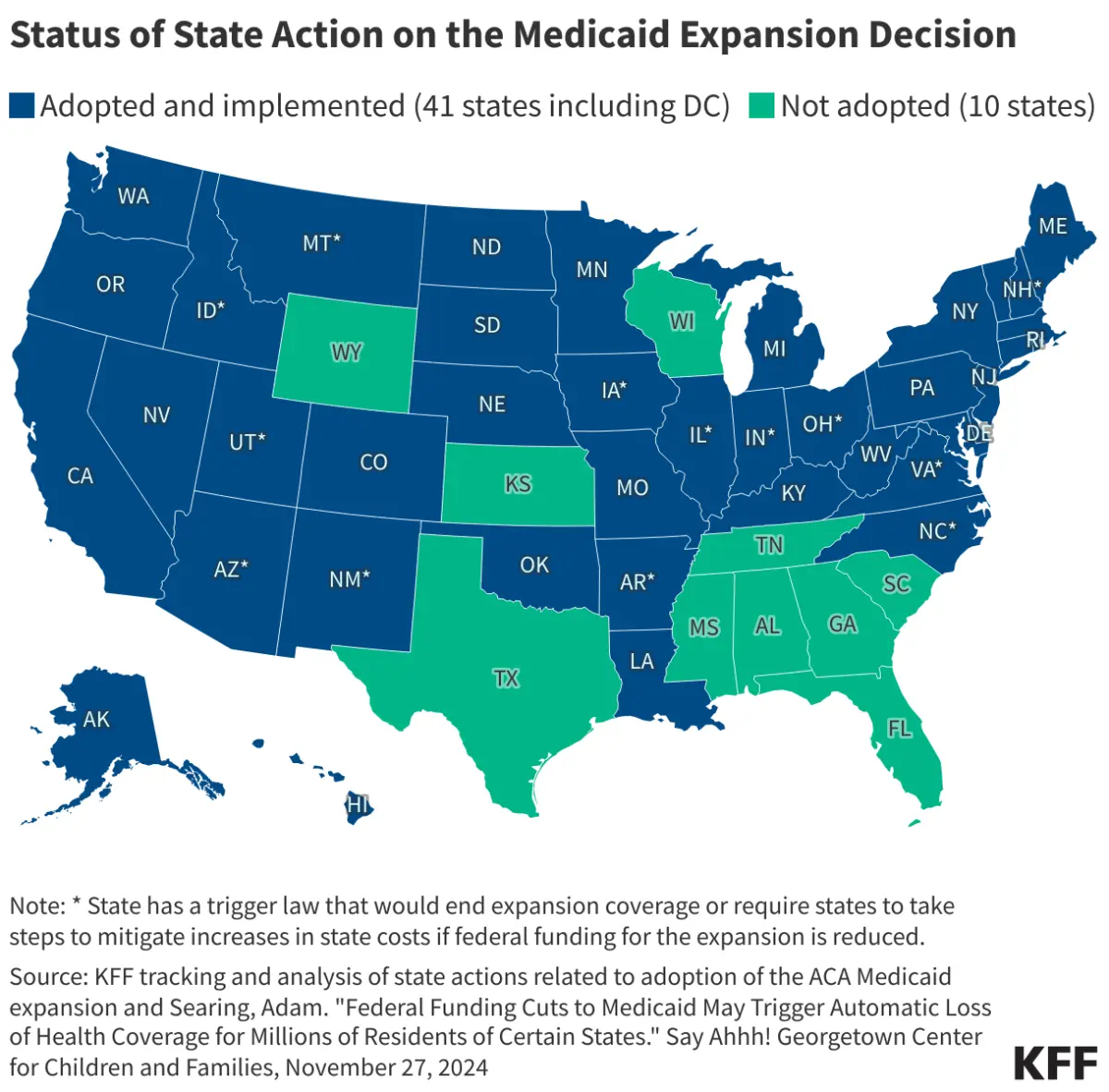
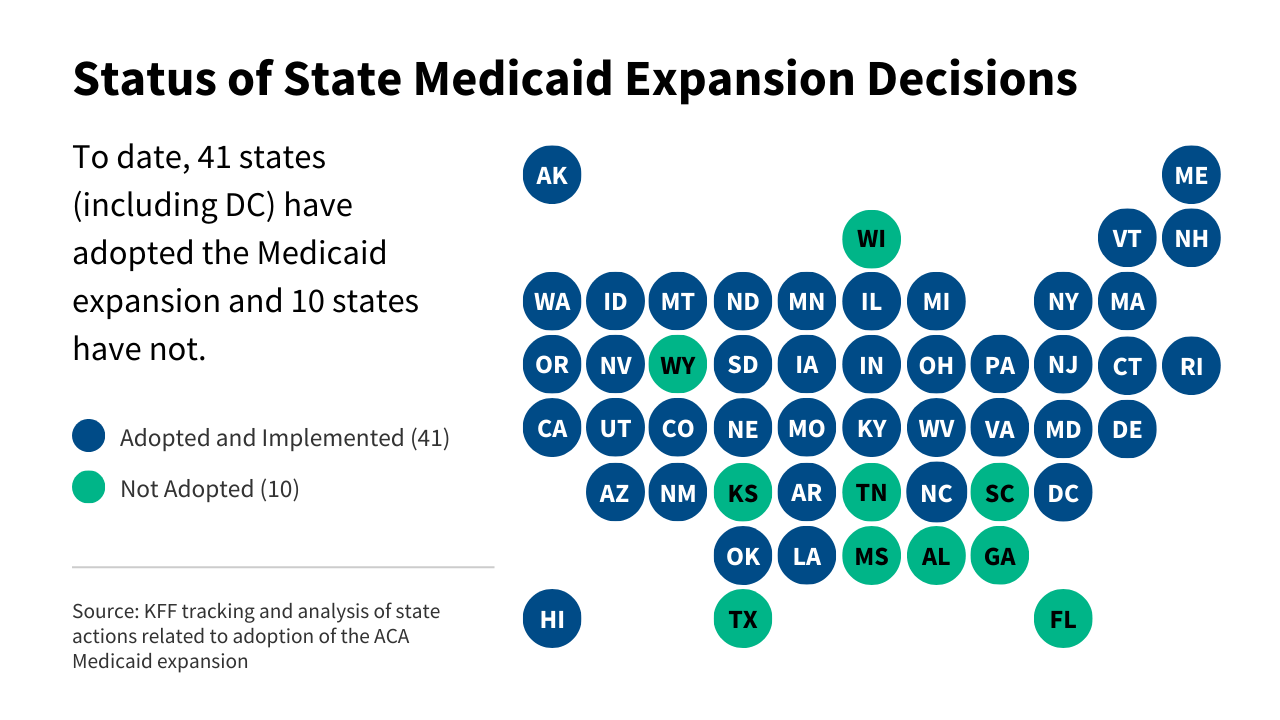
More than a decade after the passage of the landmark Affordable Care Act, the national landscape of healthcare coverage continues to be defined by state-level decisions regarding Medicaid expansion. According to the latest tracking and analysis by KFF, a total of 41 states, including the District of Columbia, have officially adopted the ACA Medicaid expansion. Meanwhile, 10 states have chosen not to adopt the program, leaving a distinct geographic and political divide in access to healthcare for millions of low-income Americans.
The ACA’s Medicaid expansion fundamentally transformed the nation’s social safety net by extending health insurance eligibility to nearly all adults with household incomes up to 138 percent of the Federal Poverty Level. For an individual, that income threshold translates to $21,597 based on the 2025 federal poverty guidelines. To incentivize states to join the initiative, the federal government provided an enhanced federal matching rate, known as FMAP, covering a significant majority of the costs associated with the newly eligible expansion populations.
Despite the substantial federal financial backing, adoption has remained a point of intense political debate across the country since the Supreme Court’s 2012 ruling made expansion optional for states. The ongoing split into expansion and non-expansion camps has created a patchwork of healthcare availability, where low-income residents in adopting states often enjoy comprehensive preventative and acute care coverage, while their counterparts in non-expansion states frequently fall into a coverage gap—earning too much to qualify for traditional Medicaid but too little to afford private insurance marketplace subsidies.
KFF’s comprehensive tracking provides a detailed window into this evolving dynamic, offering tools such as interactive maps and downloadable data visualizations to monitor state legislative, executive, and voter-led actions. While the core map illustrating the current status of state action highlights a stable majority of adopting states, the policy conversations within these jurisdictions have grown increasingly nuanced.
In states that have already embraced the expansion, recent policy activity frequently centers on efforts to place new limits or administrative requirements on the expansion population. Adopting states have increasingly turned to Section 1115 demonstration waivers to implement work requirements, premium contributions, or other enrollment conditions, seeking federal approval to reshape how the program operates locally. At the same time, policymakers in several expansion states are grappling with questions of fiscal sustainability and long-term federal funding commitments.
A prominent feature of recent state-level debate involves "trigger" laws tied directly to the share of federal funding provided through the program. These legislative mechanisms are designed to automatically scale back or terminate a state’s Medicaid expansion if the federal matching rate drops below a certain threshold. South Dakota and West Virginia, for example, are or were actively considering actions to put such trigger laws into place, reflecting underlying anxieties about future federal budget shifts.
Conversely, efforts to dismantle or modify these automatic termination clauses have emerged in other legislative arenas. In Virginia, lawmakers introduced a budget amendment aimed at removing the automatic termination of the expansion from the state’s existing trigger law. Rather than allowing a sudden coverage cutoff in the event of federal funding reductions, the proposed amendment would have required a legislative committee to develop thoughtful recommendations on how the state could adjust to potential losses in federal support. Although that specific amendment was ultimately excluded from the final budget, it underscores a growing legislative awareness of the severe disruption sudden coverage losses could cause. Similar proposals seeking to remove or scale back trigger laws have surfaced in states like Illinois and North Carolina.
The implications of these trigger mechanisms extend far beyond procedural budgeting. Policy analysts and advocacy groups have raised alarms that federal funding cuts could trigger an automatic loss of health coverage for millions of residents who rely on the expansion for their daily healthcare needs. Research from organizations such as the Georgetown Center for Children and Families highlights the vulnerability of expansion populations when state laws link program survival rigidly to federal financing levels. As federal budget priorities shift and debates over national deficits persist, state lawmakers find themselves navigating complex fiscal equations to protect vulnerable residents from unexpected coverage cliffs.
Meanwhile, in the 10 states that have not adopted the full ACA expansion, policy discussions continue to simmer, driven by legislative actions, executive proposals, and grassroots initiatives. Observers tracking non-expansion states monitor a variety of developments, ranging from the formal passage of expansion bills in at least one legislative chamber to gubernatorial budget proposals and executive announcements. In some instances, states have explored limited coverage expansions that fall short of a full ACA Medicaid expansion. These alternative programs typically do not qualify for the enhanced federal matching funds that have made the standard ACA expansion so financially attractive to adopting states, leaving policymakers to weigh the localized costs and benefits of partial solutions versus comprehensive reform.
Voter-led actions have also played a crucial role in altering the map over the years, with several states successfully utilizing ballot initiatives to bypass resistant legislatures and force expansion directly into law. As tracking data and state analyses continue to document these ongoing movements, the status of state Medicaid expansion decisions remains a vital indicator of the broader American healthcare debate. Whether through battles over Section 1115 waivers in mature expansion states or persistent legislative pushes in holdout states, the future of healthcare access for millions of low-income adults continues to be shaped in statehouses across the nation.










No comments yet. Be the first to join the conversation!