
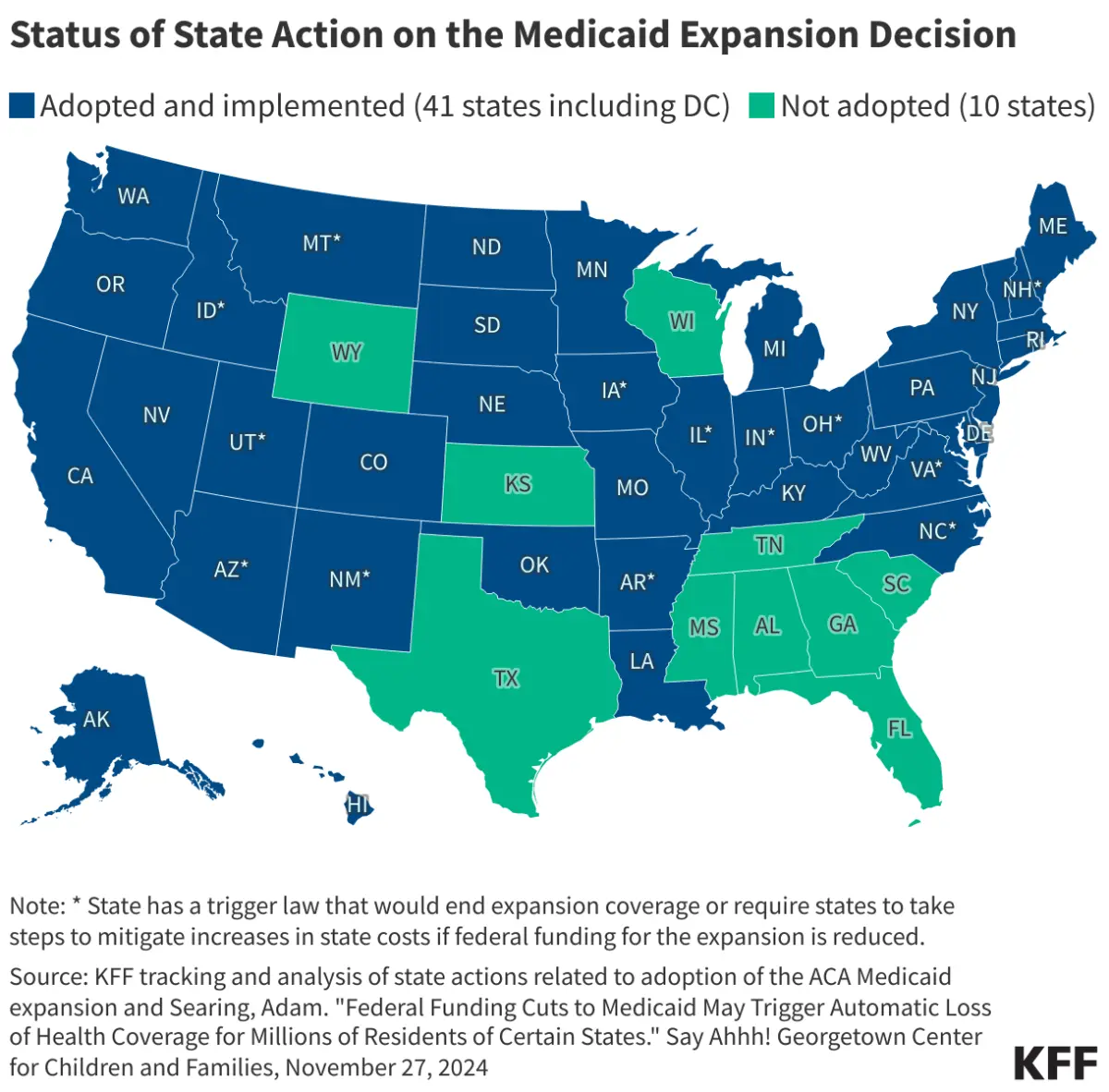
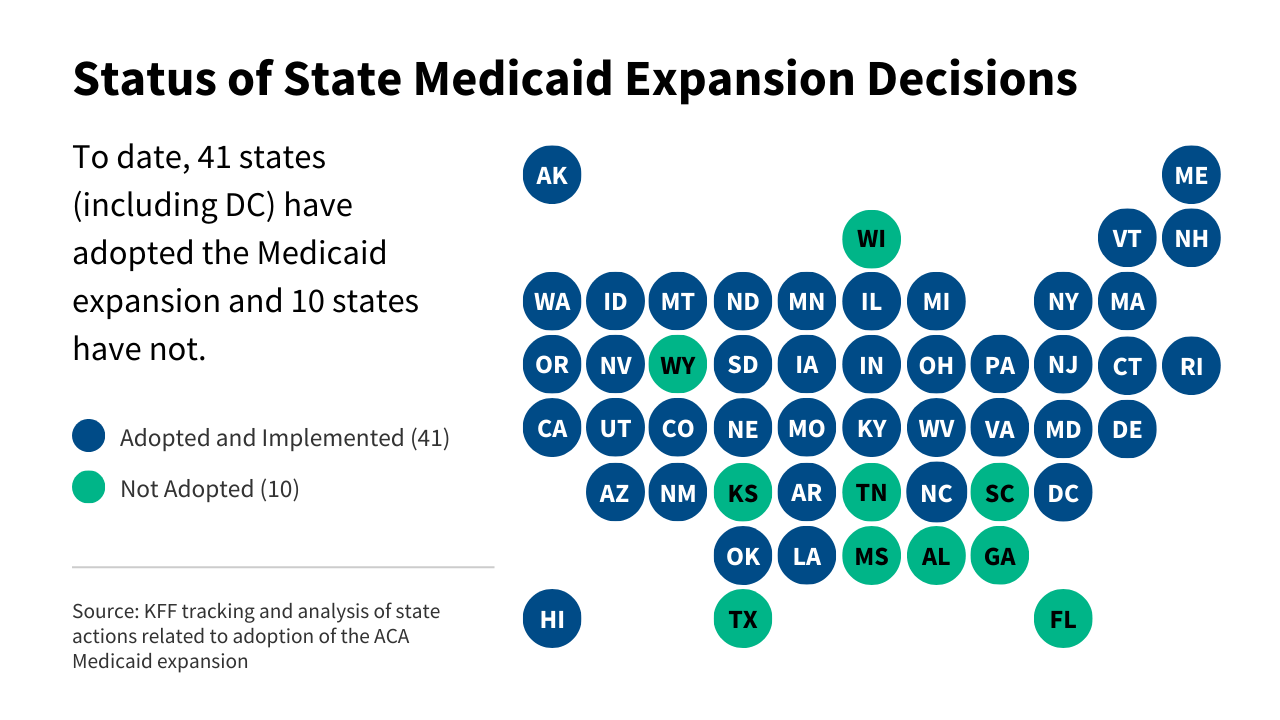
More than a decade after the landmark passage of the Affordable Care Act (ACA), the landscape of American healthcare coverage continues to evolve as states navigate the complex policy, financial, and political dimensions of Medicaid expansion. To date, 41 states, including the District of Columbia, have officially adopted the ACA’s Medicaid expansion, extending vital healthcare coverage to millions of low-income adults across the country. Meanwhile, 10 states have chosen not to adopt the expansion, leaving a distinct geographic and political divide in the nation’s healthcare safety net.
The ACA’s Medicaid expansion fundamentally transformed the country’s public health insurance framework by broadening eligibility to nearly all adults with household incomes up to 138 percent of the Federal Poverty Level. For an individual living in the United States, that income threshold translates to $21,597 based on the 2025 federal poverty guidelines. In addition to broadening access for vulnerable populations, the federal government incentivized states to participate by providing an enhanced federal matching rate, commonly known as FMAP, covering a substantial majority of the costs associated with the newly eligible expansion populations.
Tracking data compiled and analyzed by KFF provides a comprehensive view of how individual states have approached this ongoing policy decision over the years. According to KFF tracking, the current status of each state reflects a dynamic mix of legislative decisions, executive actions, and voter-led initiatives. While the majority of the country has embraced the expansion, the remaining holdout states continue to experience active debates, legislative proposals, and shifting political strategies regarding whether to adopt the policy or explore limited alternative coverage options.
In states that have not yet adopted the ACA expansion, policymakers frequently engage in debates that capture significant attention from healthcare advocates, business leaders, and local communities. Recent activity in non-expansion states encompasses a wide range of legislative actions, including the formal passage of bills in at least one legislative chamber or committee, as well as executive maneuvers such as governors’ budget proposals, executive orders, and major policy announcements. Additionally, grassroots and voter-led efforts continue to push for progress through state ballot initiatives, mirroring successful past campaigns in other conservative and purple states where citizens bypassed reluctant legislatures to expand coverage directly.
At the same time, some states that have already embraced the ACA expansion are currently pursuing adjustments that place new limits or requirements on their expansion populations. A primary vehicle for these contemporary state-level changes is the Section 1115 waiver process, which allows states to test innovative approaches within their Medicaid programs provided they align with the overarching goals of the program. These waiver requests often introduce work requirements, premium contributions, or other administrative hurdles that spark intense national debate among healthcare policy experts, patient advocates, and federal officials.
A prominent and emerging area of focus in several states involves legislative mechanisms known as trigger laws. These statutory provisions are tied directly to the share of federal funding that states receive to support their Medicaid expansion programs. According to tracking data and analyses by organizations like the Georgetown Center for Children and Families, certain states have considered or enacted measures that would automatically roll back or terminate Medicaid expansion if federal matching rates were to decrease below a specific threshold.
For instance, South Dakota and West Virginia have evaluated or implemented actions aimed at putting trigger laws into place. In Virginia, lawmakers introduced a budget amendment designed to remove the automatic termination of expansion from the state’s existing trigger law. Rather than allowing an automatic cutoff of health coverage, the proposed amendment would have required a legislative committee to develop thoughtful recommendations on how the state could adjust to any potential loss of federal funding. However, that specific proposal was ultimately not included in the final enacted budget.
Similar legislative friction has surfaced in other parts of the country. Proposals intended to completely remove or scale back existing trigger laws have been introduced in states such as Illinois and North Carolina. These legislative battles highlight the underlying financial anxieties that state lawmakers face regarding the long-term sustainability of federal healthcare funding, especially in an era of shifting federal budgets and changing congressional priorities. Proponents of trigger laws argue that fiscal prudence is necessary to protect state treasuries from sudden federal shortfalls, while opponents warn that such laws threaten millions of residents with the sudden, automatic loss of essential health insurance coverage.
The ongoing evolution of state Medicaid policies underscores the enduring significance of the Affordable Care Act within the American political and economic landscape. As tracking organizations and researchers continue to monitor legislative chambers, governor’s mansions, and ballot initiatives, the future of healthcare access for millions of low-income Americans remains closely tied to these state-level decisions. Comprehensive data tables and choropleth maps illustrating the current status of state action on the Medicaid expansion decision provide ongoing insights into how states balance budgetary constraints, federal incentives, and the healthcare needs of their residents.










No comments yet. Be the first to join the conversation!