
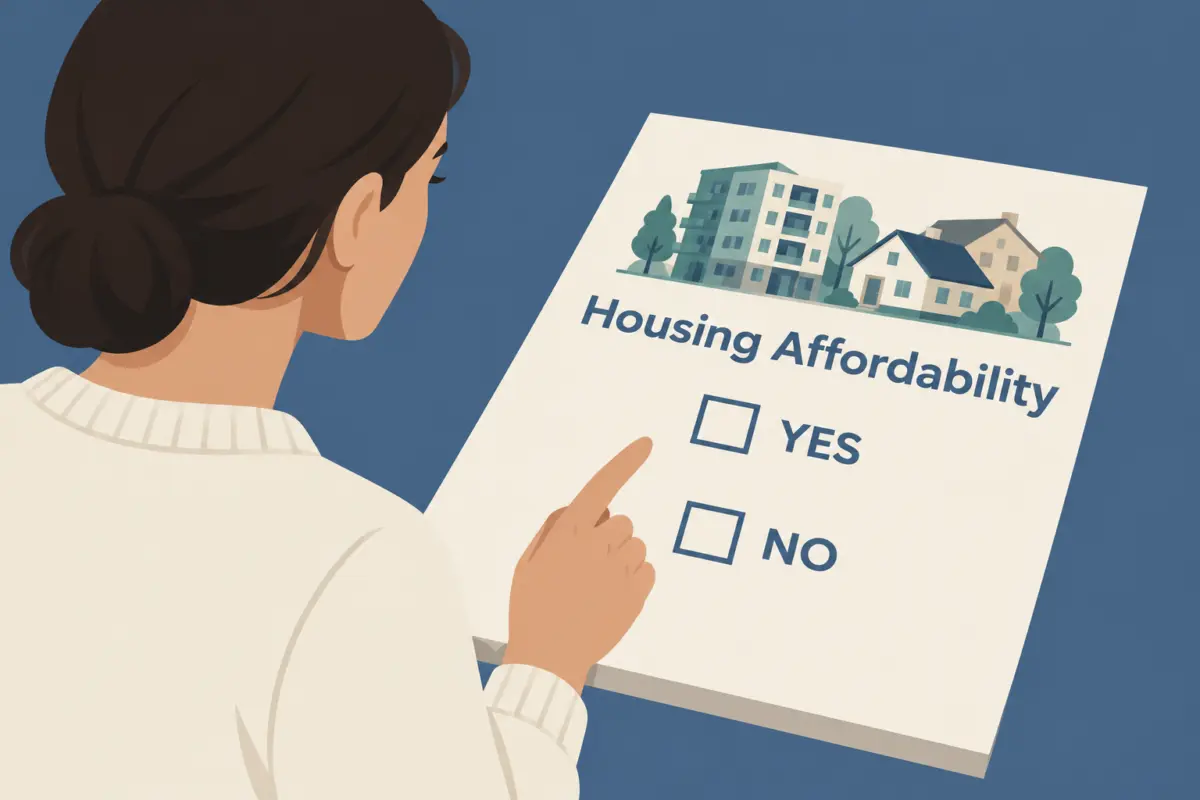
As voters head to the polls this fall, the conversation surrounding housing affordability has expanded far beyond traditional races for state and national office, landing directly on state ballots through high-stakes policy measures. Across the United States, citizens are taking matters into their own hands, preparing to decide crucial questions on November 3 that could fundamentally reshape local zoning laws, municipal permitting processes, and property tax structures.
While early voting has already commenced in states like California—where a simple majority is all it takes to secure victory—other regions face much steeper legislative hurdles. In Florida and Massachusetts, the road to passing ballot measures involves complex voting thresholds, organized opposition, and high-profile debates over the future of residential development, environmental oversight, and local government funding.
Massachusetts: The Fight Over Question 7 and Minimum Lot Sizes
Massachusetts presents perhaps the most unique and intricate hurdle for housing advocates to clear this election cycle. Not only does the measure require a simple majority of "yes" votes to pass, but those affirmative votes must also equal at least 30% of all ballots cast in the entire election.
If voters successfully approve the initiative, the change would cap minimum lot sizes for single-family homes on a statewide level, marking the first time such a ballot question has ever been put before voters anywhere in the country.
However, the primary challenge for supporters is simply ensuring that voters navigate all the way down the ballot to reach the question. Listed as the seventh item on a nine-question ballot, the measure ties the record for the most statewide questions in the history of Massachusetts. Housing advocates have expressed deep concern that voters may experience extreme fatigue by the time they reach the item or choose to skip a complex question they may not fully understand.
“There’s risk of voter fatigue,” Jesse Kanson-Benanav, executive director of Abundant Housing Massachusetts, told HousingWire TBD.
The housing question is forced to compete for attention with several other high-profile and emotionally charged political fights. At the same time, voters are being asked whether to repeal recreational marijuana laws, weigh in on recent gun law changes, alter how primary elections are conducted, and establish caps on state revenue growth.
What Question 7 Would Do
If enacted, the measure would cap minimum lot sizes at 5,000 square feet. This regulation would apply exclusively to residentially zoned lots that boast at least 50 feet of frontage and have direct access to public water and sewer infrastructure.
Boston has been formally excluded from the mandate because the city has already taken its own proactive steps to address housing density. Furthermore, while the cap would reach the vast majority of the state’s densely populated areas, it would deliberately leave out most of Cape Cod, Martha’s Vineyard, Nantucket, and the Berkshires.
The reform targets a widespread zoning practice across the region, where more than half of Eastern Massachusetts towns currently require at least an acre of land per single-family lot, with some municipalities demanding two full acres.
Despite the scope of the change, institutional opposition has been somewhat muted. The Massachusetts Municipal Association formally opposes the measure, yet it has not formed a dedicated campaign committee to spend financial resources against it. Similarly, the state Republican Party opposes the initiative but has failed to mount any organized opposition effort.
In a twist of political alliances, Republican gubernatorial candidate Mike Minogue has voiced his support for the measure as part of his campaign to unseat Governor Maura Healey, who also backs the initiative.
On the financial front, supporters have mobilized substantial funding. The Legalize Starter Homes campaign has successfully raised more than $1.7 million, bolstered by major financial contributions from influential real estate groups. Additionally, Abundant Housing Massachusetts has launched an extensive field operation dedicated strictly to turning out supporters. Backers are pitching the measure as a vital tool to combat the state’s severe housing affordability crisis, leaning on a straightforward message centered on enabling the construction of smaller, lower-cost homes on smaller parcels of land.
Kanson-Benanav noted that historically, no Massachusetts ballot measure has ever won a simple majority while simultaneously failing to clear the separate 30% participation mark. Nevertheless, housing supply advocates are refusing to take any chances with the outcome.
The overall odds for the measure improved significantly earlier in the election cycle when the state’s Supreme Judicial Court ruled that a controversial rent stabilization measure had to be removed from the ballot. Governor Healey and other key political figures had strongly opposed that measure, which threatened to fracture the loose, broad-based coalition currently supporting lot reform.
Had both measures remained, voters would have faced a complicated choice: deciding whether to vote “yes” on both, reject both, or pick and choose between them. With rent stabilization out of the picture, housing advocates across the board have been able to channel their collective energy and focus entirely on a single affordability measure, according to Kanson-Benanav.
California: Proposition 45 and Environmental Review Deadlines
Out on the West Coast, California voters are considering Proposition 45, a measure designed to establish strict deadlines for environmental reviews and court challenges mandated under the California Environmental Quality Act, commonly known as CEQA. The policy would broadly cover housing developments, as well as critical projects tied to water, energy, education, health, and transportation.
Under the proposed rules, public agencies would generally be granted 365 business days to finish a comprehensive environmental impact report, while state courts would be given a strict 270-day window to resolve any legal challenges that arise.
Furthermore, the measure would cap public-comment periods, narrow the scope of tribal consultation, and place distinct limits on judicial review. Critics of the initiative argue that these changes would dangerously weaken essential environmental safeguards. Conversely, supporters maintain that the reforms are necessary to make the development approval process far more predictable and timely.
Early voting in the state officially began on October 5, and unlike the unified front seen in Massachusetts, one of the most influential "yes in my backyard" (YIMBY) organizations has opted to remain entirely on the sidelines. California YIMBY announced via social media that it has taken no official recommendation or stance on Proposition 45.
The organization successfully backed several key legislative changes earlier in the year—including two laws designed to curtail CEQA—alongside major structural reforms to the law enacted last year.
“The measure affects housing, but its broader impact falls on non-housing projects, so we encourage voters to weigh both sides and decide for themselves,” the organization posted online.
Florida: Amendment 3 and the Homestead Exemption Debate
In the Southeast, Florida voters are weighing Amendment 3, a measure that would significantly increase the homestead exemption from $50,000 to $150,000 in 2027, and push it further to $250,000 by 2028, after which it would be permanently indexed to inflation. The amendment would also slash the annual assessment cap on non-homestead property from 10% down to 5%.
Because Florida requires a formidable 60% voter approval threshold for constitutional amendments to pass, political analysts have given the measure a remarkably slim chance of success. Public polling conducted in July by the University of North Florida revealed that voter support plummeted sharply from 61% down to 45% once respondents were informed of the proposal’s severe potential impact on public budgets.
The amendment has subsequently generated broad-based opposition across the state. State economists have projected that the tax shifts would inflict a staggering $12 billion annual financial blow to local governments. Highlighting the severity of these fiscal consequences, Palm Beach County’s administrator warned that as many as 10 local municipalities within the county could face total insolvency if voters ultimately approve the measure at the ballot box.
Despite the heavy fiscal warnings and widespread institutional pushback, opponents currently hold a lopsided lead in terms of campaign organization and funding, while Florida Realtors remains the most prominent and vocal backer of the initiative.










No comments yet. Be the first to join the conversation!