
EDMONTON, Alberta — A violent, fast-moving fire that erupted during a routine military training exercise at one of Canada’s most prominent army installations has resulted in a devastating loss of life, shaking the nation and prompting an immediate, multi-agency emergency response.
Four service members have died, and dozens of others sustained severe injuries following the deadly blaze that broke out on the afternoon of Oct. 17 at Canadian Forces Base (CFB) Wainwright in Alberta. Prime Minister Mark Carney addressed the nation at midday Sunday, confirming the initial fatalities and describing the event as one of the worst peacetime tragedies experienced by the Canadian Armed Forces on domestic soil.
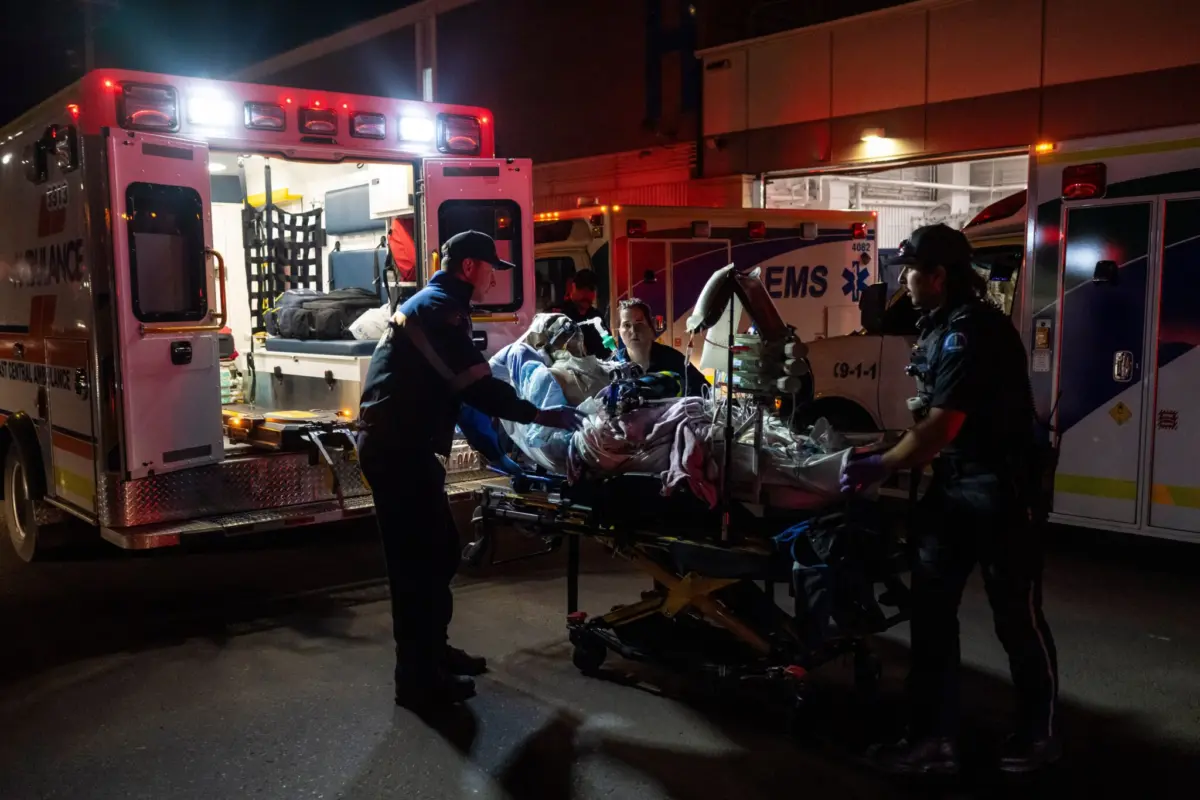
Alberta Premier Danielle Smith later provided a grim update on the scope of the disaster, confirming that a total of 39 people had been injured. At least 19 of those individuals remain in critical condition, with many patients currently receiving specialized, long-term medical care for severe burns.
As hospitals across Edmonton declared a rare "Code Orange" alert—a designation strictly reserved for external disasters and mass casualty incidents—federal and provincial leaders rushed to coordinate emergency relief, while military investigators launched a full-scale inquiry to determine the exact cause of the catastrophe.
What is Known About the Fire Incident at CFB Wainwright
According to official statements released by the Canadian Armed Forces, the fire ignited within the designated training area of CFB Wainwright during the late afternoon hours. What began as a localized incident quickly escalated into a widespread emergency. Driven by unusually high winds and dry October weather conditions, the flames spread rapidly across the terrain, eventually breaching the boundaries of the military base and threatening the adjacent Municipal District of Wainwright.
In the hours following the initial outbreak, local municipal authorities used social media to warn residents of the advancing threat as the fire pushed toward civilian areas. By evening, local district updates confirmed that emergency crews and firefighters had managed to bring the fire under control and establish containment lines.
Defense Minister David McGuinty addressed the public in a video statement on Oct. 17, underscoring the unprecedented nature of the crisis. "I cannot recall an incident like this," McGuinty said, characterizing the event as a very active and delicate situation.
Military officials have emphasized that, amid the ongoing investigation, there is currently no indication that the fire was the result of an act of terrorism. Minister McGuinty quickly mobilized, traveling en route to Edmonton while maintaining continuous communication with both Prime Minister Carney and Premier Smith.
The tragedy unfolded against a backdrop of intense political and logistical activity. Prime Minister Carney had just recently returned to Ottawa following a visit to his home province of Alberta. The province is currently preparing for a pivotal vote regarding whether to begin the legal process of potentially separating from Canada, adding a layer of national tension to an already grieving region.
What is CFB Wainwright?
Situated more than 100 miles southeast of the Alberta provincial capital of Edmonton, CFB Wainwright stands as one of the nation’s busiest and most critical military installations. The sprawling base serves as the home of the Canadian Manoeuvre Training Centre and the 3rd Canadian Division Training Centre, making it the preferred and primary training ground for army field force units stationed throughout Western Canada.
"Our country depends on the women and men of the Canadian Armed Forces," Prime Minister Carney remarked during his Sunday address. "And CFB Wainwright is where the women and men of our armed forces learn to do the hardest things this country can ask of anyone."
Retired Major-General Denis Thompson offered insight into the rigorous nature of the facility in an interview with CBC on Sunday. Thompson explained that training at Wainwright typically involves large formations that integrate infantry foot soldiers with heavy artillery in complex, large-scale live-fire exercises, occasionally incorporating air-dropped munitions.
"You’re trying to put that together in order to conduct complex operations in as safe an environment as possible, but remember we’re talking about live fire, here, to do things like breaching obstacles, which are extremely difficult," Thompson noted.
Wainwright Mayor Bruce Pugh shared his perspective with CBC, recalling that he heard the familiar sounds of cannon fire and weapon discharges from the base prior to the incident—sounds that are normally commonplace for residents living near the installation. However, when the base suddenly fell silent and local fire departments were urgently mobilized, Mayor Pugh realized that a catastrophic event had unfolded.
Pugh also pointed to environmental factors that exacerbated the disaster, observing that October had been unusually dry, which, combined with the powerful winds, created a volatile environment for any fire to spread uncontrollably.
The base itself supports a significant population, employing approximately 1,300 military and civilian personnel, which includes roughly 1,070 active military members, according to municipal data published by the Town of Wainwright in October 2025. The surrounding town of Wainwright is home to more than 6,600 residents, excluding those who reside directly on the base.
"We have neighbors who are either serving or former members of the Canadian Armed Forces," Pugh told CBC, highlighting the deep integration between the civilian community and the military installation. "We’re integrated, our kids play on the same hockey teams, attend the same schools."
Hospitals Declare "Code Orange" as Medical Infrastructure Strains
The sheer scale of the casualties overwhelmed local medical facilities, forcing hospitals in Edmonton to activate emergency Code Orange protocols. Mayor Pugh confirmed that the event represents the largest mass casualty incident the community has ever witnessed.
The local health care facility in Wainwright served as the initial triage and reception area for the wounded before patients could be transferred to major hospitals equipped for specialized trauma and burn care. Pugh commended the extraordinary efforts of the frontline medical staff and first responders, noting that they faced harrowing conditions.
"They were witness to things that you would pray that you never see, or that if you do, it would be a once-in-a-lifetime experience of service," Pugh said.
Alberta Health Services confirmed that they are actively compiling additional information regarding the status of the injured and the ongoing medical response.
Prime Minister Carney praised the rapid, coordinated mobilization of emergency personnel and ordinary citizens alike as the crisis unfolded, emphasizing the resilience of the country in moments of profound adversity.
"Canadians come together in crisis," Carney said on Sunday, adding that he anticipated further official briefings from base leadership in Wainwright as the investigation moves forward.
The Department of National Defence continues to withhold specific details regarding the identities of the deceased service members pending the notification of next of kin. Federal investigators, military officials, and provincial authorities remain on the scene to assess the structural and environmental damage while piecing together the exact sequence of events that led to the deadly blaze.








No comments yet. Be the first to join the conversation!