
PARIS — France found itself grappling with a profound national security and political crisis on Monday after a weekend of nationwide demonstrations spiraled into widespread violence, looting, and chaos. French Interior Minister Laurent Nuñez candidly admitted that law enforcement authorities "lost control" of the streets in several major cities as hundreds of thousands of demonstrators converged to protest underfunded public services and the escalating pressures of a punishing cost-of-living crisis. The explosive weekend unrest has sent shockwaves through the highest echelons of the French government, prompting President Emmanuel Macron to demand an urgent, comprehensive review of police intelligence and tactical planning.
The gravity of the situation was underscored when Nuñez offered his resignation directly to President Macron, stating that he felt personally "responsible" for how the weekend’s events unfolded. However, the Élysée Palace confirmed that Macron refused to accept the resignation, citing the critical "need for a continuous command of the police" as the government struggles to restore order. Instead, the French leader directed the Interior Ministry to take immediate, transparent measures to address intelligence failures and deploy all necessary resources to dismantle barricades, halt looting, and secure public spaces.
To regain a firm grip on the deteriorating situation, Prime Minister Sébastien Lecornu announced that local mayors across the country would be granted emergency powers to enforce "partial curfews" aimed at safeguarding local populations and protecting vulnerable businesses. Additionally, the French government has committed to establishing a dedicated financial assistance fund to help merchants and shopkeepers recover from the heavy property damage inflicted during the riots.
A Weekend of Unprecedented Clashes and Destruction
The unrest erupted from nationwide demonstrations held on Saturday, which drew massive crowds. While the Interior Ministry estimated the turnout at approximately 550,000 participants, a major French trade union placed the figure significantly higher at over 800,000. What began as an expression of economic grievance quickly deteriorated into intense urban guerrilla-like confrontations in multiple urban centers.
By Sunday, the human and material toll became starkly evident. Interior Ministry figures revealed that more than 2,000 individuals had been placed under arrest, while over 600 police officers and firefighters sustained injuries in the line of duty. In the capital, the devastation to commerce was severe; Dominique Restino, head of the Paris chamber of commerce, reported to BFM television that at least 300 businesses had been vandalized or ransacked.
While Paris bore a significant share of the chaos, the violence rapidly spread to other key metropolitan areas. Peaceful demonstrations in Marseille and Lyon quickly degenerated as rioters hijacked the gatherings. In response to the escalating violence, local authorities in Marseille instituted a temporary ban on all public gatherings and demonstrations on Monday.
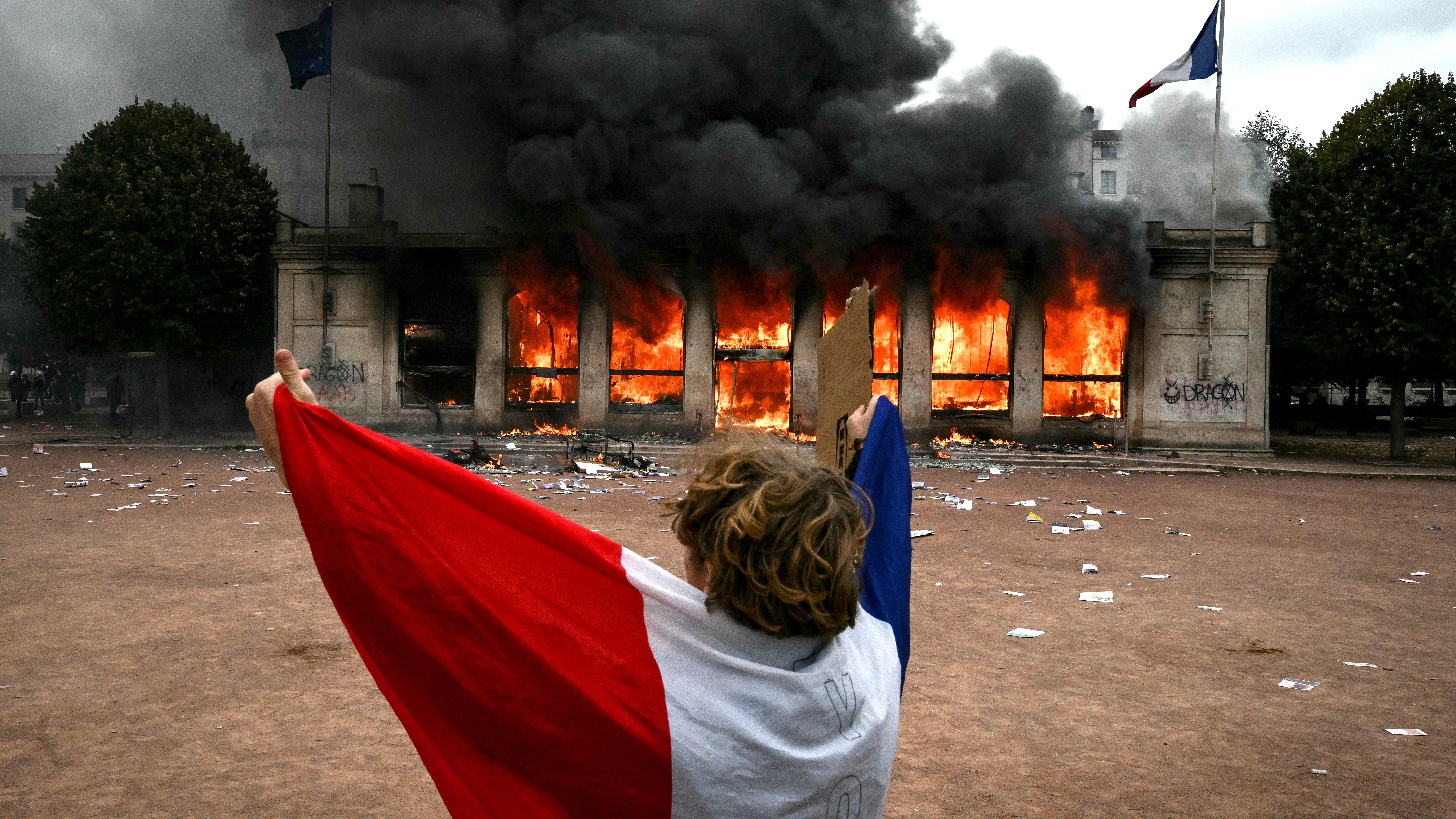
Public monuments and historic government buildings were also deliberately targeted. In the central French city of Limoges, a historic town hall suffered extensive damage during what authorities identified as a targeted arson attack on Saturday. In Lyon, one of the city’s primary tourist offices was set completely ablaze, while in Bordeaux, local officials confirmed that the official residence of the prefect was violently attacked by protestors.
Addressing a shaken nation in a televised address on Sunday, President Macron acknowledged the palpable public "anger" and national "shame" triggered by the rioting. Taking a hardline stance against the perpetrators of the destruction, Macron vowed that those who engaged in looting would be forced to pay for the damage, while individuals who sought to undermine the stability of the Republic would face the full force of the law and be held fully accountable.
Protests Spread Across France
The weekend riots did not materialize in a vacuum; they marked a violent escalation of social tensions that have been simmering for weeks. Throughout September, students across France organized rolling blockades of high schools and universities to protest against what they described as a chronically underfunded and neglected educational system.
The movement gained national momentum on October 6, when more than 250,000 people marched in cities across the country, drawing a broad coalition of teachers, concerned parents, and militant union activists. Commentators and historians have increasingly drawn comparisons between the current unrest and the historic May 1968 student-led protests, which famously sparked widespread general strikes and nearly toppled the French government.
Over the weekend, the demonstrations evolved further as various factions attempted to resurrect the spirit of the "Yellow Vest" movement of 2018, which originally erupted in fierce opposition to rising fuel taxes before broadening into a general anti-government movement. Demonstrators in Paris on Saturday vividly symbolized this continuity by draping a yellow vest over the iconic Marianne statue at the Place de la République.
According to manifestos published by coordination groups, the mobilization represents a complex convergence of diverse economic and social grievances. The coalition brings together high school and university students, farmers, firefighters, unionized workers, teachers, healthcare professionals, climate activists, residents of marginalized working-class suburbs, and retirees, all united in their frustration with current economic conditions.
Thousands Demonstrate in Other European Cities
France was not alone in facing severe civil unrest over the weekend, as widespread public anger over economic pressures manifested in mass demonstrations and violent clashes across several other European nations.
In Portugal, thousands of citizens marched through the streets of Lisbon, Porto, and Coimbra, demanding higher pensions, enhanced public services, and decisive government intervention to counter soaring inflation and the cost-of-living crisis.
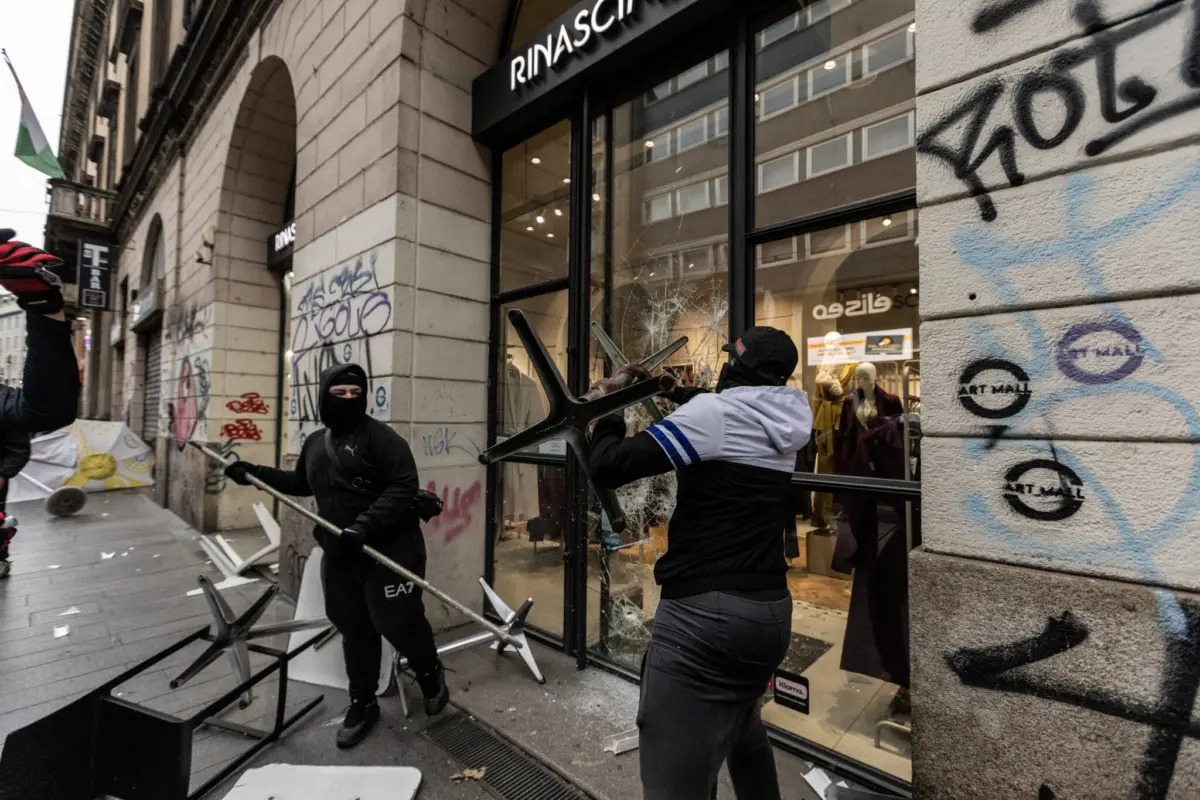
Meanwhile, neighboring Italy experienced severe urban conflict. In Milan, police forces clashed directly with demonstrators as crowds hurled stones and stones were used to smash storefront windows and loot businesses. The protests in Milan, alongside similar clashes in Bologna and Turin, were catalyzed by anger over underfunded public services and economic hardship. In response to the breakdown in public order, Italian Prime Minister Giorgia Melvin convened an emergency security meeting with top law enforcement and intelligence officials on Monday to evaluate the unfolding crisis.
In Belgium, unrest broke out in Brussels on Saturday afternoon as a scheduled march by antifascist activists headed toward the Midi railway station. The demonstration quickly turned violent, forcing riot police to intervene as widespread property damage was reported across the capital’s streets, signaling a broader, cross-border wave of social discontent currently sweeping across Western Europe.








No comments yet. Be the first to join the conversation!