
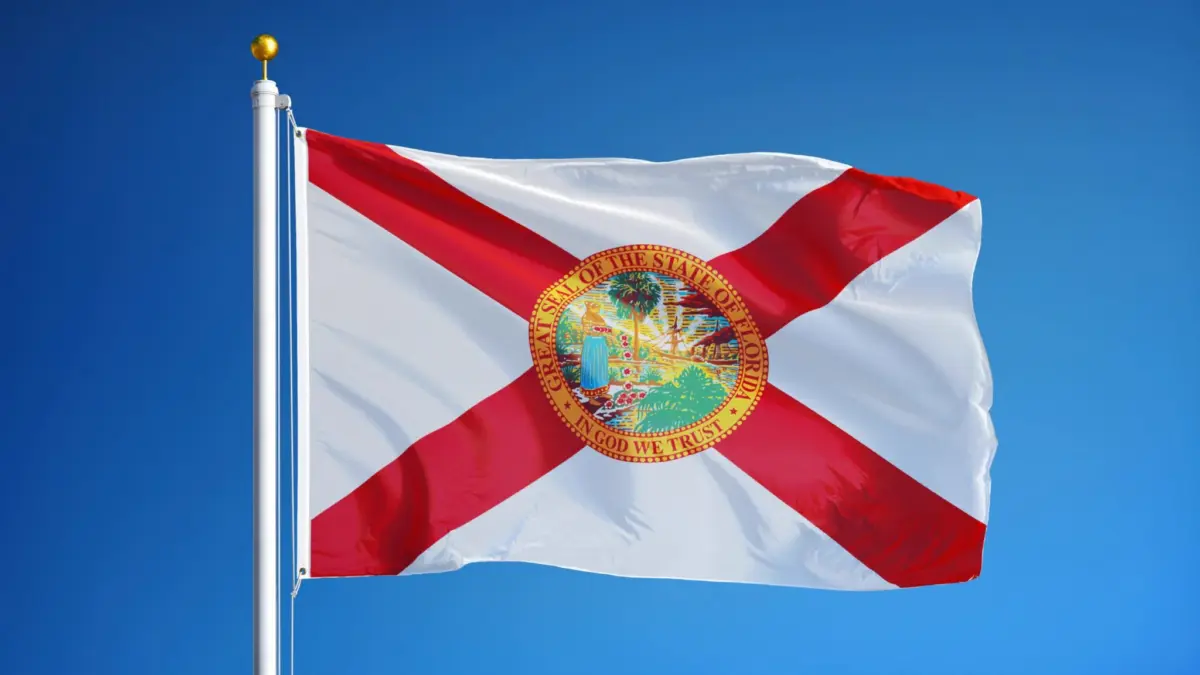
Florida currently maintains one of the most competitive tax systems in the nation, boasting no individual income tax and a reliance on property taxes that is relatively lower than many competing states. Under its current tax structure, the state has successfully attracted individuals and businesses while simultaneously funding the public infrastructure, essential services, and community amenities that make it a desirable place to live, visit, and grow a business.
However, Florida voters are now being asked to weigh a consequential shift in fiscal policy. On November 3, 2026, the electorate will consider Amendment 3, a constitutional amendment that would substantially increase the state’s current homestead exemption for non-school district property taxes. The measure would also mandate that the legislature establish a framework allowing counties and municipalities to increase assessed value exemptions up to the total elimination of remaining taxable value. While proponents argue the measure offers necessary relief for homeowners grappling with rising living costs, a comprehensive examination of the proposal reveals deep fiscal and economic trade-offs that will impact every resident in the state.
Florida’s Current Tax Code Consistently Ranks Among the Best
Florida’s tax code has consistently ranked among the nation’s most competitive, placing securely in the top five in nearly every edition of the Tax Foundation’s State Tax Competitiveness Index and its predecessor, the State Business Tax Climate Index, since their inception in 2003.
Economic research continually demonstrates that individual income taxes are among the most economically damaging forms of taxation, dampening incentives for work, investment, and entrepreneurship. Florida imposes no state individual income tax and maintains a competitive 5.5 percent corporate income tax rate. Furthermore, its combined state and local sales tax rate sits at an average of 6.98 percent—significantly lower than neighboring states like Alabama and Georgia, which post average combined rates of 9.46 percent and 7.56 percent, respectively.
The state’s competitive edge is built not merely on low tax burdens, but on a revenue architecture that reliably funds vital local infrastructure and public safety, creating a strong foundation for local communities and a flourishing business climate.
Amendment 3 Would Fundamentally Change Florida’s Property Tax System
Florida’s economic success and popularity have generated a booming housing market, resulting in rapid property value appreciation. While this growth has benefited homeowners, it has also driven up property tax burdens, particularly for new and first-time buyers. Existing constitutional protections like the "Save Our Homes" (SOH) assessment limitation have inadvertently exacerbated disparities, leaving identical neighboring properties with wildly different tax bills based solely on their purchase dates.
If approved by at least 60 percent of voters in November 2026, Amendment 3 would rewrite the state’s fiscal landscape. Under current law, qualifying homestead owners receive an exemption from property taxes on the first $25,000 of assessed value, alongside a second inflation-adjusted $25,000 exemption that applies to values above $50,000, excluding school district levies.
Amendment 3 would preserve the $25,000 exemption for school district taxes. For all other property levies, however, the homestead exemption would surge to $150,000 starting in 2027, and to $250,000 by 2028, with subsequent annual adjustments for inflation beginning in 2029. To qualify, homeowners must establish permanent residency by December 31, 2026. Those establishing homesteads after that date would face a restricted $50,000 exemption for their first five years of ownership before scaling up to the larger exemption. Furthermore, the measure directs lawmakers to create uniform procedures enabling local governments to expand exemptions all the way to complete tax exclusion.
The amendment also reduces the annual assessment increase cap for non-homestead properties from 10 percent to 5 percent beginning in 2027. Together, these sweeping provisions would dramatically shrink the property tax base available to finance core local services.
The Property Tax Is a Stable and Economically Efficient Revenue Source
Local property taxes align closely with the "benefit principle" of taxation, wherein taxpayers finance the specific public services that enhance their neighborhoods and elevate property values. This direct link between taxpayers, local benefits, and municipal officials fosters robust local accountability.
Economic literature consistently highlights the property tax as one of the most reliable revenue sources for local governments. Real property is immobile—land and structures cannot be relocated to avoid taxation—making revenue streams far more predictable than mobile bases like sales taxes. Moreover, property values fluctuate far less aggressively during economic downturns than wages, corporate profits, or retail activity, buffering local governments against sudden fiscal disruptions and allowing them to maintain essential public safety and infrastructure services.
The diversity of the property tax base—encompassing residential, commercial, industrial, agricultural, and utility properties—further dampens volatility. Because property taxes impose fewer distortions on economic decisions surrounding labor and capital investment compared to income or sales taxes, they allow local governments to raise necessary revenue with minimal economic friction.
Homestead Property Dominates Florida’s Tax Base
Property taxes are the financial bedrock of Florida’s local governments, accounting for 41.5 percent of own-source local revenues and 75.8 percent of local tax collections in fiscal year 2024. While non-school property tax collections grew rapidly between 2019 and 2025, outpacing both population growth and inflation, fiscal analysts warn that this recent revenue expansion does not mean local governments can easily absorb the blow of Amendment 3.
Homestead parcels represent over 5.2 million properties, accounting for 46.7 percent of all parcels, 46.4 percent of market value, and 36.1 percent of total taxable real property value in Florida. Projections indicate that the proposed $150,000 exemption would cost local governments $4.9 billion in its first year, jumping to $8.7 billion in the second year, and reaching an annual impact of $11.8 billion by tax year 2031. Because the amendment paves the way for the total elimination of homestead taxable values, the long-term fiscal impact remains dangerously unpredictable.
Amendment 3 Would Shift Tax Burdens to Renters and Businesses
Because eliminating a massive portion of the property tax base does not erase the underlying costs of police, fire, and municipal services, Amendment 3 would trigger a massive tax shift. The resulting revenue shortfalls would force a redistribution of the tax burden onto non-homestead properties, meaning commercial enterprises, landlords, second homeowners, and recent buyers would face significantly higher effective tax rates.
Businesses would feel an acute impact. In addition to real property, Florida taxes business tangible personal property using local millage rates, creating compliance hurdles and investment distortions. Higher tax burdens on commercial properties and business assets inevitably translate into higher operational costs and inflated consumer prices.
Renters, who comprise roughly one-third of Florida’s population, face profound downstream consequences. Economic studies demonstrate that landlords frequently pass property tax increases through to tenants. Analyses specific to Amendment 3 suggest that if local governments raise millage rates to offset homestead losses, annual property taxes for rental properties could climb significantly by 2031, placing immense upward pressure on monthly rents statewide and threatening housing affordability.
Similarly, second homeowners would see higher tax bills, risking Florida’s appeal as a destination for high-net-worth individuals who support local economies through high-end retail and service spending without adding burdens to local school systems. Meanwhile, new homebuyers would find themselves facing starkly different tax bills than long-term residents for their first five years, dampening the state’s allure for prospective new residents.
Local Governments Likely to Face Pressure to Raise Tax Rates
Under Florida law, a mandatory rollback requirement adjusts millage rates to ensure local governments do not capture financial windfalls from rising property values without formal action. However, if Amendment 3 dramatically erodes existing property tax bases, the rollback mechanism will not prevent local governing boards from raising millage rates to recoup lost revenues.
The capacity to offset these losses depends heavily on a jurisdiction’s existing rates and constitutional caps. While the Florida Constitution limits general operating millage to 10 mills for counties and municipalities respectively, distributions vary wildly. Rural counties in northern Florida and the Panhandle often feature higher operating millages, while affluent coastal jurisdictions frequently maintain lower rates. Jurisdictions with room under the 10-mill cap would possess greater flexibility to hike tax rates, effectively shifting the fiscal burden onto the remaining taxable properties.
Alternative Funding Sources and Their Limitations
Faced with declining property tax revenues, local governments would search for alternative funding streams, though many are severely restricted. While local option sales surtaxes serve as a significant non-property tax revenue source, their revenues are heavily restricted by statute to specific uses such as infrastructure, transportation, and health care, preventing them from acting as general-purpose operational replacements.
Other options, including local business taxes, municipal public service taxes on utilities, and tourist taxes, carry strict statutory caps or geographic limitations. Impact fees are generally restricted to financing infrastructure tied strictly to new development rather than ongoing general operations. While special assessments can fund specific neighborhood improvements that provide direct benefits, they require rigorous public noticing procedures and cannot legally fill broad municipal budget gaps.
If alternative taxes and fees prove insufficient, local governments would have little choice but to defer capital investments or drastically slash public services, slowly eroding the high quality of life that underpins Florida’s economic vitality.
The Weight of Constitutional Tax Policy
Embedding major tax policy directly into the state constitution creates long-term rigidity. While ordinary legislation can be adapted swiftly during shifting economic cycles, amending the Florida Constitution is a grueling and complex process requiring extensive voter mobilization and a 60 percent supermajority threshold.
Past ballot measures nationwide, such as Missouri’s rejection of sweeping income tax repeals amid unclear revenue replacement plans, demonstrate that voters approach radical fiscal restructuring with deep caution when faced with uncertainty. Florida voters will confront a similar dilemma in November: deciding whether the promise of homestead relief outweighs the profound, unknown trade-offs associated with dismantling the state’s local tax architecture.
Ultimately, Amendment 3 represents far more than a simple tax cut; it is a fundamental restructuring of local government finance. While homestead owners would see immediate relief, the underlying costs of running local communities will not vanish. Instead, those financial burdens would migrate to businesses, renters, new homebuyers, and commercial enterprises through higher fees, increased rents, and reduced public services—ultimately testing the fiscal stability and economic competitiveness that have defined modern Florida.








No comments yet. Be the first to join the conversation!