
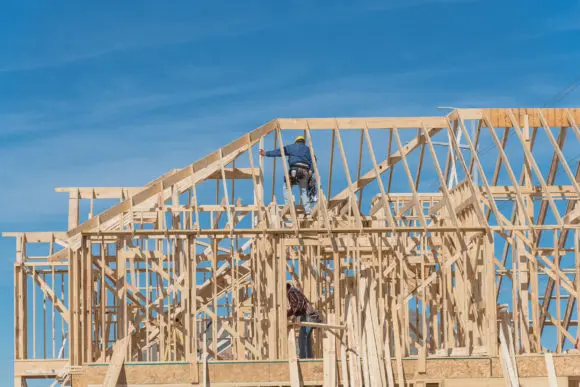
Having spent more than 20 years navigating the intricacies of the insurance industry, including a dedicated decade focusing heavily on builder’s risk, industry veterans have witnessed the marketplace shift and pivot numerous times. The cyclical nature of commercial property and casualty insurance is a given, but the forces currently colliding in the builder’s risk sector present a uniquely complex operating environment for carriers, brokers, and developers alike.
As industry stakeholders gather for the annual IRMI construction conference, Kaycie Cook, president of Builder’s Risk for DUAL North America, has outlined the primary forces dictating the current trajectory of the market. According to seasoned underwriters and market leaders, three massive pillars are currently influencing builder’s risk: prolonged project stagnation, persistent and challenging loss ratios, and an ongoing generational change that is injecting both fresh talent and innovative thinking into the specialty sector.
Project Stagnation and Extended Timelines
One of the most visible developments in the current marketplace is a stark disconnect between market interest and actual project execution. While the volume of submissions for builder’s risk insurance has risen notably compared to recent years, the actual journey from receiving an initial quote to officially binding a policy has grown considerably longer. In the direct experience of DUAL and other major market players, a project that historically required a standard 90-day window from quotation to binding is now seeing that timeline stretch out substantially further as developers hesitate to pull the trigger.
Uncertainty lies at the absolute heart of this widespread stagnation. A complex web of tariffs and broader geopolitical factors are actively disrupting established global supply chains, specifically impacting logistics tied to China and the Strait of Hormuz. These disruptions are steadily driving up the costs of essential construction materials across the entire builder’s risk space.
Lumber serves as a prime example of this pressure. Typically sourced from Canada, lumber has been subject to heavy tariffs that have effectively inflated prices by roughly half. Faced with these soaring expenses, many builders are actively choosing to delay project starts, adopting a wait-and-see approach in the hope that these trade restrictions and tariff pressures will eventually ease.
Other challenges facing the sector are far more item-specific and deeply technical. The ongoing, global rush to construct massive data centers to support digital infrastructure has drastically exacerbated overall power demands. This unprecedented surge in demand has resulted in staggering supply chain bottlenecks, including a five-year lead time for combined cycle turbines. Consequently, underwriters and developers must grapple with the reality that any contingent business interruption loss tied directly to such severe equipment delivery delays could prove to be potentially catastrophic.
"Spicy" Loss Ratios and Underwriting Discipline
Even though the broader market is technically operating within a soft market environment, loss ratios within builder’s risk continue to run high, a phenomenon that market insiders describe as "spicy." Builder’s risk claims inherently possess a long tail, typically manifesting many months or even years after a policy’s initial inception. Now, with widespread project delays stretching construction timelines out even further, the exposure period is likewise extended.
This reality places a heavy burden on underwriters to maintain strict underwriting discipline. Professionals in the space must constantly recognize and account for the fact that the loss ratio impacts of today’s underwriting decisions may not fully materialize on carrier balance sheets for a couple of years. Because of this lag, the relationship between carriers and brokers is more critical than ever. Brokers play an indispensable role in keeping underwriters closely apprised of up-to-date, ground-level information regarding what they are actively observing from their clients and the broader building market.
Property losses continue to stem from a variety of persistent hazards, with arson remaining a particularly significant loss contributor. A substantial number of arson-related claims continue to stem from local opposition, frequently referred to as "not-in-my-backyard" or NIMBY incidents. In recent months, cities like Salt Lake City, Utah, and Aurora, Colorado, have witnessed a noticeable spate of arson attacks targeting new real estate developments. Adding to these concerns, several carriers have elected to cut their site security requirements to remain competitive during the current soft market cycle, a practice that risk experts warn could pave the way for even higher loss ratios in the future.
Generational Change and Evolving Industry Relationships
Amid these operational and financial headwinds, the builder’s risk sector is experiencing a profound demographic transformation. It is an encouraging sight for industry veterans to see large numbers of younger insurance professionals—spanning both brokerage and underwriting roles—choosing to specialize in this specific market niche. This generational shift, combined with the unique pressures of the current market conditions, is successfully spurring a new wave of creativity. There is a noticeable increase in "out-of-the-box" thinking across all professional disciplines, which includes some clever and forward-thinking applications of artificial intelligence.
However, industry leaders emphasize that those who are relatively new to the sector must remain mindful of market realities. The current surplus of underwriting capacity is cyclical and is not likely to last indefinitely. Consequently, building strong, stable, and long-term partnerships with reliable carriers is essential for weathering future market corrections—a core philosophy that has long driven operations at DUAL.
The methods by which professionals forge and maintain business relationships across the industry are also undergoing a noticeable evolution. Creativity and innovation have expanded beyond traditional corporate entertainment, focusing instead on unique engagement activities such as group cooking classes, organized yoga sessions, and even leveraging artificial intelligence to help plan collaborative networking events.
Despite these modern twists on professional networking, fundamental truths remain unchanged. Underwriting fundamentally continues to be a people business. It is a profession deeply centered on authentic human connection, which builds enduring trust throughout the underwriting cycle and ultimately creates positive, sustainable outcomes for the client, the broker, and the underwriter alike.
Like all specialized insurance products, the market inevitably moves in cycles. Remaining fully aware of the primary drivers behind each current market cycle, while maintaining a clear understanding of how the market has historically reacted to those same forces, remains the most effective way for professionals to improve decision-making moving forward.







No comments yet. Be the first to join the conversation!