
In an era defined by rapid technological shifts and intense geopolitical competition, the discourse surrounding the European economy has frequently been dominated by a narrative of stagnation. Policymakers, analysts, and business leaders often call for "reinvention," implying that the continent’s existing models are obsolete. However, according to Ngozi Okonjo-Iweala, Director-General of the World Trade Organization (WTO), this impulse to constantly pivot often blinds observers to the foundational strengths that have sustained Europe through multiple global crises.
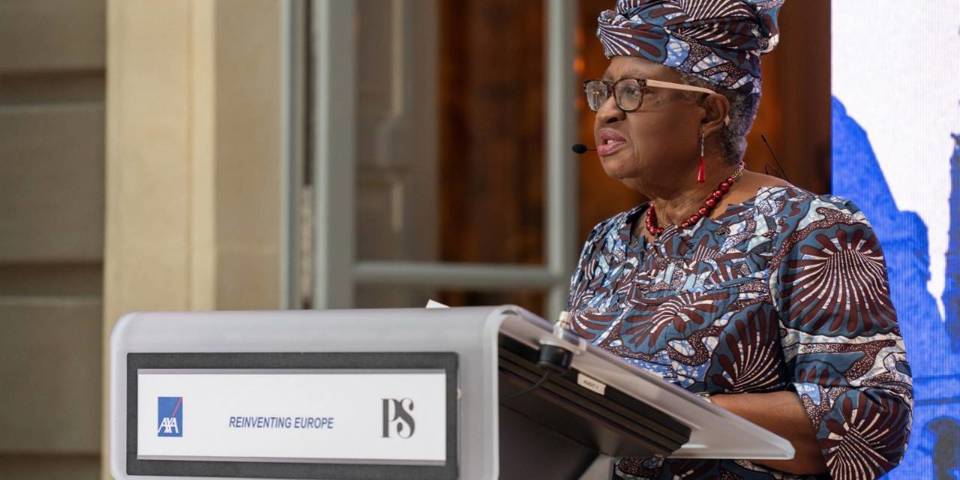
Speaking during a high-profile closing keynote address, Okonjo-Iweala urged a more balanced perspective on Europe’s economic standing. While the continent faces undeniable challenges in its quest to match the scale of the digital and technological giants emerging from the United States and China, the WTO chief argued that Europe’s current economic architecture possesses a degree of durability that is rarely acknowledged in contemporary commentary. The call for systemic "reinvention" should not, she suggested, come at the cost of disregarding the pillars of stability that continue to serve the continent well.
The Myth of European Obsolescence
The prevailing narrative in many financial hubs suggests that Europe is trailing behind in the global "tech race." Critics often point to the absence of homegrown platforms that can compete directly with the dominant conglomerates of Silicon Valley or the massive, state-backed technology ecosystems of East Asia. Because Europe lacks these singular, gargantuan tech champions, the assumption is often made that the continent’s economy is inherently lagging or failing to innovate.
Okonjo-Iweala pushed back against this binary view, emphasizing that the global trading system has demonstrated remarkable resilience—a quality that Europe has played a central role in maintaining. The European economy, she noted, functions differently than its counterparts across the Atlantic or the Pacific. Rather than relying on the "winner-takes-all" model often associated with digital platform monopolies, Europe has cultivated a diverse industrial landscape that thrives on high-value trade, manufacturing excellence, and a deep-seated commitment to scientific research.
The WTO Director-General pointed out that while the European Union may not dominate the consumer-facing digital app market in the same way as its global peers, it remains a powerhouse in the essential machinery of international commerce. European firms consistently lead in high-end manufacturing, automotive engineering, sustainable energy infrastructure, and complex chemical processes. These sectors are not merely "old economy" holdovers; they are the backbone of the global transition to a greener, more automated future.
Europe’s Global Trade Footprint
The strength of the European economy is perhaps best measured by its integration into global supply chains. Despite the shocks of recent years—including pandemic-related disruptions, energy price volatility, and the intensification of trade protectionism—European trade volumes have remained remarkably robust. Okonjo-Iweala highlighted that Europe remains one of the most vital engines of the global economy, serving as both a primary source of high-tech exports and a critical hub for global logistics and services.
For many, the focus on "reinvention" has become a distraction from the reality that Europe’s regulatory and legal environment provides a level of market predictability that remains highly attractive to global investors. By setting international standards in data privacy, environmental protection, and artificial intelligence governance, Europe exercises a unique form of "regulatory power" that shapes the behavior of corporations worldwide. This influence, often dubbed the "Brussels Effect," allows the continent to punch above its weight in global affairs, ensuring that its values and standards are adopted even by companies based in jurisdictions with different regulatory priorities.
However, Okonjo-Iweala cautioned that maintaining this influence requires a shift in how Europe views its own potential. If policymakers become too fixated on mimicking the structural successes of the US or China, they risk neglecting the specific comparative advantages that have kept Europe prosperous for decades. The goal, she suggested, should be to build upon existing strengths—such as a highly educated workforce and world-class research institutions—rather than attempting to overhaul a system that, while imperfect, has proven itself to be a pillar of global stability.
Science, Research, and the Future of Innovation
A central plank of Okonjo-Iweala’s argument was the role of science and research. Europe continues to be a global leader in academic output, patent filings in specialized sectors, and cross-border research collaboration. While the commercialization of this research into consumer technology giants has been slower than in other regions, the scientific foundations for the next generation of industrial breakthroughs are often being laid in European laboratories.
The challenge for Europe, therefore, is not a lack of innovation but rather the translation of that innovation into large-scale commercial success. Addressing this requires a focus on improving the "ecosystem" for growth—such as deepening capital markets to provide better access to venture funding—without dismantling the social and economic safeguards that define the European way of life.
The WTO leader’s perspective offers a corrective to the self-flagellation that sometimes characterizes European economic policy debates. By acknowledging that the global trading system has been "surprisingly resilient," Okonjo-Iweala provided a reminder that the institutions and partnerships nurtured by Europe are functioning as intended. The "reinvention" narrative often implies that the house is crumbling, when, in fact, the structure is sound; it simply needs constant maintenance and occasional modernization to remain competitive in a rapidly changing environment.
A Measured Path Forward
As the international community grapples with the complexities of "de-risking" supply chains and navigating the rise of artificial intelligence, the role of the European economy will remain pivotal. Okonjo-Iweala’s remarks suggest that a future-proof strategy for Europe involves doubling down on its commitment to multilateral trade. By fostering open, rule-based commerce, Europe can ensure that its industries remain at the center of the global economy, regardless of whether it succeeds in spawning the next generation of consumer-focused tech titans.
Ultimately, the WTO Director-General’s message was one of cautious optimism. The European economy is not in a state of terminal decline, nor does it require a radical departure from its core values to remain relevant. Instead, the path forward involves a sober assessment of what has worked—the resilience of the trade system, the power of its research institutions, and the stability of its regulatory frameworks—and a commitment to refining these strengths.
In a world defined by volatility and shifting alliances, the consistency offered by Europe may be its greatest asset. As the global economy continues to evolve, the ability to balance tradition with necessary evolution will likely prove more valuable than the pursuit of temporary trends. For now, the focus, according to the WTO, should remain on strengthening the existing foundations of a continent that continues to be a central, indispensable architect of the global economic order.








No comments yet. Be the first to join the conversation!