
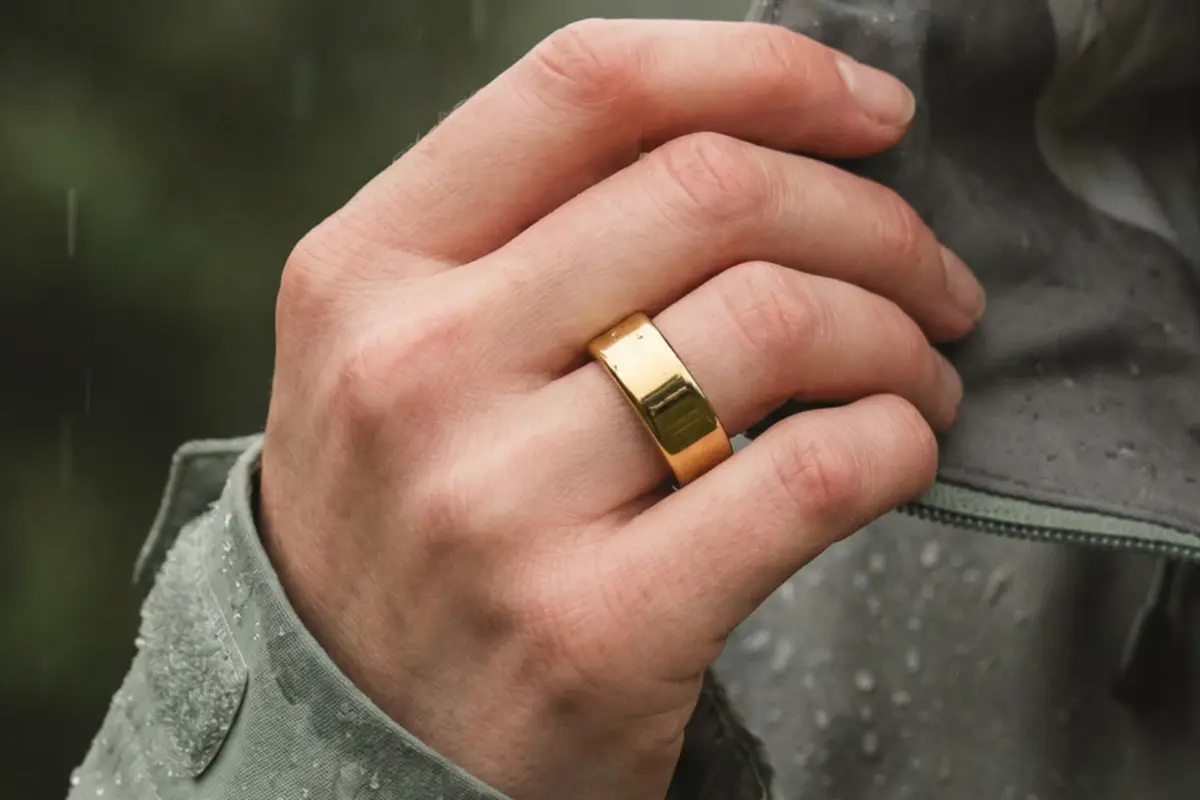
Smart ring market leader Oura has launched a fresh legal challenge against its Indian rival Ultrahuman, filing a patent infringement lawsuit in federal court designed to block U.S. sales of the Ring Pro. This new legal battle comes just months after a redesign allowed the Bengaluru-based startup to successfully return to the American market following a stringent import ban. The case represents the latest chapter in an aggressive legal strategy pursued by Oura, which has repeatedly turned to the courts and international trade regulators to protect its intellectual property against a wave of competing smart-ring manufacturers, including major industry players like Samsung and RingConn.
In the complaint filed Thursday in a federal court in Texas, Oura alleged that Ultrahuman’s Ring Pro directly infringes two distinct patents covering both the physical design of the ring and its internal components, specifically targeting the device’s battery technology and integrated sensors. Seeking to halt the commercial momentum of its competitor, Oura is asking the court for substantial monetary damages alongside a permanent injunction that would effectively bar Ultrahuman from selling, distributing, or marketing the Ring Pro within the United States.
The legal escalation arrives hot on the heels of a hard-fought recovery by Ultrahuman. The startup launched its redesigned Ring Pro in February, and the device subsequently received a favorable ruling from U.S. Customs and Border Protection in March. That decision paved the way for Ultrahuman to re-enter the lucrative U.S. market after an earlier import ban crippled sales of its predecessor, the Ring Air. That ban was enacted after Oura secured a decisive patent infringement ruling from the U.S. International Trade Commission in August of the previous year.
An Oura spokesperson minced no words when addressing the ongoing competitive friction, stating to TechCrunch that Ultrahuman has a clear history of copying Oura’s innovations, as demonstrated by the 2005 and 2024 ITC rulings against the company. According to Oura, although Ultrahuman introduced a redesigned ring, it failed to address the continued infringement of Oura’s foundational patents, choosing instead to capitalize on Oura’s innovation and the market leadership it has painstakingly built over the years.
To counter potential defenses, Oura argues that the recent U.S. Customs ruling strictly covered only the single patent involved in the earlier dispute, leaving the two new patents cited in this latest lawsuit entirely unaddressed. Those patents are designated as D804,471 and 12,769,363. To protect its intellectual property rights, Oura stated in its court filing that it was forced to initiate this new complaint of patent infringement.
Notably, patent number 12,769,363 is exceptionally fresh. It was officially issued to Oura on October 20, merely two days before the company filed the lawsuit. The patent comprehensively covers a smart-ring design incorporating sophisticated internal components, such as a curved battery, an internal circuit board, magnets, and an array of sensitive health-tracking sensors.
Further expanding the scope of the litigation, Oura also named Texas-based electronics manufacturer SVTronics as a defendant in the lawsuit. According to the complaint, SVTronics manufactures the Ring Pro at a specialized facility located in Plano, Texas, operating under Ultrahuman’s direct instruction and control. The legal filing alleges that both Ultrahuman and SVTronics bear responsibility for infringing Oura’s patents through the active manufacture, importation, and commercial distribution of the device within the United States.
Ultrahuman co-founder and CEO Mohit Kumar pushed back against the claims, telling TechCrunch that the startup remains fully confident in the integrity of the Ring Pro and intends to fight the new allegations aggressively.
Kumar pointed out the aggressive timing of Oura’s legal maneuver, noting that Oura has chosen to assert entirely different patents, including one issued just two days before the lawsuit was filed. He emphasized that the company will address these claims through the appropriate legal channels and defend its position with vigor. Furthermore, Kumar confirmed that there are currently no court orders or injunctions affecting the availability of the Ring Pro, and the device remains fully available for purchase by customers in the U.S.
The animosity between Oura and Ultrahuman is not new, tracing its origins back to 2023 when Oura first sued the Indian startup over the Ring Air—a device that had instrumental in helping Ultrahuman establish its brand presence and reputation in the U.S. market. Oura’s subsequent escalation before the U.S. International Trade Commission in 2024 ultimately yielded the ruling that led to the temporary blockade of the Ring Air.
Ultrahuman, however, is far from the only competitor caught in Oura’s legal crosshairs. The Finnish-founded ring maker has actively pursued patent infringement claims against an array of smart-ring manufacturers, including Samsung, RingConn, Circular, and Zepp Health. While some of these high-stakes battles have culminated in heated courtroom battles, others have been resolved through licensing agreements. Notably, companies like RingConn and Circular chose to settle their disputes by agreeing to pay ongoing royalties to Oura, securing their legal right to continue selling their respective wellness-tracking products in the American market.
This intense legal maneuvering unfolds against the backdrop of a rapidly expanding global smart-ring market. Market research firm IDC projects that global shipments for wearable smart rings will surge by 12.8% this year alone, reaching an estimated 4.9 million units, and scaling up to approximately 6.3 million units annually by 2030. While Oura maintains its status as an established pioneer and market leader in the category, aggressive challengers like Ultrahuman are fighting hard for market share.
The timing of the lawsuit also coincides with broader corporate developments for Oura. Just weeks prior to initiating the litigation against Ultrahuman, Oura made headlines by shelving its anticipated $2.2 billion initial public offering, attributing the decision to lingering uncertainty in the broader financial markets. Despite holding off on its public market debut, Oura has continued to push forward with product development, rolling out new software features and advanced fitness metrics designed to help users better understand how physical workouts impact their long-term cardiovascular health.
Meanwhile, Ultrahuman has been securing its own financial footing and expanding its strategic partnerships. In September, the startup successfully raised $70 million in a funding round backed by prominent investors, including Qualcomm Ventures and Labcorp, bringing the company’s valuation to approximately $365 million. As part of its future roadmap, Ultrahuman has been collaborating with Qualcomm to develop a next-generation smart ring capable of running software applications directly on the device, signaling an ambitious strategic pivot beyond basic health and fitness tracking into advanced domains such as interactive AI and gaming.










No comments yet. Be the first to join the conversation!