

As the financial services industry navigates an increasingly complex digital landscape, major banking institutions are grappling with competing pressures to innovate rapidly while aggressively managing unprecedented technological risks. From the boardrooms of Wall Street to the evolving strategies of regional lenders, banking executives find themselves walking a delicate tightrope. On one side lies the immense potential of artificial intelligence, blockchain technology, and tokenized finance; on the other, the stark realities of cybersecurity vulnerabilities, regulatory scrutiny, and the fierce competition from nimble fintech startups.
Recent developments underscore this turbulent environment, highlighting how traditional financial giants are reacting to a marketplace transformed by digital disruption. Whether it is restricting third-party artificial intelligence agents from accessing customer accounts or pouring hundreds of millions of dollars into collaborative stablecoin ventures, the modern banking sector is undergoing a profound structural evolution.
The Immediate AI Dilemma: Balancing Innovation with Account Security
The tension between embracing cutting-edge technology and safeguarding institutional integrity was brought into sharp focus recently regarding the use of external artificial intelligence agents. Jamie Dimon, the long-serving CEO of JPMorgan Chase, has built a reputation as an enthusiastic and vocal advocate for technological advancement. Under his leadership, JPMorgan Chase has made artificial intelligence a cornerstone of its strategic vision, backing the initiative with a staggering $19.8 billion technology budget slated for 2026.

Given this heavy financial and strategic commitment to AI, Dimon’s recent warnings carry significant weight across the financial sector. When the chief executive of America’s largest bank publicly cautions that outside artificial intelligence agents pose risks too severe to permit direct access into customer accounts, the rest of the industry is forced to take notice. Alongside similar cautious stances adopted by major institutions like Morgan Stanley and Bank of America, this conservative near-term posture reveals a growing consensus among traditional banking leaders.
While banks are eager to deploy their own proprietary machine-learning models for internal efficiency, fraud detection, and customer service automation, allowing autonomous third-party AI agents to interface directly with sensitive consumer accounts introduces a labyrinth of security, privacy, and liability concerns. In the near term, building walls around customer data to block unverified external AI agents is increasingly viewed by risk management teams as a necessary defensive maneuver, even for organizations aggressively championing digital transformation elsewhere in their operations.
Banking Giants Double Down on Digital Assets Through Project Faro
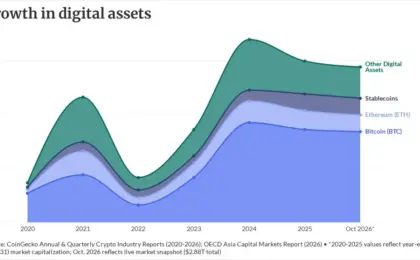
While artificial intelligence encounters protective roadblocks, the realm of digital currency and blockchain infrastructure is seeing a massive influx of traditional capital. A prime example of this trend is the significant momentum behind Project Faro, a bank-led stablecoin venture that recently secured a major milestone with a $270 million, five-year funding commitment.

For industry observers, the news of traditional financial institutions investing heavily in stablecoin technology may feel familiar. Project Faro is just one of several stablecoin initiatives currently operating in various stages of development and deployment. As traditional banks continuously evaluate how to safely and profitably adopt emerging digital assets—many of which still lack universal regulatory clarity or mainstream adoption—collaboration has emerged as the preferred strategy. By pooling resources through ventures like Project Faro, major financial institutions can share the immense costs and regulatory risks associated with building compliant blockchain payment rails, ensuring they are not left behind if tokenized money becomes the standard for global clearing and settlement.
This cautious yet aggressive exploration of digital assets extends beyond large-scale consortia into other corners of the financial ecosystem. Small and medium-sized businesses, for instance, have shown notable hesitation when it comes to adopting cryptocurrencies for daily transactions. This widespread reluctance among small businesses has created a unique strategic opening for traditional banks. Rather than treating crypto as an existential threat or an entirely alien asset class, forward-thinking financial institutions are recognizing that small business owners’ anxiety around digital currencies actually favors established banks. By positioning themselves as trusted intermediaries that can offer secure, regulated bridges between traditional fiat currency and digital assets, banks have a prime opportunity to capture market share from tech-first platforms that lack the long-standing trust of Main Street merchants.
Institutional Pioneers and the Fintech Disruption of Underserved Niches
While many legacy institutions are moving deliberately and methodically into the digital asset space, select financial firms have chosen to leap ahead with unprecedented speed. An illuminating look at Franklin Templeton reveals how a 75-year-old Wall Street fixture has aggressively leaned into tokenized finance at a time when the vast majority of traditional banks are still tentatively peering into the new world of decentralized finance. Through executive leadership and calculated strategic bets, firms like Franklin Templeton are demonstrating how legacy financial powerhouses can reinvent their product offerings for a tokenized economy, setting a benchmark that other asset managers and banks are closely monitoring.

At the same time, the broader financial technology sector continues to exploit the gaps left by traditional lenders. While massive banks focus their technological firepower on high-value corporate clients and retail mass markets, nimble fintech companies are increasingly targeting specific small-business niches that traditional banks have historically spurned or underserved. These specialized fintech platforms leverage alternative data sources and streamlined digital onboarding to serve micro-enterprises and specialized industries that do not fit neatly into the rigid underwriting boxes of conventional commercial banks.
Ultimately, the contemporary financial services landscape is defined by this constant push and pull. Traditional banks are forced to defend their perimeters against unauthorized technological intrusions, such as unvetted AI agents, while simultaneously funding massive collaborative experiments in stablecoins and digital asset infrastructure. As financial technology continues to evolve at a breakneck pace, the institutions that successfully balance stringent risk management with calculated digital expansion will define the next era of global banking.








No comments yet. Be the first to join the conversation!