
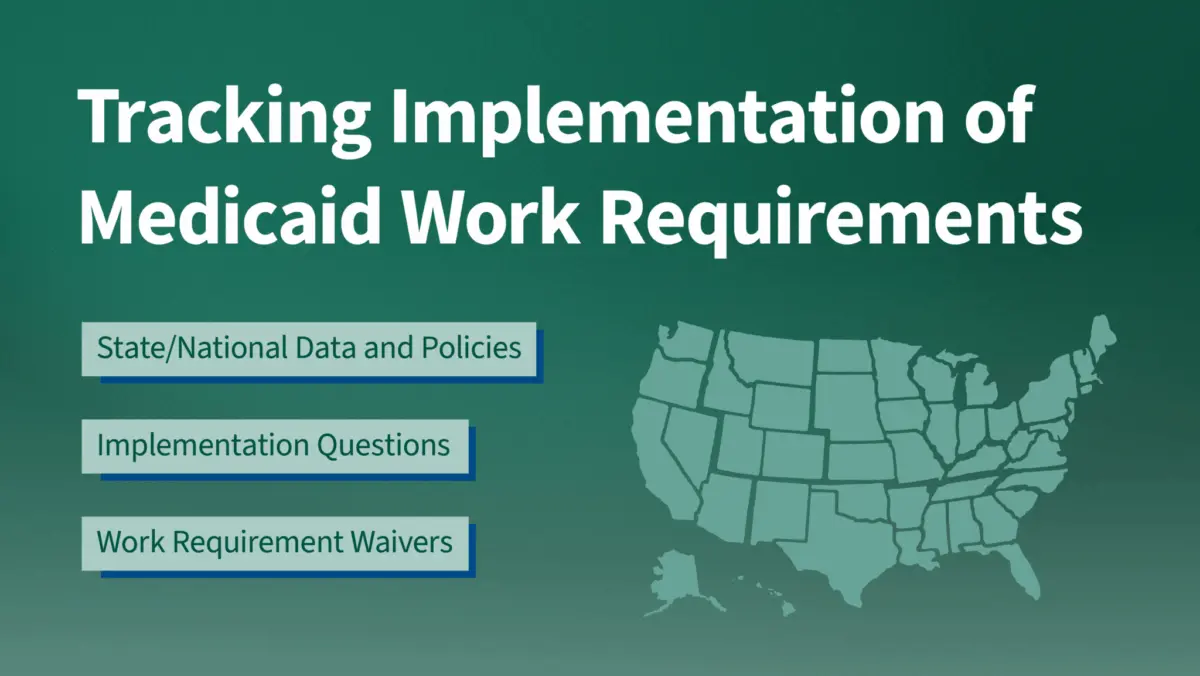
As policymakers, health care advocates, and state administrators continue to debate the future of public health insurance programs, the health policy organization KFF has compiled an extensive archive of resources focusing on Medicaid work requirements. The newly highlighted collection provides a detailed overview of how conditioning health coverage on employment or community engagement activities affects low-income Americans, drawing on years of research, data tracking, and real-world implementation experiences across various states.
The comprehensive compilation spans multiple facets of the ongoing debate surrounding Medicaid policy, offering lawmakers and the public deep dives into exemption criteria, historical waiver approvals, state-level case studies, public opinion polling, and overarching analyses of how work mandates impact healthcare access and labor market participation.
Work requirements overview
The debate surrounding Medicaid work requirements centers on proposals to mandate that non-elderly, non-disabled adult beneficiaries participate in a specified number of hours of work, job training, education, or community service to maintain their health coverage. Proponents argue that such policies promote economic self-sufficiency, personal responsibility, and upward mobility.
Conversely, health policy experts and researchers point to decades of data indicating that the vast majority of Medicaid adults who can work are already employed, while those who are not working often face significant barriers such as chronic illness, caregiving responsibilities, or a lack of accessible local job opportunities. Critics of work mandates warn that administrative hurdles and complex reporting requirements frequently lead to coverage losses among eligible individuals—a phenomenon often referred to as "red tape" churn—which can disrupt necessary medical care and worsen health outcomes.
Medical frailty exemption
A central component of discussions regarding Medicaid work mandates involves the implementation of exemptions for individuals with complex health conditions. Under many proposed and enacted frameworks, policies include provisions to protect medically frail individuals, persons with severe disabilities, and those undergoing treatment for substance use disorders or acute mental health crises.
However, defining, identifying, and verifying medical frailty has historically presented major administrative challenges for state Medicaid agencies. Research highlighted in the KFF resources examines how these exemption pathways function in practice, noting that navigating the verification processes can place an undue burden on both vulnerable beneficiaries and healthcare providers who must document and submit extensive medical evidence to prevent coverage terminations.
Implementation of work requirements
Translating policy proposals into operational reality requires substantial administrative infrastructure at the state level. State Medicaid agencies must establish systems to track beneficiary compliance, process regular employment verifications, communicate policy changes to enrollees, and handle appeals for individuals whose coverage is slated for termination due to non-compliance.
The KFF resources outline the operational complexities states face when attempting to implement these mandates. Administrative costs often rise significantly as agencies invest in new data-matching technologies, expanded call centers, and intensive outreach campaigns designed to inform participants of the reporting rules. Despite these investments, historical implementation efforts have frequently revealed widespread confusion among enrollees regarding what activities qualify and how to report them accurately.
50-state survey of Medicaid eligibility and enrollment policies
To understand the broader policy landscape, KFF maintains a detailed 50-state survey tracking Medicaid eligibility and enrollment policies across the country. This expansive dataset provides a comparative look at how different jurisdictions approach public health coverage, offering baseline metrics that illuminate how states vary in their adoption of expansion policies, renewal procedures, and eligibility restrictions.
The survey serves as an essential tool for analysts tracking shifts in state policy, illustrating the divergence between states that have fully embraced federal Medicaid expansion options and those that have pursued alternative pathways, including restricted coverage models or conditional eligibility frameworks tied to work and community engagement metrics.
Research and analysis on Medicaid and work
The intersection of public health insurance and labor market participation has been the subject of extensive empirical research. KFF’s curated analysis explores the demographic characteristics of adult Medicaid enrollees, highlighting that a significant majority are already connected to the workforce, working in low-wage service, retail, or healthcare support roles that often lack employer-sponsored health benefits.
Studies featured within the collection analyze whether conditioning healthcare on employment actually achieves its stated goals of increasing labor force attachment. Much of the economic and health services research suggests that work requirements do not significantly boost employment rates, largely because most enrollees who can work are already doing so, while those outside the workforce face genuine health or logistical barriers that administrative mandates cannot resolve.
1115 work requirement waivers
Under Section 1115 of the Social Security Act, the federal government can grant states experimental waivers to test new approaches in Medicaid program design. In past years, several states applied for and received approval from the Centers for Medicare & Medicaid Services (CMS) to implement work and community engagement requirements as a condition of eligibility.
The KFF resource hub compiles documentation surrounding these 1115 waivers, tracking their historical evolution, federal approval processes, legal challenges, and ultimate outcomes. These waivers served as the primary testing ground for work mandates, providing researchers with real-world data on how conditioning benefits alters enrollment trends and state administrative burdens.
Work requirements implications and state experience
Evaluating the practical implications of Medicaid work requirements requires looking closely at state-level experiences where these policies were formally adopted and implemented. The documented impacts extend far beyond employment rates, touching upon financial stability for healthcare providers, uncompensated care costs for hospitals, and overall coverage stability for low-income populations.
State experiences have consistently demonstrated that work requirements lead to notable coverage losses. Many individuals who remain eligible for Medicaid lose their benefits simply due to administrative difficulties in reporting their hours or navigating complex notification procedures, highlighting the delicate balance between enforcing policy rules and maintaining continuous access to essential medical care.
Arkansas work requirement experience
Arkansas stands as a primary case study in the implementation of Medicaid work requirements, having been the first state in the nation to fully implement such a policy under an 1115 waiver. The state required certain non-disabled adult beneficiaries to report work or community engagement activities online each month or risk losing their coverage.
The documented outcomes from the Arkansas experience have been widely cited by health policy researchers. During the period the requirement was active, thousands of individuals lost their Medicaid coverage, many due to administrative hurdles rather than a lack of employment. Subsequent independent evaluations indicated that the policy did not result in measurable increases in employment compared to neighboring states without work mandates, but it did result in significant coverage disruptions, increased administrative expenses, and heightened anxiety among enrollees attempting to maintain their health benefits.
KFF Polling on Work Requirements
Public opinion surrounding Medicaid work requirements reflects a complex mix of values regarding personal responsibility and support for safety-net programs. KFF public opinion polling data provides insight into what American adults think about conditioning health coverage on work and community engagement.
Polling results consistently show broad initial support for the general concept of work requirements, as many respondents associate employment with self-reliance. However, public sentiment shifts noticeably when respondents are asked about the practical consequences of these policies—such as whether individuals should lose their health coverage if they fail to paperwork-verify their employment, or whether exemptions should be robustly protected for caregivers and individuals dealing with chronic illnesses. The polling data highlights a gap between abstract approval of work policies and practical concern over healthcare access.
Beyond the Data by KFF CEO Drew Altman
Offering a broader perspective on the policy debate, commentary from KFF President and CEO Drew Altman provides executive-level context on the role of empirical evidence in healthcare policymaking. Through the "Beyond the Data" series, Altman examines how research findings on contentious topics like Medicaid work requirements intersect with political priorities and public discourse.
The executive commentary emphasizes the importance of grounding legislative and administrative decisions in objective data, particularly when evaluating programs that provide foundational health and financial security to millions of low-income Americans. By synthesizing complex research into accessible insights, these reflections help frame the ongoing national conversation about the future of the Medicaid program and the populations it serves.








No comments yet. Be the first to join the conversation!