
Editorial Note: This brief was updated on September 29, 2026, to include the latest KFF polling data. It was originally published on December 14, 2021.
For many years, ongoing polling from KFF has documented how the high cost of health care places a heavy economic burden on U.S. families. These expenses consistently factor into critical personal decisions regarding insurance coverage and whether individuals seek necessary medical care. Among various financial pressures, health care costs routinely rank as the single greatest monetary worry for adults and their households across the country. Recent data from KFF tracking polls and specialized surveys outline the public’s widespread struggles with medical expenses, prescription drugs, health insurance limitations, and long-term care affordability.
Worries and Difficulty Affording Medical Costs
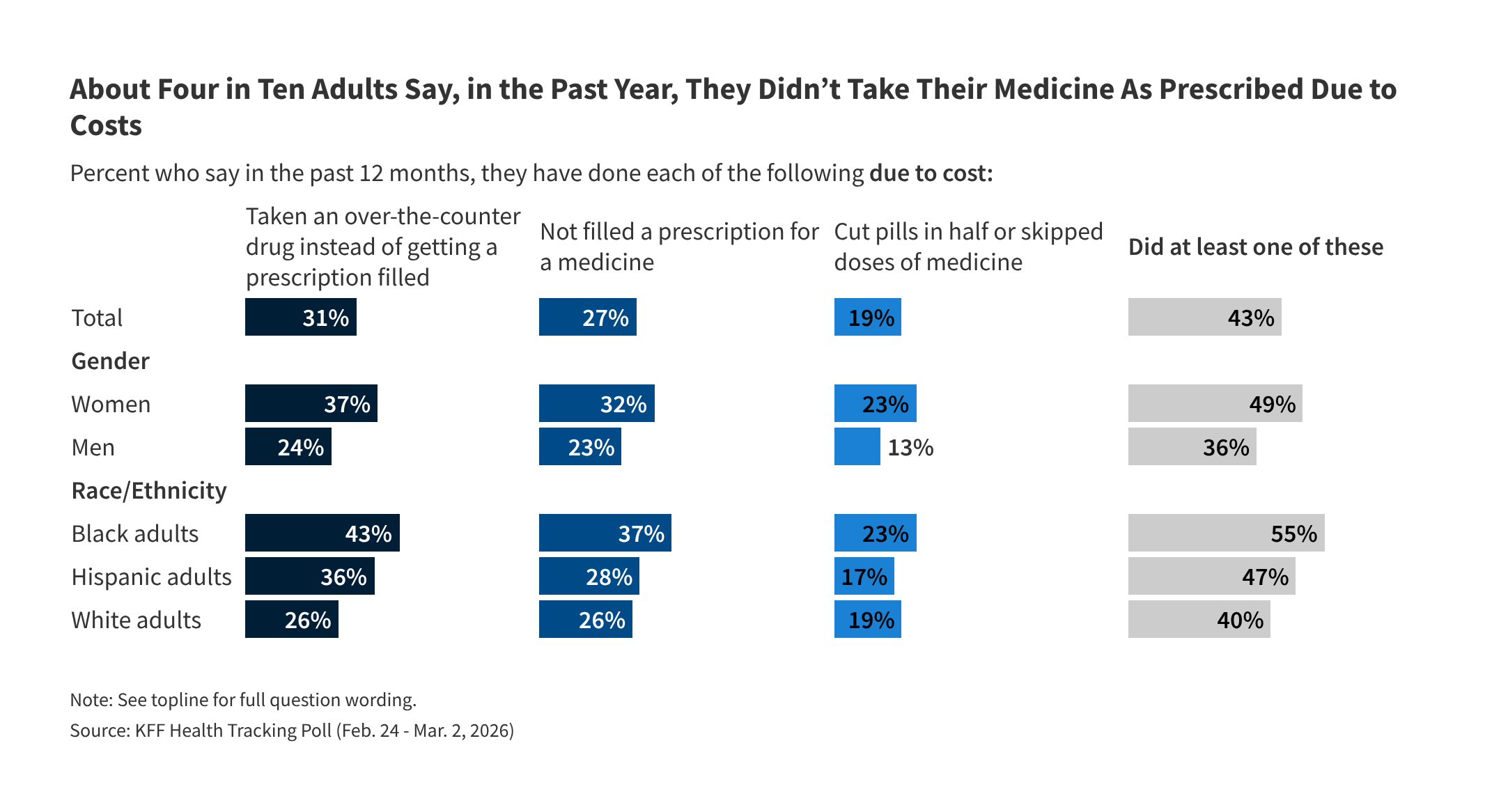
Throughout most of 2026, health care expenses have remained at or near the very top of the list of people’s financial anxieties. Approximately six in ten adults report that they are either "very worried" (27%) or "somewhat worried" (35%) about affording health care costs for themselves and their families. This broad category includes the price of health insurance premiums as well as out-of-pocket expenses for routine office visits, diagnostic testing, and prescription drugs. By comparison, about one in five adults report being "very worried" about affording other essential household expenses, such as gasoline and transportation costs (22%), rent or mortgage payments (21%), food and groceries (20%), or monthly utility bills (19%).
The anxiety surrounding medical costs crosses various demographic and economic boundaries, though it is particularly acute among the uninsured. Just under nine in ten—87%—of uninsured adults under the age of 65 say they are very or somewhat worried about affording health care. At the same time, a substantial majority of insured adults under 65, standing at 64%, share these same concerns. Health care costs emerge as a primary household worry regardless of an individual’s specific type of health insurance coverage or political affiliation.
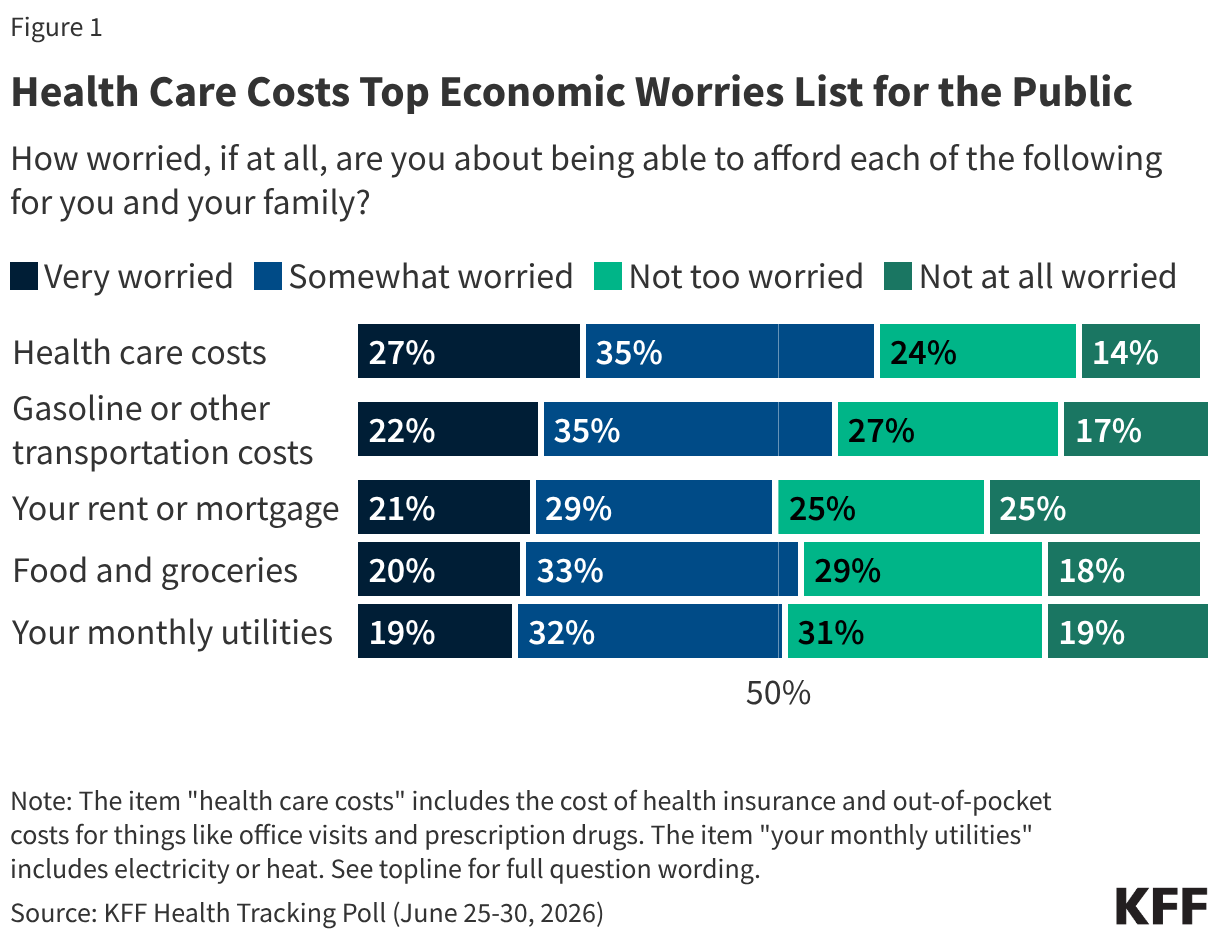
Echoing these pervasive worries, many U.S. adults find medical expenses genuinely difficult to manage. While lower-income and uninsured individuals are the most likely to report affordability hurdles, people with health insurance and those with higher household incomes are far from immune. Just under half of all U.S. adults—44%—state that it is very or somewhat difficult for them to afford their overall health care costs.
The disparities become starker when examining specific groups. Uninsured adults under 65 are vastly more likely to report financial difficulty, with 82% citing affordability challenges compared to 42% of those who maintain some form of health insurance coverage. Furthermore, a slight majority of Hispanic adults (55%) and half of Black adults (49%) report difficulty affording care, compared to roughly four in ten White adults (39%). Additionally, individuals living in households with annual incomes under $40,000 report higher rates of financial strain regarding medical costs than those in higher-income brackets.
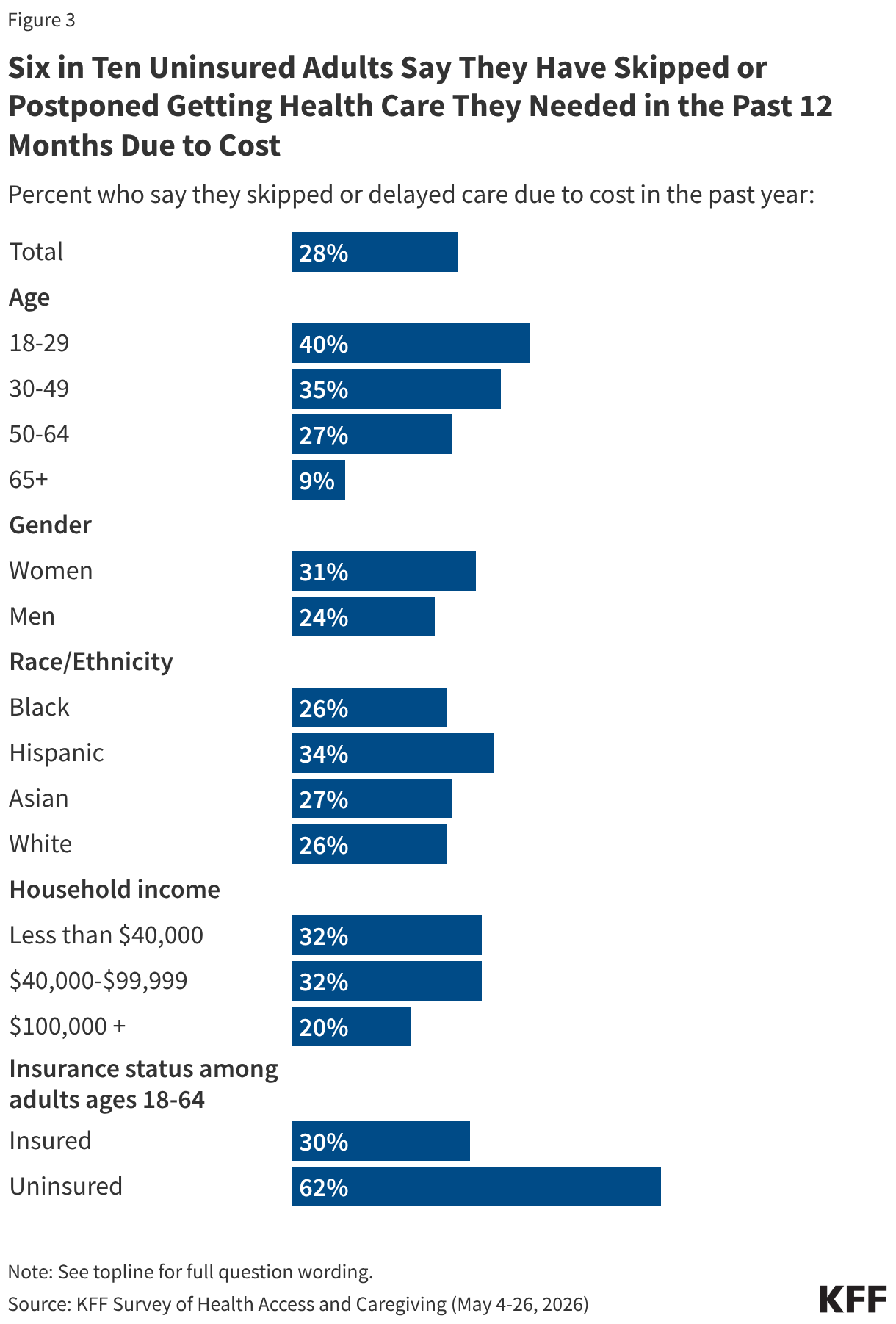
The financial barriers inherent in the U.S. health care system frequently force individuals to compromise on their health. Roughly three in ten adults (28%) report that they have skipped or postponed getting needed health care within the past 12 months simply because of the cost. Women, younger adults, Hispanic adults, and lower-income individuals are more likely than their respective counterparts to delay or forego care. Among the uninsured, the situation is even more critical: about six in ten (62%) report skipping or postponing necessary medical services due to cost. Having health insurance, however, does not provide absolute protection, as three in ten adults ages 18 to 64 with active coverage still report forgoing care they needed because they could not afford it.
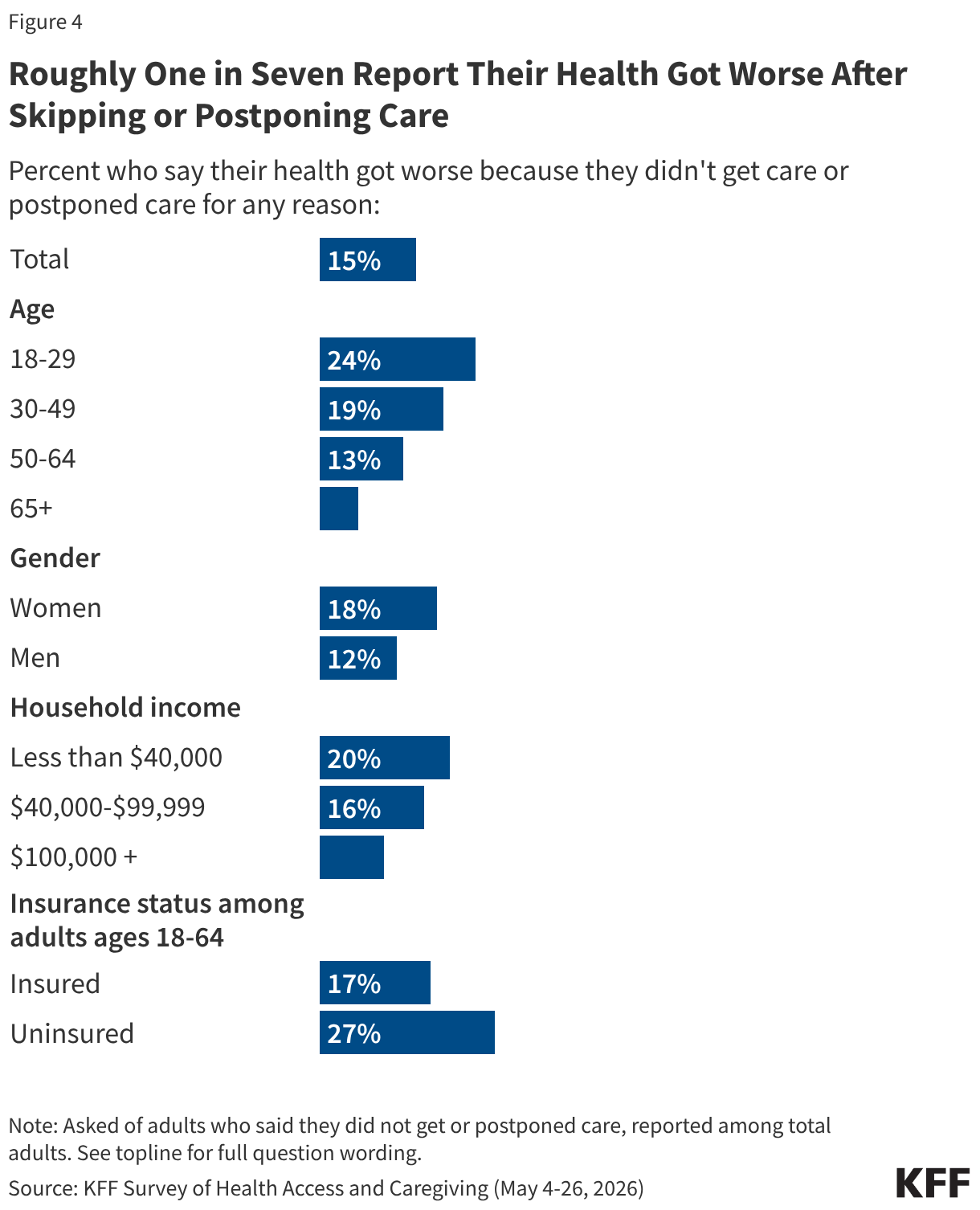
Postponing or avoiding medical care for any reason can trigger serious health consequences. Approximately one in seven adults (15%) report that their overall health actually deteriorated because they skipped or delayed seeking treatment. Among adults under age 65, the uninsured are significantly more likely than the insured to state that their health worsened as a result, at 27% compared to 17%. Furthermore, adults under the age of 30 are four times as likely to report a decline in health after skipping care (24%) compared to adults ages 65 and older (6%), the vast majority of whom are protected by Medicare coverage.
Problems Paying Medical Bills
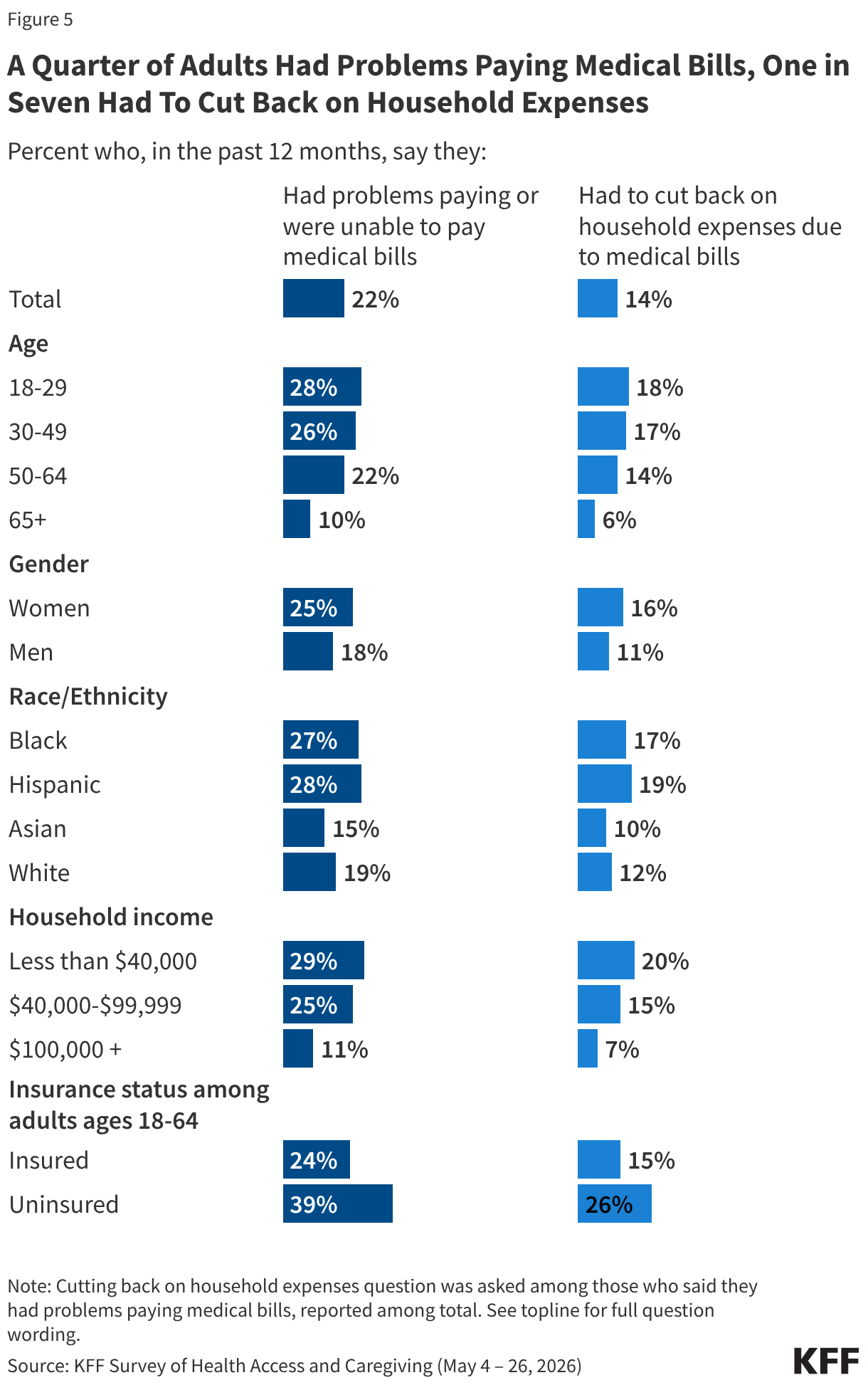
Beyond the day-to-day anxiety of affording care, a significant portion of the population struggles with direct debt and payment failures. About one in five adults overall (22%) report that they had problems paying or were entirely unable to pay medical bills over the previous 12 months. These include bills originating from physician visits, laboratory tests, diagnostic imaging, or prescription medications. Younger adults, women, Hispanic adults, Black adults, lower-income households, and uninsured adults under 65 experience these payment problems at notably higher rates than others.
The burden of medical bills frequently ripples outward, forcing difficult trade-offs in household budgets. One in seven adults (14%) report that they have had to cut back on basic household necessities—such as food, clothing, or other essential supplies—in order to cover their health care costs. This coping mechanism is particularly prevalent among lower-income adults, with 20% of those earning less than $40,000 annually cutting back on basics, and among uninsured adults under 65, where the share rises to 26%.
Skipping Care and Medical Bill Problems Among LGBTQ+ Adults and Those With Serious Health Conditions
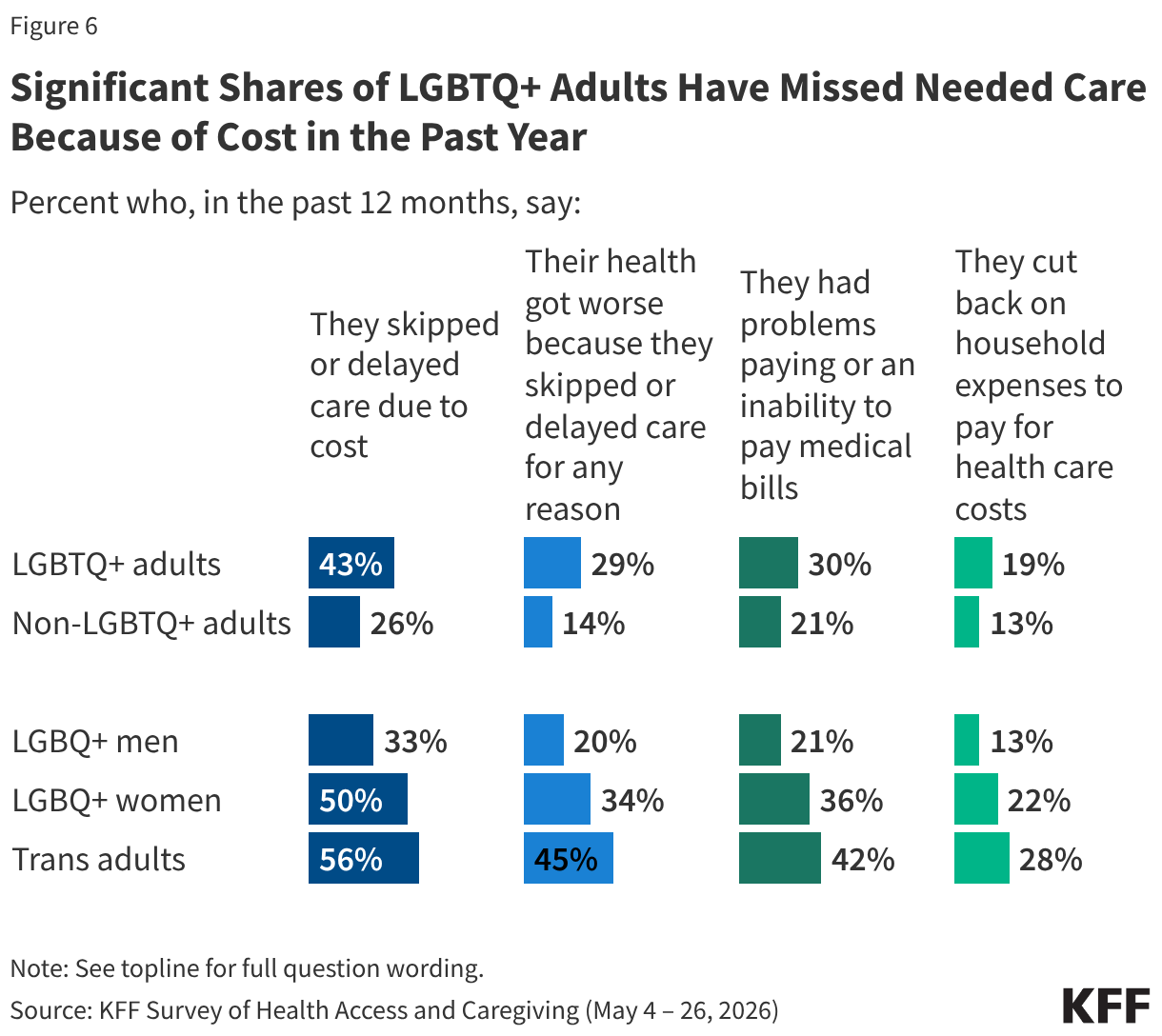
Certain demographic groups face disproportionate challenges when navigating health care affordability and access. LGBTQ+ adults, who on average tend to be younger and possess lower household incomes than their non-LGBTQ+ peers, report markedly higher rates of financial strain. According to KFF findings, more than four in ten LGBTQ+ adults (43%) skipped or delayed medical care due to cost in the past year, compared to about a quarter (26%) of non-LGBTQ+ adults.
Additionally, roughly three in ten LGBTQ+ adults report trouble paying or an inability to pay medical bills over the past year, including 19% who had to cut back on basic household expenses to cover medical costs. Transgender adults face even more pronounced hurdles, with over half (56%) reporting that they skipped or delayed care because of the expense. Nearly half of trans adults (45%) indicate that their health worsened as a result of such delays.
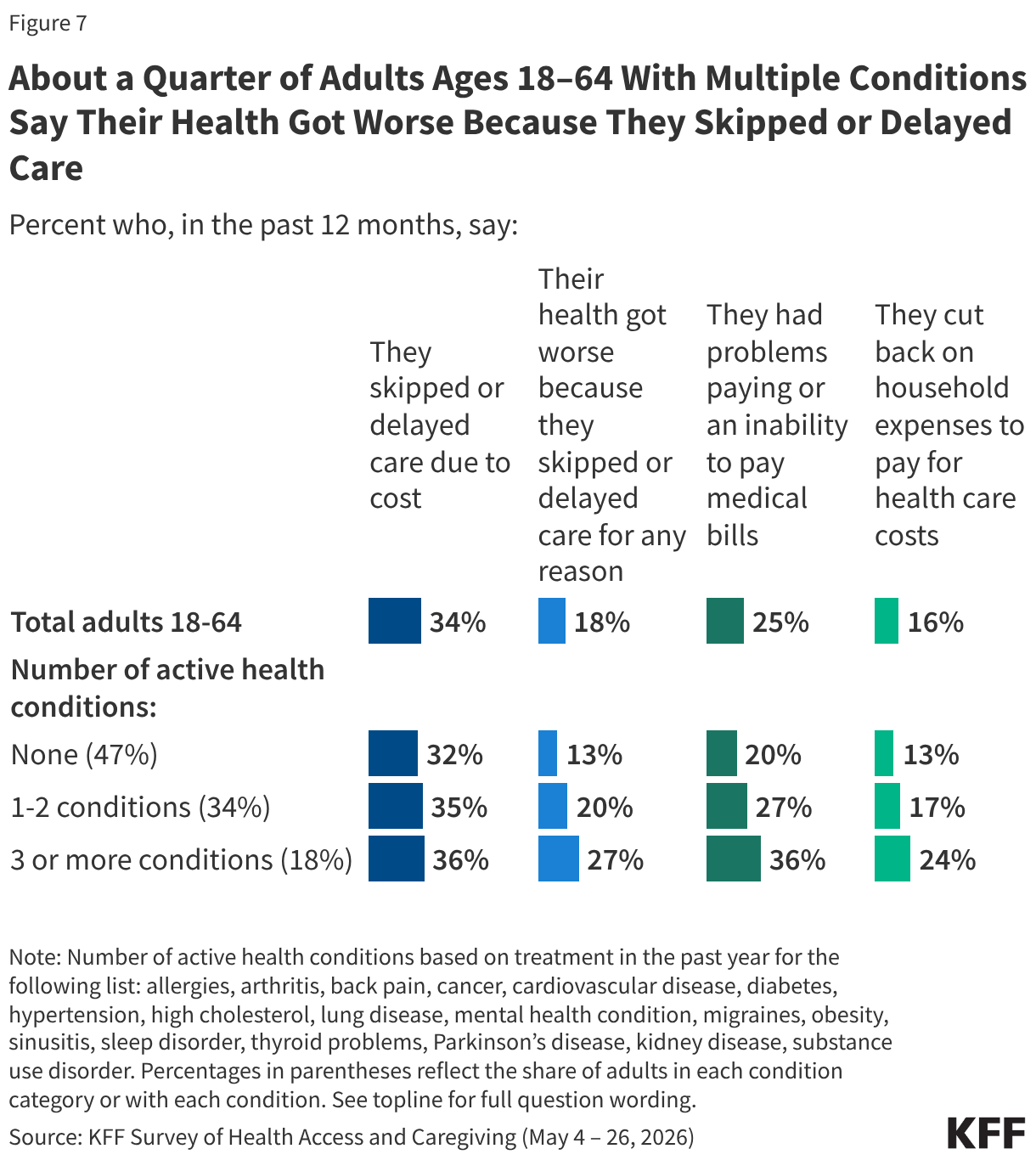
Patients managing multiple or complex health conditions also experience disproportionate struggles with medical bills and declining health due to deferred care. Roughly one-third (36%) of adults aged 18 to 64 with three or more active health conditions report that they failed to receive needed care in the past year due to cost. A quarter of this group (27%) state that their health worsened because they skipped or delayed care for any reason. Furthermore, more than a third of adults in this age bracket with three or more conditions experienced problems paying medical bills over the past year, and about one in four had to cut back on household necessities to pay for care.
Prescription Drug Costs
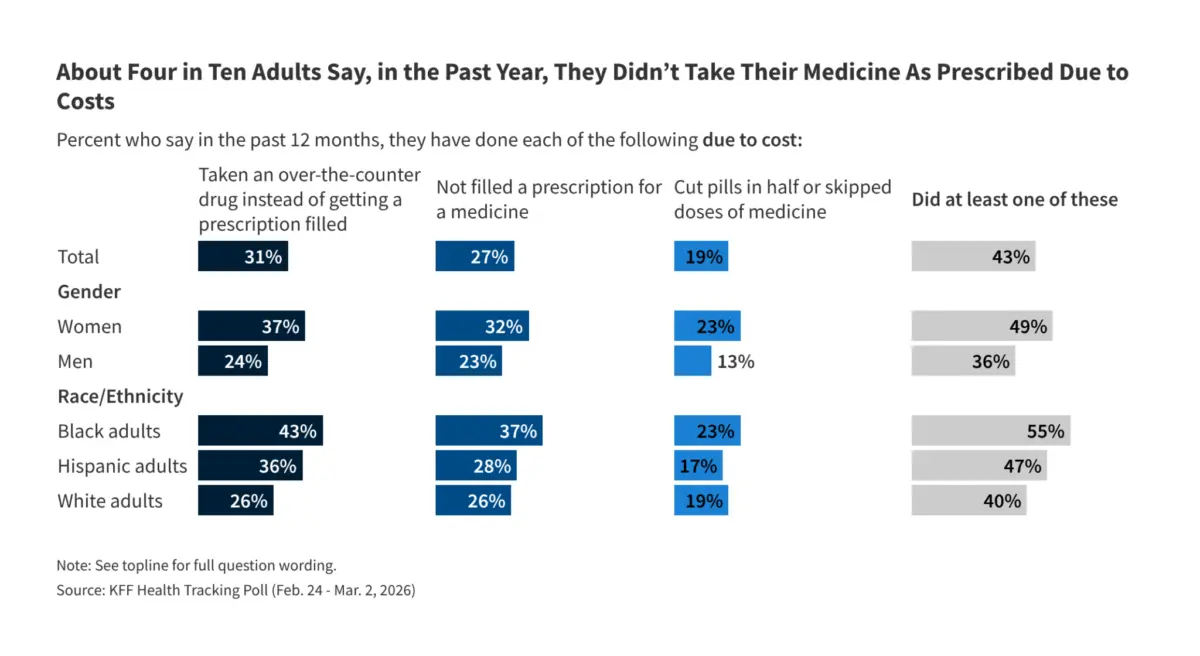
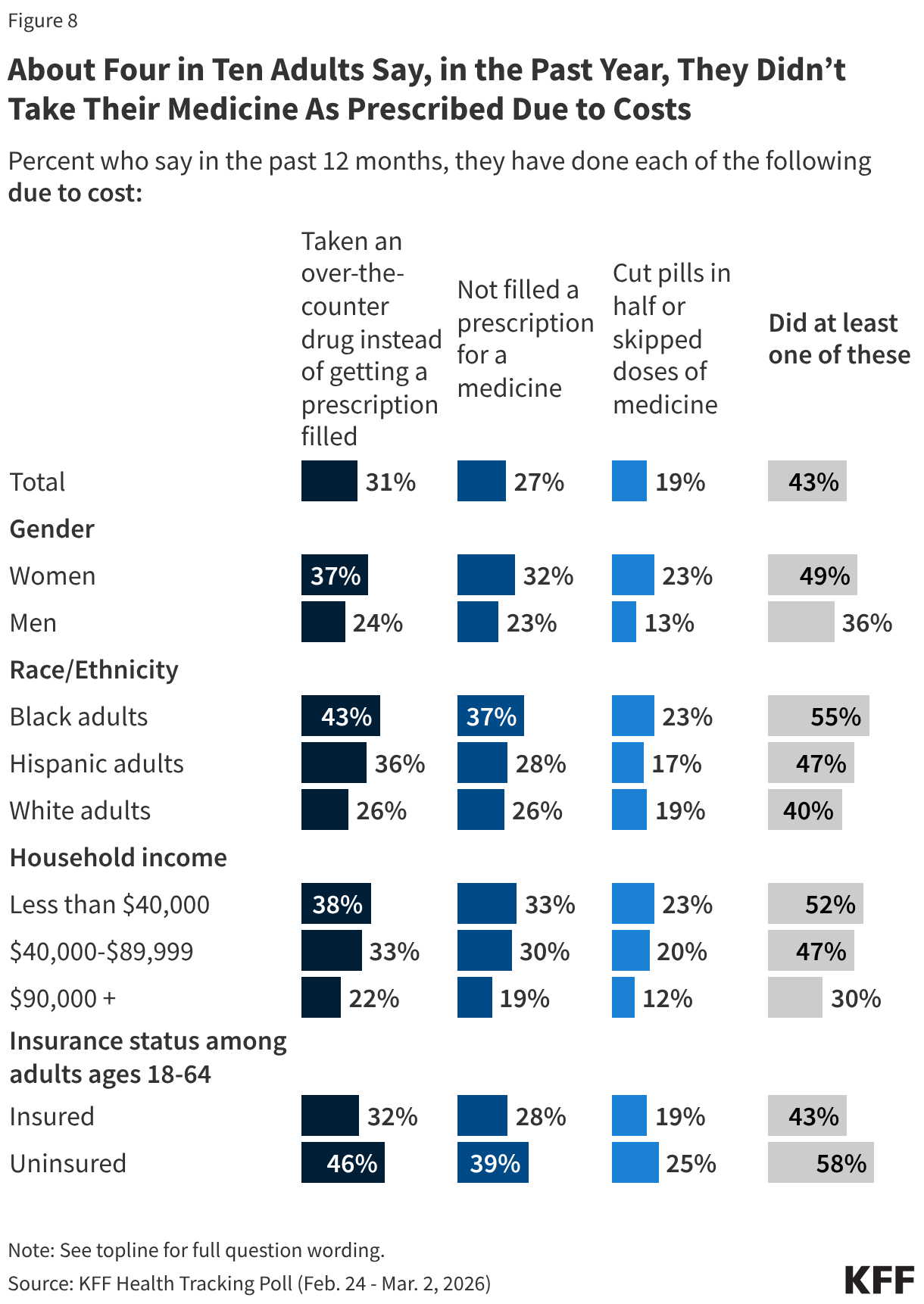
The climbing cost of prescription medications forces many individuals to alter how they take their prescribed treatments. About three in ten adults (31%) report that over the past 12 months, they opted for an over-the-counter drug instead of filling a prescription because of cost concerns. Meanwhile, roughly 27% have chosen not to fill a prescription altogether, and about one in five (19%) have cut pills in half or skipped doses to stretch their medication supplies. Overall, 43% of adults report taking at least one of these cost-saving measures in the past year, continuing an upward trajectory from 33% in 2025 and 31% in July 2023.
Middle- and lower-income households resort to these measures at much higher rates than wealthier households. About half of adults living in households with annual incomes under $40,000 (52%) or between $40,000 and $90,000 (47%) report not taking their medications as prescribed due to cost over the past year, compared to three in ten adults in households earning $90,000 or more. Uninsured adults under 65 are also more likely to alter their medication use for financial reasons, at 58% compared to 43% of insured adults under 65. Demographic trends further reveal that half of women (49%) take steps to reduce prescription costs, compared to 36% of men, while 55% of Black adults and 47% of Hispanic adults report similar measures, compared to four in ten White adults.
Health Insurance Cost Ratings
While health insurance provides a degree of financial shielding, premiums and out-of-pocket expenses continue to weigh heavily on consumers. Most insured adults rate their health insurance as "excellent" or "good" regarding the out-of-pocket costs they pay for prescriptions (61%), doctor visits (53%), and monthly premiums (54%). However, at least three in ten consumers rate their coverage as "fair" or "poor" across each of these categories, and satisfaction levels vary significantly depending on the structure of the plan.
Adults enrolled in private insurance—whether through an employer-sponsored plan or a state or federal Marketplace—are more likely to give negative ratings to their monthly premiums, doctor visit copays, and prescription expenses compared to those covered by Medicare or Medicaid. About one in four adults with Medicare give negative ratings to their monthly insurance costs and prescription out-of-pocket expenses, while about one in five give unfavorable marks to out-of-pocket costs for doctor visits. Medicaid enrollees are generally the least likely to give negative affordability ratings, reflecting the structure of the program, which typically does not charge monthly premiums and limits copays for covered services.
Health Care Debt and Long-Term Costs
Health care debt remains a pervasive issue across the United States. Landmark survey work conducted alongside investigative reporting projects has revealed that 41% of U.S. adults carry some form of debt resulting from medical or dental bills for themselves or someone in their care. This includes roughly a quarter of adults (24%) who hold past-due bills or bills they cannot afford to pay, and one in five (21%) who are paying off debt over time directly to a health care provider. Additionally, 17% report debt owed to banks, collection agencies, or other lenders via personal loans taken out for medical expenses, while an equal share carry medical debt on credit cards that they are paying off incrementally. About one in ten owe money to friends or family members borrowed specifically to settle medical or dental bills.
While four in ten adults nationwide carry some level of medical debt, the burden falls disproportionately on lower-income individuals, the uninsured, Black and Hispanic adults, women, and parents. Many households remain precariously positioned, standing just one unexpected medical bill away from falling deeper into financial distress. Approximately half of U.S. adults state they would be unable to comfortably pay an unexpected out-of-pocket medical bill of $500. This includes 19% who could not pay it at all, 5% who would need to borrow money from banks, payday lenders, or family and friends, and 21% who would be forced to incur credit card debt to cover the expense. Women, lower-income earners, and Black and Hispanic adults are notably more likely to report being unable to absorb such a financial shock.
Among older demographics, the mounting costs of long-term care and support services introduce further anxiety. Nearly six in ten adults aged 65 and older (57%) report feeling at least somewhat anxious about affording a nursing home or assisted living facility if the need arose, and half express worry about paying for support services like paid home nurses or aides. These concerns are even more pronounced among adults aged 50 to 64, where more than seven in ten express anxiety over the potential cost of residential care (73%) and professional in-home support (72%) as they age.








No comments yet. Be the first to join the conversation!