
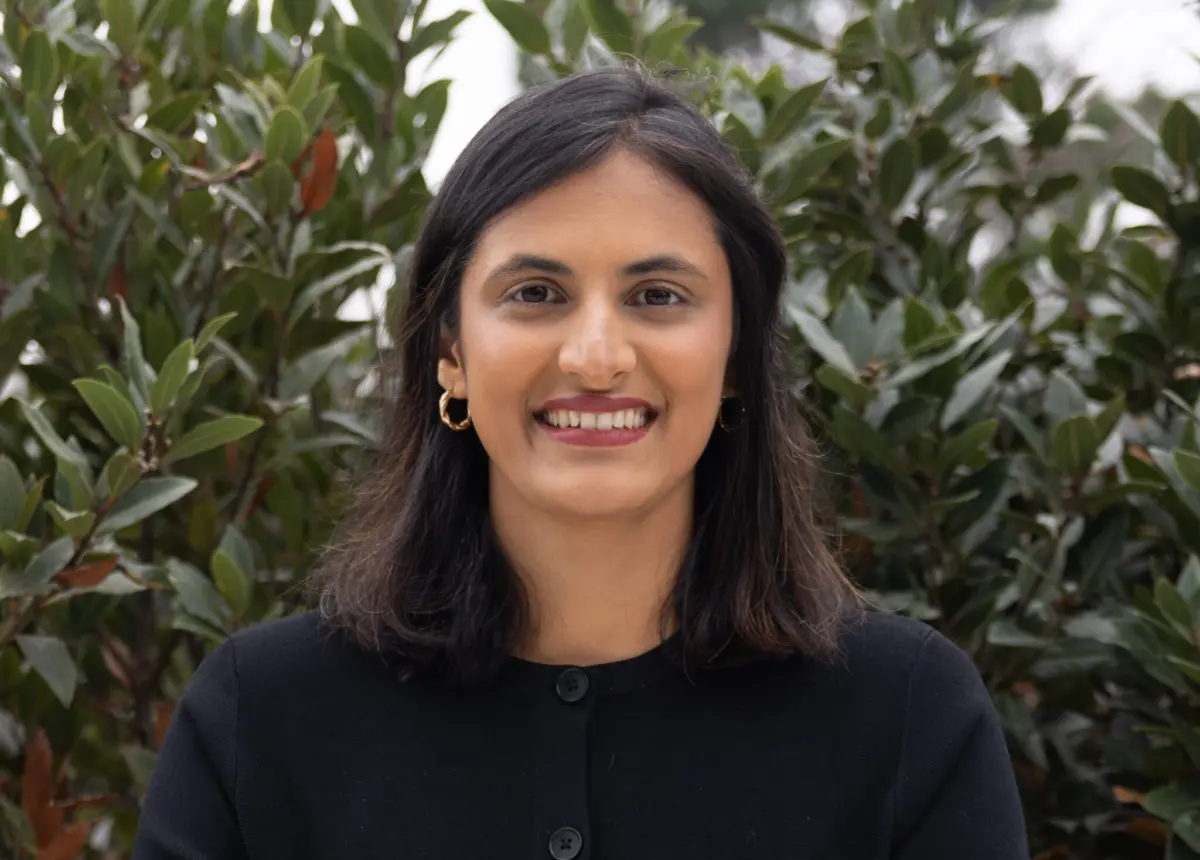
In the vibrant gemstone hub of Jaipur, India, where Nidhi Singhvi spent her formative years, gold jewelry is far more than a mere fashion statement. It functions as a tangible family heirloom, passed down carefully from one generation to the next. In her hometown, gold is a foundational component of personal finance, always factored into traditional calculations of an individual’s net worth.
However, when Singhvi relocated to the United States roughly 14 years ago, she observed a remarkably different cultural and financial attitude toward this ancient asset class.
"Jewelry was always done stupidly," Singhvi reflects, pointing out the systemic inefficiencies of the Western market. "It’s so marked up when you buy it, and if you want to sell it, like a broken chain or earring, your infrastructure is a pawn shop or a local jeweler."
That glaring disconnect set the wheels turning in her mind. Singhvi eventually pursued her MBA at The Wharton School and launched a high-powered career in finance. She initially focused on currency investing at a hedge fund before moving on to build an options trading desk at a digital asset brokerage. Despite her deep immersion in modern financial instruments, her underlying fascination with the jewelry business never faded.
"Gold is the OG asset class," she notes.
That enduring conviction culminated in 2024, when she co-founded Sonalore alongside fellow Wharton graduate Navya Reddy. The venture offered high-end 18-karat gold jewelry backed by a lifetime buyback guarantee, bridging the gap between luxury adornment and financial security.
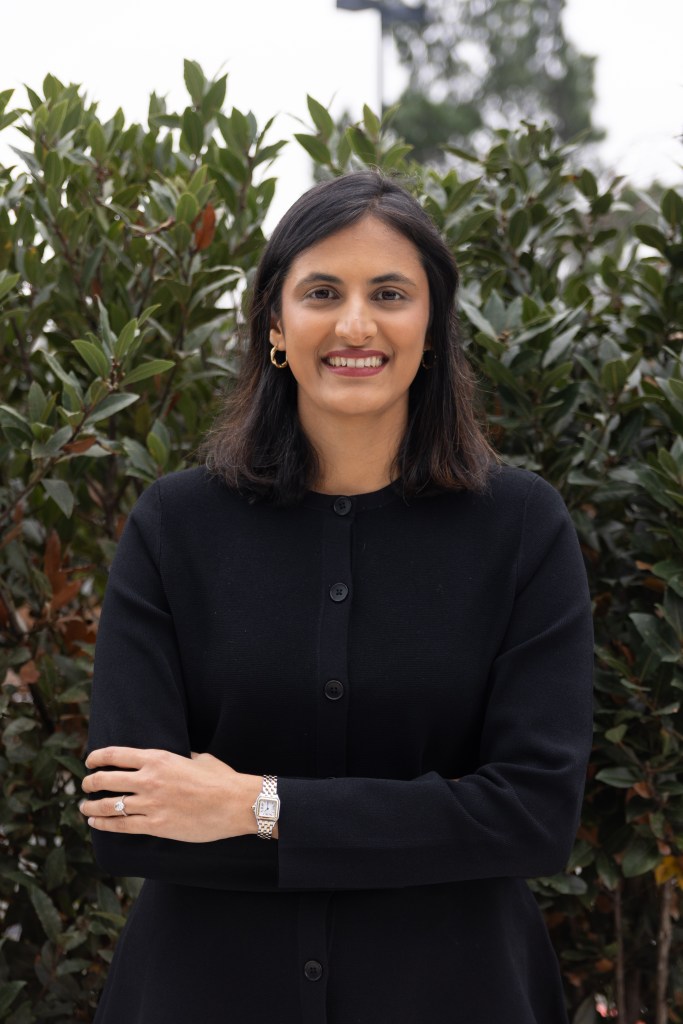
It was not long, however, before Sonalore’s customers began returning with a frequent and pressing request. Many of these consumers already owned substantial collections of inherited or purchased jewelry, but they had no reliable way to determine its true market value. They turned to Singhvi and Reddy for answers.
"The way the customers pushed us was the revelation there," Singhvi says. "They know it’s an investment. Ask any woman. She treats her jewelry differently than everything else. But what’s the value of it? For an asset to be a true asset, you need to know the value of it."
Co-founding Unvault to Unlock $750 Billion in Assets
Recognizing a profound market gap, Singhvi and Reddy immediately pivoted to address the demand. In June 2025, the co-founders launched Unvault in Palo Alto, California, positioning it as a dedicated financial platform for personal gold—what they describe as the "$750 billion asset class hiding in plain sight."
By October of that same year, the founding duo had strategically leveraged artificial intelligence to build the platform’s first proprietary valuation application. Because they had not yet raised outside venture capital at the time, they faced a distinct operational advantage: financial constraint forced them to become true AI natives. It motivated them to maximize every advanced tool available on the technological frontier.
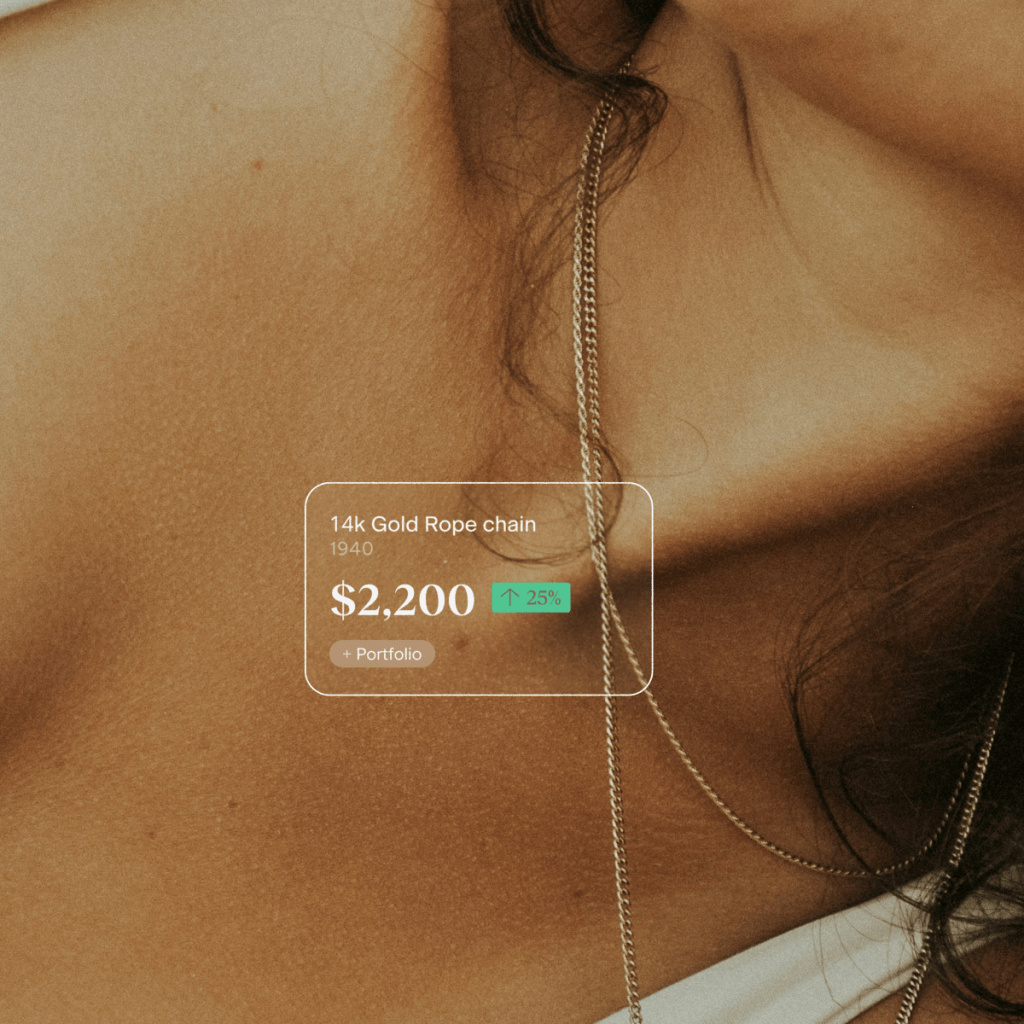
Unvault’s initial application allowed users to upload photographs of their jewelry items, utilizing advanced volumetric data to estimate individual worth.
"हम used all our training from being in jewelry for a year already to make that assessment better," Singhvi explains. "Even though at that time we were using frontier models, we still used our layer of understanding of jewelry to give better results. And that took off."

Customer Requests Lead to the Option to Sell Jewelry
As consumer engagement expanded, platform users soon expressed a desire to not only track their jewelry, but to sell it directly through the service. Meeting this demand, Unvault introduced a secure selling option within the same month of its platform launch.
The company established a secure postal drop-box to receive incoming items in Palo Alto. "People were shipping thousands of dollars of jewelry to us," Singhvi recalls, noting that she would frequently drive to the location herself to retrieve the precious cargo.
"हम built Unvault for knowing the value and for tracking the value," Singhvi says. "But the selling was a use case that customers gave it."
Maintaining radical transparency has remained central to the selling process, ensuring that customers retain absolute trust in a traditionally opaque industry. Unvault records high-definition video throughout the entire evaluation workflow, keeping users informed at every critical juncture—from the moment the shipping box is opened to the physical testing of the gold using specialized X-ray machinery.
"So it will tell you exactly, it’s 17.34-karat gold," Singhvi says. "Then we will give you a complete breakdown. So it’s not one number for a bunch of your jewelry items. It’ll be a number for every single item, and then the fees are broken down as well."
Navigating Silicon Valley Investors Who Want a Trillion-Dollar Market
Despite immediate validation from early adopters, pitching the concept to Silicon Valley venture capitalists presented distinct hurdles. The co-founders frequently encountered skepticism from investors searching exclusively for the next hyper-scalable tech behemoth.

"Everyone wants to back a trillion-dollar company," Singhvi says. "They want to back Anthropic, and I understand it. If I am making that decision, I want to do that as well. So there’s definitely some of that. They’re like, ‘Oh, gold jewelry, can you be $1 trillion?’"
In one notable instance, a prospective investor dismissed the market entirely by arguing that modern women rarely wear jewelry, noting that his own wife limited herself to a few staple pieces like earrings, a ring, and a bracelet.
"By the way, that’s a few thousand dollars right there," Singhvi counters. "But women do have jewelry. Jewelry predates agriculture. It has taken a lot of different forms, but there is an industry that is working, and you are a participant in it whether you like it or not."
Ultimately, Singhvi believes that tangible market traction speaks louder than skeptical assumptions. As long as a business possesses active customers proving market demand, investor sentiment inevitably follows the upward trajectory of the metrics. Unvault had that crucial validation from day one, driven by the consumer inquiries that sparked the company’s creation.
"VCs are very good at [smelling] customer traction," Singhvi observes. "Everyone that partnered with us [did so] once we started getting customer traction, once they started seeing that curve go up."
The numbers quickly validated her perspective. Unvault tracked its first $1 million in consumer assets within 27 days of launch, crossed the $2 million threshold just five days later, and boasted $5 million in logged assets by the time it formally entered the fundraising market. The company successfully secured early-stage capital in June 2026. To date, the platform has empowered users to unlock more than $150 million in personal assets.
The Importance of Customer Feedback at Every Stage
Throughout their entrepreneurial journey, Singhvi and Reddy have maintained an aggressive commitment to gathering direct consumer insights. They have even engaged unconventional guerrilla marketing tactics, such as hiding golden eggs in San Francisco’s Dolores Park to capture public attention and solicit user opinions.
This continuous dialogue has kept the startup remarkably agile, allowing the founders to rapidly adapt to emerging user demands. Looking ahead, platform users are actively requesting expanded capabilities to track inherited assets and evaluate non-jewelry items, such as fine silverware and physical collectibles.
These requests arrive at an opportune macroeconomic moment. According to projections reported by Bloomberg, older generations are expected to pass down an estimated $93 trillion in generational wealth to their heirs over the next two decades in what is widely termed the Great Wealth Transfer.
Singhvi remains eager to develop Unvault’s upcoming inheritance features while continuing to listen closely to her customer base—a foundational philosophy she recommends to any aspiring entrepreneur.
"Whatever way you can get customer feedback, and customer feedback at some scale, is great," Singhvi says. "That will just help building the product, help you be a better founder, and then also help you raise money eventually."









No comments yet. Be the first to join the conversation!