
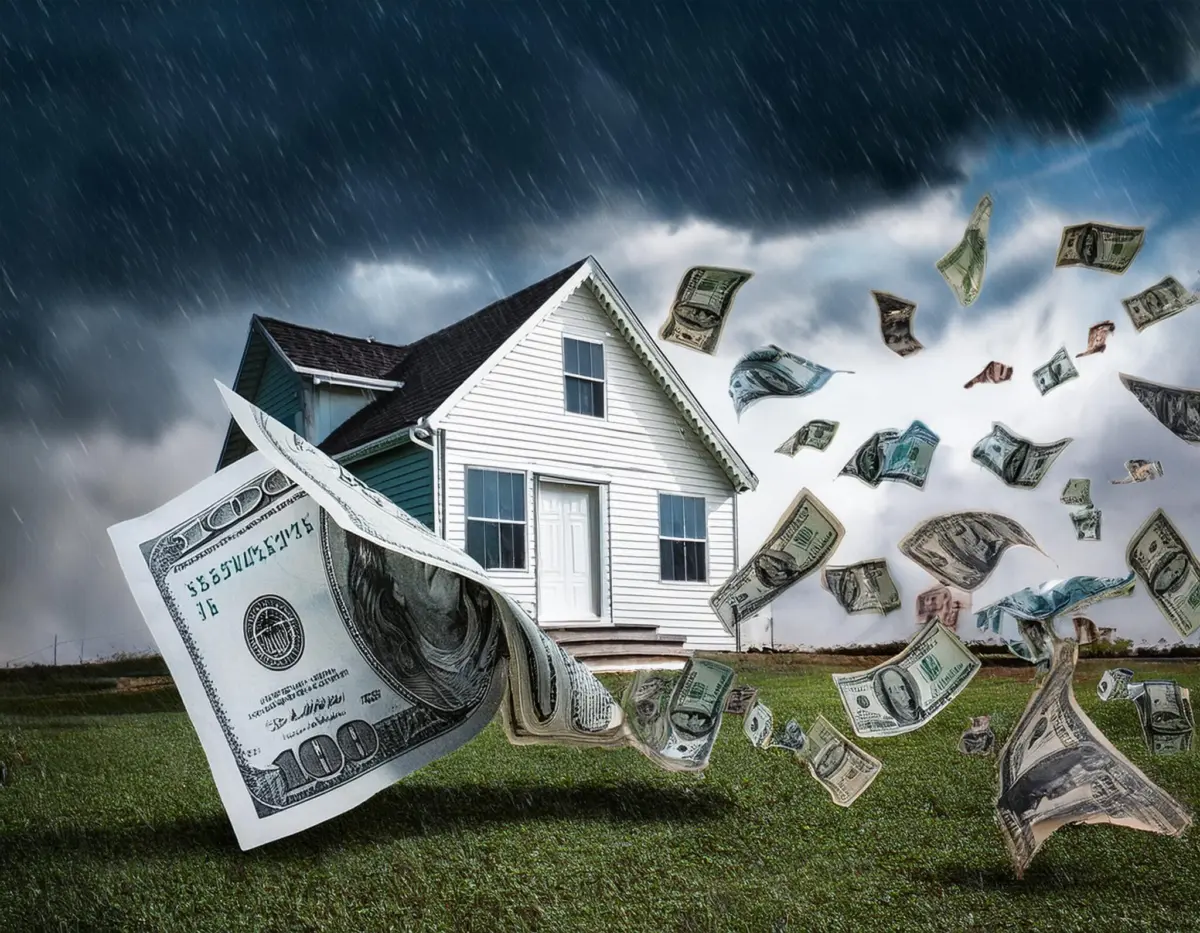
A newly released report has laid bare the mounting financial vulnerability of American property owners, revealing that fully half of U.S. homeowners have had to pay out of pocket for weather-related property damage over the past three years. Amid increasingly erratic climate patterns and frequent extreme weather events, the findings underscore a profound sense of financial unpreparedness among the nation’s residents, with only a fraction feeling truly equipped to handle unexpected repair costs.
According to the third annual “Extreme Weather Report” published by tech-native insurance group Hippo Holdings, nearly 80 percent of homeowners across the United States are not financially prepared for an unexpected weather-related repair. This sweeping lack of readiness stems from a combination of factors, primarily a lack of sufficient emergency savings to cover sudden, high-cost damages or the inability to complete the necessary repair work themselves.
The report, which is based on a comprehensive survey of 1,047 homeowners nationwide, paints a concerning picture of cumulative stress on household finances. Nearly 60 percent of all respondents reported experiencing weather-related home damage over the last three years alone. Of that group, half were forced to shoulder the financial burden entirely out of pocket, bypassing or unable to rely on traditional insurance pathways for the full remediation.
For many, the financial blow of a storm does not end when the skies clear. The Hippo Holdings survey revealed that nearly 25 percent of homeowners who paid out of pocket for weather-related damages are still carrying debt from those repairs. Among that vulnerable subset, the financial tail is alarmingly long: 71 percent have carried that storm-induced debt for at least two years, juggling high interest rates or lingering balances long after the physical scars of the weather event have faded from their properties.
The price tag for these weather events is rarely negligible. The report found that 21 percent of affected homeowners paid $2,000 or more out of pocket for repairs, while 9 percent faced bills of $5,000 or more. These unexpected expenditures can easily derail household budgets, forcing difficult trade-offs that reverberate well beyond immediate home maintenance.
“Protecting a home means protecting the financial future of the people inside it,” said Rick McCathron, president and CEO of Hippo, highlighting the broader socioeconomic implications of property damage. “When a single weather event can push homeowners into years of debt, the damage extends far beyond the property.”
Compounding the problem is the persistent hurdle of upgrade costs. For the second consecutive year, the expense of investing in proactive home hardening and protective upgrades remains the single largest barrier preventing homeowners from mitigating future damage. In the upcoming year, 39 percent of homeowners continue to cite cost as their top obstacle to fortifying their properties against extreme weather.
The financial fallout of property damage frequently bleeds into other crucial areas of personal finance. According to the report, 16 percent of homeowners who experienced storm damage were forced to delay contributions to their primary savings accounts or retirement funds to absorb the unexpected repair costs, jeopardizing their long-term financial security in order to maintain a habitable living space.
Beyond immediate out-of-pocket costs and ongoing debt, the report highlights a widespread and troubling phenomenon regarding insurance literacy: coverage confusion. Thirty-nine percent of surveyed homeowners have at some point mistakenly believed that a specific type of weather damage was fully covered by their existing policy, and 19 percent of all respondents ultimately had to pay out of pocket as a direct result of this misunderstanding.
This uncertainty is further compounded by a general lack of policy awareness among consumers. More than half of respondents—55 percent—reported that they cannot recall their current insurance deductible. This widespread memory gap leaves countless homeowners entirely uncertain about their exact financial exposure and out-of-pocket liabilities at the exact moment disaster strikes and they need to file a claim.
Despite these vulnerabilities, the report suggests there is a significant untapped opportunity for the insurance industry to step in and play a much more proactive role in pre-storm education and weather preparedness.
While insurance agents and companies possess deep professional expertise in property risk assessment and mitigation, they are rarely viewed as primary sources of guidance by the public. When asked where they turn for advice on extreme weather, only 12 percent of homeowners named insurance agents among their top two most trusted sources. By contrast, local meteorologists commanded the trust of 65 percent of respondents, while friends and family members were cited by 31 percent.
This disconnect is also visible in consumer behavior leading up to severe weather events. While an overwhelming 85 percent of homeowners actively monitor local weather alerts as a precautionary measure, a mere 21 percent took the time to review their home insurance coverage as a preparedness step over the preceding 12 months.
“Preparedness shouldn’t start the day a storm is forecasted,” McCathron noted, emphasizing the shared responsibility required to bridge the gap between risk and resilience. “Homeowners and insurers both have a role to play before severe weather hits — homeowners in taking preventive steps to protect their properties, and insurers in proactively reaching out to their customers before damage occurs.”







No comments yet. Be the first to join the conversation!