
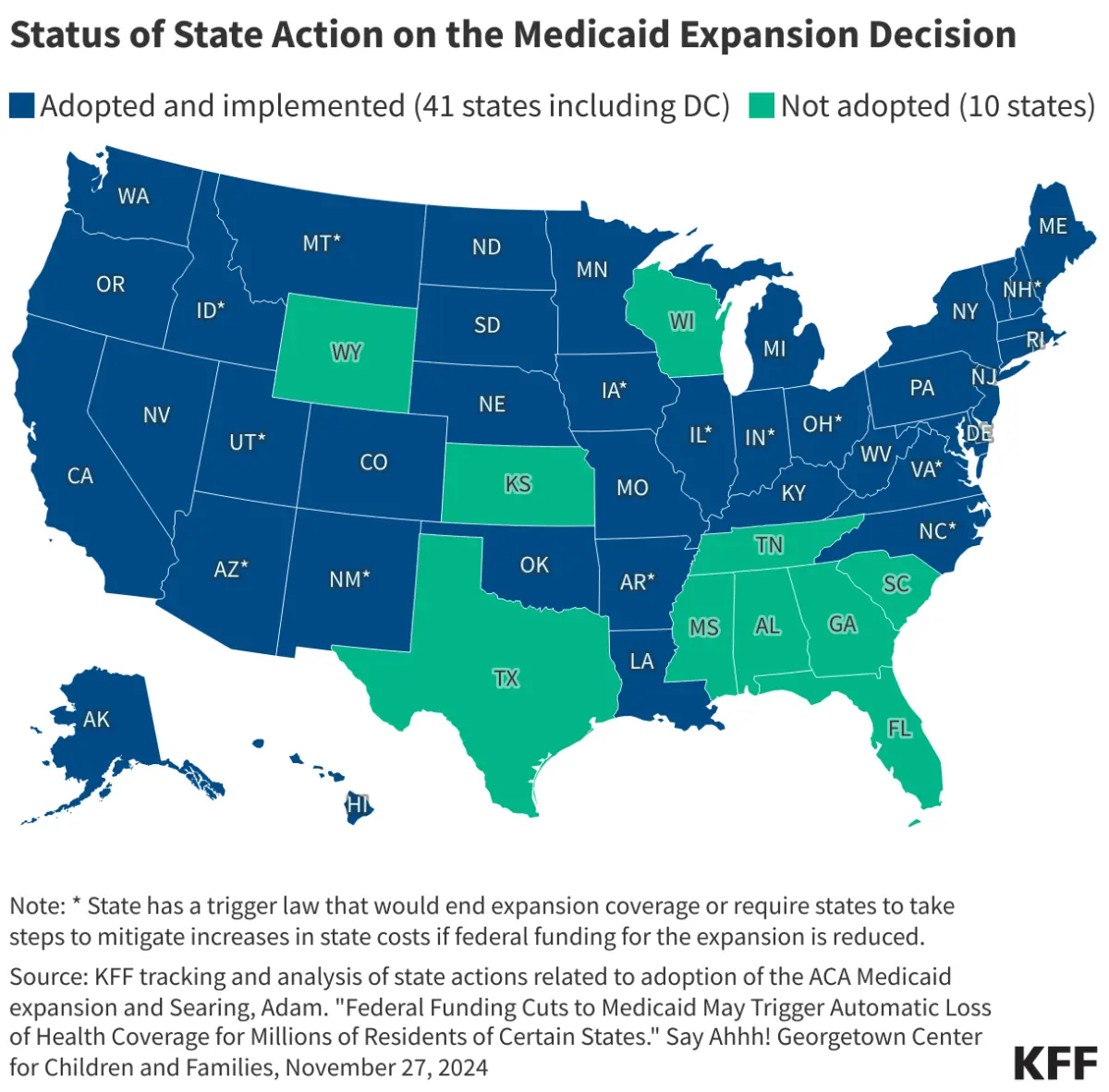
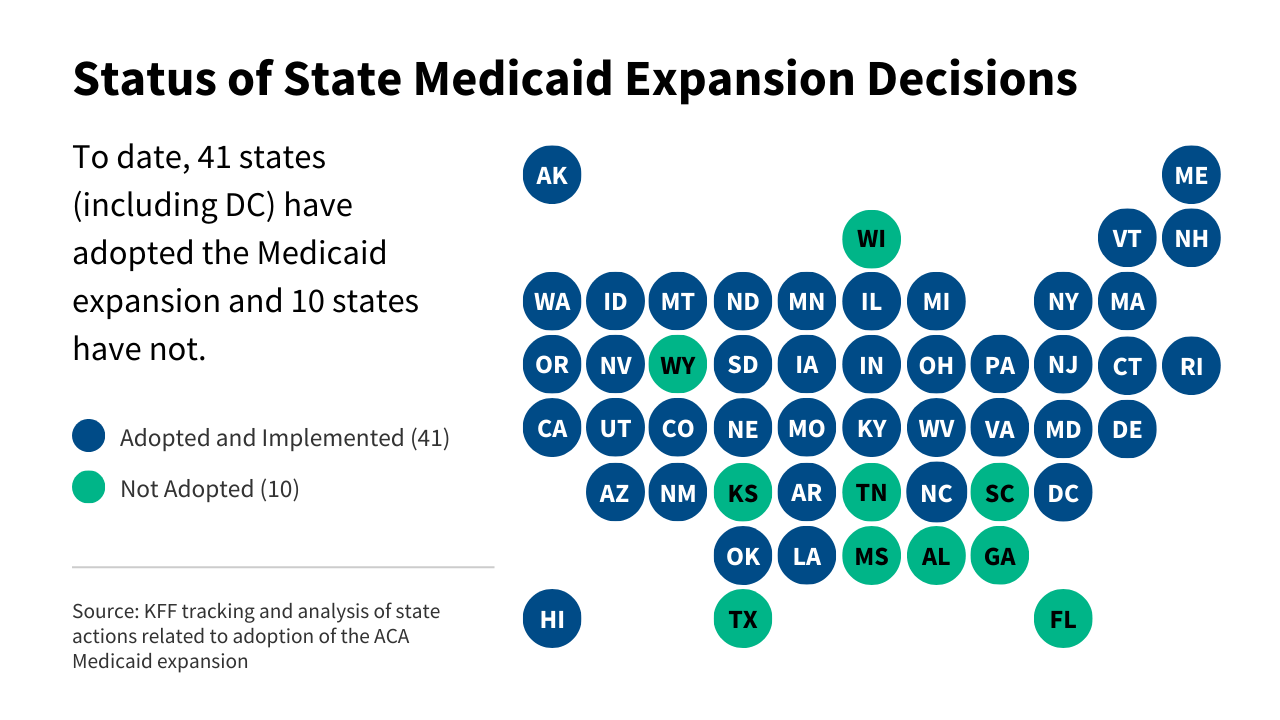
More than a decade after the landmark implementation of the Affordable Care Act, the national landscape surrounding its Medicaid expansion continues to evolve, reflecting a complex interplay of state-level politics, fiscal considerations, and ongoing healthcare debates. To date, 41 states, including the District of Columbia, have officially adopted the Medicaid expansion, opening healthcare coverage to millions of low-income Americans. Meanwhile, 10 holdout states have yet to embrace the policy, though discussions, legislative proposals, and voter-led initiatives persist within many of those jurisdictions.
The core mechanism of the ACA’s Medicaid expansion was designed to bridge a historic coverage gap by extending health insurance eligibility to nearly all adults with household incomes up to 138 percent of the Federal Poverty Level. For an individual in 2025, that threshold translates to an annual income of $21,597. To entice state participation, the federal government provided a heavily enhanced federal matching rate, known as the FMAP, covering a vast majority of the costs for the newly eligible expansion populations. This financial incentive catalyzed widespread adoption over the years, transforming healthcare access across a large majority of the country.
Tracking data compiled and analyzed by KFF provides a comprehensive view of where each state stands today. According to these ongoing evaluations, the map of American healthcare policy remains distinctly divided, even as the boundaries of that division shift through legislative battles, gubernatorial proposals, and ballot measures. The complete and up-to-date data tracking state-by-state decisions are publicly accessible through detailed tables and visual resources, including downloadable interactive maps and presentation formats for policy analysts, researchers, and healthcare advocates.
Beneath the broad national tally of 41 adoption states and 10 non-adoption states lies a dynamic environment of active state-level policy struggles. In states that have not yet expanded Medicaid, recent activity reveals persistent political friction. Lawmakers and advocates in non-expansion states continue to introduce legislative measures—ranging from bills passing through individual legislative chambers or specialized committees to executive budget proposals and executive orders from governors—aimed at revisiting the debate. In some cases, citizen-led movements have pushed progress toward ballot initiatives, allowing voters to bypass recalcitrant legislatures and decide the fate of Medicaid expansion directly at the ballot box, much like voters did in several other states in prior election cycles.
Furthermore, the policy tracking highlights instances where states have explored limited coverage expansions. These localized or targeted programs, however, do not qualify as full ACA Medicaid expansions and, crucially, do not qualify for the enhanced federal matching funds that make the comprehensive ACA expansion financially attractive to state budgets. These limited initiatives generally serve as alternative compromises or stopgap measures in states where full adoption faces insurmountable political opposition.
At the same time, states that long ago embraced the ACA Medicaid expansion are experiencing their own policy shifts. Recent actions in several expansion states focus on placing new limits, conditions, or administrative requirements on the expansion population. A primary vehicle for these restrictions has been the pursuit of Section 1115 demonstration waivers, which allow states to test new approaches in Medicaid provided they align with the overarching objectives of the program. These waiver requests often introduce work requirements, premium payments, or mandatory reporting structures that spark intense debate among healthcare providers, legal advocates, and state policymakers.
Compounding these debates is a growing focus on so-called trigger laws and funding-contingency measures tied to the share of federal financial support. Recent tracking and analysis by health policy experts, including research highlighted by the Georgetown Center for Children and Families, point to growing anxieties over potential federal funding shifts and cuts. These trigger laws are designed to automatically scale back or terminate a state’s Medicaid expansion if the federal government reduces its matching rate below a specified threshold.
For instance, states such as South Dakota and West Virginia have considered or enacted legislative mechanisms to put trigger laws in place, raising concerns among consumer advocates that millions of residents could face sudden, automatic losses of health coverage if federal funding formulas are altered in Washington. In Virginia, policy battles have played out over budget amendments. A proposal was introduced to remove the automatic termination clause from the state’s existing trigger law, seeking instead to require a legislative committee to carefully develop recommendations on how to manage any future loss of federal funding rather than triggering an abrupt cutoff of coverage. Similar legislative proposals aimed at removing or scaling back restrictive trigger laws have surfaced in states like Illinois and North Carolina, demonstrating that the fiscal sustainability and structural security of the expansion remain subjects of intense legislative scrutiny.
As tracking organizations like KFF and academic centers continue to monitor these multifaceted state actions, the future of the ACA Medicaid expansion remains a defining issue in American public health policy. Whether through ongoing political pressure to adopt the program in the remaining holdout states or through defensive legislative maneuvers to protect existing coverage from federal funding fluctuations in states that have already expanded, the debate over healthcare access for low-income adults persists in statehouses across the nation.










No comments yet. Be the first to join the conversation!